

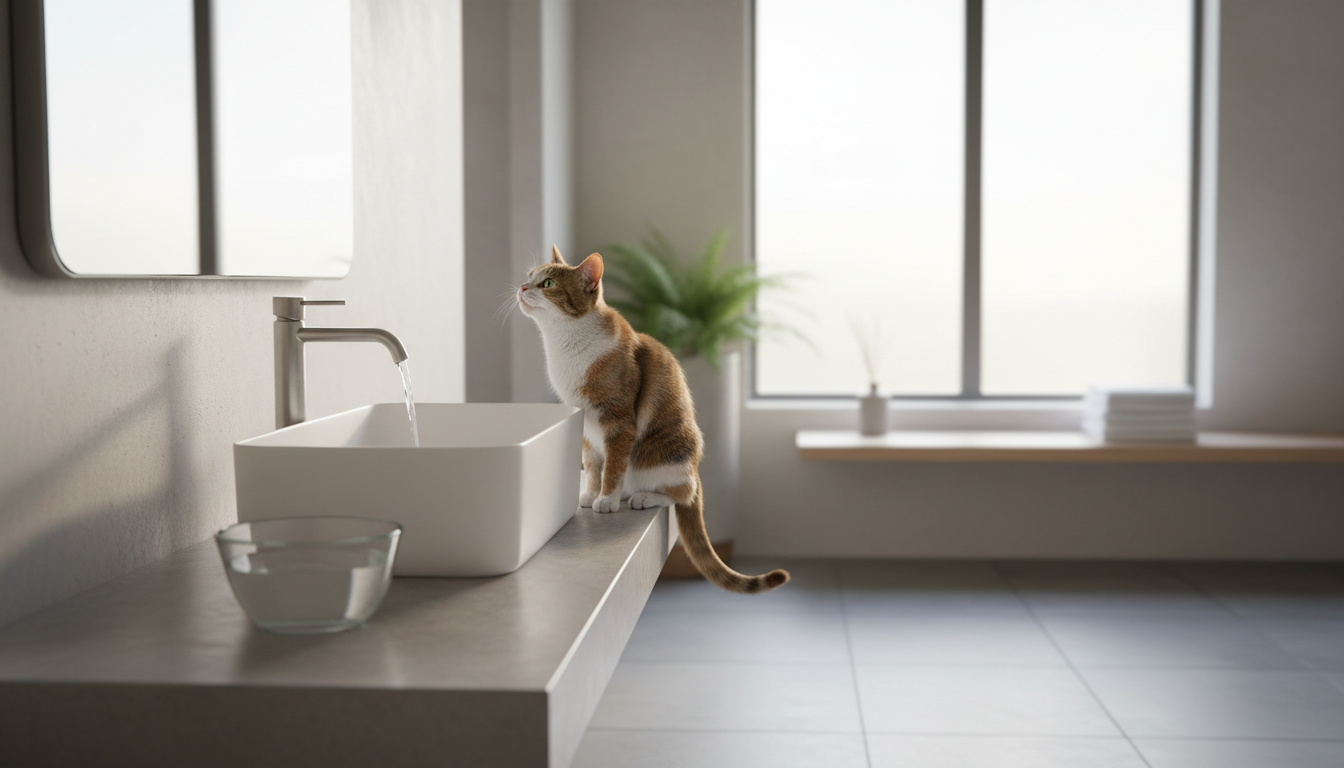
If your cat only drinks from the faucet, the behavior usually says more about the water source and routine than about a mysterious need for running water. A faucet offers movement, fresh replacement water, a specific height, and a predictable interaction with you. Some cats simply prefer that combination. The important questions are whether your cat is taking in enough fluid overall, whether the faucet habit is new, and whether you can provide a safe alternative that works when nobody is home. A faucet preference is usually manageable, but a sudden increase in thirst deserves a different kind of attention.
When a Cat Drinks From the Faucet, Separate Preference From Thirst
First ask whether your cat has always preferred the faucet or has recently started seeking it more often. A long-standing habit in a cat that eats, urinates, and behaves normally is different from a new pattern of waiting at every sink, drinking for longer periods, and producing much larger urine clumps. Increased thirst can occur with several medical conditions, so a clear change from baseline belongs on your veterinary radar even if the cat still seems cheerful.
Also consider total fluid intake. A cat eating mostly wet food may drink less visible water than a cat eating dry food. The faucet may be only one small part of the day. Thinking about water from both food and drinking sources gives better context than counting faucet visits alone. If your cat eats normally, produces usual urine, and has always taken a few drinks from the tap, the habit is more likely a preference problem than an emergency hydration problem.
The Faucet Changes Several Things at Once
Watch the first few seconds of the routine. Does your cat lick the falling stream, the wet basin, or droplets left on the tap? Does the cat arrive only after hearing the handle turn? Those details show whether movement, sound, location, or learned timing may be the strongest cue.
A running tap is not just “moving water.” It also changes temperature, sound, freshness, height, bowl shape, and location. The sink may sit in a quiet room away from litter, food, dogs, children, or another cat. Fresh water replaces the previous stream continuously instead of sitting for hours. Movement may also make the stream easier to see or interact with than still water. Your cat may also have learned that jumping onto the counter brings your attention and turns the tap on.
Because several variables change together, copying only the movement may not solve the preference. A fountain placed beside a noisy appliance can fail even if the cat likes flowing water. A beautiful bowl may fail if it is narrow, unstable, or located in a busy hallway. To learn what the cat prefers, keep the faucet habit in mind but test one feature at a time: location, bowl width, water freshness, elevation, or gentle movement. That gives you more useful information than buying several new products at once.
Test a Bowl Beside the Sink Before You Buy a Fountain
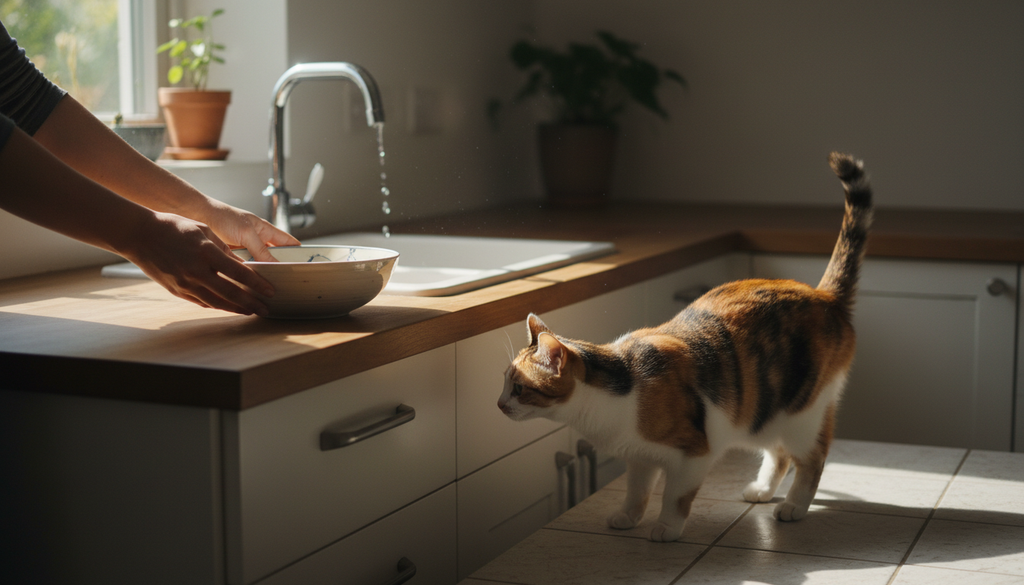
Keep the bowl far enough from the basin that splashing soap or toothpaste cannot enter it. Mark the water level only if you need a rough comparison, and remember that evaporation and other pets make the result imprecise. The useful outcome is voluntary use, not a laboratory measurement.
Put a clean, wide bowl near the faucet area while the sink is not running. Use a material that is easy to wash, such as ceramic or glass. Fill it with fresh water and leave the familiar faucet routine available at first. The point is to see whether the cat values the location more than the stream. If the bowl is used, you have a simple alternative that does not require electricity, filters, or pump cleaning.
If the bowl is ignored, try refreshing it while the cat is nearby, or move it slightly away from food and other resources. Cat Friendly Homes recommends offering water in multiple quiet locations and notes that individual cats may prefer different water sources, including bowls, fountains, and dripping faucets. Avoid forcing the cat’s face toward the bowl or carrying the cat to it repeatedly. A water station works best when the cat approaches by choice. Keep the experiment stable for several days before deciding it failed.
A Fountain Is an Option, Not an Automatic Upgrade
Before buying, think about maintenance as part of the product. A fountain that is difficult to dismantle may be cleaned less often. Choose a design you can realistically wash, refill, and inspect. A simple bowl that stays fresh is better than a complicated fountain that develops residue in hidden parts.
A fountain can imitate some features of a faucet, but it introduces others: pump noise, vibration, filters, narrow channels, and recirculated water. Some cats enjoy it immediately; others avoid it. If you try one, keep a plain bowl available during the transition. Place the fountain somewhere quiet and easy to approach, and follow the manufacturer’s cleaning schedule. Biofilm and debris can collect in pumps and hidden channels even when the top surface looks clean.
Watch what your cat actually uses rather than assuming the more expensive source is better. If the cat drinks from the plain bowl and ignores the fountain, that is a successful hydration setup, not a failed purchase. If the cat likes the fountain but still asks for the faucet, decide whether the faucet behavior is partly social. Some cats learn a strong routine around a person entering the bathroom or kitchen. Changing that routine may take longer than changing the water source.
Do Not Make the Faucet the Only Water Available
Backup access matters during ordinary disruptions too. A bathroom door may be closed, a guest may occupy the room, or a sink may be unavailable during cleaning. If your cat has learned only one drinking route, a small household change can remove access without anyone realizing it.
A tap is not a reliable sole water source because it depends on someone turning it on, access to the room, and a safe sink. Fresh water should remain available when you are asleep, away from home, or the plumbing is unavailable. Keep at least one independent bowl or fountain accessible at all times. In multi-cat homes, offer several water locations so one cat cannot quietly control the only route.
- Keep a clean bowl available even if your cat loves the faucet.
- Place water away from litter boxes and stressful traffic.
- Use more than one location in a multi-cat home.
- Refresh bowls daily and wash them regularly.
- Clean fountains beyond the visible top surface.
- Do not leave a faucet running unattended for long periods.
- Keep sinks free of cleaners, soap residue, and unsafe standing water.
The backup source should be easy for the cat to reach without jumping onto a slippery surface or crossing a room another pet controls.
Make the Alternative Feel More Like the Faucet
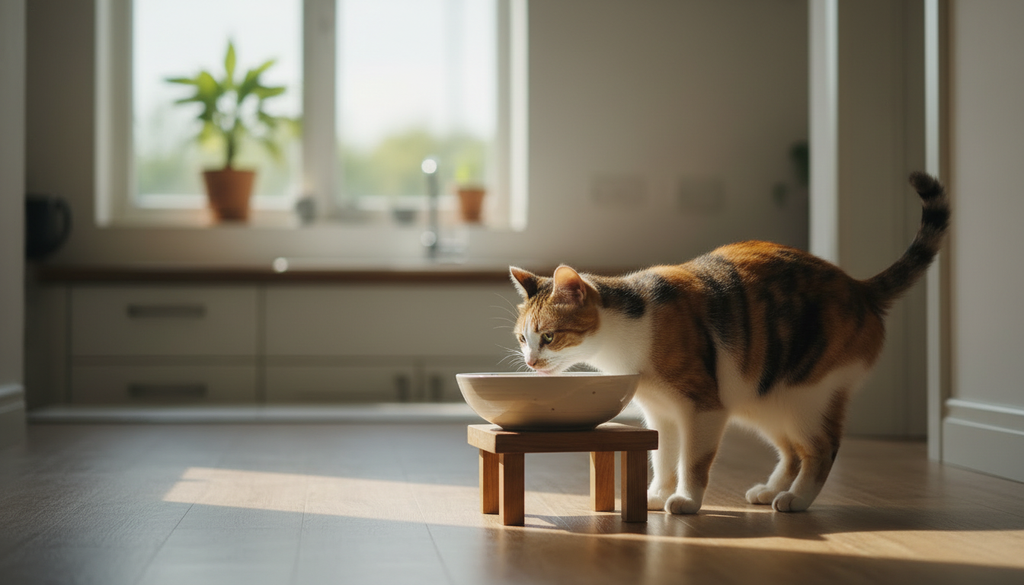
Use the cat’s choice to guide the next step. If a bowl beside the sink succeeds but the same bowl on the kitchen floor fails, location probably matters. If a fountain in the same sink area succeeds, movement may matter more. Change location only after the source itself is accepted.
If you want to reduce faucet dependence, copy the features your cat appears to value. A cat that likes the sink height may use a bowl on a stable low stand. Freshly replaced water may matter more for a cat that responds when you refill a bowl often. Watching the stream closely may point toward a preference for a fountain with visible flow. Drinking only when you are present may reflect routine and social attention as much as water movement.
Change one piece at a time. For example, place a bowl beside the sink for several days. If it is used, move it a short distance away, then gradually toward the long-term location. If you switch to a fountain, run it beside a familiar bowl rather than removing the bowl overnight. The transition should preserve access while the new option becomes ordinary. A sudden replacement can turn a harmless preference into reduced drinking because the cat loses the only source it trusted.
Watch the Sink Itself for Hidden Problems
Bathroom and kitchen sinks can contain residues that are not meant for cats. Rinse away toothpaste, mouthwash, soap, cleaning sprays, disinfectants, food scraps, and other products before allowing faucet drinking. Do not let the cat drink from a basin that has recently held cleaning chemicals. Check that the counter is not slippery and that the cat has a safe route up and down if access is allowed.
Also think about hot water controls. A cat should not be able to activate a lever or mixer tap that could produce dangerously hot water. If your faucet can be turned on by a curious paw, restrict access or change the setup. Keep electrical grooming devices and cords away from wet counters. Faucet drinking can be a cute routine, but the surrounding sink still needs to be treated as a human work area with potential hazards.
A New Faucet Obsession Can Be a Health Clue
Do not try to reduce visible drinking to test whether the cat is truly thirsty. Water should stay freely available. The question for a veterinarian is why intake appears to have increased, not whether the cat can be persuaded to drink less. Restriction can make a medical problem more dangerous.
The behavior deserves veterinary attention when it represents a clear increase in thirst rather than a stable preference. Larger or more frequent urine clumps, weight loss, increased appetite, reduced appetite, vomiting, lethargy, or other changes make the pattern more important. Do not assume a cat is simply “spoiled by running water” if the amount of drinking has changed sharply.
Keep a short record of food type, visible drinking, urine output, appetite, and weight if available. You do not need to measure every milliliter unless your veterinarian asks you to. A description such as “she used to ask for the sink once in the evening, now she waits there several times a day and the urine clumps are much larger” is useful clinical information. If the behavior is new and persistent, call your veterinarian rather than trying to solve increased thirst with a better fountain.
Keep the Preference, but Build a Reliable Backup
Your cat does not need to stop enjoying the faucet if the routine is safe and water intake is normal. The practical aim is to make sure the tap is not the only acceptable source, especially when the room is closed or nobody is home. Offer fresh, clean water in a quiet place, test the features your cat seems to prefer, and treat any sudden increase in thirst as a health change rather than a product problem.
References
- Enhancing Water Intake for Your Cat — Cat Friendly Homes — Covers bowl material, location, fountains, dripping faucets, wet food, and individual water preferences.
- Hydration — Cornell Feline Health Center — Explains total fluid intake, food moisture, dehydration, and reasons water needs can change.
- What Is Normal for Your Cat? — Cat Friendly Homes — Emphasizes using changes from a cat’s normal drinking and urination patterns as health information.
