

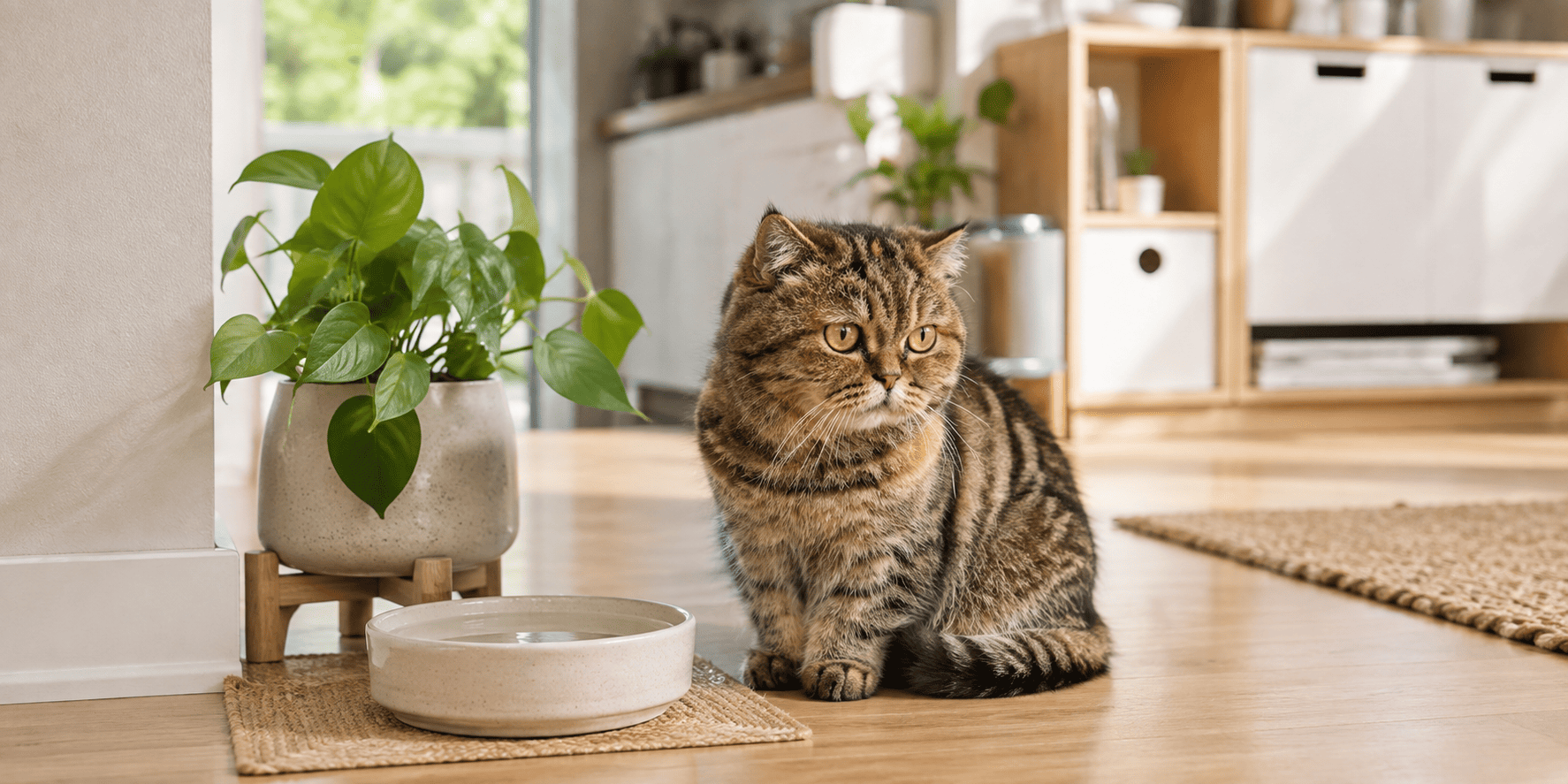
If you rarely see your cat at the water bowl, you may start to wonder: how much water does a cat need? The answer is not as simple as measuring what disappears from the bowl each day. Cats get water from both drinking and food, so a cat eating mostly wet food may drink very little and still stay well hydrated. For a healthy adult cat, a useful starting point is about 4 ounces of total water per 5 pounds of body weight each day. That works out to around 8 ounces, or 240 milliliters, for a 10-pound cat. Still, this is only a general guide. Diet, activity, temperature, age, and health can all change a cat’s needs. The most useful approach is to understand your cat’s normal drinking, eating, and litter-box habits rather than trying to make them hit one exact number every day.
How Much Water Does a Cat Need Each Day?
A healthy cat generally needs around 4 ounces of total water per 5 pounds of body weight each day. For a 10-pound cat, that is roughly 8 ounces or 240 milliliters. This does not mean your cat needs to drink the entire amount from a bowl because moisture in food counts too. A cat’s actual water requirement can also vary with activity, temperature, diet, life stage, and health. Think of the number as a practical baseline rather than a strict quota. Small daily changes are normal, and the overall pattern matters more than whether your cat reaches the same measurement every day.
Why Your Cat May Drink Less Water Than You Expect
Cats do not always drink in the same way dogs do, and some naturally take only small drinks throughout the day. Their ancestors obtained much of their moisture from prey, so modern cats can still receive a large share of their water through food. Their environment can also influence how often they drink. A bowl beside a noisy appliance may be less appealing, while some cats dislike sharing a water station with another pet. Others prefer fresh water, moving water, or a different bowl shape. Bowl material, cleanliness, location, and household routine can all affect drinking habits. If your cat seems to drink very little, look at the entire routine before assuming something is wrong.
Wet Food Changes What “Enough Water” Looks Like
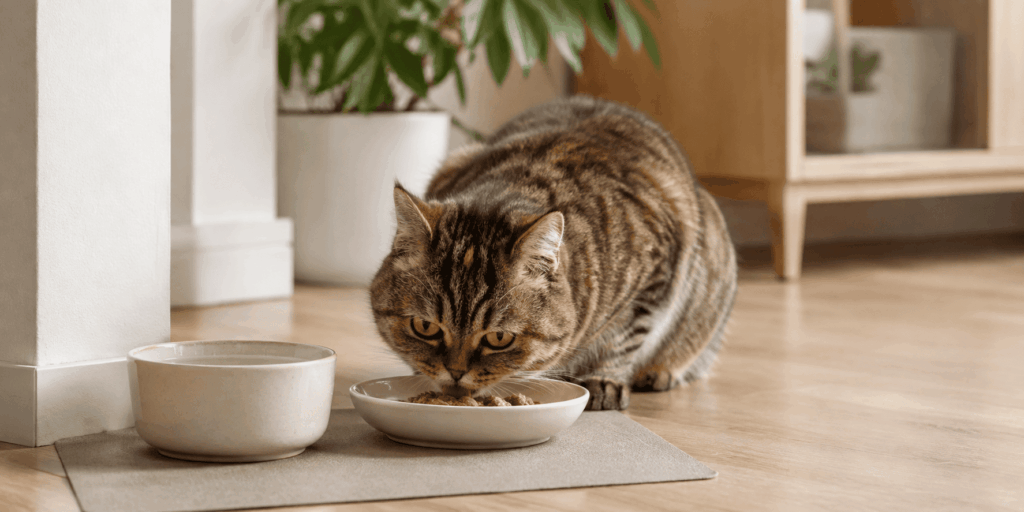
Wet cat food often contains around 70 to 80 percent moisture, which means it can supply a significant amount of a cat’s daily water intake. For example, 200 grams of food containing 75 percent moisture provides about 150 milliliters of water before the cat drinks anything from a bowl. Dry food contains far less moisture, so cats eating mostly kibble usually need to drink more to make up the difference. This is why comparing two cats based only on how much water disappears from their bowls can be misleading. A wet-food cat may drink noticeably less than a dry-food cat while still receiving a similar total amount of water.
How to Tell Whether Your Cat Is Getting Enough Water
The easiest way to judge everyday hydration is to learn what is normal for your own cat. Notice how often you refill the water bowl or fountain, what type of food your cat eats, and whether their litter-box habits stay fairly consistent. If you want to monitor drinking more closely, start with a measured amount of water and check what remains after 24 hours. The result will only be an estimate because water can evaporate, spill, or be shared by other pets. That number becomes more useful when you consider it alongside food moisture, urine output, appetite, energy level, and your cat’s usual behavior. The goal is not to track every sip but to notice meaningful changes from your cat’s normal routine.
Signs Your Cat May Not Be Getting Enough Water
Not seeing your cat drink for a few hours does not automatically mean they are dehydrated. It is more useful to look for several changes happening together, especially if your cat also seems unwell. Dehydration can affect behavior, appetite, the mouth, eyes, skin, and litter-box habits, although none of these signs can confirm dehydration on their own.
- Dry or tacky gums: Healthy gums should usually feel moist rather than sticky.
- Low energy: A dehydrated cat may seem unusually tired or less interested in normal activities.
- Reduced appetite: Eating less can also reduce the water your cat receives through food.
- Sunken-looking eyes: This may occur with more significant dehydration.
- Poor skin elasticity: Skin may return to position more slowly after being gently lifted, although this test can be less reliable in older cats.
- Changes in drinking: A sudden drop in normal water intake is more meaningful than simply having a cat who has always been a light drinker.
- Changes in urination: Smaller urine clumps or reduced urination may deserve attention.
- Vomiting or diarrhea: Both can increase fluid loss and allow dehydration to develop more quickly.
If your cat seems weak, stops eating, has repeated vomiting or diarrhea, or shows several warning signs together, contact a veterinarian rather than relying on home hydration checks alone.
Simple Ways to Get a Cat to Drink More Water
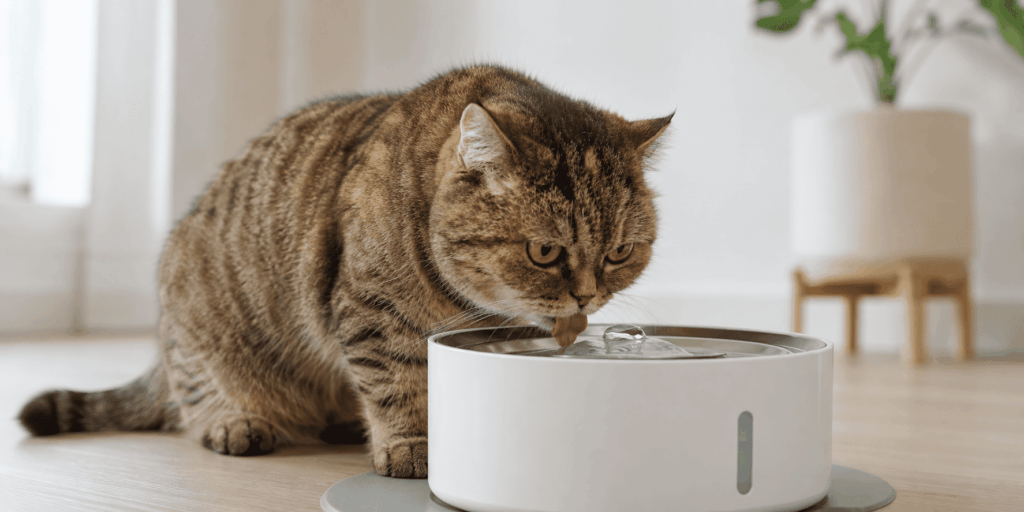
If your cat is otherwise healthy but could use more encouragement to drink, small changes to the home setup can make water more appealing. Cats have individual preferences, so there is no single bowl, fountain, or placement that works for every cat. The best strategy is to offer a few sensible options and watch which ones your cat actually uses.
- Offer more than one water station. Place bowls in quiet areas where your cat already spends time.
- Keep water away from the litter box. A clean, separate location is usually more inviting.
- Refresh the water regularly. Some cats strongly prefer freshly changed water.
- Wash bowls and fountains often. Saliva, dust, food residue, and odors can build up quickly.
- Try a wide bowl. Some cats seem more comfortable when their whiskers do not press against the sides.
- Test different materials. Ceramic, glass, and stainless steel are common choices.
- Try a cat water fountain. Moving water encourages some cats to drink more.
- Add moisture through food. Wet food can increase total water intake without requiring extra trips to the bowl.
- Mix a small amount of water into meals. This can work if your cat accepts the new texture.
- Make changes gradually. Do not add so much water or change the food so quickly that your cat refuses to eat.
A fountain is not automatically better than a bowl. The best hydration setup is simply the one your cat is comfortable using every day.
Daily Water Needs by Body Weight
The table below uses a general estimate of about 4 ounces of total water per 5 pounds of body weight each day. The amount includes water from both food and drinking, so a cat eating a moisture-rich diet may need to drink much less directly. These figures are useful for orientation but should not be treated as individual medical prescriptions.
| Cat’s Weight | Approx. Total Water per Day | Approx. Metric Amount |
|---|---|---|
| 5 lb / 2.3 kg | 4 oz | 120 mL |
| 7.5 lb / 3.4 kg | 6 oz | 180 mL |
| 10 lb / 4.5 kg | 8 oz | 240 mL |
| 12.5 lb / 5.7 kg | 10 oz | 300 mL |
| 15 lb / 6.8 kg | 12 oz | 355 mL |
| 17.5 lb / 7.9 kg | 14 oz | 415 mL |
| 20 lb / 9.1 kg | 16 oz | 475 mL |
When Low Water Intake Needs a Vet
A cat who eats wet food and has always been a light drinker may be completely normal, but a sudden change in drinking habits deserves more attention. Contact a veterinarian if low water intake comes with weakness, poor appetite, repeated vomiting, diarrhea, or unusual behavior. Increased thirst can also be important because cats with conditions such as kidney disease, diabetes, or hyperthyroidism may drink and urinate more than usual. Do not restrict water simply because your cat suddenly seems thirstier. Litter-box changes can be especially urgent. A cat that repeatedly strains, cries, or produces little to no urine may have a urinary blockage and needs immediate veterinary care. Cats with kidney, heart, urinary, or other medical conditions may also need an individualized hydration plan from their veterinarian.
How Much Water Does a Cat Need? Focus on the Whole Routine
So, how much water does a cat need? Around 4 ounces per 5 pounds of body weight each day is a useful general baseline, but that total includes moisture from food. A cat eating wet food may drink surprisingly little from a bowl, while a cat eating mostly dry food will usually need to drink more. For most healthy cats, good hydration comes from simple habits: keep fresh water available, clean bowls and fountains regularly, offer more than one drinking location if possible, and include moisture-rich food when appropriate. Most importantly, learn what is normal for your cat. A noticeable change in their usual drinking, eating, or litter-box routine often tells you more than one day’s water measurement.
References
- Cornell Feline Health Center — “Hydration”
A veterinary overview of feline water requirements, dehydration signs, moisture in wet food, and practical ways to support hydration.
https://www.vet.cornell.edu/departments-centers-and-institutes/cornell-feline-health-center/health-information/feline-health-topics/hydration - VCA Animal Hospitals — “How to Get Your Cat to Drink More Water”
Practical veterinary guidance on estimating daily water needs and encouraging cats to drink through bowl placement, fountains, wet food, and other home strategies.
https://vcahospitals.com/resources/preventive-cat/nutrition/tips-to-encourage-cats-to-drink-more-water - MSD Veterinary Manual — “Renal Dysfunction in Dogs and Cats”
Professional veterinary reference used for context on hydration, fluid balance, and why cats with kidney disease may require individualized fluid management.
https://www.msdvetmanual.com/urinary-system/noninfectious-diseases-of-the-urinary-system-in-small-animals/renal-dysfunction-in-dogs-and-cats
