

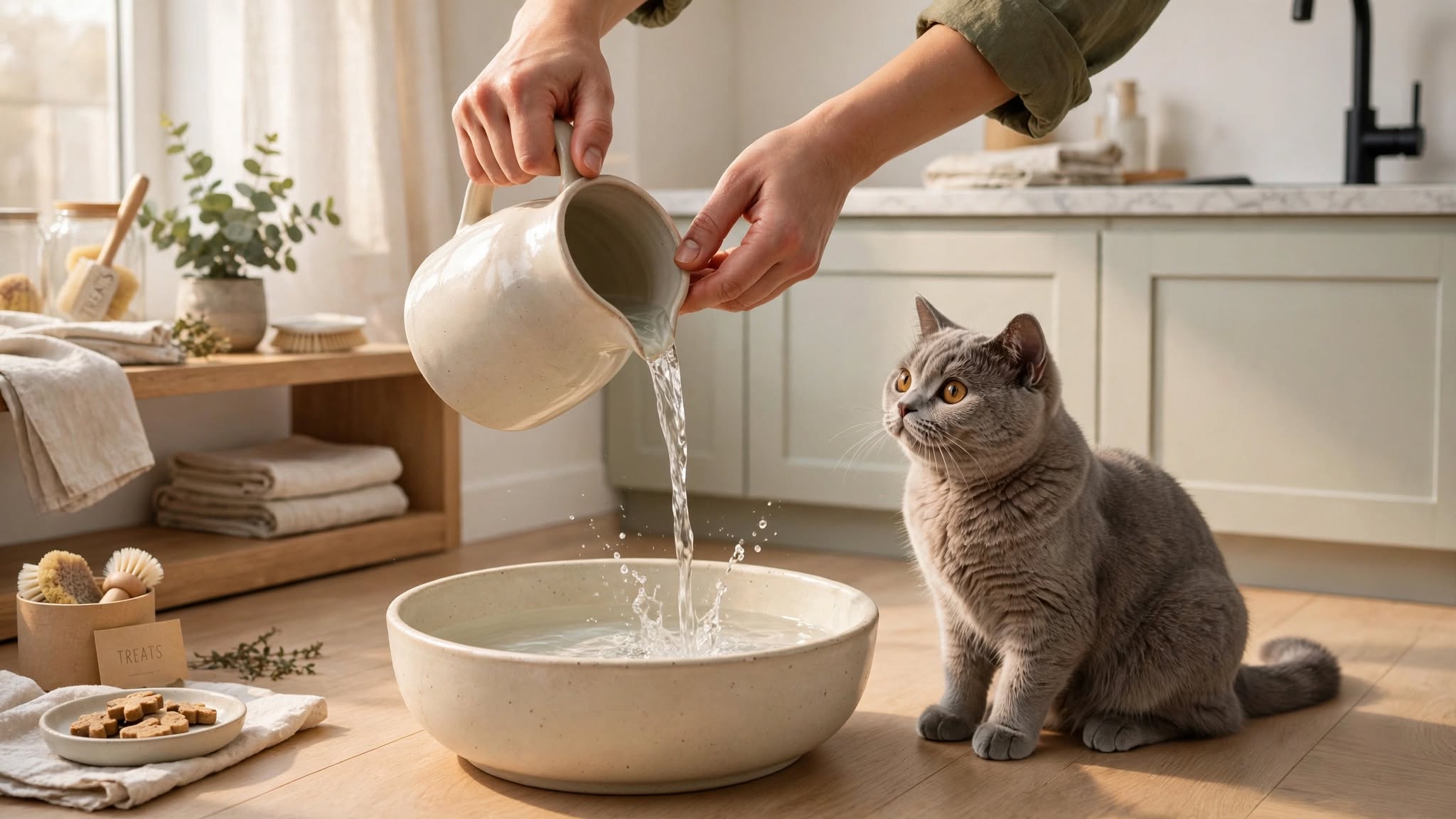
To keep cat water fresh all day, focus less on topping up the bowl and more on what makes water stale. Saliva, food crumbs, fur, dust, warmth, sunlight, and biofilm all matter. So does a container that is difficult to clean. Fresh water should be replaced daily, and many bowls benefit from washing at the same time rather than receiving endless refills over yesterday’s residue. Fountains need the same principle plus pump and filter maintenance. The easiest system uses a clean container, a quiet location, and enough separate water sources. Add a routine that lets you notice contamination before your cat starts avoiding the water.
Adding fresh water to an old bowl improves the level but does not remove saliva, dust, or residue from the sides. Empty the container, rinse or wash it, and refill with fresh water at least daily. International Cat Care advises fresh water every day and regular cleaning of water containers, daily if possible. In hot weather, dusty homes, or bowls shared by several pets, you may need to refresh more often.
Use the refill as a quick inspection. Is there a film at the waterline? Are there food particles at the bottom? Has a long-haired cat left fur floating on the surface? Is the bowl slimy when you run a clean finger along the inside? Those clues tell you the cleaning interval needs to be shorter.
Choose Materials That Are Easy to Get Truly Clean
Stainless steel, glazed ceramic, and glass are popular because smooth intact surfaces are straightforward to wash. Plastic can work, but scratched plastic is harder to clean thoroughly and may retain odors. Whatever material you use, replace bowls that are cracked, chipped, deeply scratched, or impossible to scrub around seams. A decorative shape with narrow corners may look attractive but create more surface area for residue.
Keep at least one spare bowl. Then you can swap a clean one in immediately instead of skipping washing because the usual bowl is in the dishwasher. In multi-cat homes, matching bowls can simplify the routine, but identical appearance is not necessary. The key is having enough clean water sources that one dirty bowl does not become everyone’s only option.
Move Water Away From Food Debris and Litter Dust
A bowl beside the food dish often collects crumbs, especially when a cat eats enthusiastically or drops pieces from the mouth. A bowl near the litter box can collect dust and tracked particles. Separate these resources when the layout allows. A quiet water location also reduces the chance that the bowl is kicked, splashed, or contaminated by frequent human traffic.
Avoid direct sunlight if it warms the water for long periods or encourages visible growth in the container. Likewise, do not place water beside heating vents or appliances that make the area hot. A cool, shaded station tends to stay more appealing. Placement is part of making drinking water easy to access alongside moisture from food, not just a décor decision.
Label a dedicated refill jug if your tap setup makes bowl filling awkward. The jug should be washed like any other food-contact container and not left open to collect dust. This small step can make it easier to refill distant bowls without carrying them through the house and accidentally skipping a water point.
Keep Cat Water Fresh All Day With More Than One Source
Multiple water points give you redundancy. If one bowl collects food, another remains available. During fountain cleaning, the cat still has water. If another pet blocks one route, there is an alternative. International Cat Care recommends distributing water sources around the home and suggests at least one per cat plus an additional source. You can adapt the exact number to the household. But one shared station creates more ways for freshness or access to fail.
Spread the bowls rather than lining them up together. Two bowls beside each other function more like one resource than two independent choices. In a small apartment, place them in separate zones—perhaps one near a living-room resting area and one in a quiet bedroom corner—while keeping both away from litter.
Filter replacement intervals assume ordinary use. Homes with several cats, heavy shedding, or dusty renovation work may clog filters faster. Inspect rather than relying only on the calendar. A visibly dirty filter, reduced flow, or persistent odor is a reason to service the fountain sooner. Changing filters without cleaning the pump leaves part of the problem untouched.
Fountains Need Daily Attention Even When Filters Are New
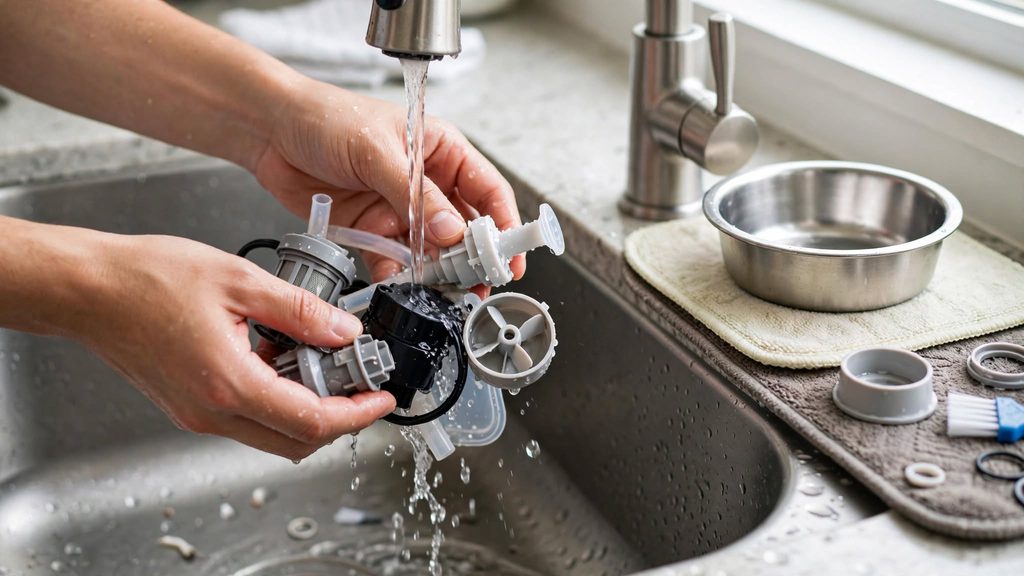
A filter does not make a fountain self-cleaning. Hair, saliva, dust, and food particles can circulate through the basin and pump housing. Top up as needed to keep the pump at the manufacturer’s operating level. But also refresh the water and inspect the surfaces. If flow slows, the motor gets louder, or the water smells different, clean the unit rather than assuming a new filter will solve everything.
Disassemble the pump on the schedule recommended by the manufacturer. Biofilm often develops where you cannot see it from above, including impellers, tubing, and seams. A small bottle brush or fountain-cleaning kit can make those areas easier to reach. Rinse all soap thoroughly before reassembly, and keep a plain bowl available while parts are drying.
Shared household habits can quietly contaminate water too. Do not rinse a dirty food spoon in the cat bowl, use the pet bowl for plant watering, or let children drop treats into the fountain to make drinking “fun.” If a dog drinks after eating, inspect the shared bowl for food residue and drool more often. Separate species-specific bowls can make maintenance simpler even when both pets are willing to share.
When a sitter is caring for the cat, leave instructions that say “empty, wash, refill” rather than “top up water.” The wording matters because topping up looks like completed care while residue accumulates. Show the sitter where the backup bowls and fountain brush are kept so the routine remains possible when you are away.
Use a Simple Midday Freshness Check in Warm Weather
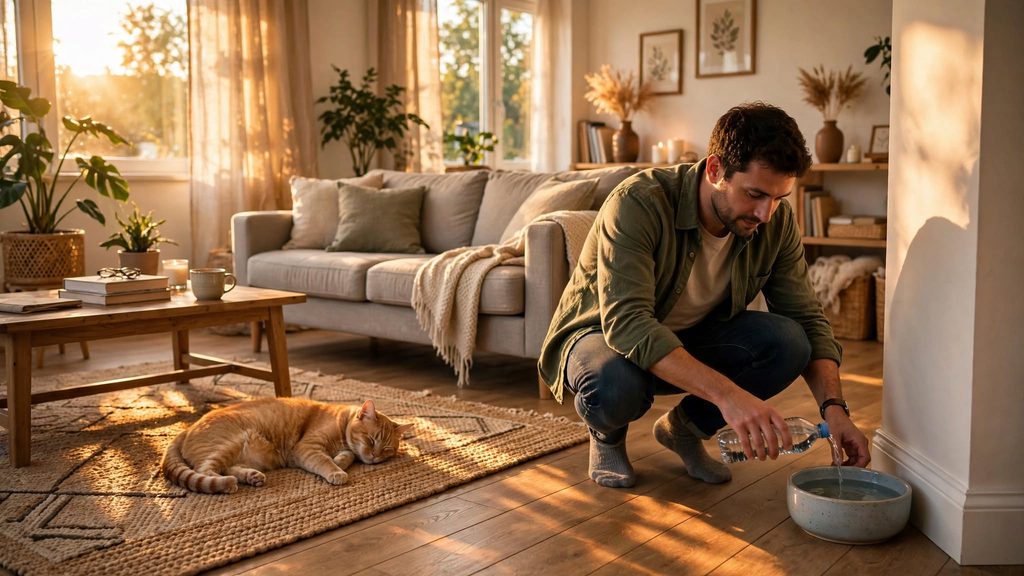
You do not need to change every bowl every few hours, but hot weather can justify an extra glance. Check whether the water has warmed noticeably, evaporated below a comfortable level, collected insects or dust, or become cloudy. Cats may drink more in heat, so a small bowl that normally lasts all day can empty faster than expected. Cornell’s feline heat-safety guidance emphasizes keeping fresh water available at all times and notes that running water may encourage some cats to drink.
- look at the surface and bottom for debris;
- check the waterline and refill before the bowl becomes shallow;
- feel whether direct sun or heat has warmed the container;
- confirm fountains are flowing normally and not gurgling;
- replace obviously contaminated water immediately rather than waiting for the evening wash.
Ice Cubes Are Optional, Not a Freshness Requirement
Some cats enjoy batting ice or drinking cooler water, but very cold water is not necessary for hydration. An ice cube can keep a bowl cooler briefly, yet it does not clean the water or remove contamination. If your cat plays with ice and spills the bowl, the trick may create more mess than benefit. Use cool tap or filtered water that is safe for human drinking in your area unless your veterinarian advises otherwise.
Similarly, flavored water should not become a routine freshness solution. Tuna water or broth may increase interest in specific situations. But they spoil faster, can contain inappropriate sodium or ingredients, and can make the bowl harder to keep clean. If you are trying to increase intake for a medical reason, ask the veterinary team what flavoring is safe for that cat.
Hard water can leave a chalky mineral line that is not the same as bacterial slime. But deposits create rough surfaces where residue is harder to remove. If mineral buildup is common, clean according to the bowl or fountain manufacturer’s instructions and consider whether filtered water improves maintenance. Do not use distilled water as a blanket recommendation for cats. Ordinary safe drinking water is generally appropriate unless a veterinarian gives a specific reason to alter it.
For ceramic bowls, inspect the glaze. Chips or cracks can trap moisture and make cleaning less reliable. For stainless steel, avoid deeply scratched or corroded surfaces. Glass should be checked for chips. Replacing a worn container is often cheaper and safer than trying to sanitize a damaged surface indefinitely.
Do Not Judge Freshness by Smell Alone
Water can look and smell normal while a slick biofilm develops on the bowl or fountain parts. Touch and cleaning history are better guides. If the inside feels slippery, wash it. If you cannot remember when the pump was last taken apart, do it. Cats have a much more sensitive sense of smell than people, so residue that seems trivial to you may change the water enough to affect preference.
Strong-smelling cleaning products can create the opposite problem. Use a mild detergent, rinse repeatedly, and avoid leaving disinfectant fragrance on the drinking surface. A clean container should smell like almost nothing. If hard-water mineral deposits build up, follow the manufacturer’s cleaning guidance for the material rather than using harsh chemicals indiscriminately.
Track Drinking Changes Separately From Water Freshness
A cat avoiding a dirty bowl may resume normal drinking once it is cleaned. A cat that suddenly drinks much more from perfectly clean bowls may have a health change. Do not explain every drinking shift with the water station. Notice appetite, urine volume, weight, activity, vomiting, and other signs. If thirst or urination changes markedly and persists, contact your veterinarian.
The same applies to drinking less. Wet-food meals can reduce visible bowl visits because the diet contains more moisture, but a cat that stops drinking and also eats less or seems unwell deserves attention. Fresh water supports normal hydration; it cannot compensate for every illness that changes fluid balance.
If you notice algae-like discoloration, persistent odor, or rapid slime despite regular cleaning, move the station out of direct light and clean every component thoroughly. Replace filters and worn pump parts as required. A fountain that cannot be disassembled enough to remove residue may be a poor long-term design for your household, even if it looked convenient when new.
A Two-Minute Routine Keeps Cat Water Fresher Than Most Gadgets
Morning: empty, wash, rinse, and refill bowls; top up or refresh the fountain and inspect flow. During the day: glance at the stations when you pass, especially in heat. Evening: remove visible contamination and refill if needed. On the fountain-cleaning schedule: disassemble the pump and replace filters according to the manufacturer. That routine is simple enough to repeat and catches most real-world freshness problems.
You do not need antimicrobial bowls, constant additives, or complicated water chemistry for a healthy cat unless a veterinarian gives a specific reason. Clean containers, safe drinking water, sensible placement, and redundancy do most of the work. The fresher the system stays with minimal effort, the more likely you are to maintain it every day—which is ultimately what matters to the cat.
References
- International Cat Care — Encouraging Your Cat to Drink — Practical feline guidance on drinking and water access.
- Cornell Feline Health Center — Feline Heat Safety — Veterinary guidance on feline health and care.
- Cat Friendly Homes — Supplies & Essentials — Feline-veterinary guidance for home care and behavior.
