

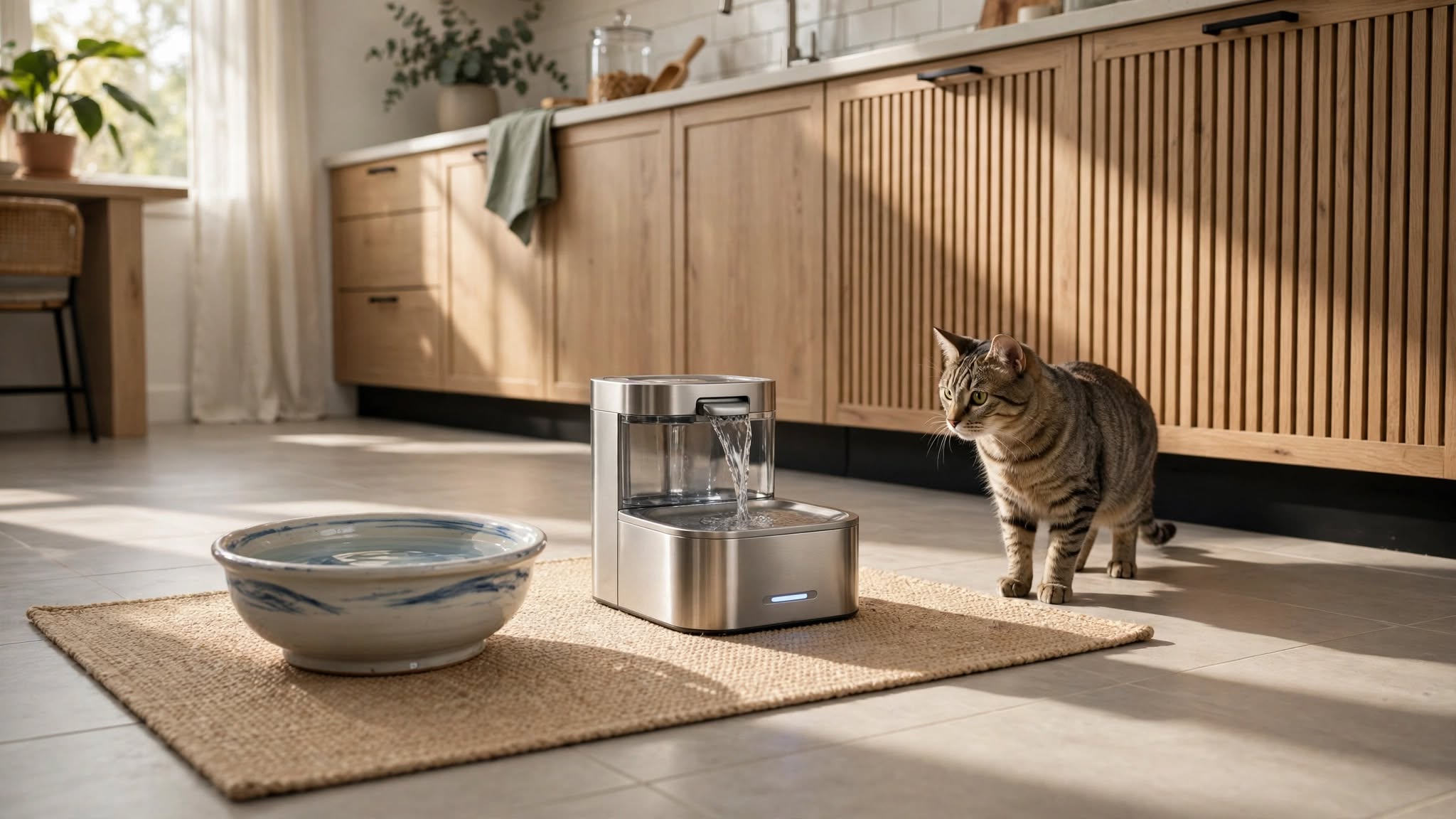
Helping a picky cat accept a new water setup works best when you stop treating the change as a test the cat must pass. Cats can care about bowl material, water depth, location, sound, movement, reflections, nearby appliances, and the route they must take to drink. A cat that ignores a new fountain may be objecting to one detail rather than rejecting running water. The safest transition keeps familiar water available while you change one variable at a time. The goal is not to make the cat love your new equipment. It is to preserve reliable access to water while discovering which parts of the setup the cat actually prefers.
Keep the Old Source When Testing a New Water Setup
The fastest way to turn a new setup into pressure is to make it the only option. Keep the familiar bowl in its usual place while adding the new bowl or fountain nearby or at another good location. This preserves choice. Some cats investigate immediately, while others need days before an unfamiliar object stops being interesting or suspicious.
Watch which source the cat uses, but do not hover. A cautious cat may wait until the room is quiet. If the new source is never used after several days, that is information—not failure. You can then test location, sound, material, or water movement without risking a drop in access.
Keep the old bowl long enough to cover more than one drinking cycle. A cat may drink heavily after dry food, after play, or at a particular time of night. Removing the familiar source after seeing one sip from the new fountain tells you very little. Give the cat several days of parallel access and note repeated choices. Reliable preference is a pattern, not a successful first encounter.
If the cat is on medication or has a condition where water intake matters closely, ask the veterinarian before removing any familiar source. A successful transition is less important than continuous access. The safest plan may be to keep the old bowl permanently and treat the new setup as an additional option.
Change One Variable Instead of Rebuilding the Whole Station
A common mistake is introducing a fountain, new mat, new room, scented filter, and raised stand at the same time. If the cat avoids it, you have no idea which detail mattered. Keep as much as possible familiar. For example, use the old location with the new bowl, or the old bowl in a new location. Once the cat accepts that step, move to the next.
This method is slower but much more informative. It also avoids repeatedly dismantling the environment. Cats often respond better to predictable changes they can inspect on their own terms.
A simple test matrix can save money. Week one: old bowl, new location. For week two, use the new bowl in the old location. During week three, move the new bowl to the preferred location. A fountain can be introduced only after you know whether location or vessel matters. You do not need to complete every step if the answer appears earlier. The value is isolating variables so you are not buying a second fountain to solve a location problem.
Keep each trial long enough to include normal workdays and quiet days. A setup accepted only when the house is empty may still need a better location.
Test Bowl Material Before You Blame the Water
Some cats prefer ceramic, stainless steel, or glass over plastic. Plastic can retain scratches and odors over time, and lightweight bowls may slide when the cat touches them. A wide, stable vessel can feel easier to use than a narrow cup that contacts the whiskers or shifts on the floor.
Try two clean bowls with the same water in the same general area. Keep size similar if you are testing material. If the cat consistently chooses one, you have a useful preference. Wash bowls thoroughly and rinse away detergent residue. The cleanest experiment is also the cleanest drinking station.
Depth can matter as much as material. Some cats prefer a broad shallow surface where they can see the water easily; others seem comfortable with a deeper vessel that stays cool. Fill two identical bowls to different depths and observe without repeatedly moving them. Refill to the same level so the comparison remains meaningful. A cat that paws before drinking may be testing distance or movement rather than rejecting the bowl.
Bowl shape can create visual effects too. Stainless steel may reflect movement in the room, while a clear glass bowl can be hard for some cats to judge against a pale floor. A colored ceramic interior gives a more obvious water boundary. These are hypotheses to test, not universal feline preferences.
Location Can Make Good Water Functionally Unavailable
A bowl can be full and still be hard to use. Avoid litter-box proximity, busy doorways, vibrating appliances, and corners where another pet can trap the cat. In multi-cat homes, one confident cat may quietly control access without ever fighting. A second water point in another room can remove that pressure.
Think about the routes described in total daily hydration and water access. A picky cat may drink normally when the source feels safe. If the cat repeatedly approaches, pauses, looks around, and leaves, investigate the environment before changing the water itself.
Consider human traffic from the cat’s perspective. A bowl beside the refrigerator may be quiet most of the day but suddenly noisy when the compressor starts. A hallway bowl may be stepped around by everyone at dinner time. Watch the station during the hours the cat normally drinks. A location can look peaceful at noon and feel chaotic at 7 p.m.
Introduce a Fountain With the Pump Off First
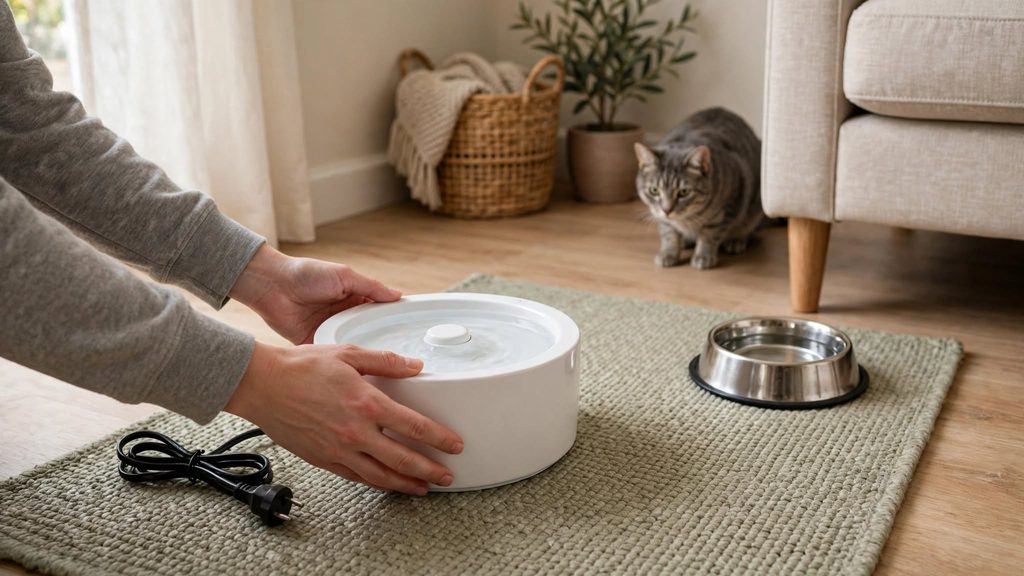
For a sound-sensitive cat, a fountain can arrive as a humming machine before it becomes a water source. Assemble it, fill it, and leave it unplugged initially if the design permits. Let the cat drink from the still basin. Once that is ordinary, run the pump briefly while you are nearby, then extend the time.
The flow rate matters. A strong stream or splashing surface may be fascinating to one cat and intimidating to another. Start at the lowest setting when adjustable. Keep a plain bowl available throughout the transition so refusing the fountain never becomes a hydration crisis.
Pump noise can change as the water level drops or the filter becomes dirty. A fountain the cat accepted on day one may become louder later. If the cat suddenly avoids it, listen before assuming the preference changed. Top up to the correct level, clean the pump, and check that parts are seated properly. Mechanical noise is a solvable setup problem.
During the pump-off stage, clean the fountain exactly as you would once it is running. A new plastic or metal smell may be part of the hesitation, and manufacturing residue should be removed according to the instructions before first use. Rinse thoroughly so detergent scent does not become the first association with the new source.
Use Water Temperature and Freshness as Gentle Tests
Some cats prefer freshly poured cool water; others seem indifferent. Instead of guessing, offer small side-by-side amounts and see whether preference is repeatable. Do not add flavorings routinely just to make a new bowl appealing. Broth and tuna water can add sodium, spoil quickly, or train the cat to wait for flavored water.
- Refresh water daily or sooner if contaminated.
- Rinse away food crumbs and hair.
- Keep fountain filters and pump parts on schedule.
- Avoid strong-smelling cleaners or fragrance around the station.
Freshness should be the baseline, not a special reward.
If you experiment with flavor under veterinary guidance, treat it as temporary. The goal is usually to help a cat through a transition or illness, not to make plain water permanently unacceptable. Use only ingredients known to be safe for that individual cat and discard flavored water quickly. Never add onion, garlic, concentrated salt, or seasoning from human soups.
A Picky Cat May Prefer Multiple Ordinary Choices
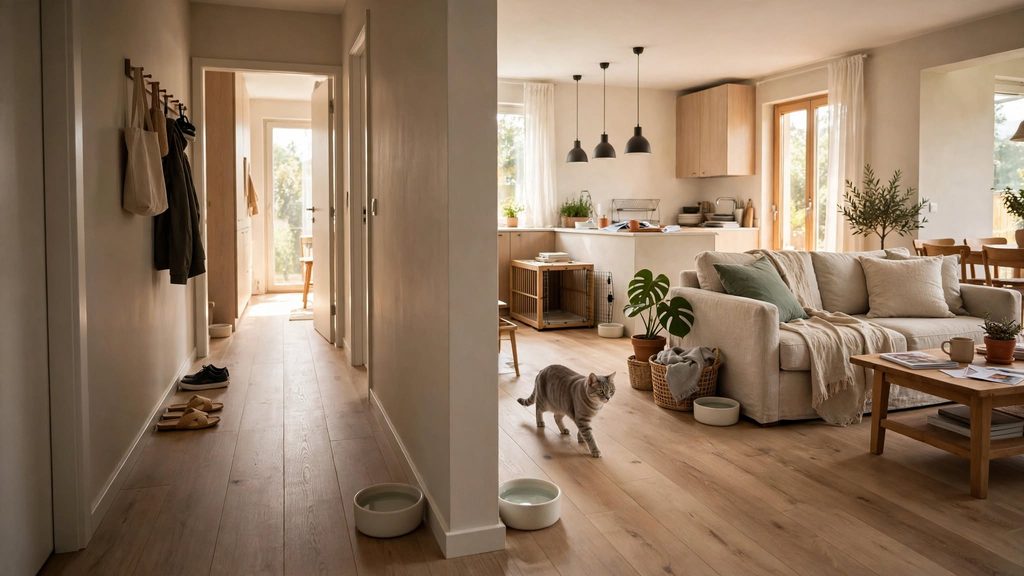
Some cats never choose one “perfect” station. They use the kitchen bowl in the morning, a bedroom glass-style bowl at night, and the fountain after play. That is not inconsistency you need to fix. Multiple water points can support hydration and reduce competition.
Keep the choices manageable enough to clean well. Three clean stations are better than seven neglected bowls. If you notice one source is never used, remove it and place another type where the cat already spends time. The home can evolve around real behavior rather than the arrangement you imagined before buying equipment.
Multiple stations can also reveal social patterns. If one cat always uses the bedroom bowl while another owns the kitchen fountain, the separation may be useful rather than inefficient. Do not consolidate them simply because one large fountain seems tidier. Redundancy gives cats choice and gives you a backup when one source is dirty, empty, or temporarily frightening.
Placement near favorite resting areas can work well because the cat passes the water naturally. Do not place it so close that splashing reaches bedding or electrical devices. In a small home, a quiet wall edge several feet from food and litter can create useful separation without needing a dedicated ‘hydration room.’
Know When Picky Drinking Is Actually a Health Change
A cat that has always been selective is different from one that suddenly stops using every water source. Reduced drinking may accompany reduced appetite, nausea, weakness, pain, or changes in diet moisture. Increased drinking can also be medically important. Look at the cat, not just the bowl.
If water behavior changes abruptly or appears with vomiting, diarrhea, urinary changes, weight loss, lethargy, or poor appetite, contact your veterinarian. Do not spend a week testing ceramic versus stainless steel while the cat is becoming unwell.
Diet moisture can alter what you see at the bowl. A cat moved from dry food to a high-moisture diet may drink less visible water while total water intake remains adequate. The reverse can happen when more dry food is introduced. Record diet changes alongside drinking behavior so you do not label a predictable shift as pickiness. Your veterinarian can help interpret a meaningful change when health is uncertain.
Keep the familiar source available.
Run a Four-Step Transition Instead of Forcing Acceptance
Start with the old source plus the new one. Next, change only one feature such as material or pump sound. Then place the preferred new source in a quiet, accessible location. Finally, keep the old source for several extra days before deciding whether it is redundant.
If the cat still prefers the old bowl, you have not failed. A fountain or designer station is optional. Reliable drinking from a clean, safe source is the outcome that matters. Let the cat choose the equipment rather than asking the cat to justify the purchase.
References
- International Cat Care — Encouraging Your Cat to Drink — Explains individual water preferences and why changes to water resources should be gradual.
- Cat Friendly Homes — Enhancing Water Intake for Your Cat — Covers bowl material, placement, multiple water locations, fountains, and diet moisture.
- Cat Friendly Homes — What Your Cat Needs to Feel Secure — Supports predictable resources and appealing, safe access to fresh water.
