

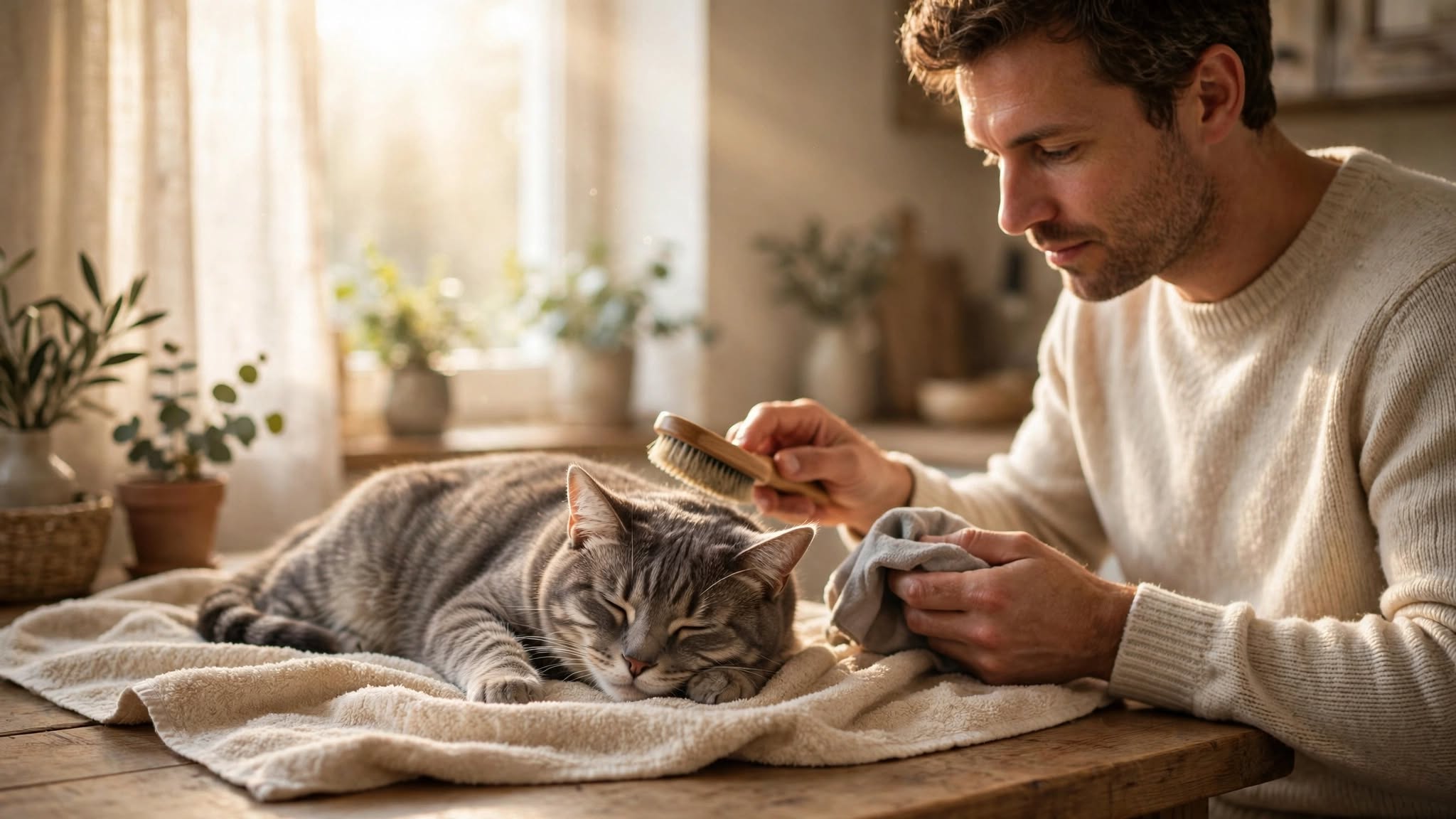
Routine indoor cat baths are usually unnecessary. Most healthy indoor cats do not need routine bathing. Cats spend a large part of their waking time grooming, and regular brushing usually handles loose hair and small debris better than repeated shampooing. Baths become useful when a cat is contaminated with something that should not be licked off, cannot groom effectively, has severe soiling, or needs a medicated bathing plan from a veterinarian. The practical goal is not to put “monthly bath” on every cat’s calendar. It is to know when water and shampoo solve a real hygiene problem—and when they add stress without benefit.
Why Routine Indoor Cat Baths Are Usually Unnecessary
A healthy adult cat with normal mobility can usually maintain the coat through self-grooming. VCA notes that most healthy cats rarely require a bath, while PetMD similarly describes bathing as an occasional need rather than routine maintenance. That is different from brushing. Brushing removes loose hair, finds mats early, and gives you a chance to inspect skin without soaking the coat.
If your cat’s coat is clean, odor is normal, skin is comfortable, and grooming behavior is unchanged, there is little reason to bathe simply because several weeks have passed. Overbathing can dry the skin, strip oils, and make future grooming harder if the cat becomes fearful of handling.
Breed and coat type can change maintenance needs without creating a universal bathing schedule. Long-haired cats may need more brushing and occasional localized cleaning. Hairless cats can accumulate skin oils differently and may receive breed-specific care recommendations. The point is to base bathing on the cat’s coat, skin, mobility, and veterinary advice rather than applying one routine to every indoor cat.
A clean indoor environment also reduces the reasons for bathing. Regularly washing bedding, maintaining litter boxes, brushing loose coat, and cleaning greasy resting surfaces can keep debris from building up on the cat. When the home routine is working, a healthy coat should not need fragrance to smell acceptable.
There Are Times When a Bath Is the Safest Choice
A bath may be appropriate when the cat gets into sticky, oily, dirty, or potentially harmful material that should not be swallowed during self-grooming. The exact response depends on the substance. If you suspect a chemical, essential oil, medication, paint, or toxin on the coat, call a veterinarian or poison-control service before improvising with household cleaners. Some substances require specific decontamination.
Severe fecal or urine soiling can also justify washing, especially in long-haired cats. In these situations, the bath has a clear purpose: remove material the cat cannot safely or comfortably clean alone. That is very different from bathing for fragrance.
If the contaminant is only on one paw or a small patch of fur, full-body immersion may create unnecessary stress. Protect the cat from licking while you identify the substance, then clean only the affected area if veterinary guidance says that is appropriate. For unknown chemicals, bring the product label or a photograph of it when you call. Accurate identification matters more than choosing the perfect shampoo.
When in doubt, call before washing. The safest decontamination method depends on what touched the coat, how much, and whether the cat already licked it.
Some Cats Need Help Because Grooming Has Become Physically Hard
Arthritis, obesity, pain, dental disease, neurologic problems, or advanced age can reduce a cat’s ability to reach the lower back, hindquarters, or belly. You may notice greasy fur, dandruff, mats, or odor in areas the cat used to maintain. Occasional bathing can help, but the grooming change itself deserves attention because it may be the first visible sign of reduced mobility or illness.
A bath is not a substitute for diagnosing the reason grooming changed. If your formerly meticulous cat suddenly looks unkempt, discuss it with your veterinarian. You may need a combination of medical care, brushing, localized cleaning, sanitary trimming by a professional, and environmental changes rather than repeated full baths.
Watch the cat’s posture during self-grooming. A cat that stops twisting toward the lower back, no longer lifts a hind leg comfortably, or abandons grooming after a few seconds may be showing pain or stiffness. Those small movements can change before obvious limping appears. Helping with coat care is kind, but documenting the lost movement is equally important because it may change the medical plan.
Skin Disease Is a Different Category From Routine Bathing
Veterinarians sometimes prescribe medicated shampoos or bathing schedules for allergies, infection, parasites, or other skin conditions. Those instructions can be more frequent than ordinary grooming advice because the bath is functioning as treatment. Use the product, contact time, frequency, and rinsing method exactly as directed.
Do not substitute human shampoo, baby shampoo, dog flea products, or essential-oil products. VCA specifically advises using shampoo formulated for cats because feline skin differs from human skin. If the skin is red, painful, crusted, or losing hair, medical guidance should come before experimenting with grooming products.
Medicated baths often require contact time, which is easy to shorten when the cat is impatient. If a veterinarian prescribes one, ask exactly how long the product must remain on the skin and how often it should be used. Set a timer rather than guessing. Rinse as instructed and monitor for redness, increased itching, or other reaction. Treatment baths should be precise, not improvised spa routines.
Spot Cleaning Often Solves the Problem With Less Stress
A full bath is unnecessary for many small messes. A damp cloth can clean a dusty paw or a small food smear. Cat-safe grooming wipes may help when the product is genuinely formulated for cats and the cat does not lick large amounts of residue. For a soiled rear end, localized washing can be easier than wetting the whole body.
- Use plain warm water for minor dirt when possible.
- Keep cleaning sessions short and stop before the cat panics.
- Dry damp areas thoroughly, especially in long coats.
- Never cut a tight mat with scissors because feline skin is easy to injure.
Low-stress maintenance is usually more sustainable than waiting until the cat needs a major cleanup.
For recurring rear-end soiling, look beyond the immediate mess. Soft stool, constipation, obesity, arthritis, long fur, and litter sticking to the coat can all contribute. A sanitary trim by a groomer may help some long-haired cats, but repeated contamination deserves a cause. The cleaner solution is often improving stool quality, mobility, or coat management rather than increasing bath frequency.
Prepare the Bath Before You Bring the Cat In
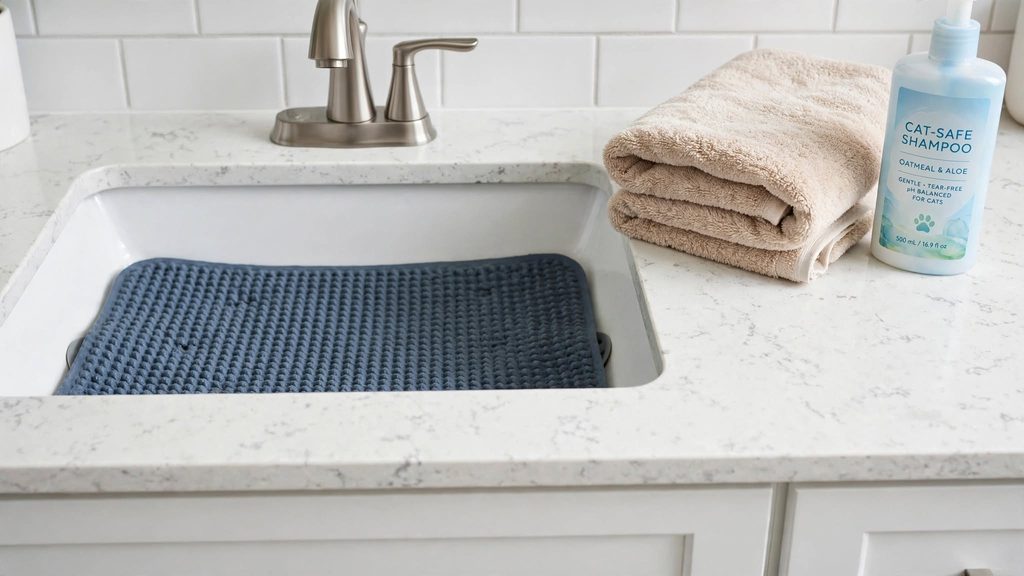
If a bath is necessary, set up first. Put a non-slip mat in a sink or tub, prepare cat-safe shampoo, towels, and a cup or gentle sprayer, and fill or adjust the water before the cat enters if running water is frightening. Use comfortably warm—not hot—water. Close the room so the cat cannot escape into a dangerous area while wet.
Brush out loose tangles before bathing because water can tighten mats. Keep the cat supported and avoid forcing the head underwater. Clean the face with a damp cloth rather than pouring water over it. Rinse thoroughly because shampoo residue can irritate skin and will later be licked.
Keep restraint minimal. One calm helper can be useful, but several people holding a cat down often increases panic. Support the body, work efficiently, and give the cat stable footing. If the cat is escalating, pause. A bath that ends with a bite, scratch, or severe fear has cost more than it solved. Professional grooming is a reasonable care choice, not a failure.
Trim nails a day before the bath rather than immediately beforehand if your cat tolerates nail care. That avoids stacking two stressful procedures together. Have the first towel open and ready before you wet the cat. Small preparation steps shorten the time the cat spends cold, slippery, and unsure of what comes next.
Drying Matters as Much as Washing
Wrap the cat in an absorbent towel and blot rather than rub aggressively. Replace the towel if it becomes saturated. Keep the cat in a warm, draft-free room until the coat is dry. Many cats find blow-dryers frightening, and heat can be unsafe if used too close. A professional groomer can advise when drying equipment is appropriate for a dense coat.
This is also where regular indoor-cat grooming between baths makes a difference. A coat that is brushed and mat-free dries more predictably than one with hidden tangles. Bath day should not be the first time you discover the condition of the coat.
After drying, check the skin once more. Wet fur can hide small abrasions, irritated patches, or mats that were not obvious beforehand. Make sure the cat is warm enough and has a quiet place to recover. Do not immediately apply perfumes, powders, or human conditioners. Clean and dry is enough unless a veterinary product was prescribed.
How Often Is Too Often for an Indoor Cat?
There is no universal bathing interval because most cats do not need scheduled baths at all. PetMD’s veterinary-reviewed guidance advises against very frequent bathing and notes that most cats need it only for specific reasons. If you find yourself bathing a healthy indoor cat every few weeks because the coat becomes greasy, smelly, or dirty, ask why that keeps happening.
Frequent need for cleaning can point to obesity, pain, skin disease, diarrhea, urinary problems, or poor litter-box hygiene. Solving the source is more useful than establishing a shampoo routine. A hairless breed or a cat with a specific dermatologic plan may be an exception, so individual advice still matters.
If you are bathing because the coat develops odor quickly, note where the smell is strongest. Ear disease, dental disease, infected skin, anal-area soiling, and urine contamination create different odors and need different solutions. ‘The cat smells’ is a symptom description, not a grooming diagnosis. Frequent shampoo may temporarily cover the clue that would have led you to the underlying problem.
When a Professional Groomer or Vet Is the Better Option
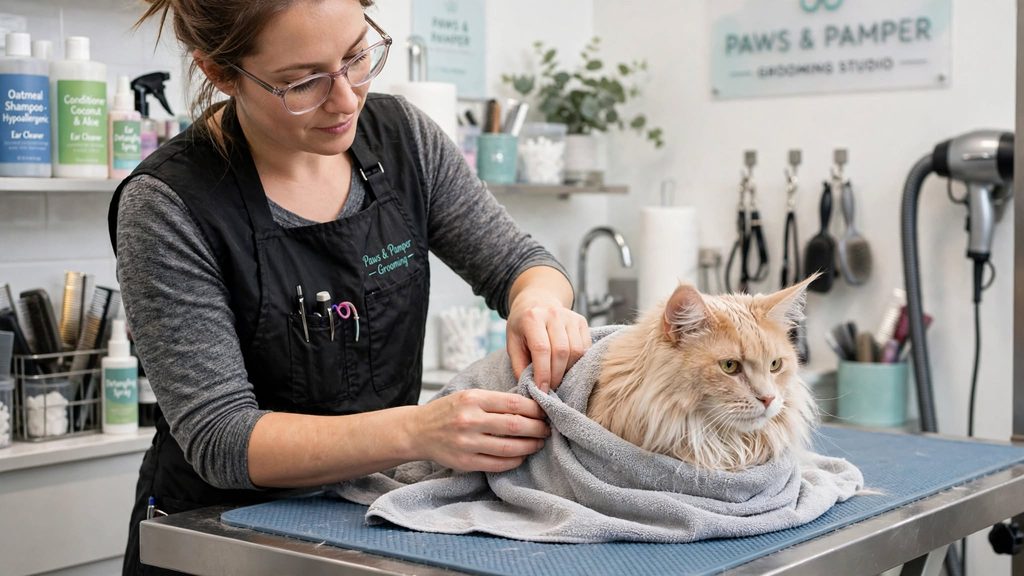
Do not turn bathing into a wrestling match. If the cat is escalating toward biting, extreme panic, or respiratory distress, stop. Severe matting, contaminated coats, painful skin, and cats that cannot be handled safely are better managed with professional support.
Most indoor cats need brushing, nail care, dental attention, and routine observation far more often than they need baths. Use bathing as a targeted tool. When it solves a real hygiene or medical need, do it calmly and safely. When the cat is already clean, letting the cat stay dry is often the better grooming decision.
A professional feline groomer can also help with coat types that mat easily or cats that need sanitary trimming. Ask how they handle stress and whether they work with cats routinely. For medically fragile cats, your veterinarian may be the safer setting because sedation or monitoring should never be improvised at a grooming salon.
References
- VCA Animal Hospitals — Grooming and Coat Care for Your Cat — Why healthy cats rarely need baths and when extra help is appropriate.
- PetMD — How to Bathe a Cat — Bathing supplies, technique, drying, and safety.
- VCA Animal Hospitals — How to Bathe Your Kitten — Low-stress bathing preparation and handling.
