

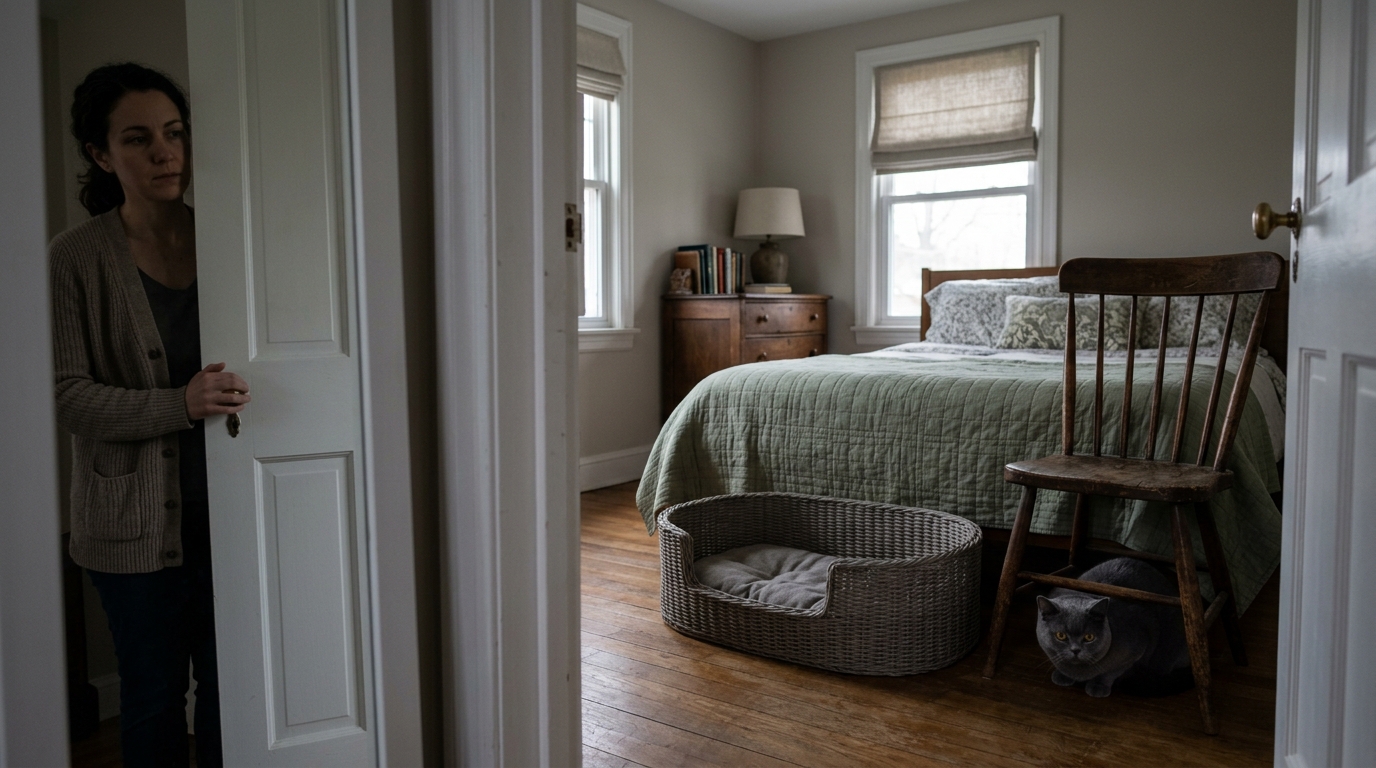
A cat hiding more than usual is worth noticing because the change matters more than the hiding itself. Cats normally use private places for sleep, security, and escape from noise. A cat that has always napped under the bed may be completely comfortable. The concern rises when a cat that usually rests in the open suddenly disappears for long periods, stops joining normal routines, or hides alongside appetite, litter-box, movement, grooming, breathing, or social changes. Hiding is not a diagnosis. It is a behavior change that helps you decide what else to look for.
First Define What “More Than Usual” Actually Means
Compare today with your cat’s normal pattern. Does the cat usually hide only during visitors but now stays under furniture all morning? Has a favorite open bed been abandoned? Is the cat still coming out for meals, play, and litter use? Duration and context are more useful than the simple fact that the cat is out of sight.
Write down the change in concrete terms. “Usually sleeps on the sofa from 2 to 5 p.m.; now stays under the bed until dinner” is more informative than “hiding a lot.” This baseline helps you notice whether the pattern is resolving or becoming more pronounced over several days.
Use a 24-hour routine check instead of repeatedly looking under furniture. Note whether the cat comes out for food, water, litter, grooming, and preferred resting periods. A cat that spends more time hidden but completes every normal routine gives you different information from a cat that remains hidden through meals and litter-box visits. Quiet observation creates better data and less stress.
Cat Hiding More Than Usual Can Be a Pain or Illness Clue
Cats can become more reclusive when they feel unwell. Pain, weakness, nausea, fever, respiratory problems, urinary discomfort, gastrointestinal disease, and many other conditions can change social behavior. The hiding itself does not tell you which condition is present. Look for additional changes that narrow the concern.
This is where small shifts in eating, drinking, movement, grooming, litter habits, and normal routines become useful health information. A cat hiding but eating normally, moving comfortably, and emerging for usual activities is different from a cat hiding while leaving meals untouched and avoiding jumps. Clustered changes deserve more attention.
Count the portion rather than judging the bowl visually. If breakfast is normally 60 grams of wet food, serve the same amount and note what remains. This is especially helpful when the cat eats only after everyone goes to bed. The empty bowl may look reassuring, but a measured portion tells you whether the cat finished a normal amount or only a few bites.
Appetite Often Tells You How Quickly to Escalate
Check whether the cat is still eating the normal amount. A hidden cat may come out only when the home is quiet, so the bowl can give you information even if you do not witness the meal. Measured portions are easier to interpret than a constantly topped-up bowl.
If the cat approaches food and then walks away, chews differently, drops food, or eats much less, contact your veterinarian. Do not spend days assuming stress is the only cause while intake remains poor. Cats can become seriously unwell when they stop eating, and reduced appetite may accompany many painful or medical conditions.
Look for Movement Changes Before You Call It “Shyness”
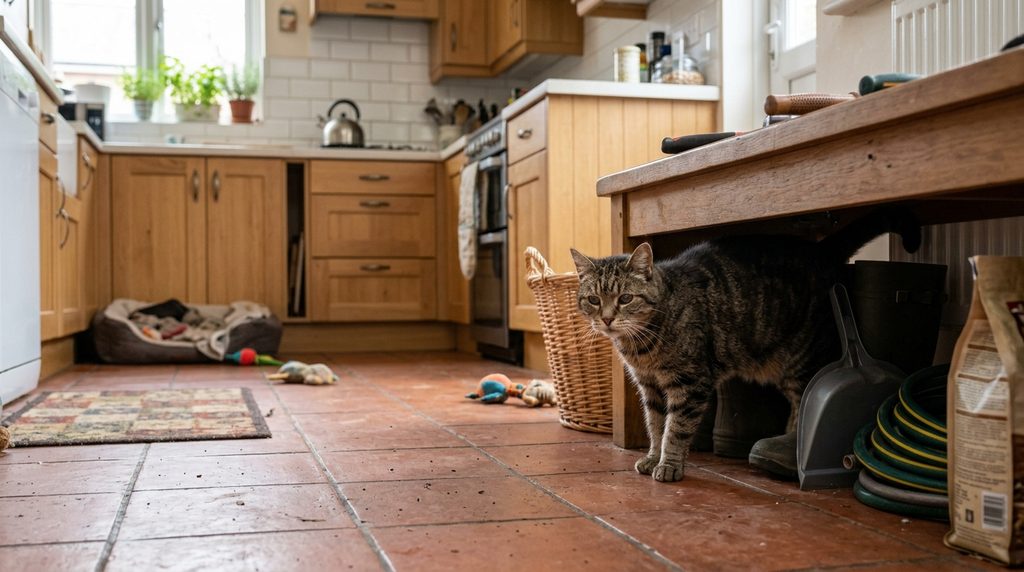
A cat may hide in a lower or more accessible place because movement hurts. Arthritis, injury, weakness, or other discomfort can reduce jumping and make a previous sleeping spot harder to reach. Watch how the cat exits the hiding place. Is walking stiff? Are stairs avoided? Does the cat hesitate before jumping onto furniture or into the litter box?
Older cats deserve special attention because mobility changes are often gradual. Do not assume a senior cat is simply becoming antisocial. If the cat stops using high perches, grooms less, or chooses warm low hiding areas, discuss the pattern with your veterinarian. Environmental changes such as lower steps and easier litter access may help, but they should not replace medical evaluation when behavior changes.
| Hiding pattern | Useful context | Next step |
|---|---|---|
| Only during visitors | Normal eating and activity afterward | Provide safe hiding and reduce pressure |
| New all-day hiding | Routine has changed | Check appetite, litter, movement, and health signs |
| Hiding plus poor appetite | Total intake may be falling | Contact a veterinarian |
| Hiding plus breathing changes | May be urgent | Seek veterinary care promptly |
| Only one room avoided | Environmental or social trigger possible | Check noise, pets, routes, and recent changes |
Give the stressor an endpoint when possible. If workers are in the home for one afternoon, keep the cat in a familiar quiet area with normal resources and let the home settle afterward. If visitors stay for a week, protect a room or zone the cat can use consistently. Repeatedly changing the safe area can be more difficult than the visitor itself.
Listen for environmental changes you may overlook. A new appliance, construction outside, or a neighbor’s dog can make one room feel different even when nothing visible changed.
Household Stress Can Increase Hiding Without Making the Cat Sick
Moves, renovations, visitors, a new baby, unfamiliar smells, schedule changes, or a new pet can make a cat use hiding places more often. A safe retreat is a healthy coping tool. Do not pull the cat out repeatedly to “show” that the environment is safe. Let the cat control distance while keeping essential resources accessible.
Stress becomes more concerning when the cat stops eating, stops using the litter box normally, or remains highly withdrawn after the trigger has passed. Keep routines predictable. Feed at usual times, maintain familiar bedding, and offer quiet interaction without cornering the cat. If the change persists, involve your veterinarian rather than assuming every symptom is emotional.
Resource placement can expose social pressure. If the hidden cat must cross the other cat’s favorite doorway to reach water, add a second water station on another route. If the only litter box sits in the contested zone, provide another option. These changes are useful even before you know whether the cats need a formal behavior plan because they reduce dependence on one pathway.
Another Cat Can Make One Room Feel Unsafe
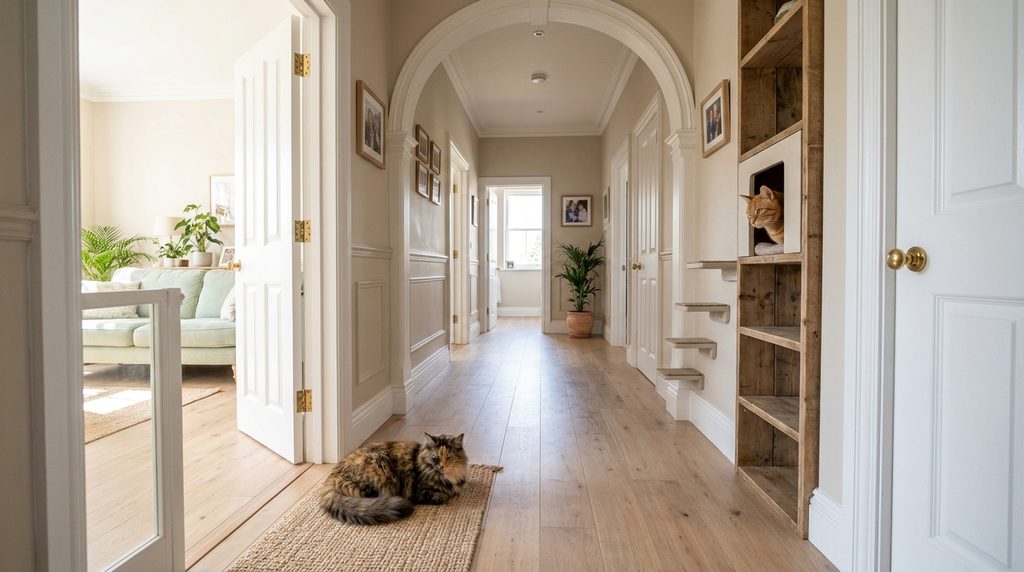
Intercat tension is often subtle. One cat may stare, follow, wait near a doorway, or occupy the route to food, water, litter, or favorite resting areas. The other cat may respond by hiding more and moving only when the confident cat is elsewhere. No fight is required for access to feel unsafe.
- Watch who leaves when both cats enter the same room.
- Check whether one cat waits outside a hiding place.
- Spread food, water, litter, and resting options through the home.
- Create elevated routes and more than one exit from important areas.
- Use a home camera if blocking happens when people are absent.
If tension is persistent, a structured behavior plan may be needed. Protect the hiding cat’s resources rather than forcing more shared time.
Sleep location can offer another clue. A cat that hides under a bed but sleeps deeply and stretches normally may be seeking privacy. A cat that changes position repeatedly, crouches, or cannot settle may be uncomfortable. Do not diagnose from posture alone. Note the behavior and combine it with appetite, movement, breathing, grooming, and litter information.
Check the Litter Box for Changes You May Not See Elsewhere
Daily scooping gives you information about urine and stool. A hiding cat that produces much smaller urine clumps, repeated diarrhea, very hard stool, blood, or repeated straining needs more than an environmental adjustment. Difficulty urinating can be an emergency, particularly when the cat repeatedly enters the box and produces little or no urine.
Location can matter too. A painful cat may avoid stairs to reach the box. A socially stressed cat may avoid a narrow litter room. Keep at least one box easy to access. Sudden house-soiling should prompt both a veterinary check and an environmental review.
Weight loss can be easy to miss in a cat that stays hidden. If the change persists, weigh the cat on the same scale when feasible and compare with previous records. Do not force a frightened cat onto a scale simply to collect data. A veterinary visit is more important when the cat is difficult to handle or when other signs are present.
Temperature preference can change too. Cats in pain or illness may seek warm, quiet areas, while a frightened cat may choose the darkest available space. Check that the hiding place is not unusually hot or cold. Make a comfortable alternative nearby. If the cat repeatedly chooses an extreme location, include that detail when describing the change to your veterinarian.
Some Hiding Patterns Need Veterinary Care Quickly
Seek veterinary advice promptly when new hiding comes with reduced appetite, repeated vomiting or diarrhea, abnormal urination, obvious pain, weakness, persistent coughing, unusual breathing, eye problems, or rapid weight change. Open-mouth breathing, collapse, severe weakness, inability to urinate, seizures, or major trauma warrant urgent care.
Do not delay emergency care to film perfect evidence. If the situation is not urgent, short videos of walking, breathing, or behavior at home can be useful because the cat may act differently in the clinic. Bring a timeline of when hiding began and which other routines changed.
Choose hides that allow observation without invasion. A cardboard box with a side opening, an open carrier, or a covered bed can give privacy while keeping the cat accessible. Avoid creating a setup where the cat can disappear into a wall void or behind an appliance. Safe hiding means the cat has control without creating a rescue problem for the household.
Check whether the hiding pattern improves when the environment becomes quiet again. A cat that gradually returns to normal meals, open resting spots, and play after a temporary stressor may simply need recovery time. A cat that remains withdrawn despite the home returning to normal deserves a lower threshold for veterinary follow-up.
Keep the cat’s familiar bedding nearby when possible, because familiar scent can make an intentional hide easier to accept.
Make Safe Hiding Available While You Investigate the Change
Removing every hiding place can increase stress and make the cat choose unsafe gaps behind appliances or furniture. Keep intentional hides such as boxes, covered beds, open carriers, or spaces under stable furniture. Make sure the cat can enter and leave safely and that you can reach the area in an emergency if necessary.
Place food, water, and litter within reasonable reach but not directly inside the hiding place. You want the cat to make voluntary trips and maintain normal routines. The aim is not to force visibility. It is to give the cat safety while you determine whether the increased hiding reflects a temporary environmental response or a health change that needs treatment.
References
- Warning Signs of Cancer — Cornell Feline Health Center — Uses increased hiding and reduced interaction as examples of behavior changes that can signal illness, while noting that many conditions can cause similar signs.
- Is Your Cat Slowing Down? — Cornell Feline Health Center — Explains how pain and joint disease can cause subtle reclusive behavior, reduced jumping, grooming changes, and altered litter-box use.
- How Do I Know if My Cat Is in Pain? — Cat Friendly Homes — Highlights subtle behavior changes, including hiding, social withdrawal, mobility changes, and reduced normal activity, as potential pain clues.
