


The signs your cat may not be feeling well are often ordinary routines that stop looking ordinary. A cat may eat half a usual meal, stop jumping to a favorite shelf, hide in a new place, groom less, become touch-sensitive, or change litter-box habits before dramatic symptoms appear. One small change rarely identifies the cause. What matters is whether the change is new, persistent, clustered with other changes, or important enough on its own to shorten the timeline for veterinary care.
Start With Eating Because It Is Easy to Measure
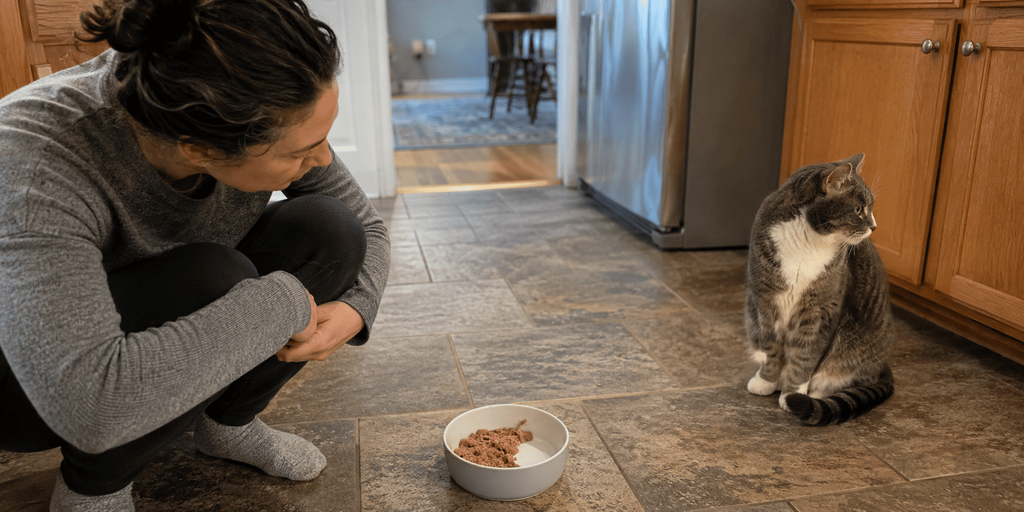
A cat that suddenly eats much less or stops eating should not be watched casually for several days. Appetite loss can have many causes, including dental pain, nausea, fever, stress, gastrointestinal disease, kidney problems, and other illness. Watch how the cat behaves around food. Approaching and then walking away can suggest a different experience from never showing interest. Dropping food, chewing on one side, or preferring softer textures may point toward mouth discomfort. Increased hunger can matter too, especially if the cat loses weight at the same time. Conditions such as hyperthyroidism and diabetes can change appetite and body weight. Measured meals make changes easier to see than a bowl that is continuously topped up.
Notice whether the cat finishes less, takes longer, drops pieces, chews on one side, sniffs and leaves, or asks for food but does not continue eating. Those details are more informative than “picky today.” A sustained or marked appetite drop in a cat deserves veterinary guidance rather than several days of rotating foods while intake remains poor.
The Litter Box Gives You Data Every Day
Daily scooping gives you information about urine and stool. Notice clear changes in urine clump size or frequency, diarrhea, constipation, blood, straining, or accidents outside the box. Repeated attempts to urinate with little or no urine can be an emergency, particularly in male cats. Do not assume straining means constipation if you cannot tell what the cat is trying to pass. A painful cat may also stop entering a high-sided box or traveling downstairs to reach it. House-soiling can therefore be a mobility sign as well as a urinary or behavioral issue. If a litter-box change begins suddenly, medical evaluation should be part of the response. Breathing is especially important to observe while the cat is resting comfortably, not immediately after play.
If breathing looks labored, the abdomen is working hard, the neck is extended, or the cat breathes with an open mouth, seek veterinary care promptly. Changes in thirst can show up here before you notice more time at the water bowl. Larger or more frequent urine clumps can accompany increased drinking. Report a clear new pattern, particularly when it comes with weight loss or appetite changes.
Signs Your Cat May Not Be Feeling Well Are Often Broken Routines
Think about what your cat does every day without prompting. Where does it sleep? How quickly does it finish breakfast? Which furniture does it jump onto? How often do you scoop urine clumps? Does it greet you at the door or prefer a quiet room? Illness can change these patterns before a cat looks visibly sick. Pain may reduce jumping. Nausea may make a cat approach food and then turn away. Weakness may change where the cat rests because a lower location is easier to reach. Knowing what normal indoor cat health looks like day to day makes those departures from routine easier to recognize. A baseline does not need to be complicated. Familiarity is enough to make change more obvious. Changes can be physical and social at the same time.
A cat with arthritis may stop sleeping on your bed because the jump hurts, then seem less affectionate because it is no longer beside you at night. Looking at function prevents you from misreading a health change as a personality change. Small home changes are particularly useful in cats that dislike veterinary handling because they show what the cat does in a familiar environment. A video of jumping, walking, eating, or breathing at home can complement what the clinic sees during a short visit. Dental discomfort may look like fussiness because the cat approaches food, licks gravy, and walks away. Thinking in terms of what the cat can no longer do helps separate a possible health change from a sudden personality change.
Weight and Mobility Changes Are Easy to Miss in Slow Motion
Gradual changes can disappear into the background because you see your cat every day. A cat may stop jumping to the highest shelf, begin using furniture as a step, hesitate before stairs, or spend more time on the floor long before obvious limping appears. Those changes can reflect pain, weakness, or loss of confidence in movement and deserve attention when they are new.
Body weight adds another objective clue. Weighing at regular intervals under similar conditions can reveal a trend that is hard to see through fur. Weight alone is not enough because older cats can lose muscle while body fat hides the change. Notice the spine, shoulders, and hindquarters during normal petting, and mention visible muscle loss or an unexplained downward weight trend to your veterinarian. A short video of jumping or walking can preserve what “normal” looked like before the change progresses.
Compare with old photos or videos when memory is uncertain. A familiar clip can reveal a jump, gait, or posture that has changed gradually.
Urgent Physical Signs Move the Timeline Forward
Some of these signs are urgent. If your cat has trouble breathing, collapses, cannot urinate, has a seizure, or suffers major trauma, seek emergency veterinary care. Do not delay urgent care while collecting perfect evidence. Notes and videos are helpful only when they do not slow down treatment. Breathing trouble, collapse, inability to urinate, severe weakness, seizures, or major trauma should move directly to veterinary care.
- Repeated vomiting or persistent diarrhea
- Difficulty breathing or open-mouth breathing
- Straining to urinate or producing little to no urine
- Sudden weakness, collapse, or severe lethargy
- Noticeable weight loss or muscle loss
- Persistent squinting, eye redness, or discharge
- Drooling, bad breath with mouth pain, or difficulty chewing
- Blood in urine or stool
- A new lump, swelling, wound, or sore that does not heal
Urgency is about function, not the number of symptoms. A cat with one severe breathing problem needs faster care than a cat with three mild changes that have stayed stable for a day. Likewise, repeated attempts to urinate with little or no urine should not be treated as a routine litter-box issue. If you are unsure whether a sign can wait, call the veterinary clinic and describe exactly what you see. The clinic can help you decide how quickly the cat should be examined.
Several Small Changes Together Can Matter More Than One Odd Day
Cats have off days, so one skipped greeting or one longer nap does not automatically mean illness. The pattern becomes more useful when several systems change together. Eating less, hiding more, producing smaller urine clumps, and grooming poorly at the same time is more concerning than any one of those observations in isolation. Duration matters too. A small change that persists or steadily worsens deserves more attention than a brief variation that resolves.
Think in clusters rather than trying to diagnose a disease from one sign. Appetite plus weight, drinking plus urine, mobility plus grooming, or vomiting plus lethargy are practical combinations to notice. You are not trying to name the condition at home. You are deciding whether the cat’s normal routine is breaking in more than one place and whether the timeline for veterinary advice should move forward.
Set a simple threshold for yourself. If two ordinary routines change at the same time, look more closely. If one change is severe, act on that sign alone. Keep the comparison anchored to your own cat. A quiet day may be normal for one cat and unusual for another. Write down the start date. Check whether the pattern improves, stays the same, or worsens. That small timeline can make a veterinary call much clearer.
Behavior and Grooming Can Reveal Pain Before You See a Wound
Behavior changes are real health information. Do not assume a previously friendly cat has become “mean” before considering pain. Changes in coat condition can also reflect where the cat can reach. An older or overweight cat may stop grooming the lower back and hindquarters first. Mats in those areas are not merely cosmetic if they represent declining mobility or discomfort. Purring is not proof that a cat is comfortable. Cats can purr during stress or pain as well as during relaxed social contact. Use posture, appetite, movement, and the situation instead of treating one familiar sound as reassurance.
- Hiding more or choosing unusual resting places
- Becoming less social or suddenly more clingy
- Growling, hissing, or biting during handling that was previously accepted
- Sleeping more, sleeping less, or seeming unable to settle
- Playing less or losing interest in normal activities
- Reluctance to jump, climb, use stairs, or enter the litter box
- New nighttime vocalizing or apparent disorientation
- Guarding part of the body or avoiding touch
Mobility and grooming often affect each other. A cat with back or hip discomfort may stop twisting to clean the lower spine, then develop greasy fur or mats in that area. A sore mouth can reduce grooming more broadly. Watch whether the change is localized or general. Also notice whether brushing suddenly becomes unwelcome over one spot. Do not force the session. New touch sensitivity can be useful information for the veterinary history.
Eyes, Mouth, and Coat Can Add Physical Clues
Some changes are easiest to notice during ordinary interaction. Persistent squinting, eye discharge, redness, drooling, new mouth odor, food dropping, or obvious difficulty chewing deserve attention. The coat can also change when a cat feels unwell or can no longer reach an area comfortably. Greasy fur, new mats, bald patches, overgroomed spots, or a sudden drop in grooming can add context to changes in appetite or mobility.
Do not force a home examination if the cat resists. A painful mouth, eye, abdomen, or joint can make handling stressful and may provoke defensive behavior. Use what you can observe safely: a photo of an eye, a short clip of chewing, or the location of new mats can be useful. A sudden change in tolerance for touch is itself information, especially if the cat previously accepted grooming or petting in the same area.
Give the Vet a Timeline, Photos, and Useful Numbers

Give your veterinary team a short timeline rather than a vague “seems off.” Record when the change began, how much of normal meals are being eaten, litter-box changes, vomiting or diarrhea, medications, and recent weight if available. A brief home video can capture limping, breathing, vocalizing, or a behavior that may disappear in the clinic. Do not delay urgent care to collect perfect evidence; breathing trouble, collapse, inability to urinate, seizures, or severe weakness come first.
References
- What Is Normal for Your Cat? — Cat Friendly Homes — Explains why changes from an individual cat’s normal eating, drinking, toileting, sleeping, and activity patterns matter.
- How Do I Know If My Cat Is in Pain? — Cat Friendly Homes — Lists subtle behavior and mobility changes that can be signs of feline pain and deserve veterinary attention.
- Routine Veterinary Care — Cat Friendly Homes — Explains how home observations and routine veterinary examinations work together to detect health changes.
