

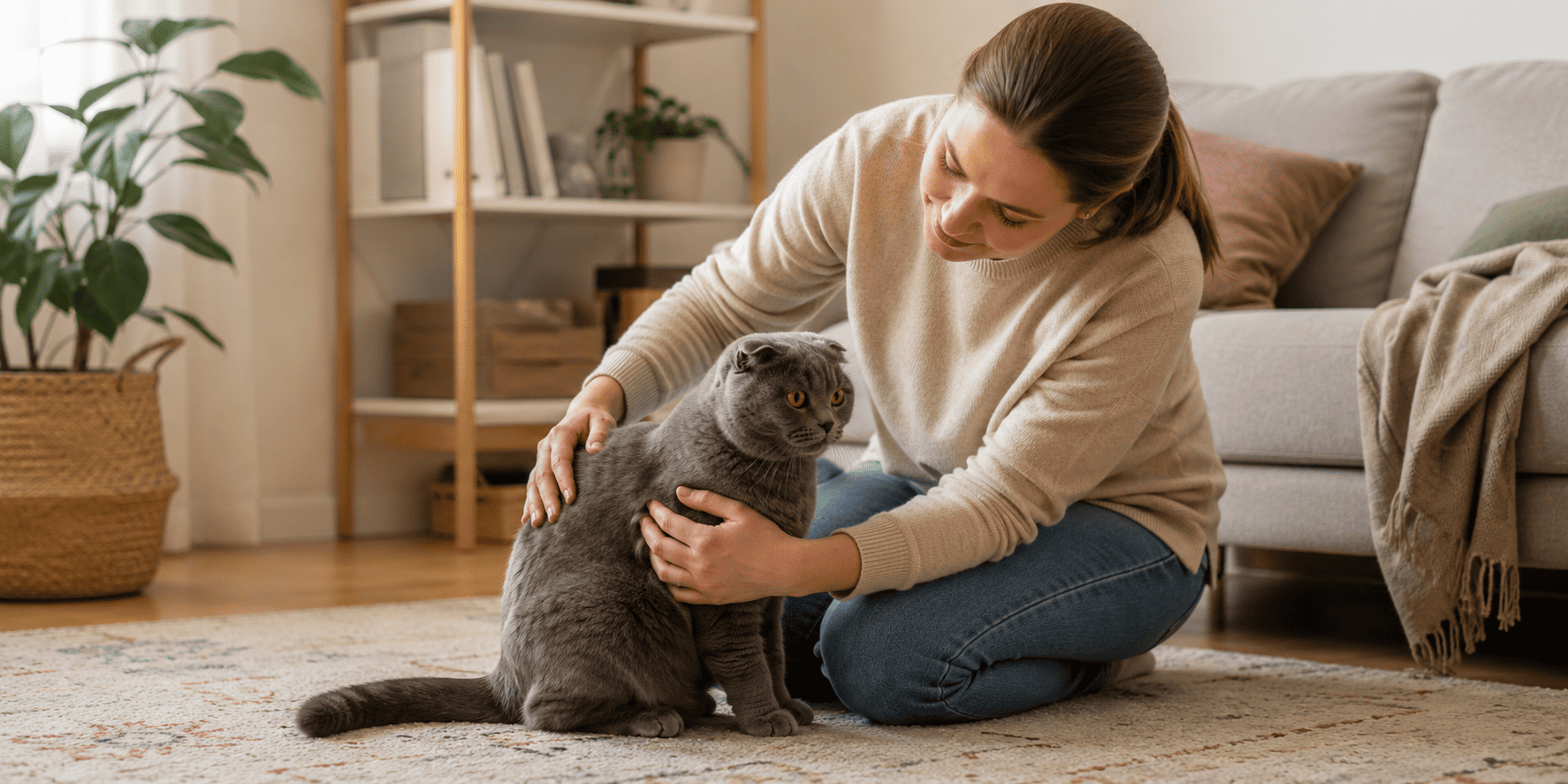
Good indoor cat health starts with knowing what is normal for your own cat. Cats often hide discomfort, so early illness may look like a small change in appetite, grooming, movement, sleep, or litter-box habits rather than an obvious emergency. A cat that lives safely indoors still needs preventive veterinary care and close observation at home.
You do not need to monitor every breath or count every piece of kibble. Instead, learn your cat’s usual patterns. Notice how much your cat eats, where it sleeps, how easily it jumps, how often the litter box needs scooping, and how social it normally is. Changes from that baseline are often more useful than comparing your cat with someone else’s.
Keep the baseline simple enough that you will actually use it. You do not need daily spreadsheets. A note in your phone with monthly weight, appetite changes, and anything unusual is enough for many healthy adults. Over time, those small records can show a trend that is hard to notice from memory alone.
Indoor Cat Health Is Easier to Track When You Know the Baseline
Start with the everyday things you already see. A healthy cat usually maintains a fairly stable appetite, body weight, grooming routine, activity level, and toileting pattern. There is normal variation from day to day, but the overall pattern should be recognizable.
Body condition is especially useful. Weight can creep up slowly in indoor cats, while muscle loss can hide under body fat. Feel your cat gently during normal petting. You should become familiar with the ribs, spine, hips, and muscle along the back legs. If those areas feel different over time, record the change.
Behavior belongs in a health baseline too. A cat that always sleeps under the bed may be completely normal. A social cat that suddenly spends every day under the bed is different. The same applies to jumping, vocalizing, grooming, and tolerance of touch.
A simple monthly note with weight, appetite, and any new changes can be enough. You are looking for trends, not creating a medical chart at home.
Everyday Signs: Usually Normal vs Worth Watching
These examples are not diagnostic rules, but they can help you decide when a pattern deserves closer attention.
| Area | Usually reassuring | Worth watching or discussing |
|---|---|---|
| Eating | Regular appetite with small day-to-day variation | Eating much less, refusing food, or sudden extreme hunger |
| Drinking | Fairly stable water use for the diet and individual cat | Clearly increased thirst or a major drop in drinking |
| Litter box | Consistent urine and stool pattern | Straining, frequent trips, blood, diarrhea, constipation, or accidents |
| Movement | Comfortable walking, jumping, and usual activity | Reluctance to jump, stiffness, limping, or hiding after movement |
| Coat | Normal grooming and an even coat | Greasy coat, mats, bald areas, intense licking, or poor grooming |
| Behavior | Usual social and sleep patterns | Sudden hiding, aggression, confusion, or major vocal changes |
Context matters. One loose stool after a diet change is different from repeated diarrhea with lethargy. One missed jump may be a misstep. Repeatedly avoiding a favorite perch is a pattern.
Normal ranges vary with diet and individual habits. A cat eating mostly wet food may visit the water bowl less than a cat eating dry food. Stool size can also differ with diet. That is why a sudden change from your cat’s usual pattern is often more meaningful than trying to match a universal number.
Appetite, Weight, and Body Condition Tell You a Lot
Changes in eating can be easy to miss when food is left out all day. Measured meals make appetite more visible. You do not need perfect calorie tracking every day, but you should notice if your cat suddenly leaves most of a meal or starts asking for much more food than usual.
Weight should also be followed over time. Indoor cats can gain weight gradually because activity is limited and food is easy to access. Weight loss can be equally important, especially in older cats. A cat can lose muscle before the change looks dramatic in photographs.
Use the same scale when possible. Monthly weighing works well for many stable adult cats. Your veterinarian may recommend more frequent checks for kittens, seniors, or cats with medical conditions.
Do not put a cat on a severe diet without guidance. Rapid weight loss can be dangerous. If weight changes without an intentional feeding adjustment, arrange a veterinary discussion.
Food intake is easier to judge when you know what was offered. If your cat free-feeds, occasionally measuring the amount placed in the bowl can make later changes easier to spot. In multi-cat homes, individual appetite is harder to track. Separate meals may be useful when one cat starts losing weight or eating differently.
Changes at Home That Should Get Your Attention
Watch for changes in routine that are new for your cat.
- Eating much less, refusing meals, or showing sudden intense hunger
- Drinking or urinating noticeably more than usual
- Straining, crying, or repeatedly entering the litter box
- Repeated vomiting, persistent diarrhea, or difficulty passing stool
- New hiding, withdrawal, aggression, or unusual sensitivity to touch
- Reluctance to jump, stiffness, limping, or trouble using stairs
- Poor grooming, greasy fur, mats, bald patches, or excessive licking
- Bad breath with red gums, drooling, food dropping, or chewing changes
One sign may have many possible causes. The goal is not to diagnose the problem yourself. It is to notice the change early and provide useful information to your veterinarian.
Changes in sleep can be useful too. Cats naturally sleep many hours, so the total is difficult to judge casually. Instead, notice where and how your cat rests. A cat that stops using a favorite high bed may be avoiding the jump. A cat that cannot settle may be uncomfortable even if it still spends much of the day lying down.
Litter Box Changes Can Be Health Clues
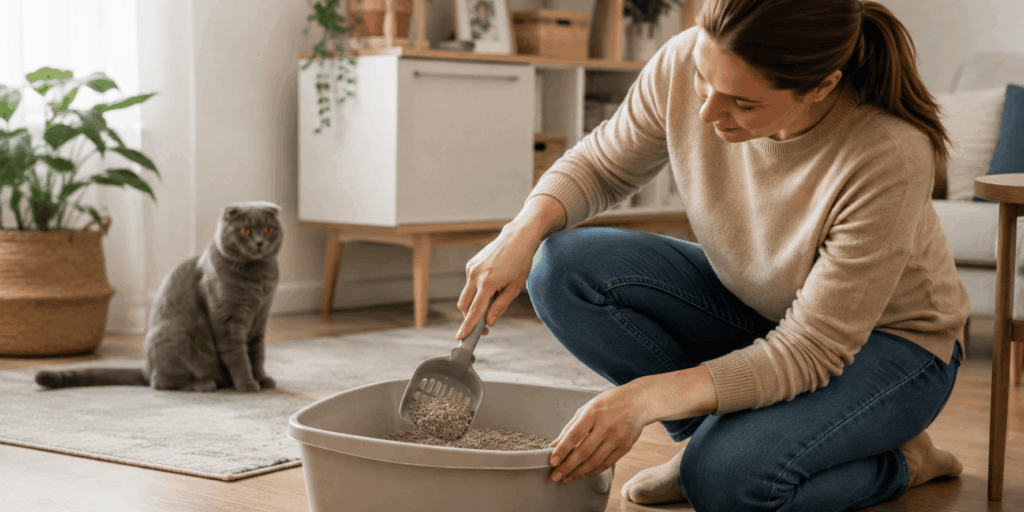
The litter box is one of the best windows into an indoor cat’s health. Scooping daily gives you a rough sense of urine clump size, frequency, stool consistency, and whether your cat is eliminating comfortably.
Straining deserves special attention. A cat repeatedly entering the box and producing little or no urine may have a urinary emergency, particularly a male cat with a blockage. Do not assume the cat is constipated simply because it is straining.
Changes in stool matter too. Persistent diarrhea, repeated constipation, blood, or obvious pain should be discussed with a veterinarian. A cat with arthritis may also begin eliminating near the box because climbing over a high side hurts.
If house-soiling starts suddenly, avoid punishment. Medical problems, pain, stress, box setup, or conflict can all contribute. A veterinary exam is often part of finding the cause.
Urine clumps are not a precise measurement, especially with several cats sharing boxes. Still, a clear change in size or number can be worth noting. If you need better information before a veterinary visit, temporarily separating cats with their own resources may help you identify which cat is producing the change.
Preventive Vet Care Still Matters for Indoor Cats
Indoor cats are protected from many outdoor hazards, but indoor living does not prevent dental disease, kidney disease, diabetes, arthritis, thyroid disease, heart conditions, cancer, or age-related changes. Preventive care is still important.
Life stage helps guide the plan. Kittens need growth-related care and vaccination planning. Young and mature adults need ongoing health assessment. Senior cats benefit from closer monitoring because risk changes with age.
Your veterinarian may recommend physical exams, vaccines based on lifestyle and local risk, parasite prevention, dental assessment, blood or urine testing, and other screening. The exact schedule should be individualized.
Do not wait for a cat to look seriously ill before scheduling routine care. Cats can compensate well, and some conditions are easier to manage when found early.
Preventive care also includes keeping basic records current. Save vaccination history, medication names, previous test results, and your cat’s normal weight range where you can find them. This becomes useful when you see a new veterinarian, travel, or need urgent care outside your regular clinic.
Simple Health Checks You Can Do Without Stressing Your Cat
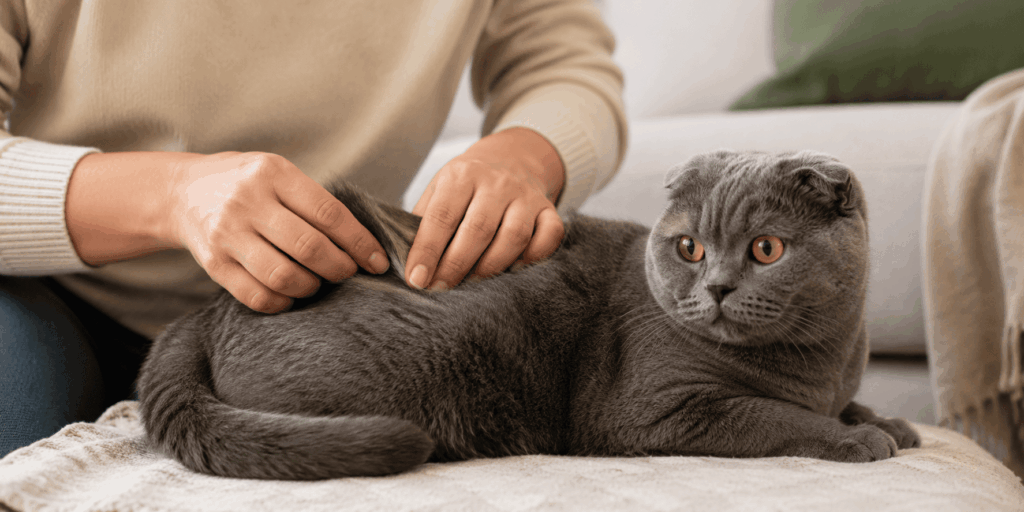
You can learn a lot during normal interaction. Keep it gentle and stop if your cat becomes uncomfortable.
- Run your hands over the body to notice new lumps, sore areas, or changes in muscle.
- Look at the coat for mats, dandruff, bald spots, wounds, or parasites.
- Glance at the eyes for new cloudiness, discharge, redness, or squinting.
- Check the outer ears for unusual debris, odor, redness, or persistent scratching.
- Lift the lip briefly if your cat allows it and look for red gums, broken teeth, or heavy tartar.
- Watch your cat walk and jump so you recognize changes in mobility.
- Notice breathing when your cat is resting comfortably, not immediately after play.
These checks are not replacements for veterinary exams. They simply make you more familiar with normal. Never force handling that makes your cat panic or struggle.
At-home checks should stay observational. Do not press painful areas repeatedly, force the mouth open, or attempt to diagnose a lump by squeezing it. If something looks different, note its location and take a photo if possible. That gives your veterinarian useful information without turning a simple check into a stressful examination.
When to Call the Vet Instead of Waiting It Out
Call your veterinarian when a change is significant, persists, or involves pain, appetite, breathing, urination, or major behavior changes. Some signs should be treated as urgent. Trouble breathing, collapse, severe weakness, major trauma, seizures, suspected poisoning, or inability to urinate require prompt professional care.
Appetite loss also deserves respect in cats. If your cat stops eating or eats dramatically less, do not simply keep offering different foods for days. Contact your veterinarian for guidance.
When you call, provide specific details. Say when the change started, whether your cat is eating and drinking, what you see in the litter box, and whether vomiting or diarrhea is present. Photos or videos can be helpful when the behavior happens only at home.
If you are unsure whether something is urgent, calling the veterinary clinic is appropriate. They can help you decide the next step based on the full situation.
Keep your clinic’s phone number and the nearest emergency option somewhere easy to find before you need them. In a stressful moment, you do not want to spend time searching. If your cat has an ongoing condition, ask the veterinary team which changes should trigger a same-day call and which can wait for a scheduled appointment.
Use Indoor Cat Health Changes as Early Information
The most useful approach to indoor cat health is not constant worry. It is familiarity. Know your cat’s normal appetite, weight, litter-box pattern, movement, grooming, and behavior. That gives you a reference point when something changes.
Keep routine veterinary care on the calendar and take sudden changes seriously. Indoor cats can still develop important medical problems. Early observation does not replace a veterinarian, but it can help you get the right care sooner.
References
- Choosing and Caring for Your New Cat — Cornell Feline Health Center — Covers common signs of illness, veterinary care, grooming, nutrition, and home monitoring.
- 2021 AAHA/AAFP Feline Life Stage Guidelines — FelineVMA — Framework for individualized preventive healthcare across kitten, adult, mature, and senior life stages.
- Client Education: Your Cat’s Dental Health — FelineVMA — Practical warning signs of feline dental pain and disease that caregivers can notice at home.
