

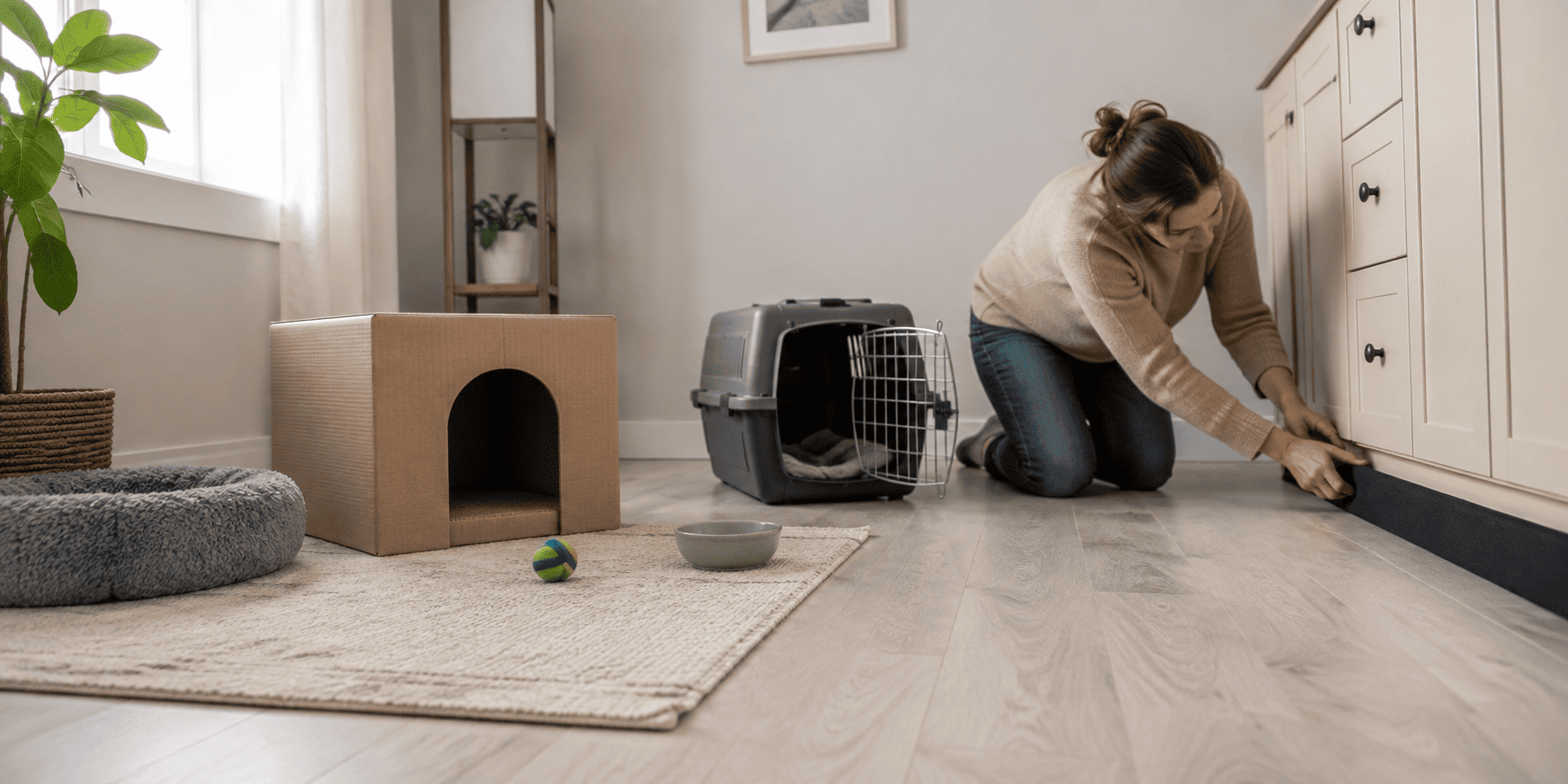
A safe room for a new cat is a small, controlled base where the cat can eat, drink, toilet, hide, rest, and observe without having to understand the entire home at once. It is not isolation as punishment and it does not need to be a spare bedroom. A quiet office, bedroom, or other closable room can work if it is secure, easy to clean, and free from hazards. The best setup balances protection with choice: the cat should be able to hide without disappearing into an unsafe gap, watch the room from a comfortable spot, and reach every resource without crossing a noisy or socially risky path.
Choose the Room by Traffic, Doors, and Escape Risk
Pick a room that can remain reliably closed while the cat settles. Avoid a space that people must enter every ten minutes, a laundry room with sudden machine noise, or a room with a door that opens directly outdoors. Check windows and screens, vents, gaps behind built-in furniture, damaged walls, and any route into ceilings or cabinets. A nervous cat can fit into spaces you stopped noticing years ago. The room should allow calm human access without giving the cat an easy path to bolt into the rest of the home.
Temperature and daily function matter too. A room that becomes extremely hot in afternoon sun or is needed for loud video calls all day may be less suitable than it appears. If you have resident pets, choose a space that does not remove their favorite bed, feeding area, or only route to a litter box. The new cat needs a base without making the existing animals lose theirs.
Bathrooms can work only if they are truly quiet and secure. Toilet lids, cleaning products, open cabinets, slippery floors, and shower gaps need attention. A spare bedroom may offer softer surfaces but more inaccessible furniture. Choose based on actual hazards rather than assuming one room type is always best.
A Safe Room for a New Cat Needs Separate Resource Zones
Do not arrange every resource in one tight corner simply because the room is small. Place the litter box away from food and water. Give the cat a resting or hiding area that does not require passing directly beside the tray. Water can sit in a separate quiet spot, and food should be somewhere you can observe intake without hovering. Even a small room can have distinct zones if you use opposite walls, furniture edges, or height to separate them. Clear resource placement helps the cat understand the room quickly.
The same principle later applies to how resources are distributed through the rest of the home, but the safe room lets you begin with a manageable version. Keep the layout stable during the first days. Moving the litter, water, and bed every evening can make the room harder to learn just when predictability is most valuable.
Think about maintenance routes for yourself. You should be able to scoop the litter, change water, and deliver food without trapping the cat between you and the door. Place resources so routine care can happen calmly even when the cat is hiding.
Offer Hiding Places You Can Still Reach in an Emergency
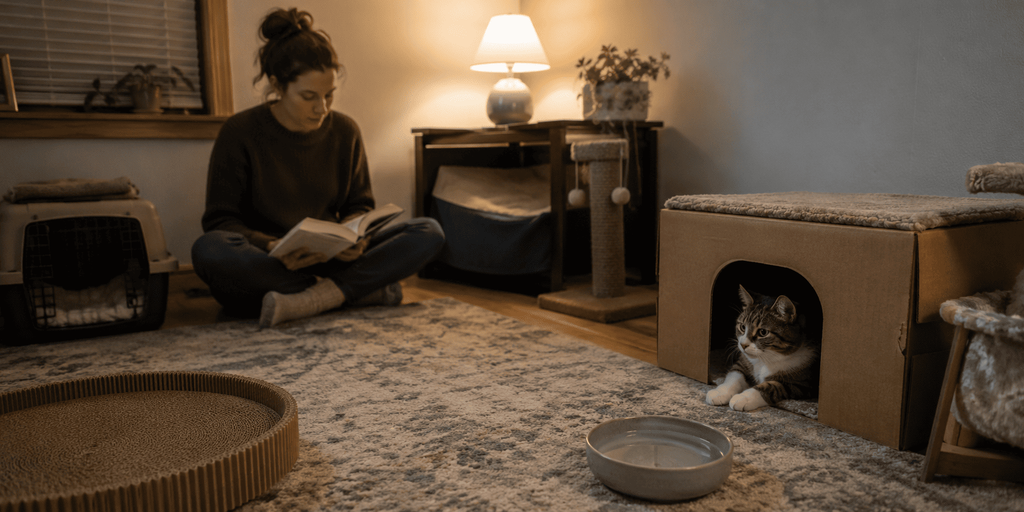
Hiding is normal and useful. A cardboard box on its side, covered bed, open carrier, or blanket draped over part of a chair can give the cat a protected retreat. The mistake is allowing the only hiding option to be behind a refrigerator, inside a reclining chair, under inaccessible cabinetry, or in a wall void. Block dangerous gaps before arrival while leaving intentional hides available. The cat should be able to disappear from view without becoming physically unreachable.
Use more than one style if space permits. One ground-level enclosed hide may feel safest at first, while an open bed or chair can become appealing later. Do not pull the cat out to encourage socialization. Instead, sit quietly nearby and let ordinary routines happen. A hide becomes less important naturally when the cat no longer needs as much distance.
A hide with two openings can feel safer than a single-entry cave because the cat has an alternative exit. Cardboard boxes are useful because you can cut a second doorway and replace them cheaply. Stability matters more than appearance; avoid stacks that can collapse if the cat jumps on top.
If a box hide becomes damp or soiled, replace it without removing every familiar object at once. Keep another known blanket or carrier in place during the swap.
Add Height Without Building a Complicated Climbing Course
Many cats feel safer when they can observe from above floor level. A stable chair, low shelf, window perch, or sturdy cat tree can provide that choice. Height should be easy to reach and just as easy to leave. Avoid unstable furniture, narrow decorative shelves, or a tall perch that requires a frightened cat to jump across the room. A senior or uncertain cat may prefer a modest platform rather than a ceiling-high tower. The purpose is control over viewpoint, not athletic enrichment on day one.
Check what sits below the perch. Remove fragile objects and secure furniture that could tip. If the window is part of the setup, confirm the screen is secure before assuming a closed-looking window is safe. Curtains and blind cords should not create loops or tangles. Once the room is safe, a simple view outside can provide quiet stimulation without adding more toys.
If a perch faces the doorway, a nervous cat can watch people enter before deciding whether to stay or retreat. That small sense of control can be useful. Avoid placing the only elevated spot directly above food or litter where jumping down could disrupt another essential resource.
Keep Familiar Smell While Removing Strong Fragrance
A new room already contains unfamiliar smells from paint, detergent, furniture, people, and other animals. If the cat comes with bedding from a foster home or previous environment, keep part of that familiar scent rather than washing everything immediately. Use unscented litter when possible and avoid strong air fresheners, essential-oil diffusers, perfumed sprays, or heavily fragranced cleaners around the cat’s core resources. The room does not need to smell “fresh” to human standards to be comfortable for a cat.
If resident cats live in the home, scent introduction can happen gradually after the newcomer is eating and using the litter box reliably. Swap a small bedding item or allow each cat to investigate an area after the other has left. Do not push scent items directly into a hiding place. The safe room works partly because it gives the newcomer control over how much unfamiliar information arrives at once.
Familiar scent should not mean dirty resources. Keep a small blanket or cloth that smells familiar, but still wash bowls and scoop litter normally. Preserve scent where it provides reassurance while maintaining hygiene where waste and food are involved.
Set Up the Room Before the Carrier Comes Through the Door
Prepare food, water, litter, hide, bed, scratcher, and any perch before arrival. Check the floor for thread, hair ties, rubber bands, medication, cleaning products, toxic plants, and small swallowable objects. Close drawers and closets that contain hazards. Secure cords and inspect reclining furniture. Put the carrier on the floor in the room, close the room door, then open the carrier and let the cat exit voluntarily when possible. Avoid carrying the cat around the house for a tour first.
- Large accessible litter box with familiar or suitable litter
- Separate food and fresh-water stations
- At least one intentional hiding place
- Comfortable washable resting surface
- Stable scratching surface
- Safe low or moderate-height perch
- A few quiet toys, with string toys stored when unsupervised
- Open carrier left as part of the room
A simple completed room is better than an elaborate setup still being rearranged when the cat arrives.
Before arrival, get on the floor and scan from cat height. Cords under the desk, gaps behind furniture, dropped pills, and narrow spaces under cabinets are easier to notice from that angle. New cats often explore exactly the places long-term residents ignore.
Human Visits Should Feel Predictable and Optional
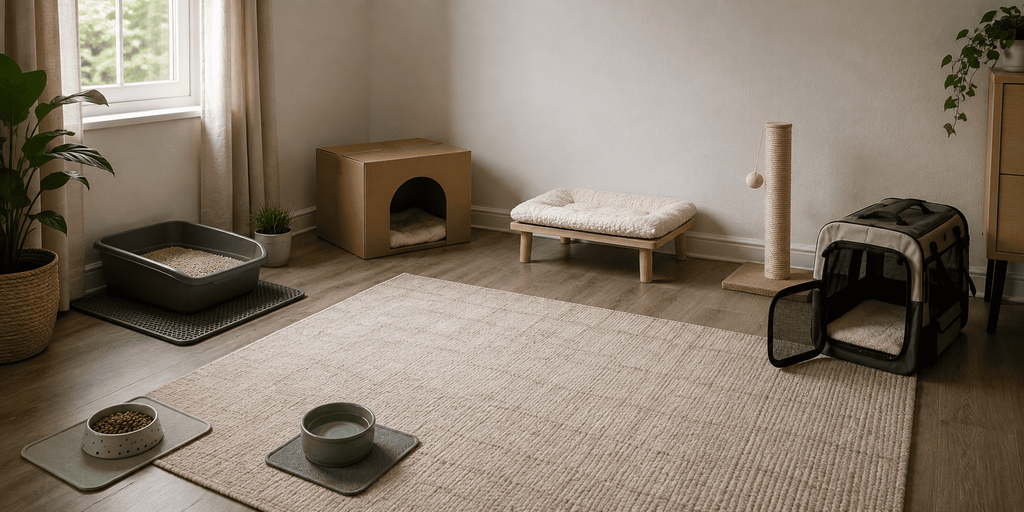
Spend time in the room without making every visit an interaction attempt. Sit on the floor, read, work quietly, refresh water, scoop the litter box, and leave. If the cat approaches, keep the first contact brief and gentle. If it stays hidden, resist the urge to reach in. A cat can learn that your presence is safe by observing repeated calm visits. Predictability is especially useful for shy cats because they can watch what happens next without having to defend space.
Keep visitors limited at first. A friendly cat may seem ready to meet everyone, but confidence with one person does not mean the room should become a social event. Children should be supervised and taught not to block exits or enter the hide. Dogs and resident cats should remain outside until introductions have moved beyond scent and controlled awareness. The safe room needs to remain a place where retreat actually works.
Set a predictable visit rhythm if possible. For example, feed, scoop, sit quietly for ten minutes, then leave. Repeated low-pressure sequences help the cat learn what your entrance means. Random long visits can be harder for a shy cat to anticipate.
Know When the Safe Room Is Ready to Get Bigger
Do not use a fixed number of days as the only signal to expand territory. Look for reliable eating, normal litter use, grooming, resting outside the deepest hide, curiosity at the door, play, and a body posture that looks looser around routine human movement. A bold cat may show these signs quickly. A shy cat may need much longer. Open access to one additional area while keeping the safe room available as a base, then watch what changes.
If the cat stops eating, disappears into unsafe hiding, becomes highly tense, or cannot settle after expansion, reduce territory again. That is useful information about pace, not a failure. In a home with resident cats, territory expansion and introductions are related but separate. The newcomer can explore more space while the resident cat is elsewhere before direct contact becomes appropriate.
Expansion can be tested in a controlled window rather than made permanent immediately. Open one adjacent room for a short calm period, then allow the cat to return to the base. If the cat explores and settles, extend gradually. If it becomes overwhelmed, close the territory again.
The best safe room has done its job when the cat no longer needs it to feel secure. You do not need to force that milestone. If the room is comfortable, clean, and connected to calm human routines, confidence usually shows through behavior. Let the cat’s use of the space tell you when the next step is ready.
Some cats keep using the safe room as a favorite sleeping area long after they have access to the whole home. That is fine. The room does not have to be dismantled on schedule. A familiar base can remain valuable during visitors, repairs, or other temporary disruptions.
The Room Should Get Simpler as the Cat Becomes More Confident
A safe room is temporary structure, not a permanent miniature apartment. As the cat begins using more of the home, some resources can stay while others move or duplicate. Keep at least one familiar hide and the carrier available during the transition. Do not remove every known object on the same day you open a new area. Gradual change preserves a stable reference point while the cat learns new routes, sounds, and household rhythms.
References
- Welcome Your New Cat or Kitten — FelineVMA — Current guidance on transition rooms, separate resources, veterinary planning, supplies, and helping a new cat settle safely.
- How to Introduce a New Cat to Other Cats in Your Home — FelineVMA — Step-by-step advice on transition rooms, scent work, resource separation, visual access, and gradual introductions.
- Meeting the Physical and Emotional Needs of Indoor Cats — FelineVMA — Explains safe places, environmental choice, separated resources, play, and social needs in indoor cats.
