


A thoughtful cat friendly home setup does not mean turning every room into a cat playground. It means giving your cat the resources needed to eat, drink, toilet, scratch, rest, hide, climb, and play without making the home difficult for people to live in. Good placement usually matters more than buying more things.
Indoor cats share our rooms, but they experience those rooms differently. A quiet shelf can feel safer than an expensive bed on the floor. A scratching post beside the sofa may work better than one hidden in a spare room. The aim is to build small cat-friendly choices into the layout you already have.
Start by walking through the home from your cat’s point of view. Look for safe routes, dead ends, sunny spots, high viewpoints, busy doorways, and places where the cat could be startled. This quick survey often shows where a resource belongs more clearly than a shopping list does.
Cat Friendly Home Setup Starts With a Few Core Zones
Instead of scattering products randomly, think in terms of useful zones.
- Food zone: A calm place where your cat can eat without being cornered or disturbed.
- Water zone: One or more easy-to-reach water stations, preferably separate from the litter area.
- Toileting zone: A quiet, accessible litter box location with enough room to enter and exit comfortably.
- Resting zone: A few comfortable places at different heights and temperatures.
- Scratching zone: Stable scratching surfaces near places your cat already spends time.
- Play zone: Open floor space where interactive toys can move safely.
- Safe retreat: A hiding place where your cat can withdraw without being pulled out.
These zones do not need separate rooms. A small apartment can support all of them with thoughtful placement. A windowsill can be a resting zone. The side of a bookcase can hold a scratching panel. A quiet corner can become a retreat with a simple box or covered bed.
Separate Resources That Should Not Be Crowded Together
Cats often prefer important resources to be distributed rather than grouped into one “cat corner.” Food, water, litter, scratching surfaces, and resting places serve different needs. Putting everything beside the food bowl may look tidy, but it can make the setup less appealing to the cat.
Keep litter away from food and water. If space allows, place water at a different point from the food bowl too. Many cats enjoy having more than one water option. A bowl in the living area and another in a quiet room can increase choice without adding much clutter.
Multi-cat homes need even more separation. One feeding station or one favorite bed can become a point of tension. Duplicate important resources and spread them out. The goal is not to make every item identical. It is to prevent one cat from controlling access to everything another cat needs.
Watch traffic patterns. A resource is not truly available if your cat has to pass a barking dog, another cat, or a noisy appliance to reach it.
Distance between resources also gives your cat choice. A water bowl in a quiet bedroom may be used differently from one in the kitchen. A second scratcher near a sleeping area may catch the moment when your cat wakes and wants to stretch. Small duplicates can be more useful than one elaborate all-in-one station.
Use Vertical Space Before Adding More Floor Furniture
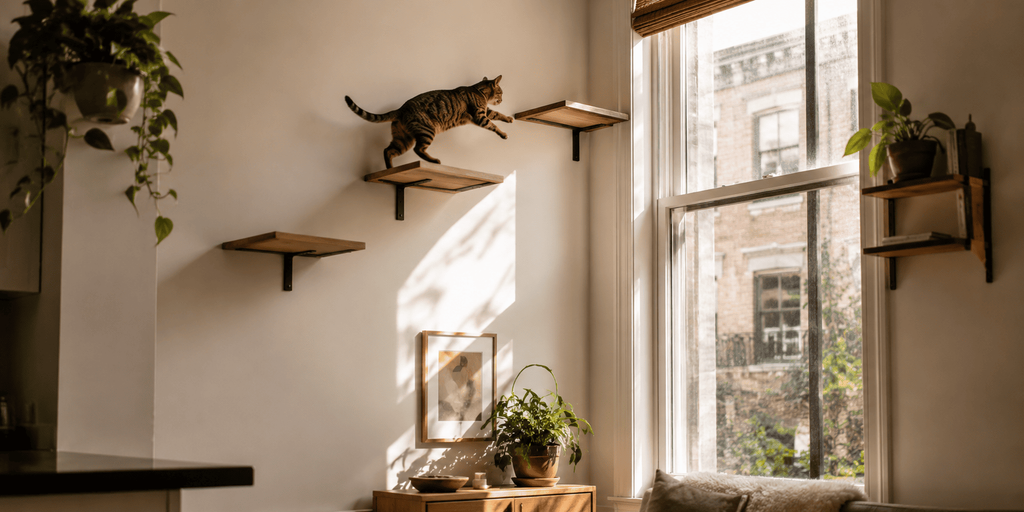
Cats naturally use height to observe, rest, and create distance. Vertical space can therefore make a small home feel larger to a cat without taking over the room. Start with furniture you already own. A stable shelf, the top of a cabinet, or a wide windowsill may already be useful.
If you add a cat tree, choose one that is stable and tall enough to be meaningful. Place it where the height has a purpose, such as near a window or in a room where people spend time. A cat tree hidden in a room nobody uses may be ignored.
Wall shelves can work well when floor space is limited, but the route matters. Cats need safe steps up and down. Avoid isolated shelves that require an awkward jump. Surfaces should not be slippery, and heavy furniture should be secured if climbing could make it unstable.
Vertical options are especially useful in multi-cat homes because they create more pathways. A cat can move through a room without passing directly beside another cat on the floor.
Home Features That Help Both Cat and Human
The most useful setup choices solve a feline need without making everyday life harder.
| Home feature | Cat benefit | Human benefit |
|---|---|---|
| Washable mat under food bowls | Stable, predictable feeding area | Faster cleanup after spills |
| Large litter mat | Comfortable transition out of the box | Less litter tracked across floors |
| Scratching post beside furniture | Scratch option in a socially important area | Better chance of protecting the sofa |
| Window perch | Height, observation, and resting | Uses existing vertical space |
| Closed storage for toys and grooming tools | Rotated toys stay interesting | Less visible clutter |
| Carrier left open as a bed | Familiar resting place and safer carrier association | Easier veterinary-trip preparation |
A good cat home often looks ordinary. The difference is that objects are positioned where the cat is likely to use them. Before buying another item, ask whether better placement could solve the problem first.
Look at how furniture changes sight lines. A low cabinet can create a stepping route to a window. A bench can become a safe pause point between the floor and a shelf. These small connections matter, especially for cats that are cautious, older, or less confident about long jumps.
Give Your Cat Places to Hide and Rest Undisturbed
A safe place is one of the basic needs of a healthy feline environment. Hiding is not something you need to discourage. Cats may retreat when visitors arrive, when the vacuum runs, or when they simply want uninterrupted sleep.
A safe retreat can be very simple. A cardboard box on its side, a covered bed, space under a table, or a high shelf can work. The important part is that the cat can choose to enter and leave. Do not repeatedly reach in and pull your cat out.
Offer more than one resting texture and temperature. Some cats choose a soft bed in winter and a cool tile floor in summer. Others prefer a firm shelf over a fluffy cushion. Let use guide you rather than assuming every cat wants the same kind of bed.
If your cat sleeps in a surprising place, ask what that location provides. It may be warm, elevated, quiet, or close to you. You can often recreate the useful feature in a more convenient location.
Make Scratching Part of the Room, Not an Afterthought
Scratching is normal behavior. Cats scratch to maintain their claws, stretch, and leave visual and scent marks. A scratching post hidden behind a door may not compete with the sofa because the sofa sits in a socially important area.
Put scratching surfaces near sleeping areas, room entrances, or furniture your cat already targets. Many cats like to scratch after waking. A post near a favorite bed can work for that reason. If your cat scratches the side of a sofa, place an appropriate scratcher beside that exact spot before trying to move it elsewhere.
Offer both vertical and horizontal options if you do not know your cat’s preference. A vertical post should be stable and tall enough for a full stretch. Horizontal cardboard scratchers work well for cats that prefer scratching along the floor.
Do not throw away a favorite scratcher simply because it looks worn. Cats often like familiar scent and texture. Replace it when it becomes unstable or unsafe, not when it stops looking new.
Scratching products also work better when they fit the room visually enough that you are willing to leave them in the right place. If you keep hiding a scratcher because you dislike how it looks, choose a sturdier design you can live with. A slightly nicer product in the correct location is more useful than a cheap one nobody wants to see.
Quick Safety Checks for an Indoor Cat Home
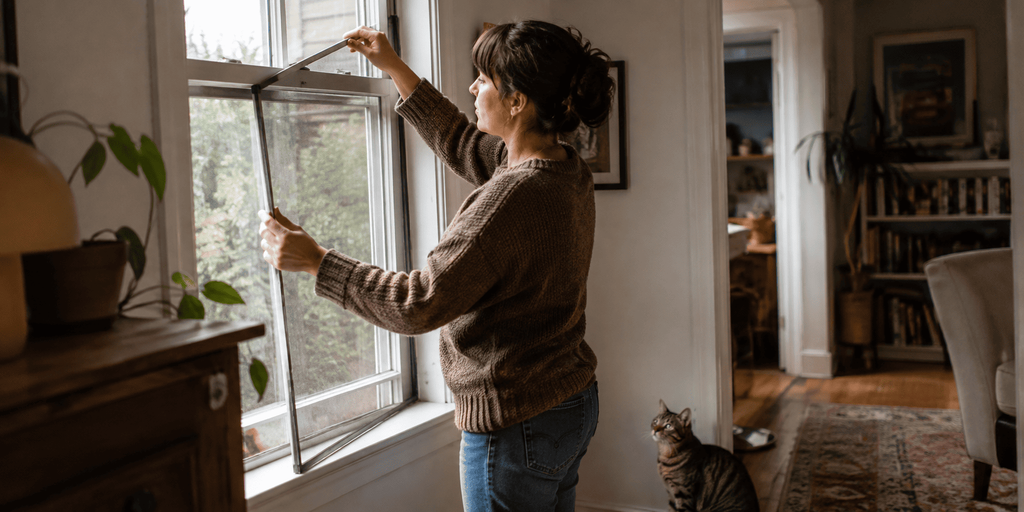
Indoor living removes some outdoor risks, but the home still needs practical cat-proofing.
- Secure unstable shelves, televisions, or tall furniture that could tip during climbing.
- Check window screens and balcony access so a cat cannot push through or fall.
- Keep string, ribbon, thread, hair ties, and similar swallowable items stored away.
- Route electrical cords where chewing or play is less likely.
- Store medicines, household chemicals, and unsafe foods in closed areas.
- Research houseplants before placing them where your cat can chew them.
- Check washers, dryers, recliners, closets, and other enclosed spaces before closing or starting them.
Safety should still leave room for normal behavior. The goal is not an empty house. Give your cat legal things to climb, scratch, chase, and explore so blocking unsafe options does not remove every interesting activity.
Review safety again after moving furniture or bringing home plants, cords, decorations, or appliances. Cats investigate changes. A route that was safe last month may gain a dangling cable or unstable object later. Cat-proofing works best as a habit rather than a one-time project.
Design for Your Routine, Not an Idealized Cat Room
The best setup is one you can maintain. If a litter box is so hidden that you forget to scoop it, the location is not working. If a water fountain is difficult to clean, you may stop using it. If a giant cat tree blocks a walkway, you will eventually resent it.
Choose materials that match your cleaning style. Washable covers are useful on favorite sleeping spots. A tray under food can catch crumbs. A cordless handheld vacuum near the litter area may be more useful than a decorative storage basket.
Build cat care into habits you already have. Refresh water when you make coffee. Scoop the litter box before taking out household trash. Keep nail clippers with grooming tools in one place. Small systems reduce the feeling that cat care is a separate set of chores.
A cat-friendly home should support both sides of the relationship. You do not need to sacrifice every surface. You need enough appropriate options that your cat does not have to invent all of its own.
Keep Your Cat Friendly Home Setup Flexible
A successful cat friendly home setup is not finished the day you arrange it. Cats age, routines change, and preferences become clearer. Watch where your cat sleeps, scratches, drinks, hides, and plays. Those choices tell you which parts of the home are working.
Adjust the environment when mobility, health, or household dynamics change. A senior cat may need lower climbing steps. A new cat may require separate resources. The best home is not the one with the most cat products. It is the one that keeps essential resources safe, accessible, and easy for everyone to live with.
References
- Meeting the Physical and Emotional Needs of Indoor Cats — FelineVMA — Current guidance on safe places, separated resources, play, social interaction, and sensory needs.
- AAFP/ISFM Environmental Needs Guidelines — FelineVMA — Evidence-based framework for creating a healthy feline environment around five essential needs.
- General Cat Care — ASPCA — Practical home-care guidance covering housing, scratching, litter boxes, supplies, grooming, and safety.
