

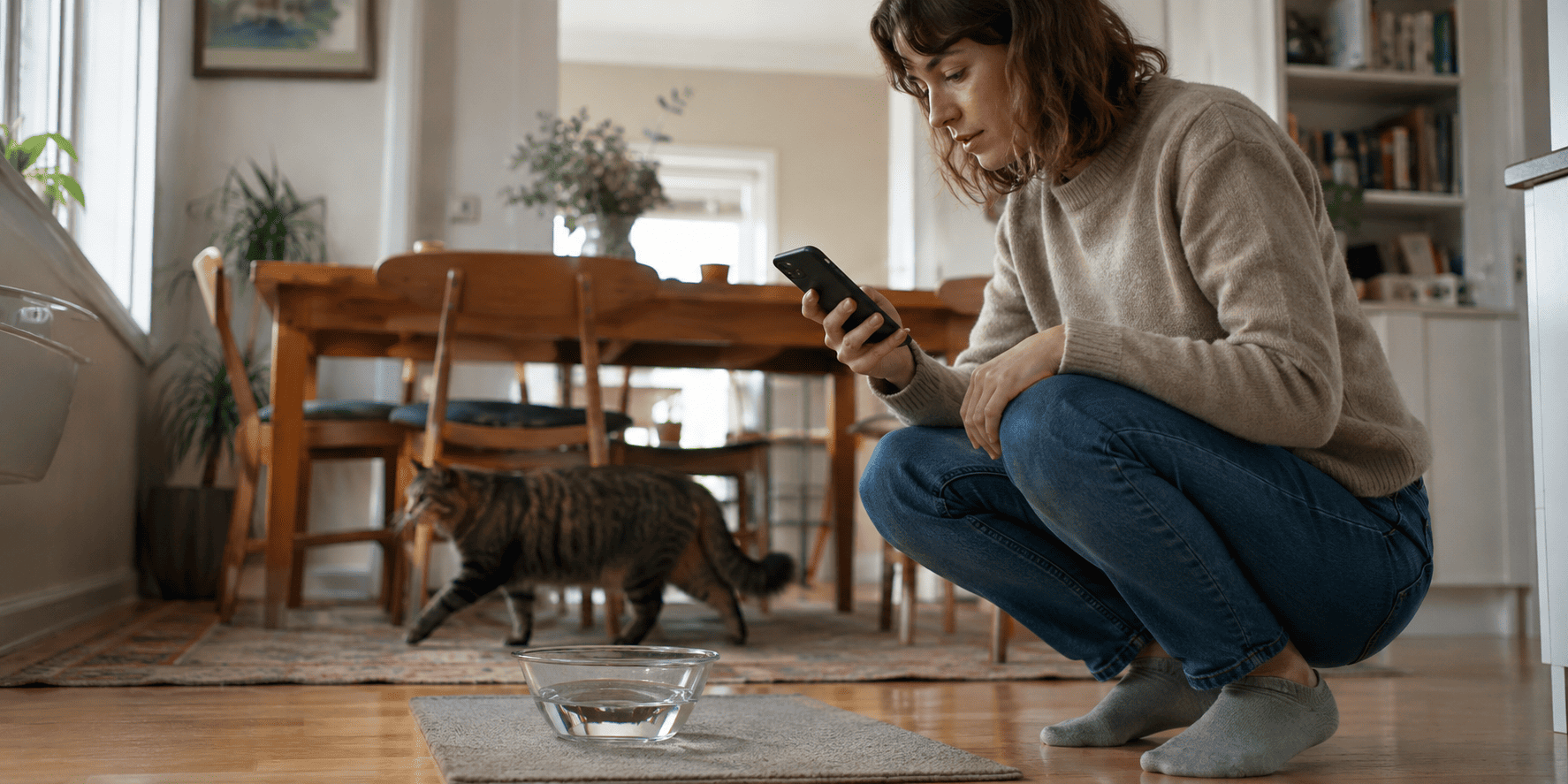
A cat drinking less water than usual is a change-from-baseline question. The important comparison is not your cat versus an internet average; it is today versus what this cat normally does with the same food, household, and water setup. More wet food can reduce visible bowl drinking without reducing total fluid intake. Less eating, smaller urine clumps, vomiting, weakness, dental discomfort, or a new obstacle near the bowl make the same drinking change more significant. This guide focuses on a noticeable decrease, not a cat that appears to have stopped drinking altogether.
What Changed During the Same 48 Hours?
The aim is not to diagnose from the table. It is to identify whether the change has a simple environmental explanation or is part of a larger health pattern. Record trends rather than exact measurements unless your veterinarian asks for them. A note such as “usually three medium clumps, now one small clump” can be more useful than pretending a litter box gives laboratory precision. Consistent observation is the goal.
| Recent change | Possible effect | Useful check |
|---|---|---|
| More wet food | Less water may be needed from the bowl | Appetite and urine remain normal |
| New bowl or fountain | Cat may dislike shape, smell, noise, or movement | Restore the old option temporarily |
| Moved water station | New location may feel exposed or inconvenient | Offer water in the previous location |
| Eating less | Food-derived water may also fall | Contact a veterinarian if appetite change is significant |
| Vomiting or diarrhea | Fluid losses can increase | Seek veterinary guidance promptly |
Include household timing in that review. A guest may have moved a chair beside the bowl, a dog may have started sleeping near the route, or a feeder schedule may now create traffic around the water station. These details seem minor until they line up with the first day drinking changed. If nothing environmental changed, widen the review to appetite, stool, urine, activity, and medication. A useful 48-hour history is less about finding one dramatic event and more about spotting several small changes that began together.
Cat Drinking Less Water Than Usual Means Compare With Baseline
Think back over the last few days. Did you change food? Move the water bowl? Start a fountain? Add another pet? Has your cat been eating the same amount and using the litter box normally? Wet food can provide a large share of a cat’s daily water. If you recently increased canned food, fewer visible drinks may be expected. If your cat is also leaving food behind, total fluid intake may be falling from both sources. Because total water intake includes moisture from food as well as drinking, a change in bowl visits only makes sense when you compare it with the diet too. Use several observations together. One fewer bowl visit is weak evidence. A sustained change in drinking plus smaller urine clumps and poor appetite is more meaningful. Try to change one variable at a time when your cat otherwise seems well.
If you restore the old bowl and drinking returns, that tells you more than simultaneously changing water source, bowl material, fountain, and location. Simple tests produce clearer answers. Temperature and season can change visible drinking too, but large shifts should still be interpreted with the rest of the routine. Do not assume that cooler weather explains reduced intake if appetite, urine, or energy also changed. A practical baseline can be simple: note the food format, where the cat normally drinks, and the usual urine-clump pattern for several ordinary days. You do not need milliliter-perfect measurements. If the cat normally eats two wet meals and makes three similar clumps, then suddenly leaves food, ignores a familiar bowl, and produces much less urine, those changes belong in the same story. If only the bowl visits fall after you add more wet food, the explanation is very different.
Test the Water Station Before You Buy Anything
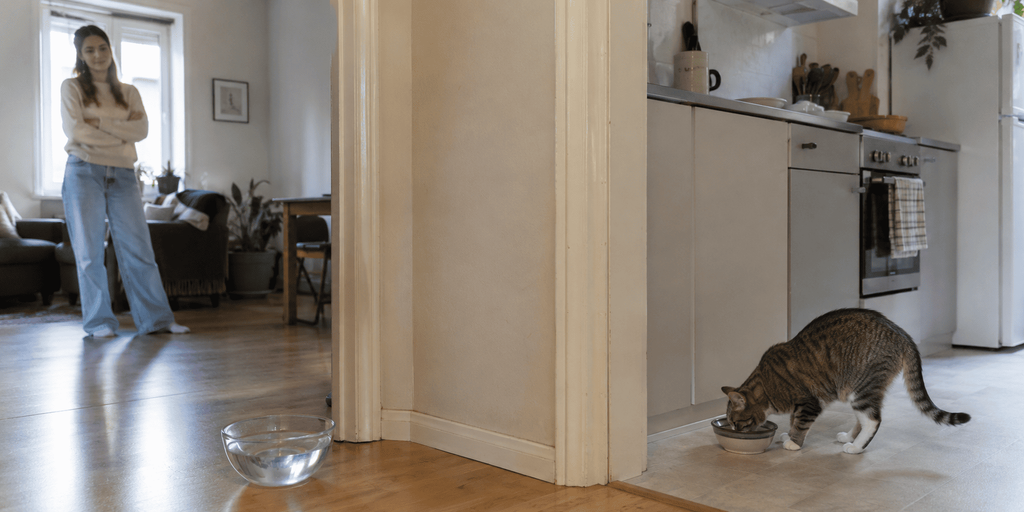
Offer a familiar clean bowl in a quiet place while you troubleshoot. Giving your cat a second option is more useful than repeatedly presenting the same rejected setup. Dental discomfort can change both food and water behavior in subtle ways. A cat may still approach the bowl but hesitate, lick only gravy, or prefer a different drinking angle. New mouth odor, drooling, or food dropping makes a veterinary dental check more important. Some cats prefer still water while others seek taps or fountains. Preference is individual, and research does not support assuming that every fountain automatically increases intake. Offer options and judge success by what your cat actually uses.
- A familiar bowl has developed a film or retained food smell.
- Fountain noise has increased as the pump has aged or clogged.
- Recent placement puts the bowl beside a litter box or busy doorway.
- Another pet now rests near the water route.
- The water temperature or source changed.
- The bowl is narrow, unstable, or difficult for an older cat to reach.
- A new cleaner or fragrance changed the smell of the area.
Run a Clean A/B Test on the Water Setup
If your cat otherwise seems well, a simple comparison can tell you more than buying a fountain immediately. Keep the familiar bowl in its usual place and add one alternative that changes only one useful variable. That might be a second bowl in a quieter room, a wider bowl made from the same material, or the old bowl restored after a recent move. Leave both choices available long enough for the cat to show a preference.
Avoid changing bowl material, water source, location, and fountain noise all on the same day. If drinking returns, you will not know what helped. The same principle applies in reverse: if the cat ignores both familiar and new options while appetite and energy are also falling, the result points away from a simple bowl preference. A small home test is most useful when it isolates one environmental question rather than trying to solve every possible cause at once.
Keep the test simple for at least a day unless your cat seems unwell. Frequent rearranging can erase the very preference you are trying to observe.
Use the Litter Box as a Secondary Clue
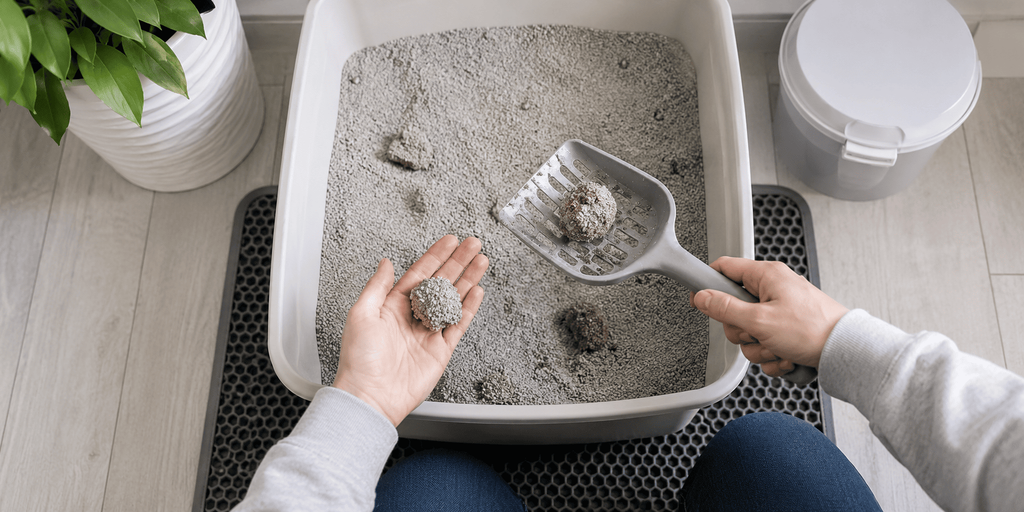
You cannot measure hydration perfectly from urine clumps, but the litter box can show a trend. Learn the usual number and approximate size of your cat’s urine clumps. If they become clearly smaller or less frequent while drinking also falls, note the change. Multi-cat homes make this harder. If you need individual information because one cat seems unwell, temporary separation with separate resources may help you identify who is producing which urine. Straining is not a hydration test. A cat repeatedly entering the box and producing little or no urine may have a urinary problem that needs urgent veterinary attention. Do not deliberately restrict water to “measure” your cat’s thirst. Fresh water should remain available at all times. Notice whether your cat has to share the station with a dog or pass a noisy appliance.
Access can change even when the bowl itself has not moved. A new object, feeding schedule, or sleeping pet can quietly make the route less comfortable. Urine color is difficult to judge in most litter and should not be used as a home hydration test. Focus on obvious changes in frequency, clump size, straining, or blood. If urine itself looks unusual, report it to your veterinarian.
If Appetite Dropped Too, Total Fluid Intake May Be Falling
Food and water intake are linked. A cat that eats wet food receives fluid with every meal. If appetite drops, that source of water drops too. Nausea can also reduce interest in both food and water. Pay attention to food behavior rather than only whether the bowl becomes empty. Does your cat approach, sniff, and walk away? Does chewing look uncomfortable? Is the cat eating more slowly than usual or dropping food? A significant appetite change in a cat deserves veterinary guidance. Do not spend several days cycling through flavors while a cat continues to eat very little. If your cat eats dry food, a reduction in drinking is especially worth noting because less moisture comes from the diet itself.
Older cats deserve extra attention because age can change thirst, mobility, kidney function, dental comfort, and appetite. A senior cat drinking less should not automatically be dismissed as “slowing down,” especially when weight or behavior changes at the same time. Wet food left out for long periods can dry at the edges and become less appealing. If your cat eats several small meals, offer fresh portions on a safe schedule rather than expecting one serving to stay attractive all day.
Track Direction, Not Perfect Milliliters
Most households do not need laboratory-style water measurements. What matters is whether the overall pattern is stable, improving, or continuing to move away from normal. A short note can include food format, appetite, obvious bowl use, urine-clump pattern, vomiting or diarrhea, and energy. Use the same observations each day so the comparison stays meaningful.
This is especially helpful after a known change. Suppose your cat begins eating an extra wet meal and bowl visits fall, while urine output and behavior remain steady. That pattern can fit increased food moisture. Now compare a different scenario: bowl visits fall, half the wet food is left behind, and urine clumps become smaller. The same visible drinking change now sits inside a broader reduction in intake. Tracking direction keeps you focused on the whole picture instead of chasing a single number that may be distorted by spills, evaporation, or another pet.
When to Call the Vet Instead of Running More Home Tests
Contact your veterinarian if the drinking change is clear and persistent, especially when it comes with reduced appetite, vomiting, diarrhea, lethargy, abnormal urination, or an existing health condition. Cats can become dehydrated because they take in too little, lose too much fluid, or both. If your cat cannot keep water down, becomes very weak, collapses, has trouble breathing, or cannot urinate normally, seek urgent veterinary care. Bring the timeline with you. Mention diet changes, approximate water behavior, urine changes, appetite, stool, vomiting, and any new medications. Those details can help narrow the problem faster. Once the pattern returns to normal, keep the setup stable for a while. That makes future changes easier to interpret and prevents you from chasing small day-to-day variation with constant adjustments.
Bring information about medications and supplements because some treatments affect thirst, urination, nausea, or kidney function. Never stop a prescribed medication on your own unless the veterinary team tells you to.
A Cluster of Changes Matters More Than One Quiet Bowl
A quieter bowl matters most when it arrives with other changes. Reduced food intake, smaller urine clumps, vomiting, diarrhea, weakness, mouth discomfort, constipation, or unusual hiding all raise the level of concern. One isolated clue is less informative than a pattern moving in the same direction.
- Compare with your cat’s normal routine.
- Note food moisture and appetite.
- Watch urine output and energy.
- Report a clear, persistent cluster to your veterinarian.
References
- What Is Normal for Your Cat? — Cat Friendly Homes — Explains how to establish an individual baseline for drinking, urine output, eating, activity, and other daily routines.
- Hydration — Cornell Feline Health Center — Covers total water intake, food moisture, dehydration signs, and medical reasons fluid balance can change.
- Enhancing Water Intake for Your Cat — Cat Friendly Homes — Practical guidance on water stations, food moisture, and monitoring changes in drinking without forcing intake.
