

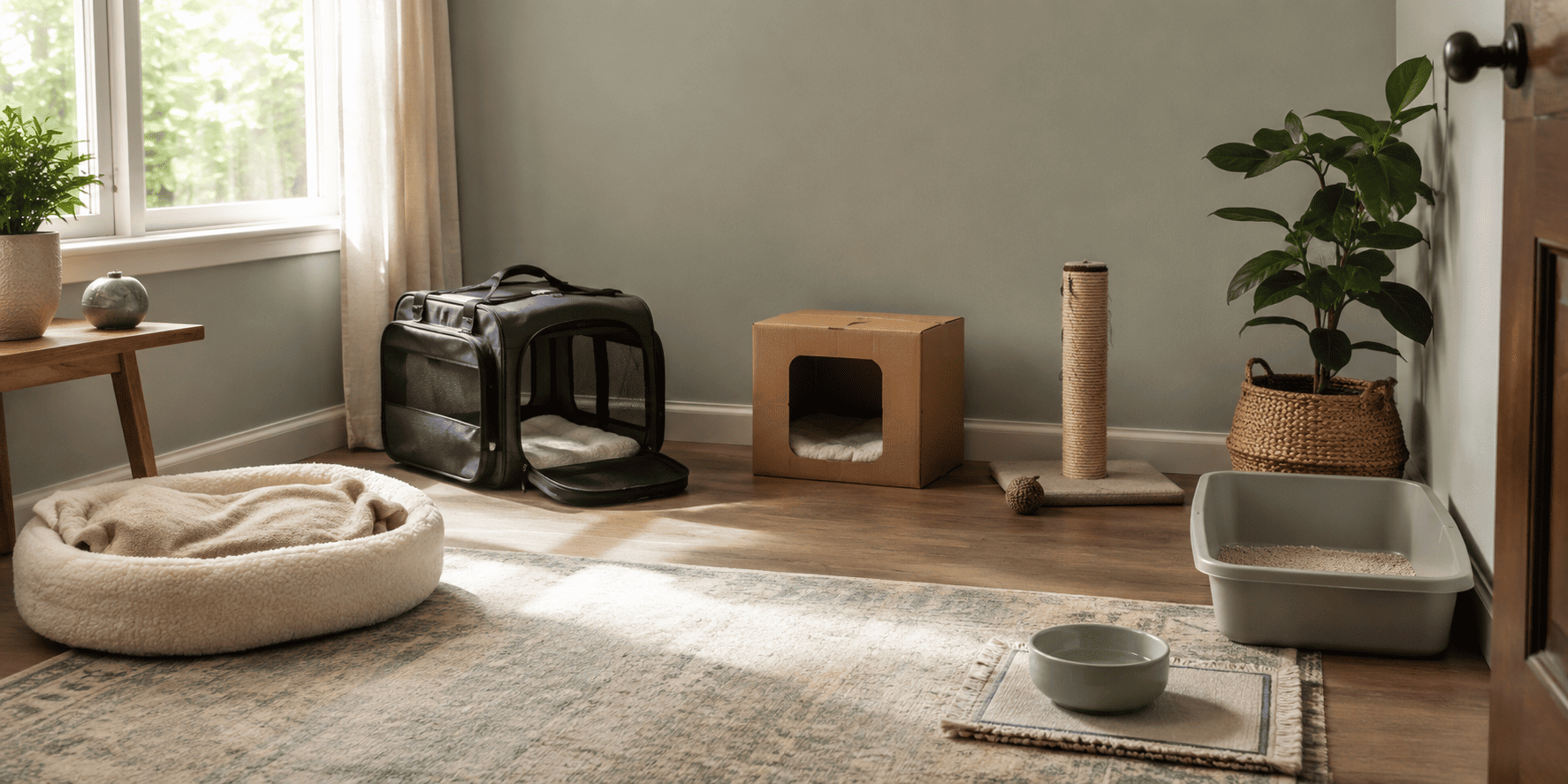
Learning how to prepare your home for a new cat is less about buying equipment and more about controlling the first few days. A newcomer needs one safe base, separated resources, predictable people, and a home with obvious hazards removed before curiosity finds them. Full access to every room can wait. If other pets already live there, preparation also means protecting their existing resources while the new cat settles behind a closed door.
A new cat should be allowed to hide, but not every hiding place is equally safe. Before arrival, look behind appliances, inside damaged cabinets, beneath reclining furniture, and around gaps that could lead into wall voids or other spaces you cannot access quickly. Block the dangerous routes, then provide intentional alternatives such as a cardboard box, covered bed, carrier, or sheltered space under stable furniture.
The distinction matters because hiding is a coping strategy. Pulling a frightened cat from a safe hide removes control and can make the room feel less secure. On the other hand, allowing the cat to disappear behind a refrigerator can create a safety problem and may force you to drag it out later. A good starter room gives the cat at least one place where it can be unseen while still remaining reachable in an emergency.
Buy Only the First-Week Basics
You can add products later after learning what your cat actually likes. The first week is not the time to solve imaginary future problems with a room full of gadgets. If the cat hides, keep essential resources easy to find without placing them directly inside the hiding spot. You want the cat to make small, voluntary trips for food, water, and litter while still feeling secure. Avoid rearranging the room repeatedly during this settling period. Keep receipts for optional products until you see what the cat uses. Cats can be very specific about beds, scratcher orientation, litter texture, and toy style. Buying fewer basics first leaves room to spend later on preferences you have actually observed.
- A large, accessible litter box and familiar or suitable unscented litter
- Complete and balanced food appropriate for the cat’s life stage
- Food and water bowls that are easy to wash
- A secure carrier that can remain open in the room
- A stable scratching surface
- A simple hiding place, such as a box or covered bed
- A comfortable resting surface
- A few safe toys for solo and interactive play
- Basic grooming tools appropriate for the coat
How to Prepare Your Home for a New Cat: Create One Safe Base
Choose a quiet starter room or defined area where the cat can decompress. It should have a door if you already have other pets. Include a litter box, food, water, a hiding place, scratching surface, bed or blanket, toys, and at least one elevated option if space allows. Separate food and water from the litter box. Put the hiding place somewhere the cat can use without becoming unreachable behind dangerous furniture or appliances. Once the starter room is working, the way you distribute resources through the rest of the home matters more as your cat’s territory expands. Do not fill the starter room with every new toy and accessory you bought. A simple room with clear resources is easier for a nervous cat to understand. Use items that are easy to clean but still feel comfortable.
A washable blanket, cardboard hide, and sturdy chair can do more than a room full of unfamiliar plush furniture. If the cat came with bedding from a foster home or previous environment, keep some familiar scent in the room. Ask what food and litter the cat currently uses before adoption day. Keeping familiar basics for the first several days reduces the number of changes happening at once. You can transition later if needed after eating and toileting are stable.
Keep Familiar Food, Litter, and Scent for the First Few Days
Arrival day already changes almost everything the cat can see, hear, and smell. Keeping a few basics familiar reduces the number of variables at once. Ask the shelter, foster home, breeder, or previous caregiver what food and litter the cat is currently using. If those choices are safe and appropriate, begin with them rather than changing diet, litter texture, bowl style, and room at the same time.
Familiar scent can help too. A blanket or small item that came with the cat can stay in the starter room even if it is not attractive décor. Avoid washing every familiar item immediately unless hygiene requires it. Once eating, drinking, toileting, and resting look stable, you can make planned transitions gradually. This approach also makes troubleshooting easier. If diarrhea, food refusal, or litter avoidance begins on day one, you have fewer new variables to untangle.
Keep meal timing familiar when possible as well. Predictable care helps you tell settling-in behavior from a true appetite problem. If the cat eats overnight but not while people are present, that still gives you useful information about comfort. Record what is actually eaten instead of repeatedly replacing the bowl with new choices. Too many food changes can create stomach upset and make the first week harder to interpret.
Do a Safety Sweep From Cat Height

New cats investigate. Look for hazards at cat height and above it. Secure loose window screens. Check balcony access. Put thread, ribbon, hair ties, rubber bands, and string toys away when unsupervised. Store medicines, cleaning chemicals, and unsafe foods behind closed doors. Research houseplants before leaving them within reach. Lilies are especially dangerous to cats and should not be kept where exposure can occur. Secure unstable furniture and heavy objects that could tip if climbed. Route cords where chewing and play are less likely. Check recliners, washers, dryers, closets, and other enclosed spaces before closing or operating them. A safe home still needs things the cat is allowed to explore. Blocking every interesting surface without offering perches, scratchers, and play can create frustration.
Then repeat the scan from above. Cats can reach shelves, cabinet tops, curtain rods, and window ledges that seem irrelevant from standing height. Remove fragile items from likely landing zones and check whether tall furniture is stable. Make sure window screens cannot be pushed loose. If a balcony or exterior door is part of the room, decide how it will be managed before the cat arrives rather than after the first dash toward it.
Check small swallowable items again after you finish setting up the room. Toys, ties, packaging, and loose hardware can appear during preparation even when the room was safe before.
Arrival Day Should Be Quiet, Not Social

Bring the carrier directly to the prepared room. Close the door, set the carrier on the floor, and open it. Let the cat come out when ready. Do not tip the carrier or reach in to pull the cat out unless safety requires it. Keep visitors to a minimum. New smells, voices, footsteps, and handling can be overwhelming even for a friendly cat. Offer food and water, then give the cat time to inspect the room. Some cats eat quickly after arrival. Others wait until the home is quiet. Monitor appetite and litter-box use, but avoid hovering over the bowls. If the cat does not eat or seems unwell, contact your veterinarian for advice. Keep routines consistent. Feed at predictable times and approach gently so the cat learns what happens next.
Expand territory one area at a time. Let the cat explore while the starter room remains available as a known base. If the cat becomes overwhelmed, retreats, or stops eating after expansion, reduce access again. Moving backward is not failure; it is information about pace. Use the cat’s appetite and body language to guide interaction. A cat that eats, grooms, and explores may be ready for gentle play. A cat that remains tightly hidden is asking for lower pressure. Both responses can be normal during an adjustment period.
Use the First Week to Expand Territory Gradually
Progress is not measured by how quickly the cat sits on your lap. Eating, using the litter box, grooming, exploring, and resting in the open are all signs that the environment is becoming familiar. Scent exchange should remain low pressure. Swap small bedding items or let each cat explore a room after the other has left. If either cat stops eating, camps at the door, growls continuously, or becomes highly aroused, reduce the intensity and return to an easier step.
- Let the cat choose when to leave the hiding place.
- Keep meals, cleaning, and interaction on a predictable schedule.
- Use short interactive play sessions if the cat shows interest.
- Expand access to the home gradually rather than opening every door at once.
- Keep the carrier open with soft bedding so it becomes familiar furniture.
- Watch appetite, urine, stool, and behavior for useful health information.
- Arrange veterinary care and bring any adoption or medical records.
Expansion should be reversible. Open one new area while keeping the starter room intact, then watch what changes over the next several hours. If the cat continues eating, resting, grooming, and using the litter box normally, the extra territory may be manageable. If the cat disappears for long periods, stops eating, or becomes tense at doorways, shrink the space again. Returning to the safe base is not lost progress. It gives the cat a familiar point from which to try again later.
Common Setup Choices That Backfire
Giving full-house access immediately can overwhelm a nervous cat and make hiding difficult to manage. Placing every resource in one tight corner is another mistake. Cats often prefer litter, food, water, scratching, and resting areas to be separated. Strong fragrances can add stress too. Avoid heavily scented litter, air fresheners, and intense cleaning products around the cat’s core area. Do not repeatedly pull the cat from hiding to “socialize” it. Safe hiding supports coping. Interaction should become positive and predictable rather than forced. Finally, do not judge the cat’s future personality from the first 24 hours. A quiet cat may become playful after settling. A bold cat may still need time before being ready for other pets or the entire home.
Another common mistake is expanding territory because the cat had one confident hour. A newcomer may explore boldly in the evening and hide again the next morning. Judge readiness from a pattern of eating, litter use, grooming, relaxed rest, and voluntary exploration rather than one burst of curiosity. The starter room should remain available as a known base even after other doors begin to open.
Already Have a Cat? Protect the Resident Cat’s Routine
Keep the resident cat’s feeding, resting, play, and litter routines as stable as possible. The newcomer should begin in a separate transition space with its own resources. Introductions can then move through scent, controlled visual access, and short low-pressure meetings at a pace both cats tolerate. If either cat stops eating, guards a doorway, hides persistently, or stays highly aroused, return to an easier step instead of forcing more contact.
References
- Welcome Your New Cat or Kitten — FelineVMA — Current caregiver guidance on planning, separated resources, carriers, veterinary care, and the first stages of settling in.
- How to Introduce a New Cat to Other Cats in Your Home — FelineVMA — Step-by-step guidance on transition rooms, resource separation, scent work, and gradual introductions.
- Which Flowers and Plants Are Toxic to Pets? — ASPCA — Current poison-control guidance for checking household plants, including lilies that can be dangerous to cats.
