

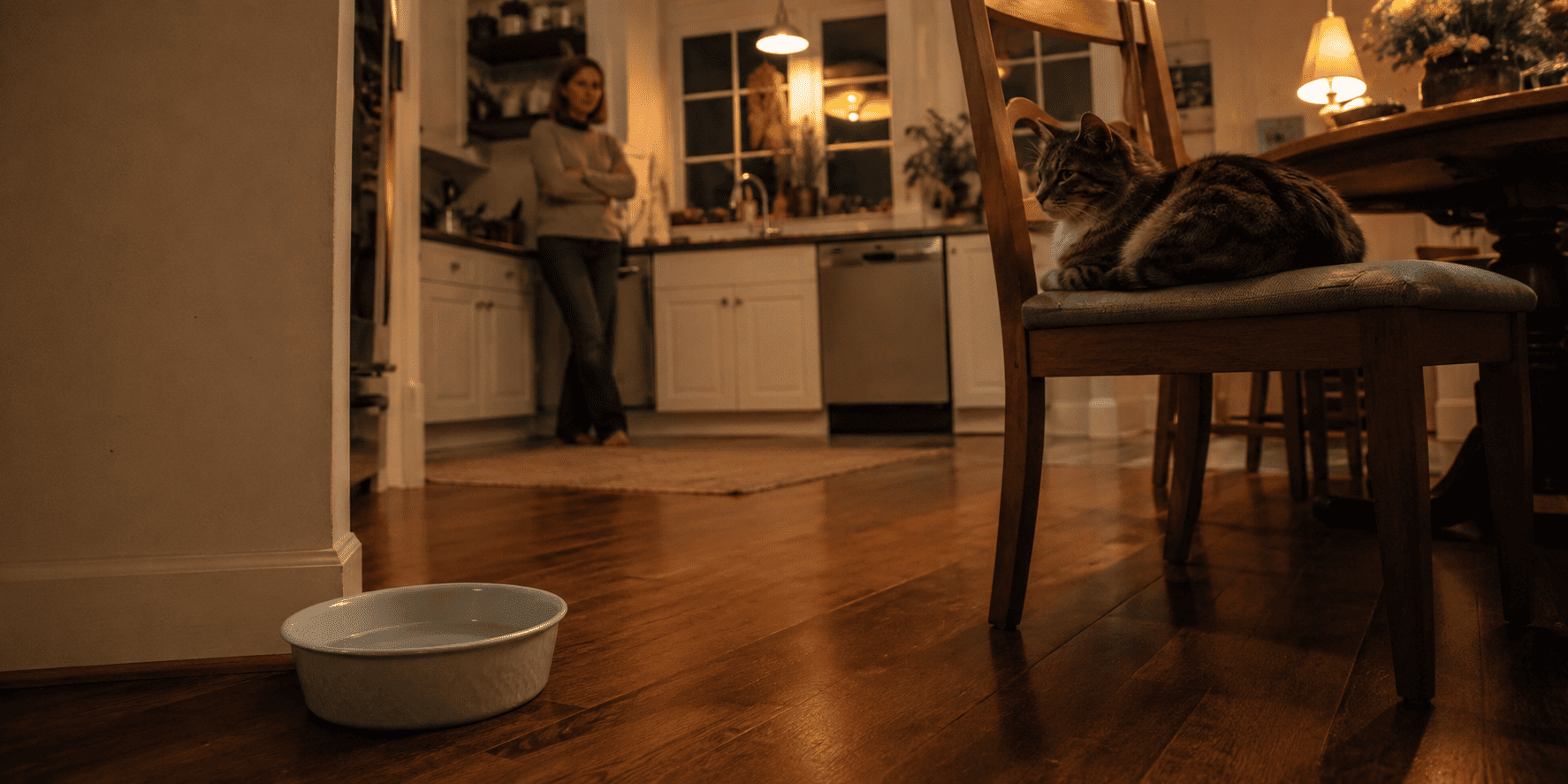
If you have a cat not drinking water, first work out whether your cat has truly stopped taking in fluid or has simply stopped visiting the bowl. Wet food can supply a large share of daily water, so a cat eating mostly canned food may drink very little in front of you. A sudden refusal of a familiar bowl is more meaningful when nothing else changed, especially if appetite, urine output, energy, or comfort also changed. This guide focuses on a cat that seems to be taking almost no visible drinks or has abruptly stopped using its usual water source; a smaller change from an established drinking pattern is a different problem.
Use the Cat, Not the Bowl, as Your First Check
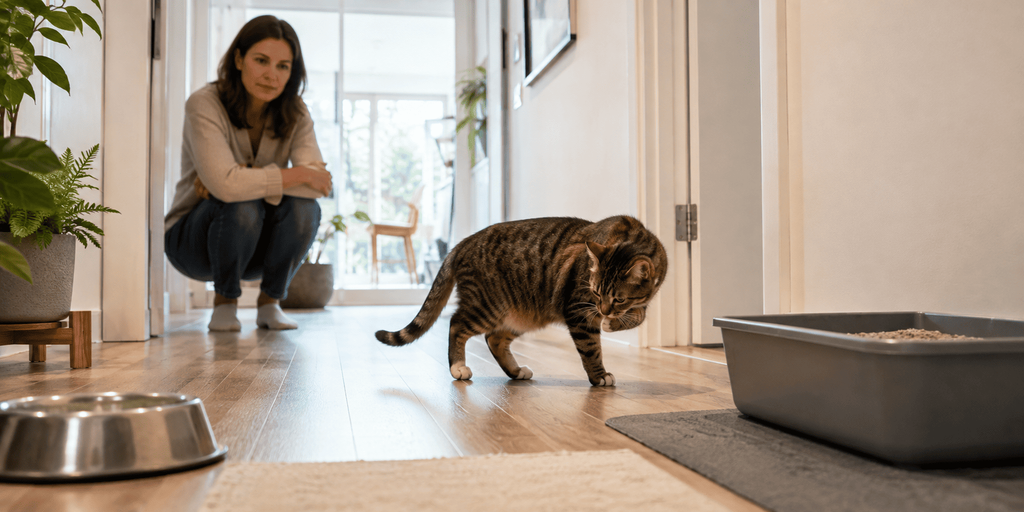
Start with changes you can actually observe. Check whether your cat is eating normally and whether urine output looks usual. Then compare activity, grooming, and general behavior with the normal routine. A cat that appears comfortable and produces its usual urine while eating wet food is a different situation from a cat that refuses food and seems weak. Home checks can help you notice a pattern, but they cannot confirm hydration status as reliably as a veterinary assessment. Pay attention to bowl height and reach for older cats. A cat with neck or joint discomfort may avoid a station that requires an awkward crouch or a long walk across the home. A stable bowl on an easy route can remove a physical barrier without turning hydration into a special treatment routine.
Body weight can add context when a change continues. A stable adult that suddenly loses weight while eating or drinking differently needs more than a bowl adjustment. Weighing at home can be useful, but unexplained loss should be discussed with your veterinarian rather than managed through hydration tricks alone.
| What you notice | What it may mean | What to do next |
|---|---|---|
| Rarely drinks but eats mostly wet food | More fluid may be coming from meals | Watch urine, appetite, and normal behavior |
| Suddenly stops using a favorite bowl | Bowl, water, location, stress, or illness may have changed | Refresh the setup and monitor closely |
| Eating less and drinking less | Total fluid intake may be falling | Contact your veterinarian if the change is significant |
| Vomiting or diarrhea plus low intake | Water loss may be increasing while intake falls | Seek veterinary guidance promptly |
Cat Not Drinking Water? Food Moisture Changes What You See
Wet food contains far more water than dry food, so visible drinking can look very different between two healthy cats. A cat that eats canned food may drink only small amounts from a bowl. A dry-fed cat usually needs to obtain more of its daily fluid by drinking. Look at what your cat actually eats before deciding something is wrong. If you recently switched from dry food to wet food, fewer trips to the bowl may be expected. If nothing about the diet changed and your cat suddenly stops visiting its usual water source, pay closer attention. That distinction is easier to make when you think about total water intake from both food and drinking rather than bowl visits alone.
Do not rely on bowl level alone if more than one pet shares the water. Spills, evaporation, and another animal drinking from the same bowl can make the amount impossible to interpret. Food changes can hide a drinking change in both directions. Switching from wet to dry food may increase bowl visits, while moving toward wetter meals may reduce them. When you compare weeks, record the diet format too. Otherwise, a normal response to food moisture can look like a new thirst problem.
If Your Cat Avoids One Water Source, Test the Setup
A sudden change deserves more attention than a cat that has always been a light bowl-drinker. Nausea and poor appetite can reduce both eating and drinking. Dental or mouth pain may make lowering the head or taking in water uncomfortable. Weakness can make a distant bowl harder to reach. Stress can also change routines. A new pet, visitors, construction noise, or a moved water station may make a previously comfortable location feel unsafe. Multi-cat tension can be subtle; one cat does not need to attack another to make a shared bowl difficult to approach. Medication and illness can alter fluid balance too. Some diseases increase water loss, which can create dehydration even when the cat still drinks. This is why “I saw my cat drink” does not always mean hydration is adequate. Consider both intake and losses when the change appears suddenly.
A useful clue is whether your cat still drinks elsewhere. Some cats abandon one station but use a bathroom cup, another bowl, or a fountain in a different room. That points you back toward access or preference rather than proving total intake has stopped. If every familiar water option is ignored and food intake is also falling, the situation changes. Keep the old station available while you test one alternative. Removing it too early can turn a small preference test into a forced change and make the pattern harder to read.
Watch What Happens Before the Cat Reaches the Water
The approach to the bowl can tell you more than the final sip. A cat that walks toward water, pauses, lowers the head, and then backs away may be dealing with a problem at the station itself. Bowl movement, a loud fountain pump, a new smell, another pet nearby, or discomfort when bending can all interrupt the routine. By contrast, a cat that never approaches water and is also eating less, hiding, or moving weakly gives you a broader health pattern to consider.
Use one ordinary drinking opportunity as a small observation exercise. Stay far enough away that your presence does not change the behavior. Notice the route, body posture, hesitation, and whether the cat chooses a different bowl later. This is especially useful in a multi-cat home, where access can look open to you but still feel socially blocked to one cat. The goal is not to diagnose from body language. It is to learn whether the barrier appears to happen before, at, or after the cat reaches the water.
Three Low-Pressure Changes Worth Trying
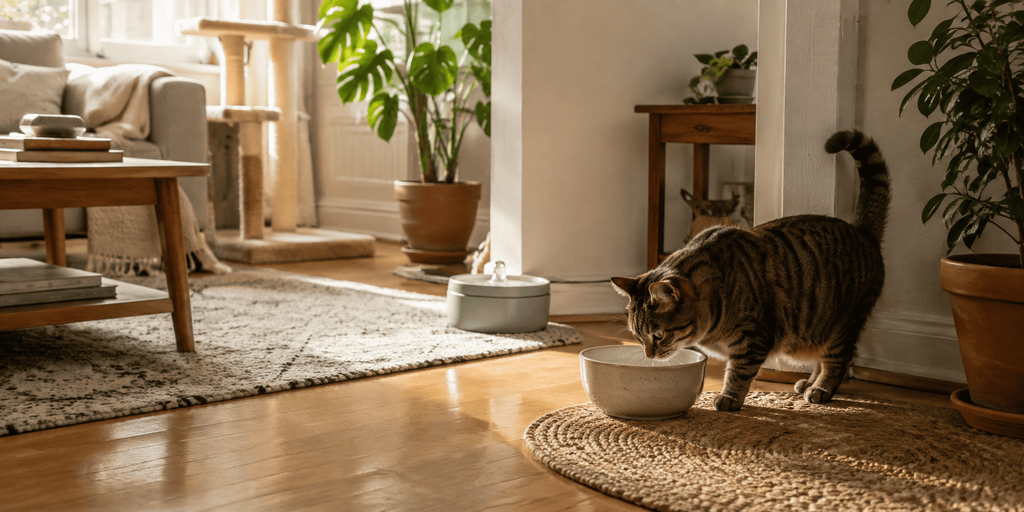
If your cat is otherwise well and you simply want to make drinking easier, try small changes rather than forcing water. Do not syringe water into a resistant cat unless a veterinarian has specifically instructed you. Forced water can be stressful and may be unsafe if given incorrectly. Also think about recent cleaning changes. A new detergent, floor cleaner, or scented product near the water station can make the area smell unfamiliar. Cats experience scent far more intensely than people do, so a location that seems unchanged to you may feel very different to your cat. Make each change easy to reverse. Add a second bowl instead of removing the first. Offer a little water in food instead of changing the whole meal texture. Cats often respond better when familiar choices remain available while a new option is introduced.
- Place several clean water bowls in quiet, easy-to-reach locations.
- Refresh the water daily and wash bowls regularly.
- Offer a fountain only if your cat seems interested in moving water.
- Feed wet food if it suits your cat’s nutritional plan.
- Add a small amount of water to food and increase slowly if your cat accepts it.
- Keep water away from litter boxes and stressful bottlenecks.
- Give each cat separate drinking options in a multi-cat home.
Measure the Pattern Without Restricting Water
If you genuinely cannot tell whether your cat is drinking, simplify the observation rather than removing access. Refresh the usual bowls, note roughly how full they are, and keep the setup stable for the day. In a single-cat home, checking the level later can give a rough clue. In a multi-pet home, bowl measurements are much less reliable because you cannot know who drank what. Never withhold water to make the result easier to measure.
Pair the bowl observation with things that are easier to interpret: how much wet food was eaten, whether meals were finished, and whether the litter box looks close to normal. A cat may take several small drinks overnight when no one is watching. Another may obtain most of its water from canned food. If the only evidence is “I never saw a sip,” you still do not know that intake is zero. A clear change in appetite, urine, energy, or comfort carries more weight than the absence of a witnessed drink.
Keep a 24-Hour Hydration Log
When a cat is not drinking water, the bowl is only one piece of the picture. Check food moisture, urine output, appetite, energy, and recent changes in the home. A wet-food cat may drink very little and still take in plenty of fluid, while a sudden drop in both food and water is more concerning. Keep water clean, accessible, and available in more than one safe location. If the pattern changes sharply or your cat seems unwell, use that change as a reason to contact your veterinarian rather than trying to solve possible dehydration with home tricks alone.
Write down only what you can verify. Note meals eaten, obvious drinks, litter-box output, and energy. Keep the water available as usual. A short log is useful because memory tends to overvalue one empty bowl or one missed visit. The pattern across the day is what matters.
A Drinking Problem Looks Different When Other Signs Appear
Watch for changes that occur together. Skin-tenting tests are often discussed online, but they are not perfect. Age and skin condition can affect how quickly skin returns to position. Use concerning signs as a reason to contact your veterinarian rather than trying to calculate a dehydration percentage at home. If you are experimenting with a fountain, keep at least one plain bowl available during the trial. This lets your cat choose rather than forcing a switch. Track which station is actually used over several days before deciding that the new product has improved intake. Constipation can be part of a low-fluid picture, but it has many causes. If your cat strains, produces very hard stool, or skips bowel movements repeatedly, contact your veterinarian. Do not assume that simply adding more water will correct a persistent defecation problem.
- Reduced appetite or refusal to eat
- Lethargy, weakness, or unusual hiding
- Dry or tacky-feeling gums
- Vomiting or diarrhea
- Noticeably smaller or fewer urine clumps
- Constipation or difficulty passing stool
- Sunken-looking eyes or marked loss of normal alertness
- A sudden change in drinking plus an existing medical condition
Red Flags That Change This From Monitoring to Veterinary Care
Contact your veterinarian when low intake is a clear change and your cat also eats less, vomits, has diarrhea, seems weak, or produces less urine. Existing kidney, urinary, heart, or metabolic disease can lower the threshold for a call. Seek urgent care for collapse, breathing difficulty, repeated vomiting that prevents fluids staying down, or inability to urinate normally. In those situations, a cleaner bowl or new fountain is not the next experiment.
References
- Hydration — Cornell Feline Health Center — Explains how drinking and food moisture contribute to total water intake, common dehydration signs, and reasons intake may fall.
- Enhancing Water Intake for Your Cat — Cat Friendly Homes — Feline-veterinary guidance on bowl placement, water preferences, wet food, added water, and practical ways to improve access.
- What Is Normal for Your Cat? — Cat Friendly Homes — Shows why a cat’s usual eating, drinking, and urine pattern is more useful than judging one isolated bowl visit.
