

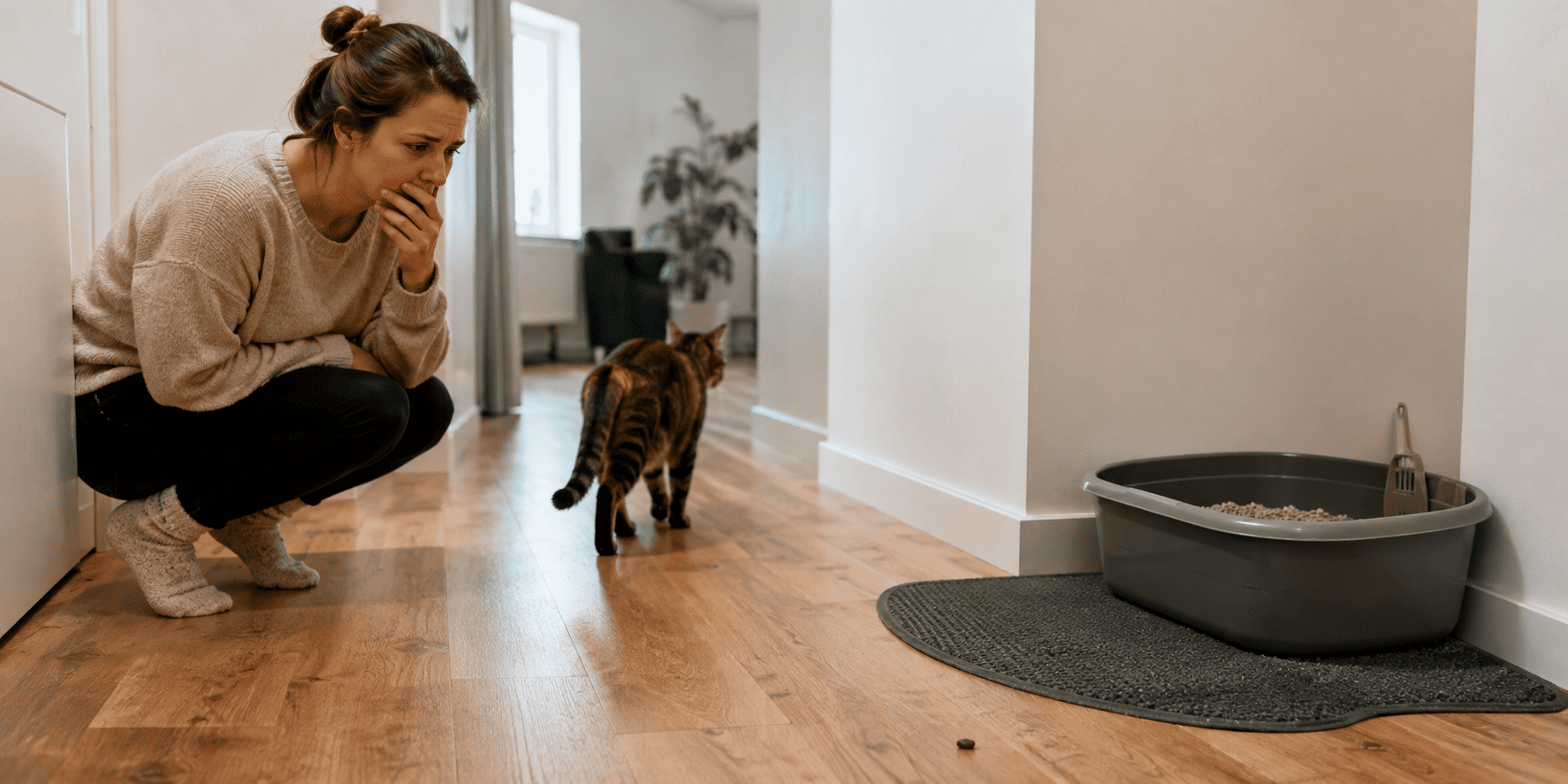
A cat pooping outside the litter box may be reacting to pain, urgency, difficult stool, box design, substrate preference, or social access. The stool itself often gives the first useful clue. Hard dry feces, repeated straining, loose stool, mucus, or blood point in a different direction from one normal stool placed beside a box with a high entrance. Treat the accident as evidence: what came out, where it happened, and how the cat behaved before and after defecation can narrow the problem faster than changing litter at random.
Cat Pooping Outside the Litter Box? Start With the Stool
Stool quality gives immediate context. Hard, dry pieces can suggest constipation or difficult passage. Loose or watery stool creates urgency and may make it harder for a cat to reach the box in time. Blood, mucus, repeated straining, or obvious discomfort deserves veterinary attention. Notice frequency too. A cat that passes small hard pieces after repeated attempts has a different problem from a cat that produces a normal stool on the rug once after a frightening event near the box. Do not diagnose constipation from posture alone. Cats can look similar when straining to urinate, and urinary obstruction can be an emergency. If you are unsure what your cat is trying to pass, contact your veterinarian. Location can reveal substrate preference too.
A cat that repeatedly chooses a bath mat, laundry pile, or soft rug may prefer that texture to the current litter. Do not simply make the surface unavailable; offer an acceptable litter texture and box where the cat can use it comfortably. Do not change food abruptly just because the stool is outside the box. Sudden diet changes can create new digestive upset and make the pattern harder to interpret. If you suspect food is involved, discuss a structured transition with your veterinarian. Compare two common scenarios. A small hard stool dropped just outside the box after several trips suggests a very different problem from a normal formed stool placed on the same bath mat three mornings in a row. Hard or difficult stool pushes discomfort and constipation higher on the list.
With normal stool in a repeated spot, box access, litter texture, location, and learned surface preference become more useful to investigate. Location still matters, but stool quality and effort tell you what kind of problem may be driving it.
If Urine Goes in the Box but Stool Does Not, Test Space and Preference
Some cats separate elimination locations by preference. A cat may use one box for urine and another for stool. This can happen even in a single-cat home and does not automatically mean anything is wrong. However, a sudden new split can still signal discomfort or a change in the environment. A cat may tolerate the box long enough for a quick urination but avoid spending more time there to defecate. Box size can matter because cats may need more room to dig, turn, and position for stool. Offering a second large box in a separate location is a simple test. If the cat immediately uses it for stool, you have learned something useful about preference or access. Do not remove the original box while testing. Choice gives clearer information than forcing a single option.
Offer boxes in different locations rather than identical trays lined side by side. A cat may be choosing privacy, escape routes, or room conditions as much as the box itself. Separate options help reveal that preference. Defecation can take longer and require more turning, digging, and postural adjustment than a quick urination. A box that feels barely acceptable for peeing may feel cramped for stool. This is why a second large open box can be a useful test even in a one-cat home. Place it in a genuinely different, quiet location rather than directly beside the first box; if the cat consistently chooses it for stool, you have learned something about space or location without forcing a permanent change.
The Surface Can Become Part of the Preference
A repeated accident on the same bath mat, rug, or laundry pile can tell you something about texture as well as location. Soft absorbent surfaces may feel more comfortable than coarse litter, especially after a painful defecation experience. If you remove one target without improving the toilet option, the cat may simply choose another similar surface.
Use the pattern to design a test. Keep the established box available and add a larger box with a softer, unscented litter in a separate quiet location. If the cat begins using the new box for stool, that result is more informative than spraying deterrent around the house. The same logic applies to a cat choosing a bare hard floor: location, ease of entry, or box size may matter more than softness. Let the repeated choice guide the next variable you test.
Pain, Constipation, and Diarrhea Change the Priority
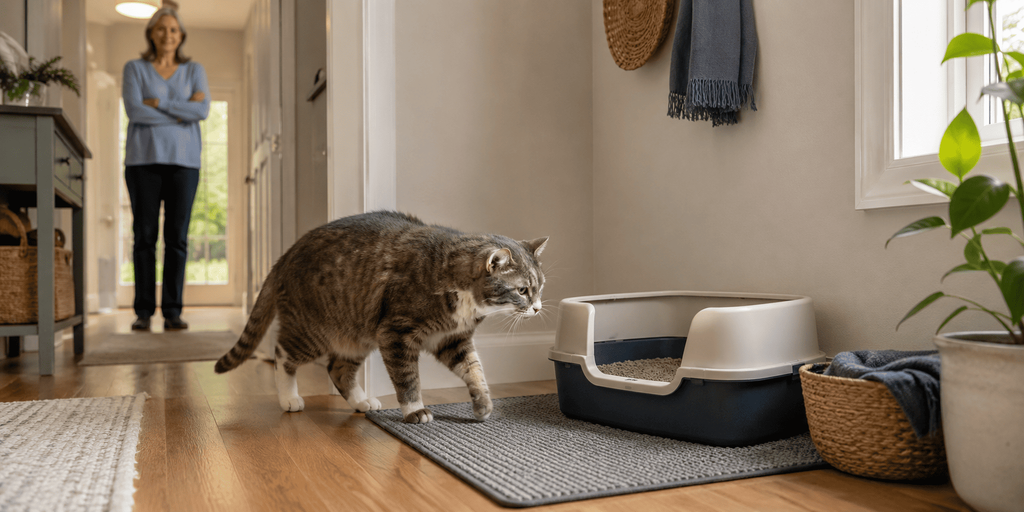
Defecation problems can create a strong negative association with the litter box. If a cat experiences pain while inside, it may later choose a different surface even after the original discomfort improves. Constipation can be related to dehydration, diet, reduced movement, pain, medications, or medical disease. Diarrhea has many possible causes too. Repeated episodes need veterinary assessment rather than endless litter experiments. Mobility matters. Arthritis can make the squat itself uncomfortable or make a high-sided box difficult to enter. Senior cats may choose a nearby floor simply because stepping over the box edge has become painful. Watch for vomiting, reduced appetite, lethargy, straining, or a swollen-looking abdomen. Those signs increase the need for prompt veterinary advice. If the cat defecates near the box, measure the box rather than assuming it is large enough.
A cat may fit inside for urine but need more turning and digging room for stool. Storage-style trays can provide more usable area than many standard pet-store boxes. Long-haired cats can also develop stool stuck in fur around the rear, which may lead to discomfort or accidents. Gentle grooming can help with minor coat issues, but painful skin, repeated soiling, or severe mats need professional attention.
Get Veterinary Help Before Repeating Litter Experiments
Contact your veterinarian if the change is new and persistent or if your cat strains, passes very hard stool, has repeated diarrhea, vomits, eats less, seems painful, or becomes lethargic. Cats with constipation can become increasingly uncomfortable, and ongoing diarrhea can cause dehydration. Seek prompt care if your cat repeatedly strains and you cannot tell whether urine or stool is being produced. Difficulty urinating can be urgent. Older cats with new house-soiling also deserve a mobility and health review. A lower-entry box may help, but pain or disease should not be assumed away.
Bring the stool history with you if you can. A photo of an unusual bowel movement, notes on frequency, and a list of recent food or medication changes can be more useful than trying to describe everything from memory. If the clinic asks for a fresh stool sample and you can collect one safely, follow their instructions. Do not delay care just to obtain a sample. Pain, repeated straining, vomiting, or a swollen abdomen deserve attention first.
Tell the clinic whether the cat also urinates normally. Straining can look similar from a distance, and that distinction can change how urgently the situation needs to be assessed.
Clean the Area Without Punishment or Startle Tricks
Remove stool promptly and clean the surface well enough that the area does not keep carrying a strong elimination scent. Choose a cleaner that is safe for the material and for pets. If residue has reached carpet padding or fabric layers, the visible spot may be smaller than the area that needs cleaning. Strong fragrance is not a substitute for removing contamination.
Avoid punishment, yelling, or devices designed to scare the cat away from the location. Those methods can add anxiety and may only move the accident elsewhere. Temporary management is fine: pick up bath mats, protect a bed, or restrict access to a repeat location while you investigate. The important part is pairing that management with a better litter option and medical care when indicated, so the cat has an acceptable place to go rather than simply fewer places to choose.
Once the area is clean, change its function only after the cat has a reliable toilet option. A resting mat, scratcher, or play activity can make sense in a former accident spot, but it should not replace fixing box comfort or medical problems. If the cat keeps returning, that is a sign to revisit the reason rather than escalating deterrents.
Rebuild the Box Around Comfort and Escape Routes
Before testing deterrents, make sure box size, placement, litter, cleaning, and access are genuinely comfortable for the cat. Fix comfort and access before trying deterrents around the accident site. Some cats also want more room for defecation than the current box provides. A large uncovered tray can be a useful test even if the existing box seems adequate for urine. If the new box is preferred immediately, size or enclosure may have been part of the problem.
- Box size is too small for comfortable turning and posture.
- A high entrance makes access harder for a senior or painful cat.
- Strong scent, coarse texture, or a recent litter change may reduce acceptance.
- Waste from another cat or delayed scooping makes the box less appealing.
- Noise, exposure, or a poor escape route makes the location stressful.
- Several boxes are grouped together in one stressful area.
- Another cat waits near the route or blocks access.
- The cat had a frightening experience while using the box.
Run a Seven-Day Stool and Box Log
A short log can reveal patterns that are easy to miss from memory. Record whether the stool was normal, hard, small, loose, bloody, or coated with mucus. Note the location, approximate time, whether the cat strained, and which litter boxes were clean and accessible. In a multi-cat home, add anything you noticed about another cat near the route.
Do not wait a week if the cat is painful, vomiting, repeatedly straining, or not producing normal urine. The log is for troubleshooting a stable cat, not delaying care. When the cat otherwise seems well, seven days is often enough to show whether accidents follow one box, one surface, one time period, or one social situation. That pattern can make the veterinary history clearer and helps you avoid changing several things without learning which one mattered.
Use the Next Accident as Evidence
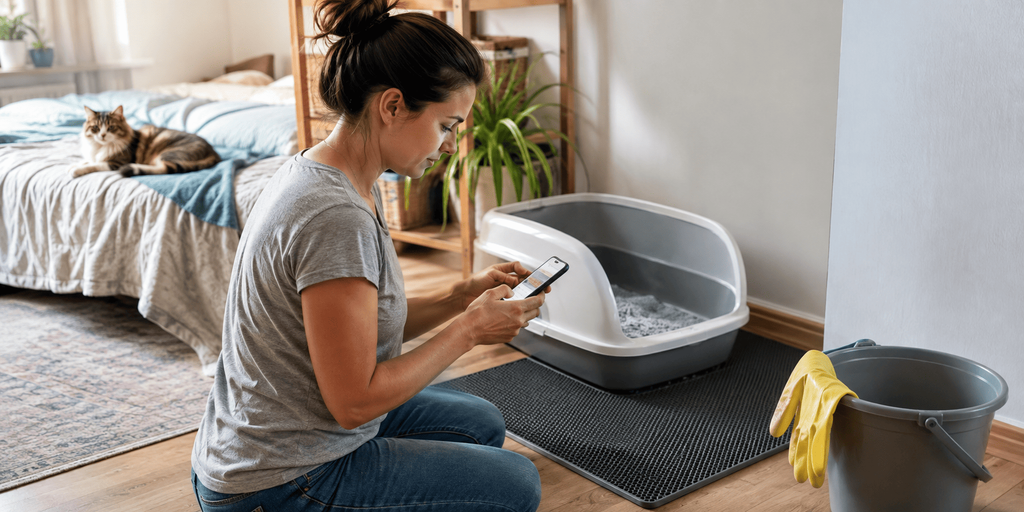
Treat the next accident as data instead of a failed lesson. Note stool texture, location, timing, effort, and whether the cat also used the litter box normally that day. A photo can help your veterinarian if the stool looks unusual.
- Record hard, loose, bloody, or mucus-coated stool.
- Note repeated straining or urgency.
- Check which boxes were clean and accessible.
- Watch for another pet near the route.
- Keep changes limited enough to identify what helps.
References
- Not Using the Litter Box — Cat Friendly Homes — Updated guidance on medical, environmental, litter, location, and social factors behind fecal and urinary house-soiling.
- Constipation — Cornell Feline Health Center — Explains difficult or infrequent passage of hard stool and the range of medical factors that can contribute.
- Feline House-Soiling — FelineVMA — Practical caregiver guidance on litter-box design, access, social pressure, and systematic troubleshooting.
