

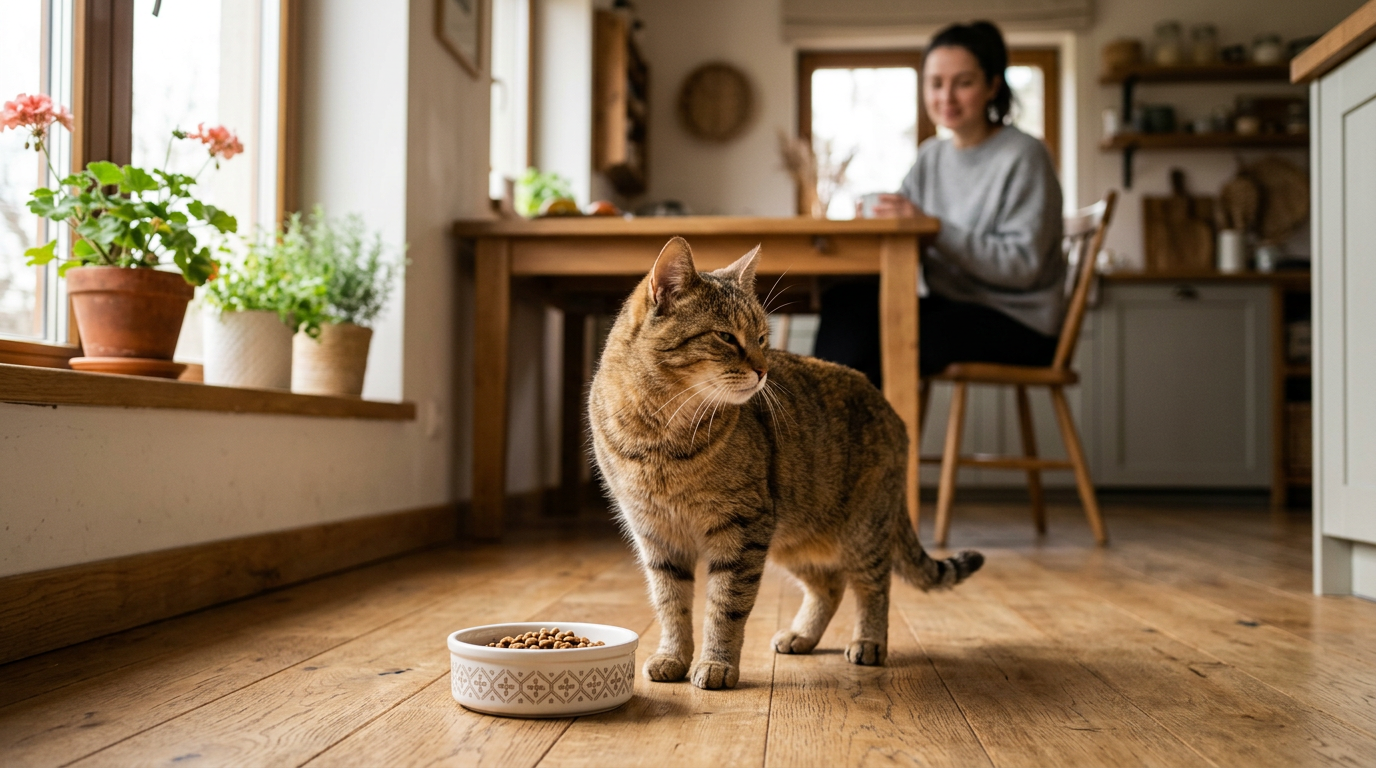
If your cat eating less, the change matters more than the exact number of bites left in the bowl. A cat that has always been a light grazer is different from one that normally finishes dinner and now walks away after a few mouthfuls. Reduced intake can come from something simple, such as a new food, heat, household disruption, or another pet near the feeding area. It can also be an early sign of dental pain, nausea, fever, gastrointestinal disease, kidney disease, or other illness. The practical job is to confirm that intake really changed, look for clues about whether the cat wants to eat but cannot. And avoid letting a meaningful appetite drop drift on for days.
Cat Eating Less? First Confirm the Change
Free-feeding makes appetite changes surprisingly easy to miss. One person tops up the bowl, another pet steals some, and the remaining food looks “about normal.” For the next meal, measure what you offer and what remains. If you feed wet food, note how much is eaten before it dries out. In a multi-cat home, separate meals temporarily so you know which cat consumed what. The goal is not perfect calorie accounting; it is to turn a vague impression into a usable observation.
Also check treats and scavenged food. A cat that skips breakfast after eating a large amount of treats the night before has a different pattern from a cat refusing both meals and favorite snacks. If appetite is genuinely down, record when you first noticed it. Duration changes how urgently the problem should be handled.
Watch Whether Your Cat Wants Food but Struggles to Eat It
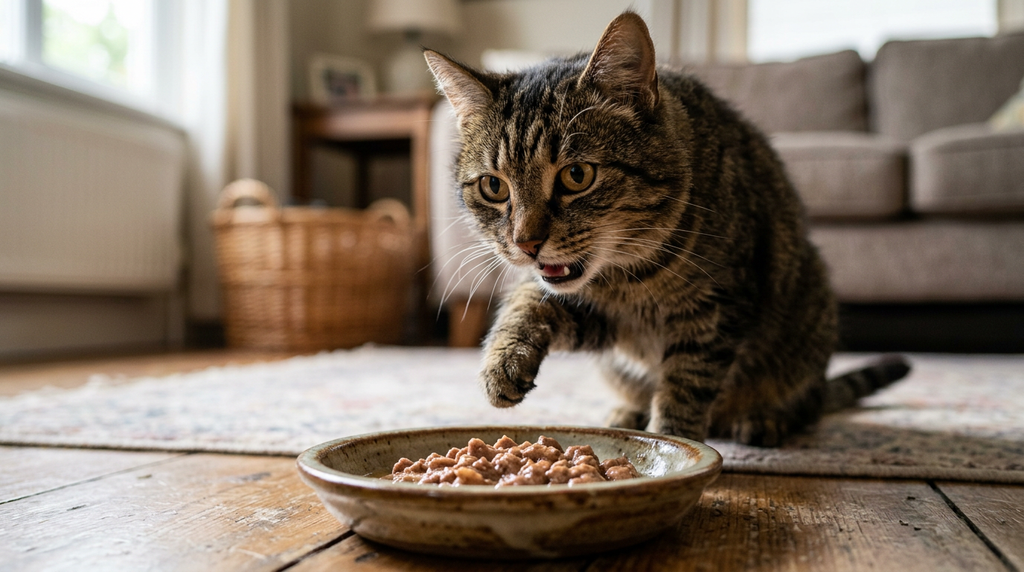
VCA distinguishes true anorexia from pseudo-anorexia. In pseudo-anorexia, the cat is interested in food but has difficulty picking it up, chewing, or swallowing. That distinction is useful at home. A cat that runs to the bowl, sniffs eagerly, takes one bite, drops food, paws at the mouth, chews on one side, or backs away may be telling a different story from a cat that never approaches.
Dental disease, oral inflammation, jaw pain, foreign material, and swallowing problems are examples your veterinarian may consider. Do not pry open a painful mouth or try to scrape teeth. Instead, note whether soft food, hard food, or licking behaves differently. A short video of the eating attempt can be useful for the clinic if it can be recorded without disturbing the cat.
Check What Changed Around the Food Before Changing the Food Again
Cats can be sensitive to feeding context. Cornell notes that noise, heavy traffic, nearby litter boxes, dirty containers, and other animals can deter eating. Before opening three new cans, look at the station. Was the bowl moved? Did a dishwasher, washing machine, construction project, guest, or new pet change the room? Is another cat waiting in the doorway? Did you switch from a wide ceramic dish to a deep plastic bowl?
If the cause appears environmental, restore the familiar setup and give the cat a quiet place to eat. Change one thing at a time. Constantly rotating foods can make it harder to tell whether appetite is recovering and may teach some cats to wait for a different option. If the cat appears unwell, environmental troubleshooting should not delay veterinary care.
Check the packaging for a new lot, damaged seal, dented or swollen cans, or dry food that smells rancid. If several pets refuse the same newly opened product, stop using it and contact the manufacturer or retailer. Keep the package and lot information rather than throwing it away immediately. Food quality problems are uncommon, but a synchronized refusal is a clue worth preserving.
Food Changes Can Reduce Intake Even When the Label Looks Similar
A new bag or case can differ in aroma, texture, moisture, kibble shape, or recipe. Even a planned transition can temporarily reduce enthusiasm. Compare the exact product name, flavor, life stage. And calorie density rather than assuming two foods from the same brand are interchangeable. Check expiration dates and storage. Dry food exposed to heat or humidity can smell stale, while refrigerated wet food may be less aromatic when served very cold.
If your cat was eating the previous food well and the change coincided exactly with a new product, offer a small amount of the familiar food if it is still appropriate and safe. Do not starve a cat into accepting a new diet. When a therapeutic food is involved, contact the veterinary team for transition options rather than abandoning the prescription independently.
Water intake can move in either direction. A nauseated cat may drink less, while some diseases that reduce appetite also increase thirst. Litter output may change before you notice anything else. These combinations are why a short video, meal estimate. And litter observation can be more useful than repeatedly offering different flavors without recording the response.
Look for the Clues That Make Reduced Appetite More Concerning
Appetite rarely exists in isolation. Combine the food change with what you see elsewhere. A cat that eats 20% less but otherwise plays, drinks, toilets, and behaves normally still deserves monitoring. A cat that eats less and hides, vomits, drools, strains in the litter box, breathes differently, or loses weight deserves faster evaluation. Cornell notes that sustained anorexia can have serious consequences in cats and advises veterinary attention rather than prolonged home experimentation.
- repeated vomiting or diarrhea;
- marked lethargy, weakness, or hiding;
- drooling, mouth pain, or difficulty swallowing;
- straining or repeated unproductive litter-box trips;
- rapid or unexplained weight loss;
- yellow tint to gums, skin, or whites of the eyes;
- breathing difficulty or collapse.
Urgency depends on the full picture, age, and health history. When in doubt, call the clinic and describe the amount eaten and the accompanying signs.
Do Not Wait for “Not Eating at All” Before Taking the Change Seriously
The phrase “not eating” sounds more dramatic than “eating less,” but cats can become nutritionally compromised before intake reaches zero. Cornell describes appetite loss as a clinical sign that can accompany many conditions and notes that prolonged food avoidance can be dangerous. Overweight cats are particularly at risk of hepatic lipidosis when intake falls sharply. Kittens, seniors, and cats with chronic disease may also have less reserve.
This is why a sudden, sustained reduction deserves a timeline. If your cat is eating meaningfully less than normal for roughly a day, contact your veterinarian for guidance rather than waiting several days to see whether hunger wins. For very young kittens or cats already ill, seek advice sooner. Your clinic can adjust the recommendation based on age, health status, and the degree of reduction.
Temperature and texture can provide clues without becoming a diagnosis. A cat that rejects cold chunks but eats the same food mashed and slightly warmed may simply find the aroma or texture more appealing. But mouth pain or nausea can produce similar selective eating. A cat that licks gravy and leaves solids may be choosing the easiest component rather than rejecting the flavor. Note the pattern and tell the veterinarian if it persists.
Likewise, “still eats treats” does not clear a cat medically. Highly palatable treats can be accepted after normal meals start dropping, especially when nausea is mild or chewing a small soft treat is easier than eating a full portion. Treat acceptance is useful information, not proof that the cat is merely being picky.
Use Familiar Food and Gentle Aroma Before Resorting to Pressure
While arranging veterinary advice, you can make normal food easier to approach. Serve a familiar wet food at room temperature or warm it slightly so the aroma is stronger; test the temperature before offering. Provide a clean, shallow dish in a quiet area. Small fresh portions can be more appealing than one large serving left out for hours. If your veterinarian has previously recommended a specific appetite strategy for this cat, follow that plan.
Avoid force-feeding unless a veterinary professional has specifically instructed you how and why. Cornell notes that forcing food into the mouth can worsen food aversion in anorexic cats. Also avoid hiding unpleasant medication in the cat’s main meal if it risks making the cat reject an important food. The goal is to support eating while the cause is assessed, not to turn meals into restraint.
Medication timing is another important clue. Antibiotics, pain medicines, chemotherapy drugs, supplements, and other treatments can affect appetite or nausea, while the illness being treated may be the actual cause. Do not stop prescribed medication on your own unless the veterinary team tells you to. But report the timing of the appetite change relative to new drugs or dose changes. Bring a complete medication and supplement list rather than relying on memory.
If the cat has eaten less after a stressful event such as moving, boarding, a new pet, or a veterinary visit, note that too. Stress can reduce intake, yet the presence of a plausible stressor should not automatically rule out illness. Cats can experience both at the same time. And a stress story can delay care if it becomes the only explanation considered.
Record Enough Detail to Make the Veterinary Call More Useful
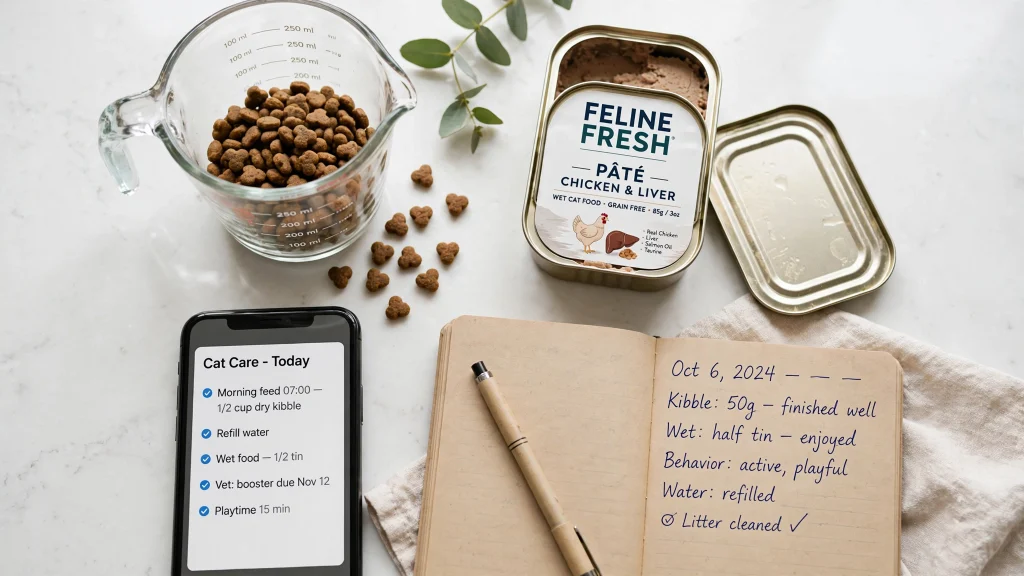
When you call, “she ate less” is a start, but a short structured history is better. Note the last normal meal, roughly how much food was offered and eaten, whether treats are accepted, vomiting or diarrhea, drinking changes, urine and stool changes, recent weight, medications, and any food or household changes. Mention whether the cat approaches food and then stops. If you can weigh the cat calmly on a reliable scale, record the number without repeatedly weighing throughout the day.
This kind of baseline fits into a feeding plan built around the full daily intake rather than individual bowl moments. It also helps distinguish a one-off small meal from a genuine downward trend. Bring packaging or a photo of the exact food if a recipe change or possible spoilage is relevant.
If your cat normally eats overnight, remember to include that period in the timeline. An untouched morning bowl may represent many hours of reduced intake, not merely one skipped breakfast.
A Sudden Appetite Drop Is a Signal, Not a Diagnosis
Reduced eating can be caused by stress, food preference, mouth pain, nausea, systemic illness, medication effects, or many other problems. The pattern tells you that something changed; it does not tell you which disease is present. Resist the urge to diagnose from one internet list or to treat nausea, constipation, or dental pain with human medication. Cats metabolize many drugs differently, and common household medicines can be dangerous.
The useful response is proportional: verify the change, remove obvious feeding barriers, look for accompanying signs. And contact the veterinarian promptly when intake remains meaningfully below normal. Once the cause is treated or the stressor resolves, appetite often becomes one of the clearest ways to judge recovery because you already know what normal eating looks like for your cat.
References
- Cornell Feline Health Center — Anorexia — Veterinary guidance on feline health and care.
- VCA Animal Hospitals — Anorexia in Cats — Veterinary guidance on this care decision.
- Cornell Feline Health Center — Feeding Your Cat — Veterinary guidance on feline health and care.
