

A cat losing weight without a planned diet change deserves attention, even if the cat still seems bright or is eating well. Weight loss is not a diagnosis; it is a sign that the balance between calories coming in, nutrients being absorbed, and energy being used has changed. The most useful clues are appetite, thirst, urination, vomiting or diarrhea, age, dental comfort, and whether the cat is losing fat, muscle, or both. A cat that eats more while getting thinner suggests a different set of possibilities from a cat that approaches food but cannot comfortably eat it.
Confirm That the Weight Loss Is Real
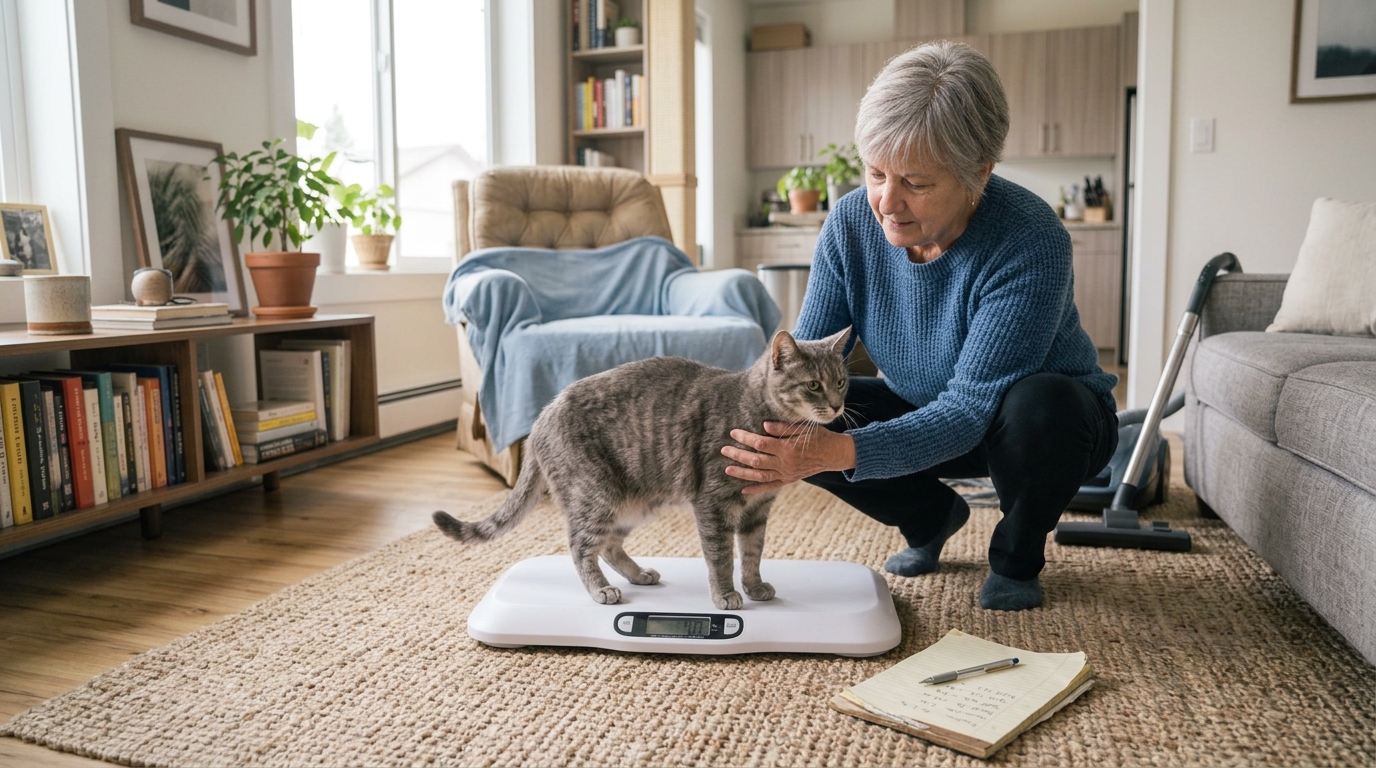
Gradual changes are easy to miss because you see your cat every day. A fluffy coat can hide loss of body mass, while a haircut or seasonal coat change can make a stable cat look suddenly smaller. Use the same scale when possible and compare repeated measurements rather than relying on one reading. If your cat will stand calmly on a pet or baby scale, record the number under similar conditions. Another option is to weigh yourself holding the cat and subtract your own weight, although this is less precise.
Numbers are only part of the picture. Feel along the ribs, spine, shoulders, and hindquarters. Older cats can lose muscle even when the scale changes only a little. Photos taken from above and from the side every few weeks can help reveal a changing waist or muscle profile. If you are already tracking everyday changes in appetite, litter habits, movement, grooming, and body condition, add weight to the same record so the trend has context. Unplanned loss should be discussed with a veterinarian rather than managed by simply adding more treats.
Check the feeding record before assuming the food itself is inadequate. Measure what goes into the bowl. Measure what remains when practical. Count treats. Note whether another pet steals food. Confirm that a timed or automatic feeder is releasing portions correctly. A simple access problem can reduce intake, but persistent loss still deserves medical assessment.
Appetite Splits Weight Loss Into Useful Patterns
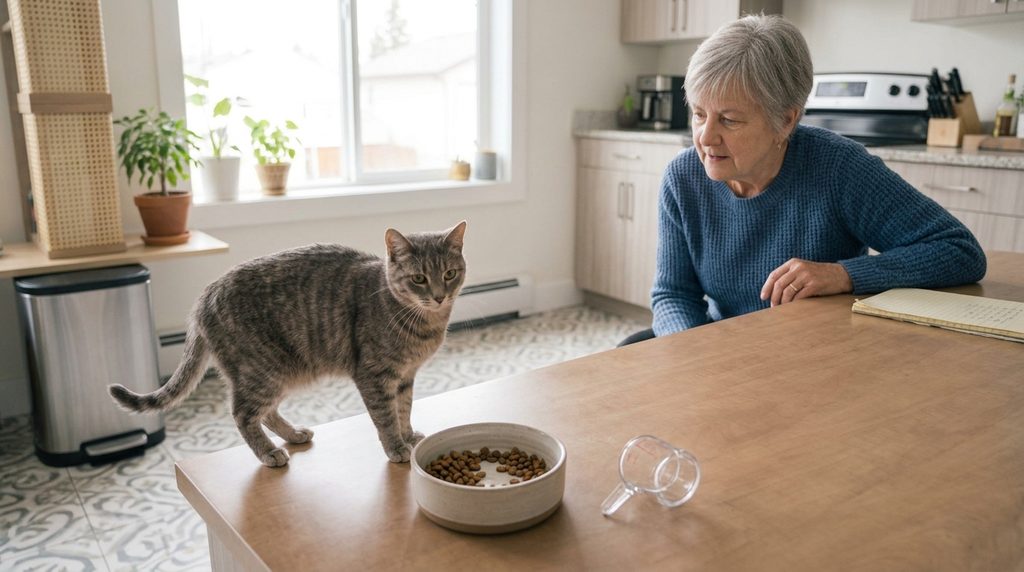
Ask whether your cat is eating more, eating less, or appearing interested in food but struggling to eat. A cat that loses weight despite a strong or increased appetite may have a condition that prevents the body from using calories normally or greatly increases energy use. Hyperthyroidism and diabetes are classic examples. A cat that eats less may be dealing with nausea, kidney disease, dental pain, gastrointestinal disease, infection, stress, or many other problems. A cat that wants food but drops it, chews on one side, or walks away after a few bites raises concern for oral discomfort.
| Pattern | Clues to notice | Why it matters |
|---|---|---|
| Losing weight + eating more | Strong appetite, thirst, larger urine clumps, restlessness | Metabolic disease such as hyperthyroidism or diabetes may be considered |
| Losing weight + eating less | Nausea, dental signs, vomiting, lethargy, hiding | Many illnesses can reduce intake |
| Weight stable but body looks bonier | Muscle loss over spine or hindquarters | Muscle condition can change before scale weight shifts much |
| Sudden sharp loss | Rapid change over days or weeks | Needs prompt veterinary assessment |
In an Older Cat, Hyperthyroidism Is an Important Possibility
Hyperthyroidism is common in older cats and often causes weight loss despite a good or increased appetite. Cornell lists increased thirst and urination, vomiting, diarrhea, hyperactivity, and an unkempt coat among other possible signs. The pattern can be subtle at first. A cat may simply seem hungrier, louder, or more restless while getting thinner. Because thyroid hormone affects multiple body systems, untreated disease can also contribute to heart problems and high blood pressure.
Do not assume an older thin cat is losing weight because of age. A veterinarian may perform a physical examination, check heart rate and blood pressure, and order blood testing that includes thyroid hormone measurement. Some cats with hyperthyroidism can have thyroid values that are not clearly elevated on the first test, so the veterinary interpretation depends on the whole clinical picture. If your senior cat is eating enthusiastically but the spine and hips are becoming more prominent, schedule an examination rather than increasing portions indefinitely.
One micro-scenario is especially useful. A senior cat that empties meals, begs for more, and still loses weight is not following a normal dieting pattern. Another cat may lose weight while leaving half of breakfast and hiding after eating. Both need attention. The appetite direction helps the veterinarian prioritize different possibilities.
A Cat Losing Weight With More Thirst or Urine Needs a Closer Look
Diabetes can cause weight loss even when appetite is good because the body cannot use glucose normally. Cornell describes weight loss despite a good appetite plus increased thirst and urination as two common signs noticed at home. Larger or more frequent urine clumps can therefore be an important clue. Some diabetic cats also develop weakness in the hind limbs. Diagnosis requires veterinary testing rather than judging symptoms alone.
Chronic kidney disease can also lead to weight loss, particularly as appetite falls and the cat feels unwell. Cats with CKD may drink and urinate more because the kidneys lose some ability to concentrate urine. Later signs can include poor appetite, lethargy, nausea, vomiting, an unkempt coat, and weight loss. These diseases can overlap in age group and visible signs, which is why thirst alone cannot tell you the cause. Bring observations about water, litter clumps, appetite, and weight trend to the appointment.
Dental Pain Can Make a Hungry Cat Eat Too Little
Not all appetite loss looks like refusal. Some cats still walk to the bowl because they are hungry, then hesitate when chewing becomes uncomfortable. Watch for dropping kibble, chewing on one side, licking gravy while leaving chunks, taking longer to finish meals, bad breath, drooling, or pulling away when the face is touched. A cat that seems “picky” may actually be modifying how it eats to avoid pain.
Do not repeatedly switch foods while ignoring a persistent reduction in intake. Softer food may be easier for a cat with oral pain, but improving texture does not identify or treat the cause. Dental disease can progress below the gumline where you cannot see it easily. Veterinary oral examination and, when indicated, dental imaging are used to evaluate painful disease. The useful home contribution is describing exactly how eating behavior changed and when the weight trend began.
Digestive Disease Can Reduce Intake or Nutrient Absorption
Vomiting, chronic diarrhea, soft stool, constipation, or repeated changes in stool can accompany weight loss, but gastrointestinal disease does not always produce dramatic litter-box signs. Cats with inflammatory bowel disease and other digestive problems may show combinations of poor appetite, vomiting, diarrhea, and weight loss. Parasites, food-related disease, pancreatic problems, cancer, and other conditions can also affect the digestive system. The range is broad enough that guessing from stool appearance alone is not reliable.
Record frequency rather than only severity. Vomiting once after eating too quickly is different from vomiting several times a week while weight steadily falls. Note whether stool volume or consistency changed, whether the cat strains, and whether appetite fluctuates. If your cat is losing weight, avoid making several diet changes at once unless your veterinarian recommends them. Multiple rapid changes can make it harder to understand what is helping and may further reduce intake in a cat that dislikes unfamiliar food.
Use the same body landmarks each time. Feel gently over the shoulders. Check the spine. Compare the thighs from month to month. Do not press hard on a thin or painful cat. Photos can support these checks. They do not replace an examination, but they make gradual change easier to describe.
Muscle Loss Matters Even When the Scale Changes Slowly
Body weight combines fat, muscle, bone, organs, and fluid. A senior cat can lose muscle while maintaining a similar total weight, especially if fat remains. This is why body condition and muscle condition are related but separate ideas. Feel the spine, shoulder blades, skull, and hindquarters gently. A more prominent backbone or reduced muscle over the thighs can be meaningful even before a large change appears on the scale.
Mobility and pain can contribute. A cat with arthritis may play less, stop climbing, or avoid moving between resources, which can affect muscle over time. Chronic disease can also contribute to muscle loss. Do not respond by simply pushing high-calorie food without assessment. The feeding plan should match the reason for the loss. In older cats, preserving muscle and identifying underlying disease may be more important than chasing a specific number on the scale.
Know Which Weight-Loss Patterns Need Faster Care
Any unexplained weight loss deserves veterinary discussion, but some combinations shorten the timeline. Seek prompt care when the cat is eating very little or not at all, repeatedly vomiting, very weak, dehydrated, having trouble breathing, or showing severe diarrhea. Sudden inability to eat, collapse, marked lethargy, or signs of pain should not wait for a home weight log. Cats can become seriously ill when food intake drops sharply.
- Weight loss plus refusing food or eating only tiny amounts
- Weight loss plus repeated vomiting or persistent diarrhea
- Weight loss plus increased thirst and much larger urine clumps
- Weight loss plus weakness, collapse, or breathing difficulty
- Rapid loss over a short period
- Visible muscle wasting or a suddenly prominent spine
- Weight loss in a cat with an existing chronic disease
If the cat otherwise seems stable, arrange a routine appointment rather than waiting months to see whether the trend reverses. Earlier measurements give the veterinarian a clearer starting point.
Bring medication and supplement names too. Include recent diet changes. Mention dental procedures, boarding, stress, or a move. Tell the clinic whether thirst changed before or after the weight loss. Share previous laboratory results if they came from another hospital. A concise timeline can save time during the visit.
Keep the record simple. One page is enough. Date each weight. Note the scale used. Add appetite beside it. Mark any vomiting or diarrhea. This makes the timeline readable. It also prevents a stressful appointment from relying on memory alone.
Bring Useful Evidence Instead of Trying to Diagnose at Home

Before the appointment, write down when you first noticed the change and collect a few practical details. Bring the exact food name, daily amount offered, treats, and whether the cat finishes meals. Note changes in thirst, urine clumps, stool, vomiting, activity, and grooming. If you have previous veterinary weights, compare them. A short video can show how the cat walks, jumps, or eats in a familiar environment.
Your veterinarian may recommend a physical examination, blood work, urinalysis, thyroid testing, blood pressure measurement, imaging, fecal testing, or other diagnostics depending on age and signs. There is no single test for “weight loss.” The purpose is to identify which system is driving the change. A cat losing weight needs cause-finding, not just extra calories. The sooner you know whether the issue is intake, pain, metabolism, digestion, kidney function, or something else, the more targeted the plan can be.
References
- Hyperthyroidism in Cats — Cornell Feline Health Center — Current Cornell guidance on weight loss with increased appetite, thirst, urination, GI signs, and the diagnosis of feline hyperthyroidism.
- Feline Diabetes — Cornell Feline Health Center — Explains the classic combination of weight loss despite a good appetite with increased thirst and urination in diabetic cats.
- Chronic Kidney Disease — Cornell Feline Health Center — Covers how CKD can affect thirst, urination, appetite, energy, coat condition, and body weight, especially in older cats.
