

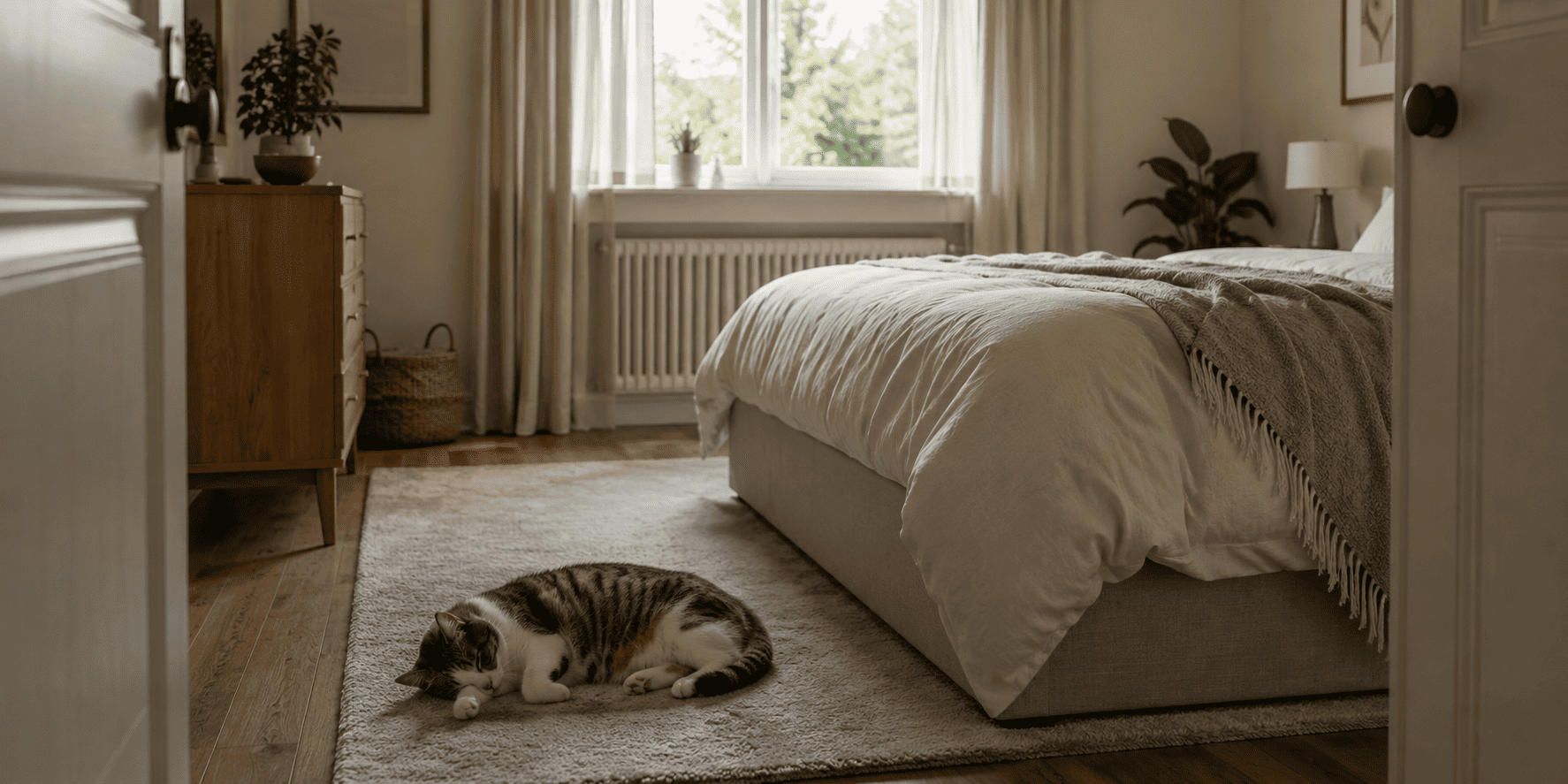
Why is my cat sleeping more than usual? The useful question is not whether cats sleep a lot—they do—but whether your cat’s pattern has changed in a way that affects the rest of the day. More time curled up can follow a quieter routine, a warmer sleeping spot, a growth stage, or normal aging. It can also be one of the first clues that movement hurts, appetite is slipping, or your cat feels unwell. Instead of counting naps alone, compare sleep with what happens when your cat is awake: eating, grooming, using the litter box, jumping, playing, and interacting with you.
First Decide Whether Your Cat Is Sleeping More or Simply Resting Differently
Start by comparing today with your own cat’s ordinary routine, not with a generic number of hours from the internet. Some cats disappear into a bedroom for long naps, while others doze in several visible places. A change in location can make it look as though sleep increased when you are simply seeing more of it. The reverse can happen too. A cat that once slept on a high shelf may move to the sofa if climbing has become uncomfortable, so the total sleep time may be similar even though the pattern feels different.
Look at timing as well as duration. Has your cat stopped joining a predictable morning routine? Does the cat still wake readily for meals, play, or a familiar household sound? Is the new sleeping place easy to reach, warmer, quieter, or farther from another pet? Those details help separate a comfortable preference from a broader change in function. A cat that naps more after a household becomes quieter is different from a cat that stays in bed through meals, moves stiffly when awake, and stops grooming. The pattern around the sleep is usually more informative than the nap itself.
Why Is My Cat Sleeping More Than Usual? Look for Changes Around the Sleep
Sleep becomes more meaningful when another routine shifts at the same time. Appetite is one of the easiest clues to compare. A cat that sleeps an extra afternoon but still eats, toilets, grooms, and seeks attention may simply be resting more. A cat that sleeps more and leaves half of dinner gives you another clue to investigate. Mobility matters too. Watch whether your cat still jumps to favorite furniture, climbs stairs, stretches normally, and changes sleeping positions without hesitation. Reduced movement can be mistaken for “getting lazy,” especially when it develops gradually.
Daily observations of appetite, urine and stool, movement, grooming, and social behavior are part of tracking everyday indoor cat health, and they give extra meaning to a change in sleep. Also note thirst, vomiting, diarrhea, weight change, hiding, vocalizing, or sensitivity to touch. One small variation may not mean much. Several changes moving in the same direction deserve more attention. If your cat used to wake for a wand toy but now watches from the floor, note that change. Returning to sleep instead of joining normal play may be more useful information than the total hours spent resting.
Sleepiness Is Different From Lethargy
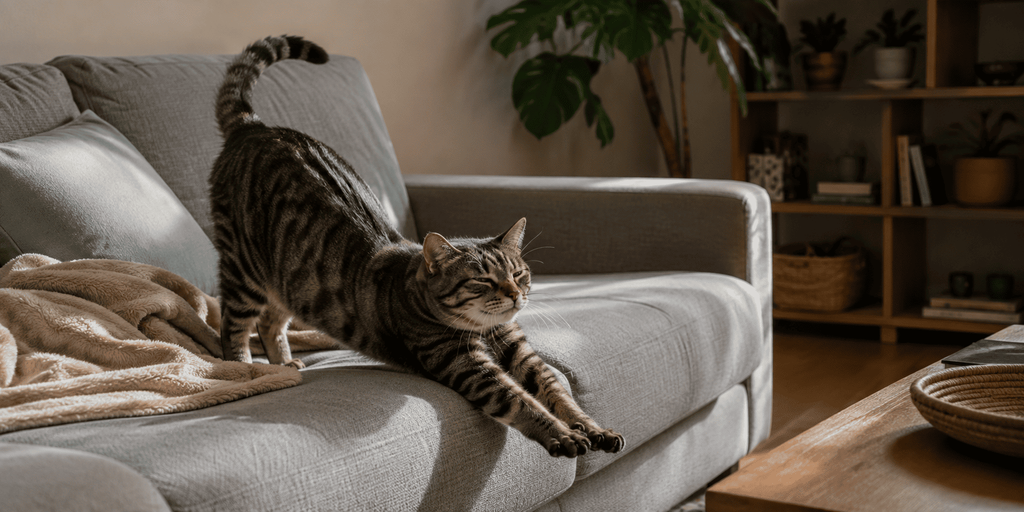
A sleepy cat can usually wake, orient to what is happening, and behave normally once awake. Lethargy is more about reduced responsiveness, energy, or interest in normal activities. The distinction is not always obvious at home, but it helps to observe what the cat can do after waking. A healthy napper may stretch, groom, eat, investigate a sound, or follow you into another room. A cat that feels unwell may wake slowly, remain hunched, avoid movement, or return to rest without engaging in things that normally matter.
| What you see | More consistent with ordinary sleep | More concerning change |
|---|---|---|
| Waking | Wakes readily to normal cues | Hard to rouse or unusually dull |
| Appetite | Eats the usual amount | Eats less, refuses food, or seems nauseated |
| Movement | Walks and jumps normally after waking | Moves stiffly, slowly, or avoids usual routes |
| Social behavior | Still seeks or accepts normal interaction | Withdraws, hides, or becomes unusually irritable |
| Grooming | Coat care looks normal | Grooming drops or one area is overgroomed |
You do not need to label the behavior perfectly before calling a veterinarian. If the cat seems weak, unusually unresponsive, or markedly different from baseline, describe what you are seeing rather than trying to decide whether the correct word is “sleepy” or “lethargic.”
Pain Can Look Like More Sleep
Chronic pain in cats often shows up as behavior change rather than obvious crying. A painful cat may rest more because moving, jumping, grooming, or being handled has become uncomfortable. Feline pain guidance specifically lists changes in sleep, sleeping location, jumping, play, social interaction, grooming, appetite, and tolerance of brushing or touch as useful clues. This is especially important in older cats, because a gradual decline in activity can be mistaken for normal aging.
Watch the route into and out of the sleeping place. A cat with joint discomfort may stop using a high bed or choose a lower surface. It may also hesitate before jumping down or remain in one location because moving between rooms takes more effort. Dental pain can create a different pattern: the cat may still walk normally but eat more slowly, chew on one side, or abandon dry food. Abdominal discomfort may lead to a tighter resting posture or reluctance to stretch. None of these observations identify the cause by themselves, but they help show whether “more sleep” is really a change in comfort and function.
If your cat suddenly resists petting or brushing in a spot that was previously comfortable, do not keep testing the area repeatedly. Record the change and mention it to your veterinarian.
Routine and Environment Can Change How Much Rest You Notice
Not every increase in visible sleep is medical. Cats often arrange their activity around household patterns. A person who starts working from home may suddenly notice daytime naps that were always happening. A quieter house after visitors leave can create longer undisturbed rest. Moving a bed into a sunny or warmer location may make one sleeping spot more appealing. A new pet, baby, renovation, or schedule can also shift when and where a cat rests. Stress may lead to more hiding and sleep-like inactivity, or to more vigilance instead.
Separate a comfortable environmental change from a loss of normal engagement. If your cat chooses a new heated-looking sun patch but still eats, plays, moves, and toilets normally, the new rest pattern may simply reflect preference. If the cat sleeps behind furniture after a stressful event, watch whether the behavior improves as the environment settles. Persistent withdrawal, reduced eating, litter-box changes, or a failure to return to normal routines deserves a different response.
Multi-cat households add another layer. One cat may rest more in a bedroom because another cat has begun occupying the hallway or main living room. There may be no fight. Staring, following, or quietly blocking access can change where a less confident cat spends the day. Notice whether the sleeping cat still has comfortable routes to food, water, litter, and favored resting areas.
Watch What Happens in the First Ten Minutes After Your Cat Wakes
The period after a nap can tell you more than the nap itself. A comfortable cat often wakes, stretches, changes position, grooms, checks the environment, or moves toward a resource. You are looking for fluid, familiar behavior rather than a specific sequence. If your cat wakes and immediately returns to a tight posture, walks stiffly, hesitates at a step, or abandons a normal activity, write that down. Short home videos can be useful because cats may move differently in a clinic than they do in familiar surroundings.
Also observe breathing while your cat is resting calmly. Breathing should not look labored. Open-mouth breathing, pronounced abdominal effort, an extended neck, or obvious respiratory distress needs prompt veterinary attention. Do not count breathing right after vigorous play and assume the number represents resting behavior. The same principle applies to movement: a sleepy cat right after a long play session is less informative than a cat that has become consistently inactive across several ordinary days.
A micro-scenario can help. Sleeping through one quiet afternoon means little if your cat jumps up for dinner and races to the kitchen. Sleeping through breakfast, refusing a favorite treat, and walking slowly to the litter box is a different pattern. The second pattern gives you several independent reasons to act.
Keep a Three-Day Baseline Log Before Guessing
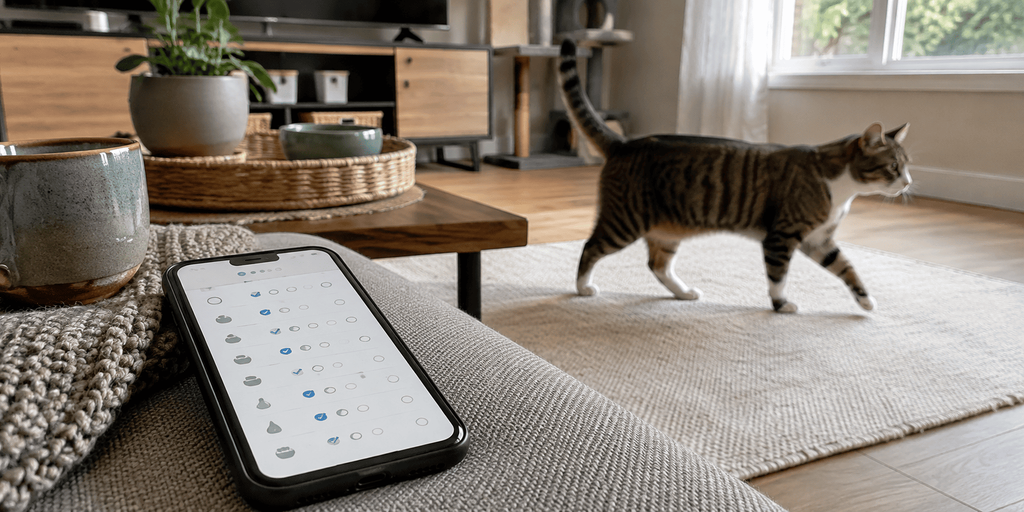
If your cat is otherwise comfortable and there are no urgent signs, a short log can reveal whether the change is real. Do not try to record every minute of sleep. Instead, track the routines that surround it. Use the same observations each day so you can compare like with like.
- Note whether each meal is finished, partly eaten, or refused.
- Record usual urine clumps and stool, including any clear change.
- Watch one or two familiar jumps, stairs, or favorite routes.
- Write down whether your cat initiates play or social contact.
- Notice grooming quality and whether the coat looks different.
- Record new hiding places or a change in sleeping location.
- Take a short video if walking, posture, or getting up looks unusual.
The log is not a reason to delay care when your cat seems ill. It is most useful when the change is subtle and you are trying to decide whether it is continuing. A clear downward trend across appetite, movement, and engagement is more meaningful than a single quiet day.
Do Not Use Age as the Whole Explanation
Older cats often change their activity patterns, but age alone is not a diagnosis. A senior cat may sleep more as routines and activity change with age. Older cats are also more likely to develop problems that make movement or eating uncomfortable. The useful question is whether the cat can still do the things that matter without obvious difficulty. Compare getting onto furniture, reaching the litter box, grooming the back and hindquarters, and moving between resting places. A gradual change in one of those tasks deserves attention even if your cat still looks peaceful while asleep.
Younger cats can also have meaningful sleep changes. A normally active adult that becomes unusually quiet for several days should not be dismissed because it is too young for arthritis or senior disease. Infection, gastrointestinal illness, pain, injury, stress, and many other problems can alter activity at any age. Treat age as context, not as the answer. When you describe the change to your veterinarian, include the timeline and the lost behaviors. That is more useful than simply saying your cat is “sleeping more because she is getting older.”
When More Sleep Deserves Veterinary Attention
Contact your veterinarian when increased sleep is persistent, clearly different from baseline, or paired with reduced appetite, weight loss, vomiting, diarrhea, abnormal urination, pain, stiffness, breathing changes, or marked withdrawal. Seek urgent care for breathing difficulty, collapse, inability to urinate, severe weakness, seizures, or major trauma. More sleep alone may be harmless, but more sleep plus a loss of normal function is information worth acting on.
References
- Treating Chronic Pain with NSAIDs — FelineVMA — Lists sleep, mobility, grooming, appetite, and social changes that can signal chronic pain in cats.
- What Is Normal for Your Cat? — Cat Friendly Homes — Explains why changes from an individual cat’s normal routine are useful health clues.
- Home Modifications for Your Cat — Cat Friendly Homes — Connects mobility, rest, handling tolerance, and home access with age-related or painful changes.
