

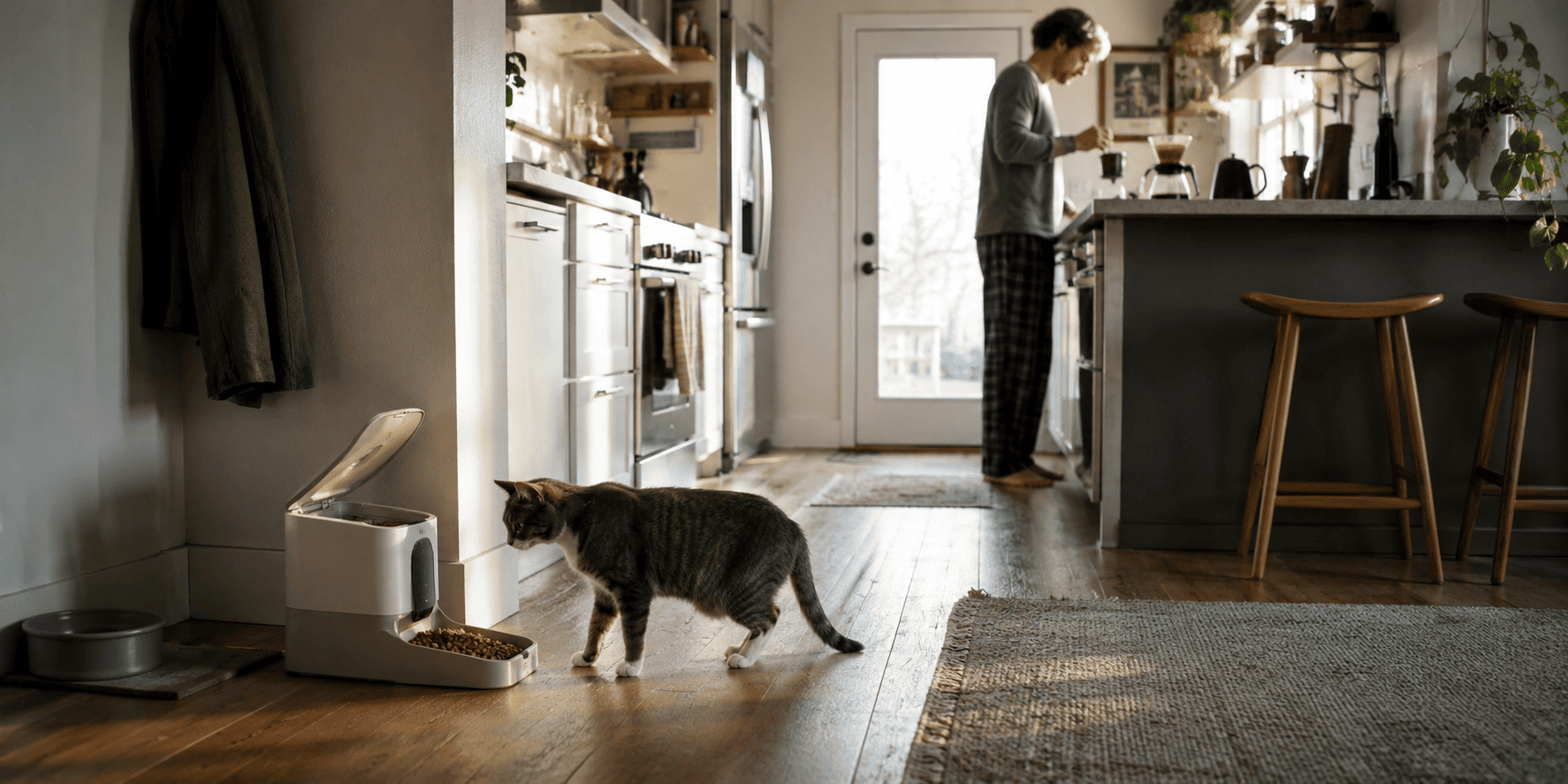
How many times a day should you feed a cat? For many healthy adults, one or two main meals can work, while several smaller measured meals may fit appetite, activity, or household routine better. Kittens usually need more frequent feeding, and some medical plans require specific timing. Meal frequency is separate from daily food amount: four meals should usually be four pieces of one appropriate daily ration, not four full portions.
Instead of starting with a fashionable number of meals, look at the longest stretch your cat goes without food and decide whether that gap is creating a real problem. A healthy adult that eats breakfast and dinner, maintains a healthy weight, and settles comfortably may not need a more complicated plan. Another cat may gulp dinner after a long daytime gap, wake the household before dawn, or do better when the same ration is divided into smaller portions.
For a person who works away from home, breakfast, a timed midday portion, dinner, and a small bedtime meal can divide one daily allowance without adding calories. Someone who works from home might use three manual meals instead. The schedule can look different while the nutrition stays the same. Build around what you can deliver consistently, because an elaborate routine that is followed only on some days may create more frustration than a simple predictable one.
First Decide Whether You Need Meals or Grazing
Free feeding means food remains available for the cat to graze. Some cats self-regulate well and maintain a healthy body condition this way. For others, constant access makes overeating easy. Scheduled meals give you clearer appetite information. If your cat normally finishes breakfast and suddenly leaves most of it, you notice immediately. With a constantly full bowl, reduced intake can be harder to detect. Dry food is easier to leave out safely than wet food, but convenience does not remove calorie density. If you free feed, measure the entire daily ration instead of repeatedly topping up the bowl. In multi-cat homes, free feeding can hide who ate what. Individual meal periods may be necessary when cats have different diets or health needs.
For wet food, refrigerate unused portions promptly and serve them according to safe handling directions. Some cats prefer refrigerated food brought closer to room temperature. Whatever method you use, keep the calorie total unchanged. If free feeding works, measure the day’s allowance rather than filling an unlimited bowl. This keeps the grazing style while preserving portion control. Any food left at the end of the day also gives you useful information about appetite.
How Many Times a Day Should You Feed a Cat? Life Stage Sets the Boundaries
Kittens need more energy relative to their body size and generally benefit from several meals. Cornell notes that kittens under about six months often do well with three meals a day, while cats from six months to one year commonly transition toward twice-daily feeding. Most healthy adult cats can be fed once or twice daily, although smaller meals can also work well. Senior cats do not automatically need a different frequency, but appetite, dental comfort, digestion, medication schedules, and medical conditions may affect the plan. Meal frequency works best after you have settled what your cat eats and how much belongs in the full day. The most useful schedule is one that delivers the correct total food consistently and lets you notice appetite changes. Household routine matters too.
A person who leaves home for ten hours may prefer breakfast, a timed midday portion, dinner, and a small bedtime meal. Someone who works from home may divide the same calories differently. Either can be appropriate if the total ration and cat’s health stay consistent. Very young kittens may need even more frequent feeding than older kittens, and orphaned kittens require a completely different plan. If you are caring for a neonatal or underweight kitten, follow veterinary or shelter guidance rather than an adult feeding schedule.
Use Smaller Meals to Solve Specific Routine Problems
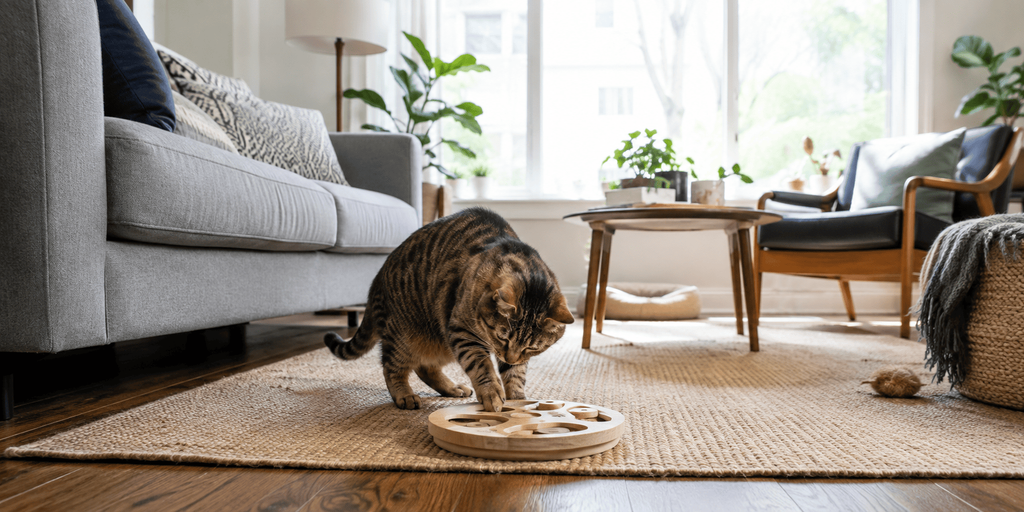
Cats naturally eat multiple small prey-sized meals when hunting successfully. Indoor life is different, but dividing food can create more activity points across the day. It can also reduce the long empty stretch between breakfast and dinner. Small meals are useful when a cat eats too quickly. A portion can be split between a bowl, timed feeder, and puzzle feeder without increasing calories. Some cats also settle better overnight when a small planned portion is reserved for later. Frequent feeding is not automatically healthier if portions are uncontrolled. Adding extra meals on top of an existing ration can cause weight gain quickly. Start with the day’s total food, then divide it. That simple order prevents most schedule-related overfeeding. Watch the cat after meals.
Comfortable grooming or resting is different from frantic searching for food, repeated regurgitation, or conflict with another cat. The schedule should make intake easier to manage, not create a new daily stress point.
Small meals can also help you separate feeding from other parts of the day. One portion can follow a play session, another can come from a puzzle feeder, and a timed portion can cover a long absence. Keep the total fixed. If the cat begins leaving meals, vomiting repeatedly, or losing weight, do not keep slicing the ration into smaller pieces without asking why appetite or digestion changed.
Early-Morning Begging Is a Timing Problem, Not an Extra-Food Problem
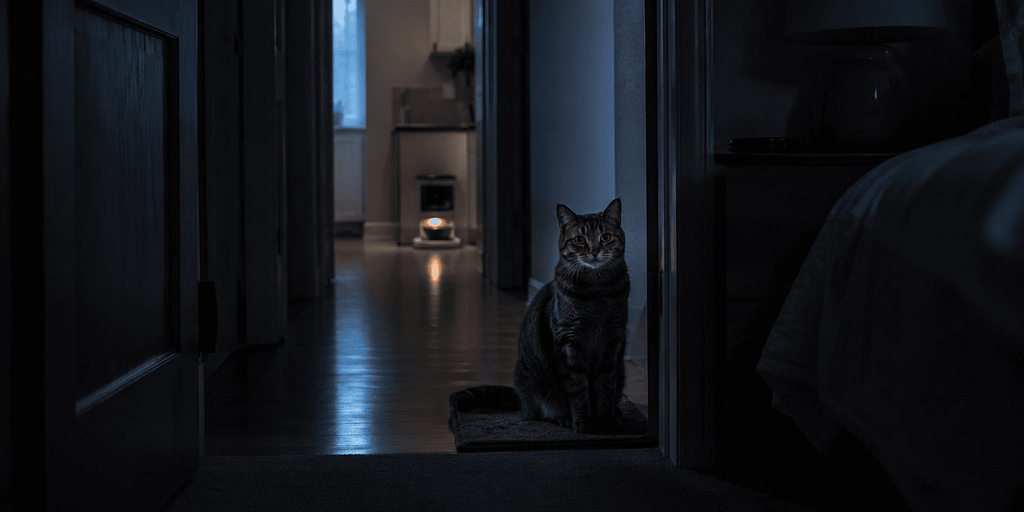
If your cat wakes you before breakfast, moving the meal earlier and earlier can teach the cat that persistent waking works. Instead, keep the schedule predictable and avoid immediately feeding in response to escalating behavior. A timed feeder can separate the meal from your alarm clock. Set it to release part of the normal daily ration before the cat usually starts waking you. Over time, the feeder becomes the predictable source rather than your bedroom door. An active play session followed by a measured evening meal can also help some cats settle. Reserve a small bedtime portion if the overnight gap is long. Make changes gradually. Sudden schedule shifts can create more demanding behavior before the new routine becomes familiar.
If your cat needs a prescription diet, ask whether every treat and feeder portion must use that food. A few unplanned snacks can matter for some medical diets. The veterinary plan should guide both what is fed and how the meals are distributed. Environmental cues matter. If you always feed immediately after turning on the kitchen light, the cat may react to that cue rather than the clock. Consistent routines are useful, but they can also create strong expectations.
Divide One Daily Ration Into the Schedule
This approach is especially helpful when more than one person feeds the cat. Everyone can see how much remains for the day. Do not solve early waking by adding calories. Shift part of the existing ration instead. Even a small feeder portion can change the timing cue without increasing the total amount eaten that day.
- Measure the entire day’s food in the morning before serving anything.
- Divide it into two, three, or four containers or feeder portions.
- Reserve some kibble for puzzle feeders instead of adding extra food.
- Count treats and toppers within the daily calorie plan.
- Use a timed feeder for a small overnight or midday meal if needed.
- Label portions in multi-person households so meals are not accidentally doubled.
For mixed wet and dry feeding, divide calories rather than containers. A “small” pouch still contributes to the day’s total, and a timed feeder portion should come out of the same allowance. Pre-portioning the whole day makes the schedule visible and prevents one person from feeding a meal that someone else already served.
Keep a small written or visual cue if several people feed the cat. A container marked for the day works well. When it is empty, the planned ration has already been served. This prevents accidental extra meals without requiring anyone to remember every feeding.
Multi-Cat Homes Need Individual Access, Not Just More Meals
Adding meal times does not solve competition if one cat still controls the food. A confident cat can finish quickly and move to the slower cat’s bowl, while a cautious cat may eat too fast because another cat is nearby. Group feeding can therefore hide both overeating and under-eating even when the total amount placed on the floor looks correct.
Separate feeding locations are often more useful than simply adding another bowl beside the first. Closed doors, distance, visual barriers, or microchip feeders can help when cats need different diets or one cat steals food. Watch what happens after each cat finishes. The slower cat should be able to complete the meal without being followed away from the bowl. If you cannot tell who ate what, the feeding schedule is not giving you reliable appetite information, which becomes especially important when one cat is sick or losing weight.
Individual access also makes health monitoring easier. If one cat suddenly leaves breakfast, you need to know that the other cat did not simply finish it. Separate meal periods can reveal appetite changes sooner and make prescription diets practical. In households where full separation is difficult, even a short supervised feeding window can provide clearer information than leaving several bowls available all day.
If the Schedule Is Failing, Find the Specific Failure
These problems do not all need the same fix. A timed feeder may solve early-morning hunger, while separate rooms may be better for food stealing. If you want to move from grazing to meals, do it gradually. Measure the normal daily amount first, then begin offering it during defined windows. A sudden switch can create intense begging and may make it harder to judge whether the cat is truly hungry or simply reacting to a new routine. Food competition can make a schedule look like a hunger problem. A slower cat may finish too little because another cat arrives first. Feed separately when necessary so you can tell whether begging reflects insufficient intake or simply unequal access.
- Your cat regularly gulps a large meal and vomits soon afterward.
- Breakfast begging starts hours before you want to wake up.
- One cat steals food from another before the slower cat finishes.
- Food is left out all day and you cannot tell how much was eaten.
- Weight is rising even though meal sizes look small.
- Your cat seems comfortable on smaller meals but distressed by long gaps.
- A medication or medical condition requires more precise meal timing.
Medical Conditions Can Override the Household Schedule
Medical needs can overrule the household schedule. Diabetes, gastrointestinal disease, dental pain, obesity treatment, kidney disease, and some medications may change when meals should happen. Follow the plan tied to your cat’s food and treatment rather than copying another cat’s routine. A sudden appetite drop, repeated vomiting, or unplanned weight loss matters more than whether the normal schedule contains two meals or four.
References
- How Often Should You Feed Your Cat? — Cornell Feline Health Center — Covers meal frequency by age, health, food type, household routine, and the limits of free feeding.
- Feeding Your Cat — Cornell Feline Health Center — Current nutrition guidance on complete diets, body condition, portions, treats, and appetite monitoring.
- Feline Feeding Programs: Addressing Behavioral Needs — FelineVMA — Explains how multiple small meals, food puzzles, and separated feeding can support normal feline feeding behavior.
