

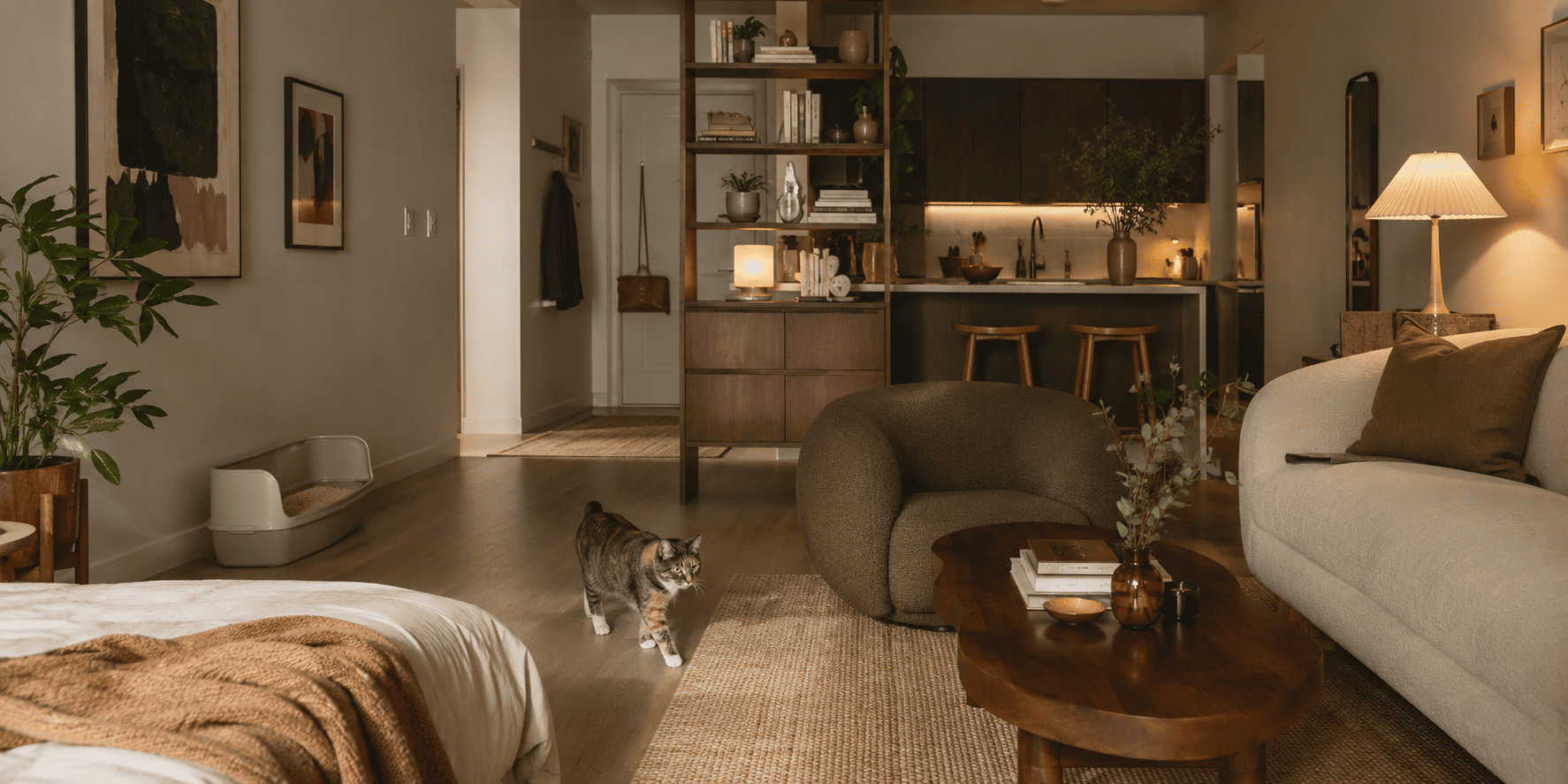
A small apartment litter box setup is mostly a space-planning problem, not a reason to compromise on the box itself. The cat still needs a tray large enough to turn and posture comfortably, a predictable route, good airflow, and distance from food and water. Fitting those needs into a home where every corner already has a job is the real challenge. The best setups use zones, furniture edges, and maintenance routines to make the litter area easy for the cat and easy for the person to keep clean.
Measure usable interior dimensions rather than the outside footprint. Thick rims, curved walls, or built-in covers can take several centimeters away from the space the cat actually stands in. In a small apartment, a simple rectangular tray can be surprisingly efficient because almost every centimeter of floor area becomes usable litter area.
For a large adult cat, “compact” products can be particularly misleading. Compare the box with the cat from nose to base of tail and look for enough room to turn without standing in the same spot. If the tray fits only because it is undersized, the apartment has not really saved space; it has shifted the cost into usability.
Choose the Box Before You Choose the Corner
Measure the cat and the available floor area before buying a compact-looking box. Small apartments often tempt people toward undersized trays or enclosed cabinets because they take less visual space. That can create a larger behavior problem if the cat cannot turn, dig, or exit comfortably.
Start with a box that works for the cat, then solve the design around it. A low-profile storage-style tray can sometimes provide more usable area than a decorative litter product with thick walls and a tiny interior.
Think vertically around the zone as well. Wall shelves, closed storage above the litter area, or a narrow utility cart can hold supplies without shrinking the cat’s floor space. Keep anything that could fall securely stored. Space-saving should happen around the box, not by making the box itself too small.
Try looking at underused transition spaces rather than prime living space. The end of a hallway, a wide bathroom edge, or a wall beside storage can work if the route stays open. Avoid placing the box in the center of a circulation path simply because the square footage is technically available.
Use Apartment Zones Instead of Waiting for a Spare Room
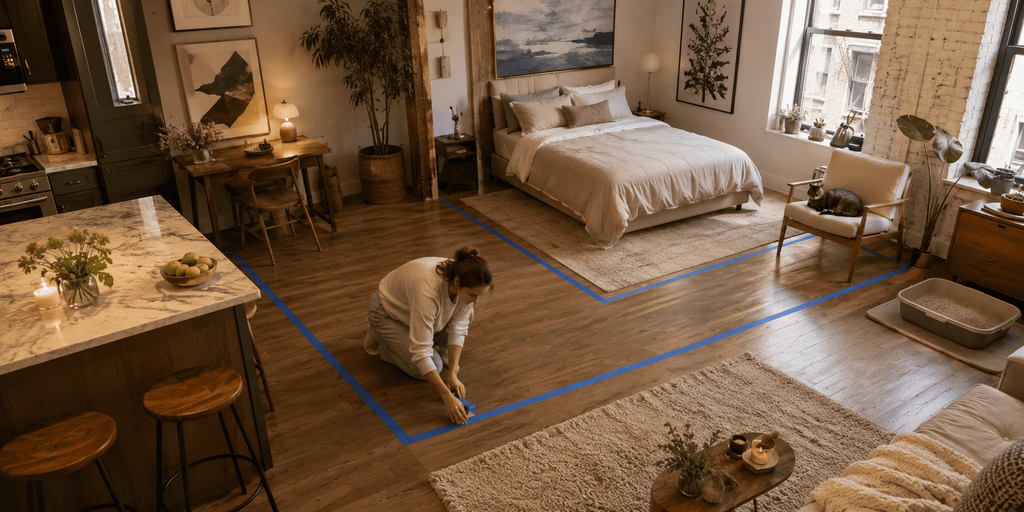
You do not need a dedicated litter room. Think in zones: sleeping, eating, working, circulation, and toileting. The litter zone should sit away from food and water while remaining reachable at all times. A different wall, furniture edge, or visual divider can create enough separation in a studio.
The broader litter-box setup—size, litter, depth, cleaning, and access still applies in a small home. Limited square footage changes how you arrange the pieces, not what the cat needs from them.
A box under a console table can sometimes work better than a full enclosure. The furniture gives visual structure while leaving the front and sides open. Check that the cat can stand upright and turn without bumping into furniture legs. Avoid hanging fabric that brushes the cat during entry if your cat dislikes confined spaces.
A Small Apartment Litter Box Should Not Be Hidden Too Well
A box pushed into a sealed cabinet or deep closet may disappear visually but become harder for the cat to use. Check ventilation, entry size, interior turning space, and whether a door can close unexpectedly. The cat should not have to squeeze through a narrow opening to reach the tray.
Use partial visual screening instead of total concealment. A bench, open shelving unit, or plant-free divider can make the area less prominent while preserving airflow and escape routes. Design around access first; aesthetics come second.
Pay attention to doors that swing into the litter zone. A bathroom door can reduce the available opening or trap the cat if someone closes it. Doorstops, a dedicated open position, or choosing a wall outside the swing path can make access more predictable without taking additional floor area.
Keep the Route Open at Night and During Daily Life
Small homes change function throughout the day. A folding chair, laundry basket, vacuum, or closed bathroom door can suddenly block the route. Walk from the cat’s favorite resting areas to the box and check what lands in that path during normal routines.
If the route passes through a narrow hallway, avoid storing items there. A reliable litter box should remain available when you are cooking, showering, sleeping, hosting someone, or cleaning the floor.
Litter choice also affects tracking. Very lightweight granules may travel farther on paws, while larger particles can reduce scatter for some cats. Any change in litter should be gradual if your cat has a strong preference. Do not trade a familiar acceptable substrate for a “low-tracking” product the cat avoids.
If litter scatters when the cat digs, a box with somewhat higher sides may help, provided entry remains comfortable. For seniors or cats with mobility problems, use a low-entry section rather than raising every wall. Containment and accessibility can be combined instead of treating them as opposite goals.
Control Tracking Without Creating a Difficult Entrance
Litter tracking feels more obvious in a small apartment because a few granules reach living areas quickly. Use a large easy-to-clean mat outside the box, but do not make the cat cross an unstable, spiky, or noisy surface it dislikes.
- Choose a mat that lies flat and does not slide.
- Vacuum or sweep the route frequently rather than waiting for a deep clean.
- Keep a small hand vacuum or broom near the litter area.
- Trim the setup, not the box size, when floor space is tight.
- Avoid top-entry boxes solely for tracking control if access is awkward for the cat.
Tracking is a housekeeping problem unless the cat has a specific accessibility issue. Solve it without making toileting harder.
Keep waste disposal simple. A small lidded bin used only for litter waste can reduce the temptation to postpone scooping, but empty it frequently. If the bin itself becomes a source of odor beside the box, move it farther away or take waste directly outside. Convenience should support cleanliness, not store smells in the cat’s toilet zone.
Humidity matters as well. A poorly ventilated bathroom can stay damp after showers, making odors linger. If that is the only workable location, improve airflow and scoop promptly rather than sealing the box into another enclosure. Fresh air around the tray helps the whole apartment feel cleaner.
Odor Control Comes From Maintenance, Not Fragrance
In a small home, odor reaches the rest of the space faster. Scoop at least daily and more often when needed. Wash the tray on a regular schedule with products appropriate for the material, and replace litter often enough to prevent persistent buildup.
Ventilation can help, but avoid strong air fresheners or scented litter as the default solution. A fragrance that seems pleasant to a person can make the litter area less appealing to the cat. Cleanliness works better than perfume.
Watch how heat builds inside furniture enclosures. A cabinet near a sunny window or radiator can become warmer and smellier than the surrounding room. Enclosures also trap dust. If the interior feels stuffy when you open it, the cat is experiencing that environment at floor level every time it enters.
Sound can also amplify inside a hollow cabinet. A plastic tray scraping against the base or a door panel rattling while the cat digs may make the enclosure feel less secure. Add a stable non-slip layer under the tray if needed, but keep it easy to remove and clean.
Use Furniture Carefully Around the Litter Zone
Litter furniture can be useful when it is genuinely roomy and open enough. Check the interior dimensions with the tray inside, not the external cabinet size. The cat needs space to enter, turn, and leave without brushing against dirty surfaces.
Open-backed or well-ventilated designs are easier to evaluate. If a cabinet creates one narrow doorway, consider whether another pet could block it. In a one-cat apartment this may be less of a social issue, but the cat may still dislike feeling enclosed.
Storage should not crowd the tray. Keep spare litter, liners, and cleaning supplies nearby only if they do not narrow the approach. A slim shelf above or beside the zone works better than stacking bags around the box. The cat needs a clean route, and you need enough room to scoop without bumping into stored items.
Keep a small maintenance kit together: scoop, bags, hand broom, and the cleaner you normally use. When supplies live nearby, daily care becomes almost automatic. In a small apartment, this matters because one missed day is more noticeable to both the cat and the people sharing the space.
Plan for Cleaning Before You Commit to the Location
Can you remove the tray without dragging it across the apartment? Can you reach every corner to scoop? Is there a nearby trash route that does not require carrying waste over the bed or kitchen counter? These practical details determine whether maintenance stays consistent.
A location that is visually perfect but miserable to clean often deteriorates over time. Good small-space design reduces friction for the person as well as the cat. Daily care should take minutes, not furniture rearrangement.
If you test a new position, keep as many other variables stable as possible. Use the same box and litter if you can. That way, improved use points more clearly toward location. In a tiny apartment, several small changes can happen accidentally at once, so deliberate one-variable tests are especially useful.
A temporary second box can be especially useful during troubleshooting, even in a small home. It may feel inconvenient for a week, but the information can prevent months of repeated accidents. Once you know which location or box feature the cat prefers, you can streamline the setup more confidently.
When the final arrangement works, keep it stable. Constantly moving the box to improve aesthetics can undermine the predictability you worked to create. In a small apartment, a successful litter zone is worth designing around rather than repeatedly asking the cat to adapt to a new corner.
Change the Layout if the Cat Shows You It Is Not Working
Watch for hesitation, accidents beside the box, rushing out, digging at nearby floors, or choosing another quiet corner. Those behaviors may indicate a problem with box size, litter, location, cleanliness, or access. Do not assume the apartment is simply too small.
Seek veterinary advice for sudden house-soiling, straining, constipation, diarrhea, or urinary signs. When health is not the cause, test one change at a time. A small apartment can support an excellent litter setup when the box remains large, clean, reachable, and easy to exit.
References
- Not Using the Litter Box — Cat Friendly Homes — Covers location, food separation, escape routes, box number, and environmental reasons cats may avoid a litter box.
- Home Modifications for Your Cat — Cat Friendly Homes — Provides practical guidance on accessible boxes, noise, location, and adapting resources to the cat’s mobility.
- Feline House-Soiling — FelineVMA — Caregiver guidance on box design, placement, cleanliness, and systematic troubleshooting.
