


Knowing how to change your cat’s feeding schedule is mostly about moving the timing without accidentally changing the total amount of food. Cats can learn a new routine, but abrupt shifts may create begging, early waking, food gulping, or confusion in a multi-cat home. Set the new target first, measure the whole daily ration, then shift meals in small predictable steps. Keep the food itself familiar while the timing changes whenever possible. If a medical condition or medication depends on meal timing, use the schedule your veterinary team gives you rather than a general transition plan.
Choose the New Schedule Before You Move the First Meal
Write the plan in terms of both time and portion. “Breakfast at 7” is incomplete if one caregiver serves half a can and another serves a full can. A schedule becomes useful only when the amount attached to each feeding event is just as predictable as the clock.
Write down the current meal times and the schedule you want. Then ask why you are changing it. Are you starting a new work shift, moving breakfast later, adding a timed midday meal, switching from grazing to meals, or dividing two large meals into several smaller ones? The reason determines which part of the routine needs to move. A cat that wakes you at 4 a.m. needs a different plan from a cat that must coordinate food with medication.
Keep the target realistic for the household. A perfect schedule that you can follow only on weekends will not become predictable. If several people feed the cat, agree on times and portions before the transition begins. Write the plan near the food or use labeled containers. Consistency between caregivers matters because a cat can quickly learn which person is likely to provide an extra meal.
How to Change Your Cat’s Feeding Schedule Without Changing Calories
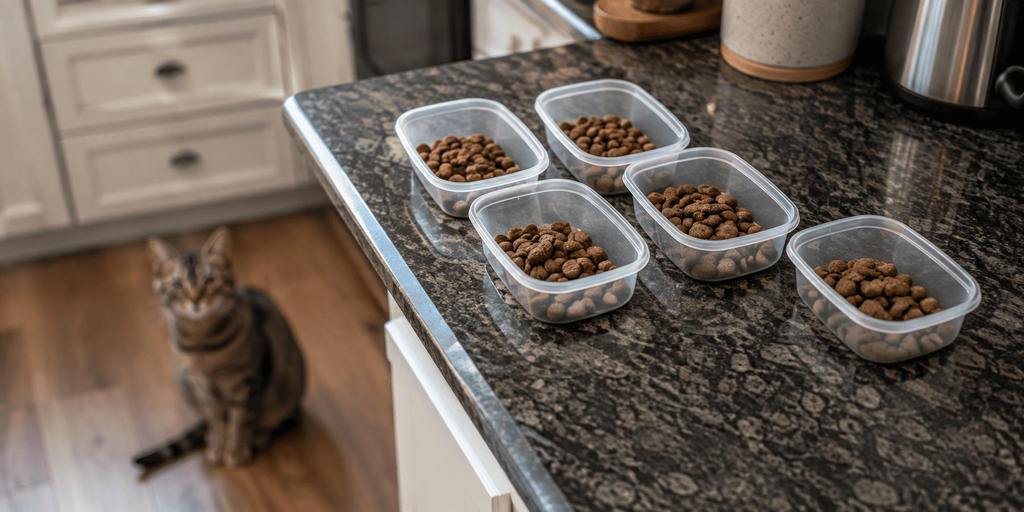
Prepare portions ahead when the transition is likely to be chaotic. Small labeled containers can prevent accidental additions when the cat begs between old and new meal times. If treats are used to redirect or train during the change, take them from the same daily allowance whenever practical.
Measure the entire day’s food before you adjust timing. If the cat receives 100 percent of the appropriate ration now, the new schedule should still add up to that same daily amount unless a veterinarian has recommended a calorie change. Moving breakfast later does not require adding a snack on top of the usual food. Adding a third meal means splitting the existing ration three ways or reserving a portion from another meal.
The nutrition question—what your cat eats, how much is appropriate, and how wet and dry food fit together—should stay stable while you change the clock. This makes the cat’s response easier to interpret. If you change food type, portion, and timing in the same week, new begging or digestive upset becomes harder to trace. Use grams or calories when possible so portions remain repeatable across the transition.
Shift Meal Times Gradually When the Change Is Large
Move only the meals that need to change. If dinner already fits the new routine, leave it alone while breakfast shifts. Fewer moving parts make the transition easier for the cat and for the people tracking it. Once one meal is stable, adjust another if necessary.
If the new meal is only a little earlier or later, many healthy cats can adjust without much difficulty. For a larger shift, move the meal in small increments over several days rather than making a dramatic jump overnight. The exact increment does not need to be identical for every cat. Use the cat’s behavior and your household schedule. A small daily shift is easier to predict than moving breakfast by several hours at once.
Keep other cues steady while the time moves. Use the same bowl, feeding location, and food. If the cat becomes frantic, vomits from gulping, or spends hours vocalizing, slow the transition. Do not reward escalating begging with an extra unplanned portion. Instead, redirect with play, attention, or another routine that does not add calories. Hunger caused by an inappropriate ration is different from expectation caused by a familiar clock cue, so make sure the total food is actually adequate before treating every request as habit.
Use a Timed Feeder to Separate Food From Your Alarm Clock

Place the feeder where the cat already feels safe eating. A device in a noisy laundry room can fail even if the timing is perfect. Test the motor sound and opening action during the day, and make sure another pet cannot steal the released portion before your cat reaches it.
Timed feeders are useful when the cat’s schedule needs to change but your presence is a strong cue. Early-morning feeding is a common example. If breakfast always follows the first movement from your bed, the cat may begin waking you earlier to start the chain. A timed feeder can deliver part of the normal ration independently, weakening the connection between waking the person and getting food.
Introduce the feeder while you are awake. Let the cat hear it open and find food easily. Do not make the first experience a 5 a.m. surprise in another room. Once the cat understands the device, schedule it near the current meal time and then shift gradually toward the target. Keep backup plans for power, battery, or mechanical failure. For wet food, use a feeder designed to keep it appropriately chilled and follow safe food-handling guidance.
Changing From Free Feeding to Meals Needs Its Own Transition
Watch stool, vomiting, and eating speed during the shift. A cat that suddenly gulps a large meal may benefit from smaller portions or a slower feeder rather than a return to unlimited food. The new routine should improve control without making meals physically uncomfortable.
If your cat is used to food being available all day, removing the bowl and offering only two brief meals can create strong begging and make intake hard to judge. First measure how much the cat actually eats in a day. Then begin offering that measured amount in defined portions while leaving enough time for a slow eater to finish. Several small meals may make the change easier than moving directly to two large servings.
- Measure the current daily intake before changing access.
- Divide the same ration into several predictable meal periods.
- Use timed feeders for midday or overnight portions if needed.
- Keep some kibble for puzzle feeding instead of adding extra food.
- Reduce all-day access gradually rather than creating sudden long gaps.
- Track weight and leftovers during the transition.
- Feed cats separately if one steals another’s portion.
Once the cat understands the new rhythm, you can decide whether fewer or more meal events work best.
Move Early-Morning Breakfast Without Creating a New Snack
Do not make every early wake-up a negotiation. If the cat vocalizes but has water, litter access, and no sign of illness, keep the response predictable. Feeding sometimes at 4:30 and sometimes at 6:30 can strengthen persistence because the cat learns that extra effort occasionally pays off.
When the goal is sleeping later, the most common mistake is adding food every time the cat wakes you. That can teach the cat that persistence works. Reserve part of the existing ration for later in the evening or a timed feeder before the usual wake-up period. Keep your own morning response boring until the planned feeding cue occurs. The new cue might be the feeder, a specific kitchen routine, or a stable time after you are already awake.
Expect some protest when a strong routine changes. Do not punish vocalizing or shut the cat away without considering litter, water, and comfort. Provide evening play and predictable wind-down activity. If the cat is genuinely ravenous despite an appropriate measured ration, or hunger suddenly increases with weight loss, talk with your veterinarian. Not every food-seeking behavior is a scheduling problem.
Multi-Cat Homes Need Individual Timing and Access
Observe the slower eater after the faster cat finishes. If one cat immediately patrols the other bowl, closing a door for ten minutes may solve more than changing meal frequency. The schedule should protect each cat’s access long enough to eat calmly without being watched or displaced.
A schedule change can expose competition that free feeding previously hid. One cat may finish quickly and move to another bowl. A shy cat may wait until the room is empty and lose access when meals are removed. Feed cats in separate locations if needed, and make sure each cat has enough time to eat. Microchip feeders or closed rooms can help when diets differ.
Change one cat’s schedule without forcing every cat to follow if their medical or behavioral needs differ. For example, a senior cat that eats several small meals may not need to switch to the same two-meal routine as a younger cat. Label portions and track leftovers separately. The household schedule should make individual intake clearer, not create a new competition around one feeding station.
Medical Plans Can Override a Convenience-Based Schedule
Bring your actual work schedule to the veterinary conversation if treatment depends on food timing. A plan that looks ideal on paper but cannot be followed consistently may need adjustment. Your veterinary team can help align medication, diet, and realistic household timing without improvising doses or skipping meals.
Diabetes, gastrointestinal disease, kidney disease, dental pain, obesity treatment, and medications can affect when and how a cat should eat. Do not move meals around insulin, medication, or a therapeutic diet without veterinary guidance. If your cat has poor appetite, the priority may be getting enough nutrition rather than enforcing a new clock.
Stop the transition and call your veterinarian if your cat eats much less, stops eating, vomits repeatedly, loses weight unexpectedly, or seems unwell. Cats should not be put through prolonged fasting simply to make them accept a schedule. A healthy routine should make intake more predictable, not create nutritional risk.
Keep the New Schedule Stable Long Enough to Become Predictable
Use the first two weeks as a check rather than a test of obedience. Note whether meals are eaten, whether begging is settling, whether the cat vomits from eating too quickly, and whether body weight stays stable. If the schedule creates a new problem, adjust the structure instead of assuming the cat must simply get used to it.
Once you reach the target, keep meal times and portions reasonably consistent for a few weeks. Minor day-to-day variation is normal, but constant changes make begging harder to interpret. Review the schedule when work hours, health, life stage, weight, or household pets change. A feeding routine is useful because it creates predictability for both cat and caregiver, not because one clock time is permanently perfect every day.
References
- How Often Should You Feed Your Cat? — Cornell Feline Health Center — Covers meal frequency, age, health, free feeding, and household schedule.
- Feline Feeding Programs — FelineVMA — Supports frequent small meals, food puzzles, separate feeding, and individualized routines.
- Feeding Your Cat — Cornell Feline Health Center — Provides nutrition context for portions, complete diets, treats, and body condition.
