

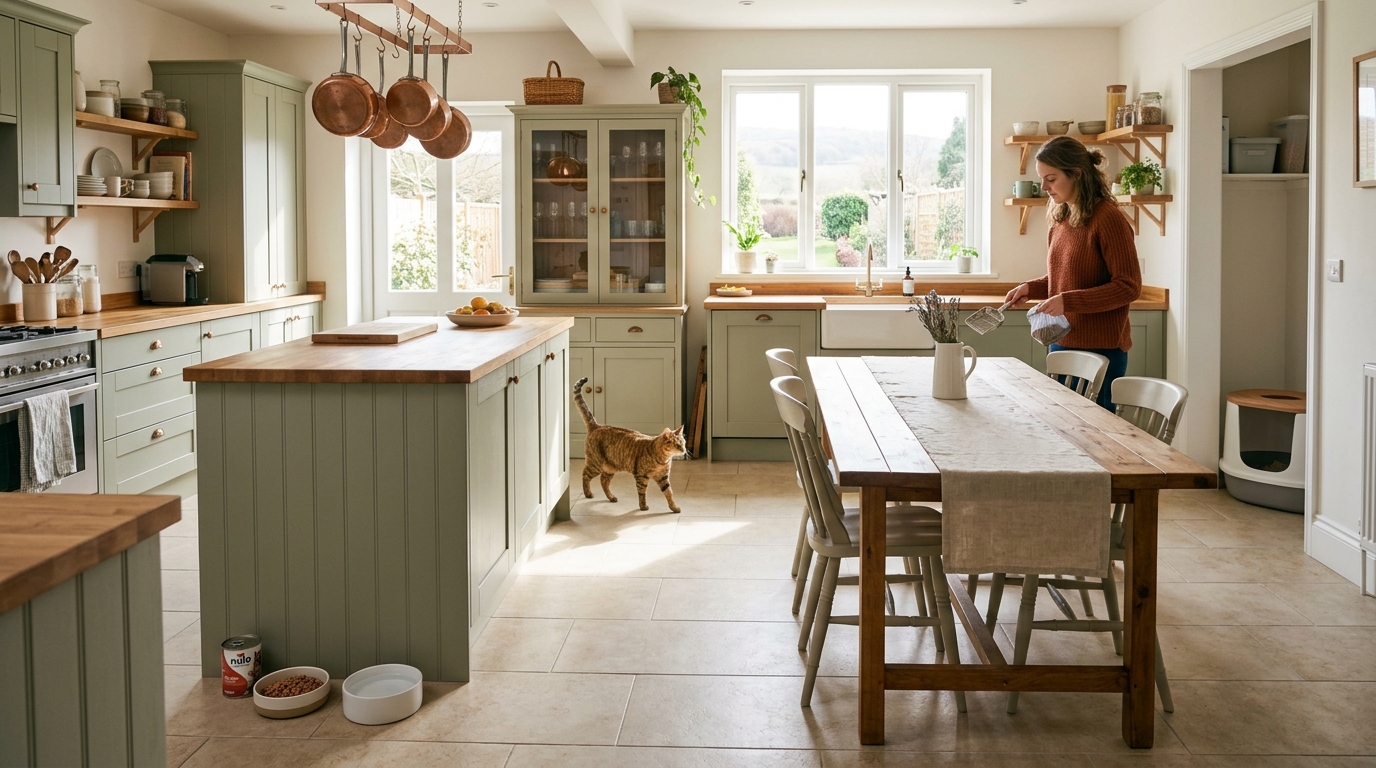
To tell whether your cat is drinking enough water, do not judge the bowl in isolation. Cats take in water from both drinking and food, so a wet-food cat may visit the bowl rarely while still receiving substantial fluid through meals. The more useful question is whether total intake appears adequate for your cat’s usual routine and whether urine output, appetite, energy, mouth comfort, and behavior remain normal. Home observations cannot confirm hydration status with the precision of a veterinary examination, but they can help you recognize when a normal low-drinking pattern becomes a meaningful change.
Begin With Food Moisture Before You Count Bowl Visits
The same number of visible drinks means different things on different diets. Canned food contains much more water than dry food, so cats eating wet meals can obtain a large share of fluid before they approach a separate water source. A dry-fed cat relies more heavily on drinking. If you recently changed the proportion of wet and dry food, visible bowl use may change even when total fluid intake remains stable.
Record the food format before interpreting drinking. A cat that eats two full wet meals and makes normal urine clumps may be getting enough water despite a quiet bowl. A cat that normally eats dry food but suddenly stops drinking deserves closer attention. The context matters more than an internet target applied without knowing what the cat actually eats.
Cat Drinking Enough Water? Compare With Its Own Baseline
Your cat’s usual pattern is one of the strongest home clues. Notice where the cat normally drinks, how often you refill the bowl, what the litter box usually looks like, and whether meals are finished. You do not need to measure every sip. A simple baseline can be “eats mostly wet food, drinks briefly at night, produces three similar urine clumps, acts normal.” When several parts of that pattern change together, the change becomes more meaningful.
This is why total daily hydration makes more sense when food moisture and visible drinking are considered together. The bowl is only one source. If your cat has always been a light drinker, that history matters. If the bowl suddenly stays untouched and the cat is also eating less, the same quiet bowl deserves a different response.
A useful micro-scenario is a cat that eats one pouch of wet food at breakfast, drinks only briefly in the evening, and produces its usual urine clumps. That pattern can be completely different from the same cat refusing breakfast, ignoring the water bowl, and making one tiny clump. The visible drinking may look low in both cases. The surrounding information changes how you interpret it.
Use the Litter Box as a Trend, Not a Measuring Cup
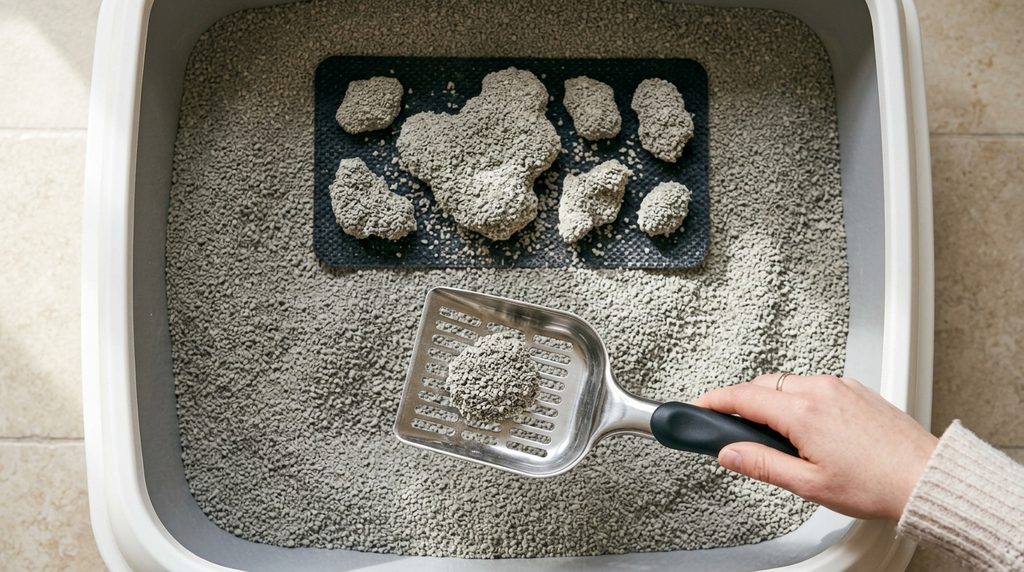
Urine clumps can provide useful trend information when you use clumping litter and know what is normal for your cat. Clearly smaller or fewer clumps may suggest less urine output, while larger or more frequent clumps can accompany increased water intake or medical changes. The litter box cannot tell you exactly how hydrated a cat is, and clump size varies with litter type, depth, and how clumps merge.
Multi-cat homes make interpretation harder because you may not know which cat produced which clump. If one cat is showing other concerning signs, your veterinarian may suggest a way to monitor that individual more closely. Never restrict water to make urine easier to measure. Fresh water should remain available at all times.
| Observation | Usually less concerning | More concerning |
|---|---|---|
| Water bowl use | Low but unchanged on wet food | Sudden drop with no diet change |
| Urine clumps | Usual number and size | Clearly fewer or much smaller |
| Appetite | Normal meals | Eating less or refusing food |
| Energy | Normal activity and grooming | Weakness, lethargy, unusual hiding |
| Fluid losses | No vomiting or diarrhea | Repeated vomiting or diarrhea |
Body weight can add another layer when a change lasts more than a day or two. A stable weight does not prove hydration is normal, but unexplained loss alongside reduced intake deserves attention. Use the same home scale and similar timing if you track weight. Large or sustained changes are more useful than reacting to one reading after a meal or litter-box visit.
Appetite Is Part of the Hydration Picture
A cat eating wet food receives water every time it eats. If appetite falls, fluid intake can fall from food and from the bowl at the same time. Watch what happens around meals. A cat that approaches, sniffs, and leaves may be nauseated or uncomfortable. A cat dropping food or chewing differently may have mouth or dental pain that also makes drinking less appealing.
Do not spend several days experimenting with water bowls while a cat is barely eating. Appetite changes are important in their own right. If reduced eating is marked or persistent, contact your veterinarian. The combination of less food and less water is more useful information than either observation alone.
Do not use drinking targets from another cat as a pass-or-fail score. Body size, diet moisture, activity, environment, and medical history all affect water intake. A veterinary team may care more about body weight, urine concentration, kidney values, or another clinical measure than the amount missing from a bowl. Home monitoring should support that medical picture rather than replace it.
Home Dehydration Checks Have Limits
Dry or tacky gums and reduced skin elasticity are often discussed as dehydration clues. They can be useful, but they are not perfect home tests. Age, skin condition, and other factors affect skin turgor. A senior cat may have slower skin return even without significant dehydration. Gums can also be difficult to interpret if you do not know how they normally feel.
Use these observations as context, not as a way to assign a dehydration percentage. If the cat seems weak, has persistent vomiting or diarrhea, eats poorly, or shows a clear change in urine output, veterinary assessment is more useful than repeating a skin test. A veterinarian can evaluate hydration and look for the reason fluid balance changed.
Older cats often reveal access problems through convenience. A bowl can be only one room away yet still require crossing a slippery floor, stepping around a dog bed, or lowering the head uncomfortably. Add a second stable bowl near the cat’s usual resting area and keep the original available. If use shifts to the easier location, the pattern tells you something about access without forcing a full setup change.
Check Access Before You Assume the Cat Is Choosing Not to Drink
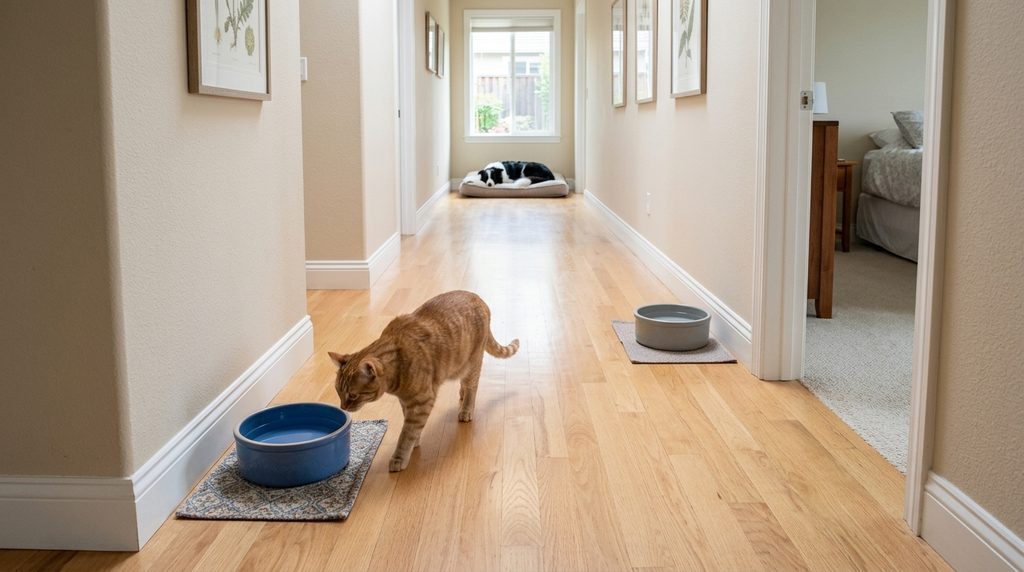
A water source can become harder to use without moving. A dog may start sleeping beside it. Another cat may wait in the hallway. A fountain pump may become louder. A bowl may develop film or retain an unfamiliar detergent smell. Older cats may avoid a station that requires a long walk or awkward crouch. These small changes can reduce visible drinking even when the cat is thirsty.
- Offer more than one clean water location.
- Keep bowls away from litter areas and stressful bottlenecks.
- Leave a plain bowl available when testing a fountain.
- Make at least one station easy for a senior cat to reach.
- Wash bowls and fountain components regularly.
- Watch whether another pet controls the route.
Make one change at a time when the cat otherwise seems well. If drinking returns after the familiar bowl is restored, you have learned something useful. Changing bowl material, water source, fountain, flavor, and location on the same day makes the result harder to interpret.
Weather and indoor climate can change routines too. Air conditioning, heating, direct sun, and activity can affect how often a cat approaches water. These influences are useful background, but they should not be used to dismiss a strong change. If appetite, urine, energy, or weight is also moving away from baseline, the cluster deserves attention even when the season changed at the same time.
Normal Hydration Can Look Different From One Day to the Next
Daily drinking varies. A wetter meal, warmer room, extra play session, or a fountain refill can change what you happen to see. Do not react to one missed bowl visit. Look for a sustained change from baseline, especially when other routines move in the same direction. Trend beats a single observation.
If you want more detail, record a few ordinary days before you worry. Note the diet, whether meals were finished, rough bowl use, and urine pattern. That record becomes useful when something changes. It also prevents you from mistaking normal day-to-day variation for a problem.
If you call the clinic, give a timeline rather than a single sentence. Mention the food format, whether the cat finished meals, approximate urine changes, vomiting or diarrhea, and any new medication. Tell them whether the cat is still moving and grooming normally. These observations can help the team decide how quickly the cat should be seen and which questions matter next.
Some Changes Mean Stop Monitoring and Call the Vet
Contact your veterinarian when reduced fluid intake is clear and persistent or appears with reduced appetite, vomiting, diarrhea, weakness, unusual hiding, constipation, mouth pain, or a known medical condition. A cat that cannot keep water down may lose fluid quickly. Repeated trips to the litter box with little or no urine are not a hydration-monitoring problem; difficulty urinating can be urgent.
Seek urgent care for collapse, severe weakness, breathing difficulty, or inability to urinate normally. In those situations, do not wait for a perfect water measurement. Bring the useful context you already have: diet, drinking change, urine pattern, appetite, stool, vomiting, medications, and how quickly the change developed.
Once you have a few normal days recorded, keep that baseline simple. You do not need permanent daily surveillance. Recheck when food format changes, after a move, during illness, or when the litter-box pattern shifts. A baseline is useful because it gives future observations a comparison point. It should make care easier, not turn ordinary drinking into a constant test.
Keep the comparison fair by using ordinary days whenever possible. A day after travel, sedation, a food change, or a very stressful event may not represent the cat’s usual pattern. Label unusual days instead of deleting them. They can still be useful later when you want to understand how quickly the cat returned to baseline.
Judge Hydration by a Pattern, Not One Number
The best home answer to whether your cat is drinking enough comes from several clues moving together. Food moisture, usual bowl behavior, urine output, appetite, energy, and recent fluid losses all add context. A wet-food cat with normal urine and normal behavior may drink very little from a bowl. A dry-fed cat with a sudden drop in drinking and smaller urine clumps deserves more attention.
Keep fresh water easy to reach, learn your cat’s baseline, and use changes from that baseline as early information. Home monitoring is most useful when it helps you decide what changed and when to involve your veterinarian, not when it creates pressure to measure every sip.
References
- Hydration — Cornell Feline Health Center — Explains food moisture, drinking, dehydration clues, access problems, and common reasons feline fluid intake may decrease.
- Enhancing Water Intake for Your Cat — Cat Friendly Homes — Practical feline-veterinary guidance on water stations, wet food, added water, and individual drinking preferences.
- What Is Normal for Your Cat? — Cat Friendly Homes — Emphasizes learning an individual cat’s baseline for eating, drinking, urine, stool, activity, and behavior so changes are easier to recognize.
