


Learning how to brush a cat that hates being brushed is less about finding a stronger brush and more about changing what the grooming session predicts. If brushing currently means being cornered, held still, pulled through a tangle, or touched in a sore area, resistance makes sense. The first job is to make the experience shorter and easier, then build tolerance in tiny steps. Some cats can learn to accept regular brushing at home. Others need a different tool, a different technique, or professional help because pain, mats, skin disease, or fear has made grooming too difficult.
Stop Trying to Finish the Whole Cat in One Session
A common mistake is treating brushing like a task that must be completed once it starts. For a cat that already dislikes grooming, a five-minute battle can undo the value of several calm interactions. Instead, define success as one or two comfortable strokes, a pause, and a clean ending before the cat needs to escape. Short sessions make it easier for the cat to predict that contact will stop. They also help you notice which areas are tolerated and which areas trigger tension.
Choose a time when your cat is relaxed but awake. Do not wake the cat from deep sleep and begin grooming immediately. Let the brush appear without using it. Offer a small reward or a favored interaction if food rewards are not motivating. Touch the shoulder or cheek with your hand, then put the brush away. On another session, make one light stroke over an easy area. Progress only while the body stays loose. If the tail begins to lash, the skin twitches repeatedly, the ears turn back, or the cat leans away, stop before the behavior escalates into swatting or biting.
How to Brush a Cat That Hates Being Brushed: Find the Exact Trigger
“Hates brushing” can describe several different problems. One cat dislikes the sound of a metal comb. Another tolerates the back but reacts when the brush reaches the hips. A long-haired cat may have a hidden tangle that pulls the skin. An older cat may have arthritis and object to pressure over the spine or joints. A nervous cat may dislike being lifted onto a table more than the brush itself. The fastest way forward is to identify the first moment the session becomes uncomfortable.
- Does your cat leave as soon as the brush appears?
- Is hand petting comfortable before the brush touches the coat?
- Does resistance happen only on the belly, hindquarters, tail, or legs?
- Is one tool tolerated better than another?
- Does the cat react when a knot or mat is touched?
- Does grooming become harder after jumping, stairs, or other activity?
- Is the cat more tolerant on the floor than on a grooming surface?
This kind of map prevents you from repeating the same trigger. If one body area suddenly becomes sensitive, treat that as possible pain or skin discomfort rather than a training failure.
Choose the Least Intimidating Tool That Still Works
Match the tool to the job you need today. If the coat is healthy and the main goal is removing loose hair, you may not need the most aggressive de-shedding tool. A gentler brush used willingly can accomplish more over a week than a powerful tool the cat avoids after ten seconds.
The right tool depends on coat type and the problem you are trying to solve, but comfort matters. A soft rubber grooming tool may be easier for a short-haired cat that dislikes firm bristles. A comb may be necessary for longer coats, yet it should move through loose coat rather than yank through resistance. The ASPCA recommends brushing in the direction the coat grows and working one section at a time. Long-haired cats generally need more frequent coat care because tangles can form quickly.
Before touching the cat, run the tool over your own forearm. Notice sharp edges, snagging teeth, or pressure that would be unpleasant on sensitive skin. Keep the brush clean so it does not carry old hair, oils, or strong product scents. Avoid introducing sprays, perfumes, and multiple new tools during the same training period. If your cat dislikes the sound of a slicker or comb being placed on a hard surface, set it on a towel. Small environmental details can become part of what the cat predicts when grooming begins.
Build a Brush-Touch-Reward Sequence
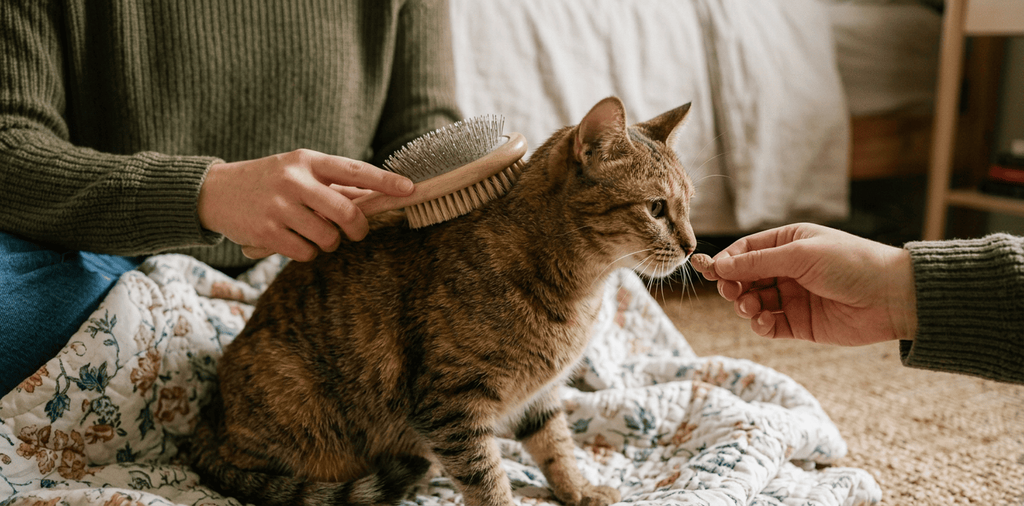
Use a repeatable sequence that is easy for the cat to understand. Show the brush, let the cat remain where it feels secure, make one brief contact, then follow with something the cat values. The reward can be a tiny food treat, licking a favorite treat from a spoon, cheek rubs, a toy, or simply the removal of the brush for a cat that values space. The timing matters more than the size of the reward. It should follow the tolerable brush contact, not a long struggle.
After several easy sessions, add a second stroke. Later, work for a few seconds on one side of the body. Do not increase duration and difficulty at the same time. If you move to a more sensitive area, shorten the session again. This process is slower than restraining the cat, but it gives you useful feedback. When the cat voluntarily remains or returns after a pause, you know the session is becoming more predictable. A cat that has to be blocked from leaving is telling you the step is too difficult.
Keep the rest of your cat’s grooming routine matched to what the coat, nails, teeth, and ears actually need, so brushing does not become one oversized session that includes every care task at once.
Use Consent Breaks Before the Cat Has to Fight for One
Position also affects choice. Grooming on the floor or a familiar sofa can feel less trapping than placing the cat on a narrow counter. Keep doorways open and avoid pinning the body between your arm and furniture. A cat that knows it can leave may be more willing to stay.
A consent break is simply a pause that gives the cat a chance to choose what happens next. After a few strokes, stop moving the brush and move your hand away slightly. If the cat stays relaxed, leans toward you, rubs against the brush, or remains in position, you may continue. If the cat walks away, let the session end. Respecting that choice can reduce the need for stronger avoidance behavior over time.
Watch the whole body rather than waiting for a hiss. Early signs can include a tightening back, tail-tip flicking, turning the head toward the tool, ears rotating back, skin rippling, or shifting weight away. Some cats groom themselves abruptly after an interaction when arousal rises. None of these signals should be treated as disobedience. They are information about tolerance. Children and visitors should not practice brushing a resistant cat until the cat is comfortable with the routine and an adult can read the signals reliably.
Mats Change This From Training to a Coat-Care Problem
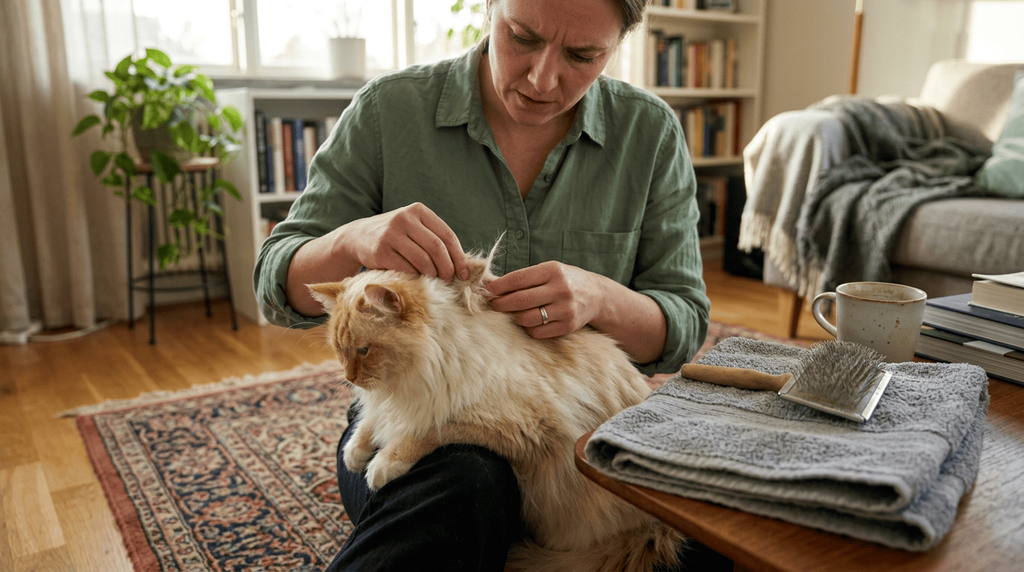
A mat pulls on the skin and can make brushing painful. If the brush catches and the cat reacts sharply, do not keep pulling until the knot comes out. Large, tight, or skin-level mats may need professional removal. FelineVMA pain guidance specifically advises against pulling out mats and warns that scissors can cut a cat’s skin. A veterinarian or experienced professional groomer can decide how to remove difficult mats safely, especially if the cat is painful or cannot tolerate handling.
Once mats are removed, prevention becomes easier than repeated detangling. Work on small areas before knots tighten. Pay special attention to friction points such as the armpits, chest, belly, behind the legs, and areas around a collar if your cat wears one. Long-haired cats may need very frequent checks even if the actual grooming session remains short. If mats keep returning despite regular care, ask whether obesity, arthritis, dental pain, skin disease, or another problem is making self-grooming difficult.
Sudden Brushing Aggression Can Be a Pain Clue
Notice whether the reaction follows pressure rather than the presence of the brush. If your cat accepts the tool near the head but flinches when you touch the lower back, changing brushes may not solve the real problem. Location-specific sensitivity is useful information for the veterinary exam.
A cat that has always disliked grooming is different from a cat that suddenly cannot tolerate it. New resistance over the back, hips, legs, mouth, or one side of the body may reflect pain. Chronic pain guidance lists reduced grooming, changes in sleep and jumping, sensitivity to stroking or brushing, altered appetite, and social changes among the behaviors caregivers may notice. Skin disease can also make ordinary brushing uncomfortable.
Look for a cluster rather than testing the sore area repeatedly. Is your cat jumping less, moving stiffly, sleeping in lower places, avoiding stairs, or becoming touch-sensitive outside grooming? Is the coat becoming greasy or matted because self-grooming has dropped? Are there bald areas, flakes, sores, bumps, fleas, or excessive licking? A veterinary exam is more useful than trying to train through pain. Once discomfort is addressed, a gradual brushing plan may become much easier.
Use a Seven-Day Reset if Every Session Ends Badly
Keep each practice period short enough that you can repeat it later without creating avoidance. One calm thirty-second interaction in the morning and another at night can be more productive than one long session. Stop while the cat is still successful rather than waiting for the first warning signal.
If brushing has become a predictable fight, take several days to rebuild the setup instead of forcing daily full-coat grooming. The plan should stay below the cat’s reaction threshold.
- First session: Put the brush nearby during a calm activity; do not touch the cat with it.
- Second session: Pair the sight of the brush with a small reward, then remove it.
- Third session: Touch an easy shoulder area once and stop.
- Fourth session: Make one or two light strokes in a tolerated area.
- Fifth session: Add a consent pause and continue only if the cat stays comfortable.
- Sixth session: Extend the session by a few seconds, not several minutes.
- Seventh session: Repeat the best previous step rather than automatically making it harder.
If your cat reacts on any day, go back to an easier version. Training is not linear, and coat needs may require professional help while tolerance is being rebuilt.
Know When Home Brushing Is Not the Right Next Step
Stop and seek veterinary or professional grooming help if brushing risks injury, if mats are tight to the skin, if your cat shows pain, or if a previously tolerant cat suddenly reacts strongly. A good grooming plan is not measured by how much restraint you can overcome. It is measured by coat care that can be done safely without turning every session into a conflict.
References
- Cat Grooming Tips — ASPCA — Covers brushing technique, coat checks, coat-length differences, and when grooming resistance needs professional help.
- Treating Chronic Pain with NSAIDs — FelineVMA — Lists sensitivity to brushing, reduced grooming, mobility changes, and guidance for painful cats.
- Cat Friendly Veterinary Interaction Guidelines — FelineVMA — Supports low-stress handling, choice, body-language awareness, and minimizing force.
