

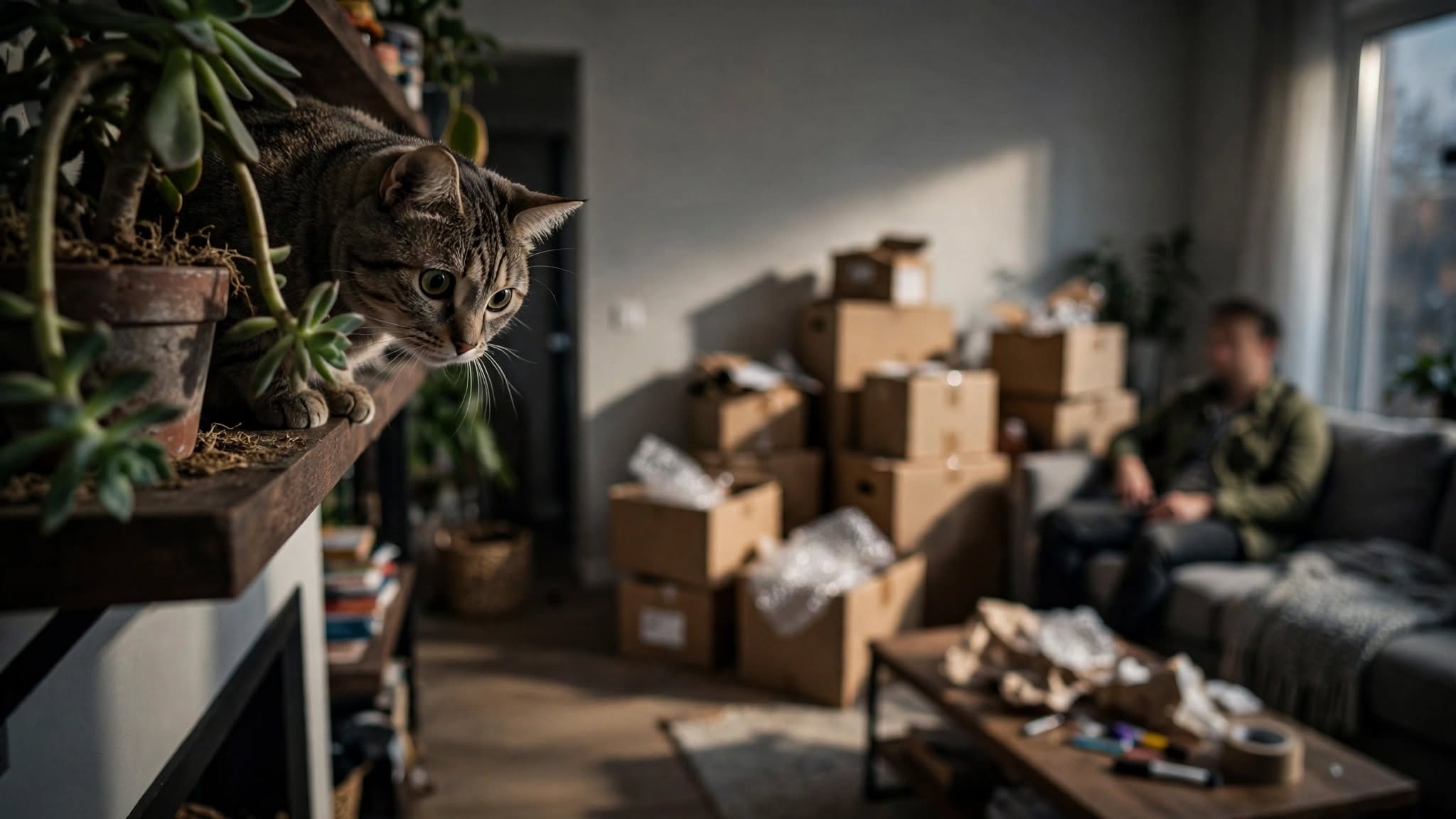
The most useful cat stress signs are often subtle because cats do not always respond to pressure with obvious panic. A stressed cat may hide more, play less, groom differently, eat faster or slower, avoid a room, become watchful around another pet, or start using resources at unusual times. None of those signs proves stress by itself. Pain and illness can create the same behavior. The useful question is whether several parts of the cat’s normal routine have shifted after a social, environmental, or physical change. Stress is best read as a pattern involving posture, location, resource access, recovery, and time—not as one dramatic body-language cue.
Cat Stress Signs Often Show Up as a Change in Territory
A cat that suddenly lives under the bed is telling you something, but the message is not automatically “anxiety.” Hiding can be a normal coping strategy, a response to visitors, a way to avoid another animal, or a sign of pain. Compare the behavior with the cat’s previous pattern. A cat that always naps in a closet is different from one that abandons the sofa, window perch, and social contact within a week.
Location can reveal the source. If the cat disappears only when the washing machine runs, the trigger is likely different from a cat that avoids the hallway where another cat blocks access. Mark the places the cat stops using. Losing territory is one of the most practical clues that the environment no longer feels predictable.
One useful measure is territory compression. Draw a rough map of the rooms your cat used comfortably a month ago and the rooms used now. If a cat that once slept in four areas now stays in one bedroom, something has changed even if appetite remains normal. Territory can shrink because of fear, conflict, pain, noisy construction, or a blocked route. That map gives you a concrete starting point instead of relying on the vague impression that the cat ‘seems off.’
Watch the Body Before You Focus on Vocalization
Stress can appear in posture: a low body, tucked limbs, tightly wrapped tail, ears rotated sideways or back, dilated pupils, a fixed stare, or rapid scanning of the room. Some cats freeze rather than flee. Others become more active and pace. Context matters because the same physical sign can appear during hunting, play, excitement, or a sudden noise.
Look at recovery. A cat startled by a dropped pan may crouch for ten seconds and then return to grooming. A cat that remains tense for an hour, refuses to cross the room, or stays hypervigilant after the trigger disappears is having a harder time returning to baseline. Recovery time often tells you more than the initial reaction.
Facial tension can add information, but it should not be used casually as a stress score. Squinted eyes, flattened ears, or a tense muzzle may reflect pain as well as fear. If those features persist when the environment is calm, take them seriously. A cat crouching only during the vacuum is easier to interpret than a cat holding a tense posture all afternoon with no obvious trigger. Duration and context keep body language from becoming fortune-telling.
Eating and Drinking Patterns Can Shift Under Pressure
Some cats eat less when stressed; others bolt meals because another pet creates competition. A bowl that is technically available may not feel accessible if a cat must pass a dog, noisy appliance, or dominant housemate to reach it. Water behavior can change for the same reason. Do not interpret appetite changes as behavioral until medical causes have been considered, especially when intake drops significantly.
Map the route to each resource. Can the cat approach, eat, and leave without being cornered? Does another cat stare from the doorway? Is the feeder beside a washing machine that starts unpredictably? Small environmental pressures can create daily stress without any overt fight. Moving the resource may solve more than adding a calming product.
Resource timing is another clue. A stressed cat may wait until midnight to eat or use the litter box because the house is finally quiet. If you only check whether food disappeared by morning, you miss the avoidance pattern. A simple camera pointed at the room entrance, not directly into private litter activity, can reveal whether the cat delays access until people, dogs, or another cat leave. Changing access may help more than changing the food itself.
Changes in drinking deserve the same caution. A cat visiting the bowl more often after a stressful event may simply be unsettled, but increased thirst can also signal disease. Measure what changed and note other signs rather than assigning every altered routine to emotion.
Litter-Box Changes Can Be a Stress Signal and a Medical Signal
Stress is associated with feline idiopathic cystitis and can also affect litter-box behavior, but house soiling should never be labeled “stress” without considering health. Straining, frequent small urinations, blood, or repeated attempts to urinate require veterinary attention. A male cat producing little or no urine may be obstructed, which is an emergency.
If medical problems are ruled out, look at box access and social pressure. A cat may avoid a box positioned where another pet can ambush the exit. Covered boxes can feel too enclosed. A move, renovation, new baby, or altered routine can also change toileting. Stress management works best when the specific pressure is removed rather than when the symptom is merely cleaned up.
The litter box can also become a place where stress and pain reinforce each other. A cat with bladder discomfort may begin to associate the box with pain, then become more hesitant even after the episode improves. Punishment for accidents makes that association worse. Keep boxes large, clean, and easy to escape from while medical causes are investigated. The aim is to reduce every avoidable source of pressure around elimination.
Overgrooming Is Not Automatically a Behavioral Problem
Cornell notes that excessive licking can become a displacement behavior related to stress, but medical causes should be ruled out first. Fleas, allergies, pain, skin disease, and other conditions can produce similar grooming changes. The pattern can offer clues. Stress-related overgrooming may appear after a household change or in situations where the cat lacks escape options, but appearance alone cannot confirm the cause.
Under-grooming matters too. A cat that stops maintaining the coat may be painful, unwell, overweight, or emotionally withdrawn. Watch for mats, greasy fur, dandruff, bald patches, and skin irritation. Grooming is one system in a larger picture, not a diagnostic test.
Excessive grooming is easier to notice when it creates bald patches, but earlier signs may be repeated licking of one area whenever a stressful event occurs. Note when it happens. Grooming after a conflict, visitor, or loud noise may function as self-soothing. Repeated focus on one painful joint or itchy patch has a different pattern. Video clips and photographs of skin can help a veterinarian decide what needs to be ruled out first.
Social Stress Can Be Quiet Enough to Miss
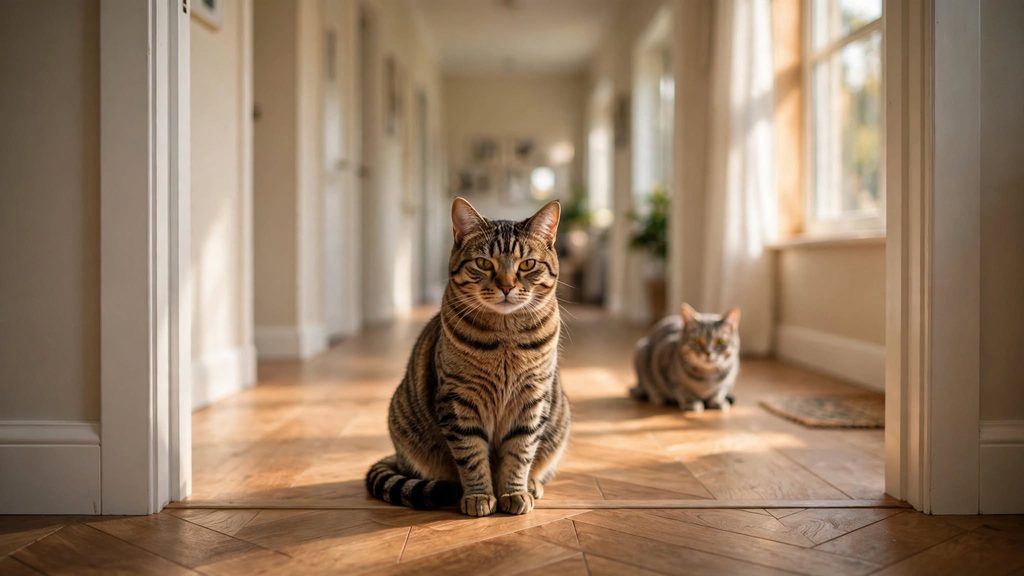
Multi-cat stress often happens without hissing or fighting. One cat may control a doorway, stare at another near the litter box, take the highest perch, or follow the other cat until it leaves a room. The lower-confidence cat adapts by moving at night, eating quickly, hiding, or shrinking its territory. Owners may describe the cats as “fine together” because there are no dramatic battles.
- Watch who waits before entering a room.
- Notice whether one cat abandons a resource when another appears.
- Check whether resting spots have several exit routes.
- Spread food, water, litter boxes, scratching areas, and beds rather than clustering them.
Reducing forced sharing can lower tension without asking the cats to become friends.
Outdoor cats can create social stress even in a one-cat home. A resident cat may patrol windows, spray, yowl, or avoid a room after seeing unfamiliar cats outside. If the pattern centers on one window, temporary privacy film, curtains, or moving a perch can be a useful test. Do not remove all outdoor viewing automatically; many cats enjoy it. Target the view that reliably produces prolonged arousal.
Separate Stress From Boredom, Fear, and Normal Preference
A cat sleeping most of the afternoon is not necessarily depressed or stressed. Cats rest extensively. A cat refusing one toy may simply prefer another style. Stress becomes more plausible when behavior narrows: fewer rooms used, less play overall, fewer relaxed postures, more startle responses, disrupted appetite, or persistent avoidance.
The broader framework in normal indoor cat behavior and changes from baseline helps prevent over-reading individual gestures. A shy cat can be happy. A highly social cat can be stressed. Temperament sets the baseline; change tells you when to look closer.
Normal fear also has a clear endpoint. A delivery buzzer may send a cat under the table, but the cat later emerges, eats, and resumes ordinary behavior. Chronic stress changes the default state: the cat spends more time anticipating trouble than recovering from it. That is why one dramatic incident is often less important than a mild pressure repeated every day. Frequency and recovery help separate a normal protective response from a welfare problem.
Run a Stress Audit Instead of Buying Calming Products First
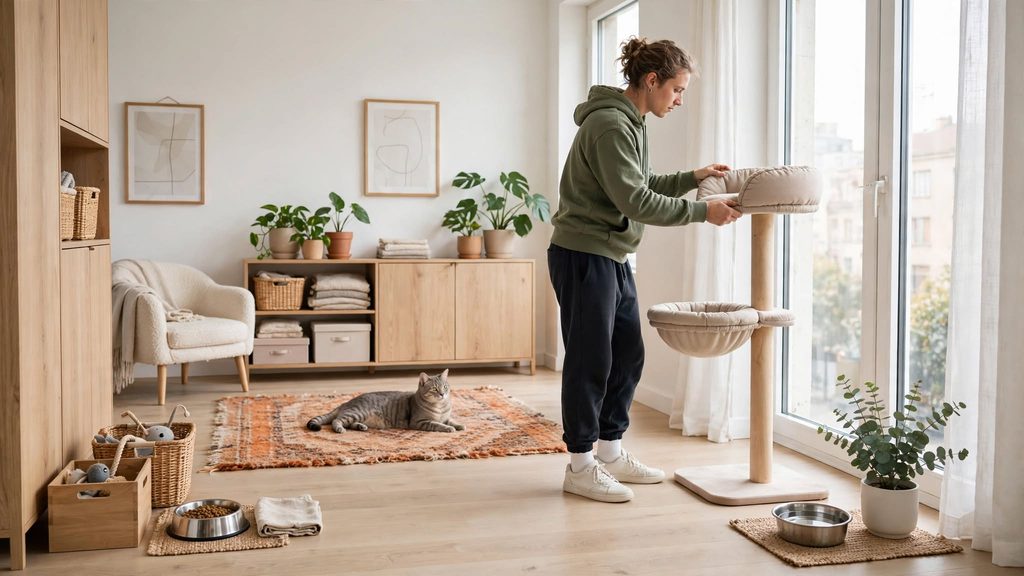
For three days, list what changed in the household during the previous month: visitors, work schedules, new pets, construction, furniture moves, diet timing, litter, noises, outdoor cats at windows, or loss of a favorite resting spot. Then map the cat’s resources. Look for choke points where the cat must pass a threat or compete.
Make one or two environmental changes and observe for a week. Add a high resting option, separate feeding, block a view of an outdoor cat, restore a familiar bed, or create a quiet room. Play can help when the cat is willing, but do not drag a hiding cat into interaction. Control is calming. Give the cat choices and let recovery happen at its own pace.
Your audit should include positive resources as well as stressors. Ask where the cat can hide without being trapped, climb without being chased, scratch, watch the room, and sleep undisturbed. A home can be free of obvious threats yet still offer too few safe choices. Adding one well-placed shelf or an extra litter box can change control more than adding several toys. Stress reduction is often about options, not entertainment volume.
When Stress Signs Belong at the Vet
Contact a veterinarian when the behavior change is sudden, severe, persistent, or paired with reduced eating, vomiting, diarrhea, weight change, urinary signs, lameness, breathing changes, or obvious pain. Cats often hide physical illness, so “stress” should not become a reason to postpone an exam.
If medical causes are ruled out and the stress is still affecting daily life, your veterinarian can discuss behavior support or referral. The goal is not to eliminate every startle or preference. It is to restore normal access, predictable routines, relaxed recovery, and the cat’s ability to use the home comfortably.
References
- FelineVMA — Your Cat’s Environmental Needs — Explains how resource access, territory, sound, scent, and social control affect feline stress.
- Cornell Feline Health Center — Cats That Lick Too Much — Discusses overgrooming, medical rule-outs, and stress-related displacement behavior.
- Cornell Feline Health Center — Feline Lower Urinary Tract Disease — Reviews stress as one factor in feline idiopathic cystitis and urinary signs that need care.
