

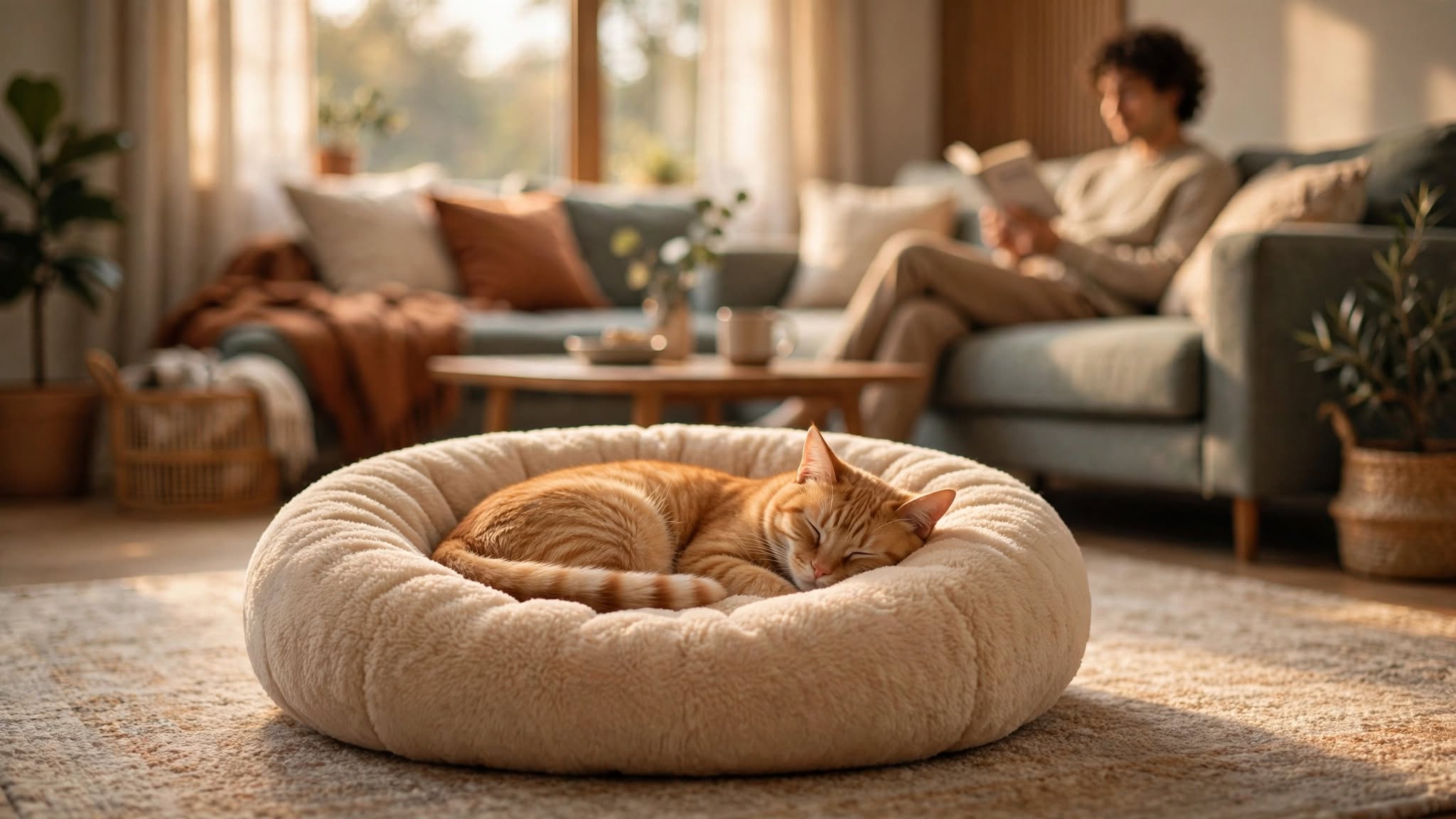
The best heated cat beds are not simply the warmest ones. A good heated bed gives a cat gentle, predictable warmth and enough room to move away. It should also be easy to clean. Electrical safety matters more than plushness, especially for cats that sleep for hours in one spot. Some cats prefer a low mat; others want a bolstered nest or covered bed. The right pick depends on how your cat already rests, where the bed will live, and whether cords are practical in your home. Below are current options with different use cases rather than one artificial “best overall” for every cat.
What Makes Heated Cat Beds Worth Buying
Start with heat control and escape choice. A heated surface should not trap a cat in a confined space. K&H specifically advises that cats must be able to move off its heated pads when they want to. That is especially important for kittens, recovering animals, or cats with limited mobility. For those cats, ask a veterinarian before using heat because the ability to sense temperature or reposition may be reduced.
Then look at the boring details. Is the whole product safety certified? Can the heater come out, can the cover be washed, and does the cord location fit your room? A bed that needs an extension cord across a walkway is a poor choice even if the product itself is well made. Fit the heat source to the home rather than forcing the room around the product.
I would also look for a clear operating range and manufacturer instructions you can actually follow. Heated pet products vary in how they regulate temperature. Some respond to pressure or insulation from the animal, while battery products offer selectable settings. Avoid improvised heating pads made for humans, hot-water bottles that can leak, or devices with no accessible safety documentation. A cat bed is used unattended for long stretches, so vague heat claims are not enough.
K&H Thermo-Kitty Bed: Best for Cats That Like Bolstered Nests
The K&H Thermo-Kitty Bed is a strong match for cats that already curl into round, high-sided beds. K&H’s current indoor heated-bed line uses low-watt thermostatic warmers designed to rise toward a cat’s normal body temperature when occupied. The standard Thermo-Kitty Bed has foam walls that create a secure nest, while the removable heater lets the bed remain useful outside cold weather.
This is the type I would choose for a cat that consistently picks padded bowls, laundry baskets, or sofa corners over flat mats. It is less ideal for a cat that sprawls fully stretched or dislikes stepping over a bolster. The advantage is not simply “more warmth”; it is combining a familiar nest shape with controlled heat. Washability also matters because a warm bed collects hair and skin oils quickly.
Before buying the classic Thermo-Kitty shape, measure the cat’s current favorite round bed. The important dimension is the usable sleeping area inside the foam walls, not the outside diameter listed in a product photo. Large cats often fit by curling tightly, but that does not mean they prefer to. If your cat regularly sleeps with forelegs extended or rolls onto the back, a flat mat may offer more comfortable choice.
K&H Thermo-Kitty Mat: Best for Cats That Hate Bolsters
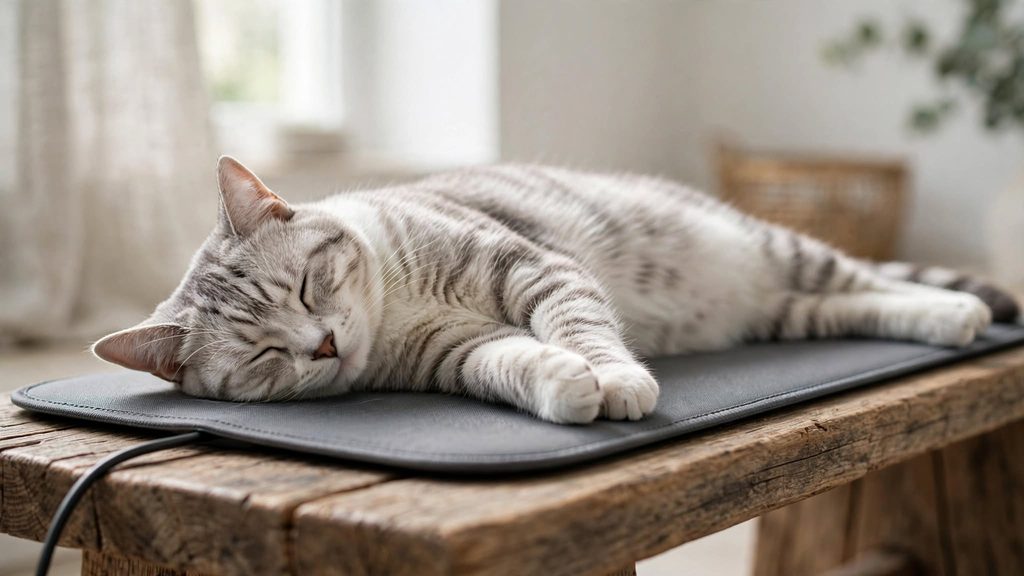
The K&H Thermo-Kitty Mat is flatter and easier to integrate into an existing sleeping spot. K&H lists the mat at 12.5 by 25 inches and 6 watts, with a removable heater and washable cover. The company says it remains moderately above ambient temperature when empty and warms further when a pet lies on it. That subtle heat can suit cats that reject beds with walls but happily sleep on folded blankets.
A flat mat is also easier to place on a wide bench, floor corner, or existing bed. The trade-off is less containment. If your cat likes leaning against something, you may need to put the mat beside a wall or inside a larger unheated bed while keeping enough unheated space available. Do not sandwich the heater under random thick bedding unless the manufacturer says that setup is safe.
The mat format also works well as a trial of whether active heat is appealing at all. Place it where the cat already sleeps and leave an unheated surface beside it. If the cat repeatedly chooses the heated half, you have evidence that warmth matters. If the cat ignores it, do not keep moving the mat around the house indefinitely. The problem may be texture, location, or simply lack of interest in extra heat.
K&H Thermo-Kitty Cuddle Up: Best for Easy Step-In Access
The Thermo-Kitty Cuddle Up uses a lower wall than the classic nest and a removable 4-watt warmer. Its 16-inch diameter makes it compact, and the low edge can be easier for cats that dislike climbing into deeper beds. That can be useful for a mature cat that still wants a defined nest but no longer steps over high sides comfortably.
K&H also states that the entire heated product is MET safety certified and that the cover can be removed for washing. Those details are more persuasive than decorative fabric. I would still measure your cat while curled up. A 16-inch circle can feel generous for a petite cat and cramped for a large-framed one. Heated beds should not force the cat into a tight posture just to stay warm.
A lower wall also makes cleaning and visual inspection easier. You can see hair, vomit, or moisture before it disappears under a hood or deep bolster. That sounds minor, but heated beds need frequent inspection because warmth and enclosed fabric can hide mess that should be washed promptly.
Stoov Nook³: Best Cordless Option for Flexible Placement
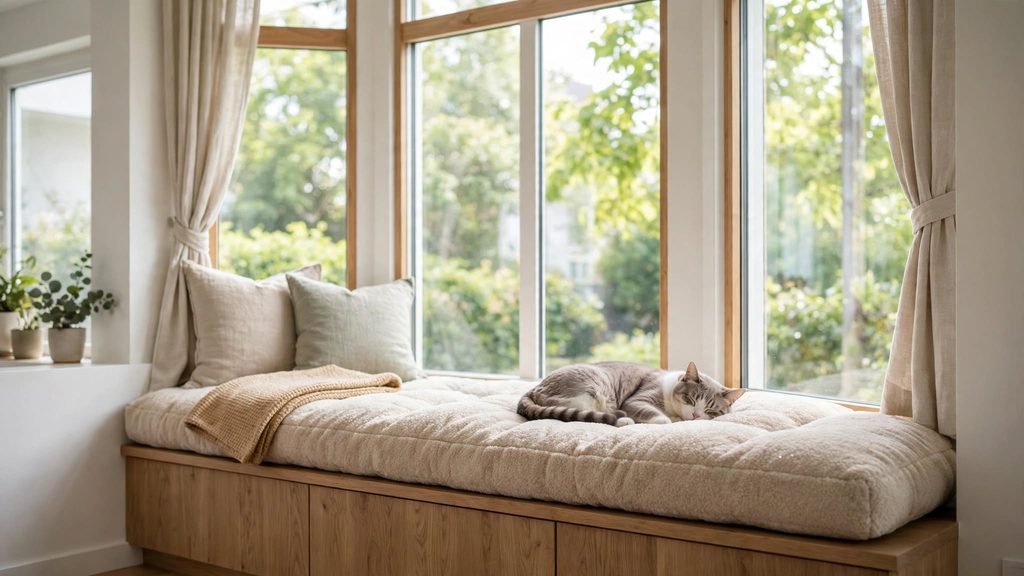
The Stoov Nook³ takes a different approach: rechargeable cordless heat. Stoov markets the current Nook line as a portable heated pet bed with up to about ten hours of warmth, depending on configuration and setting. Its SmartWarm safety system includes automatic shutoff and overheat protection. Cordless design solves a real problem in rooms where the favorite sleeping spot is nowhere near a safe outlet.
The trade-off is battery management and price. A corded thermostatic pet bed can stay available without charging, while a battery product becomes ordinary bedding when the battery runs down. Cordless flexibility matters when the favorite spot has no safe outlet. It can also help on deep shelves or near windows where a cable would be exposed. If the bed will live next to one outlet forever, it may not.
Cordless does not eliminate safety checks; it changes them. Batteries need correct charging, storage, and inspection for swelling or damage. Keep the control module where the cat cannot chew it, and follow washing instructions so electrical components are removed before laundering. The portability is valuable only if you maintain the battery safely. For travel, confirm that the bed can lie flat and that the cat always has an unheated alternative.
Heated Bed vs Self-Warming Bed Is an Important Choice
Not every cat needs electricity. Self-warming beds use reflective or insulating layers to return some of the cat’s own body heat. They do not create active heat, but they avoid cords, batteries, and electrical maintenance. In a mildly cool apartment, that may be enough. Active heat makes more sense when a cat seeks radiators constantly, the room is genuinely cold, or your veterinarian suggests warmth for comfort.
| Need | Better fit | Why |
|---|---|---|
| Favorite spot near outlet | Thermostatic heated bed | Reliable continuous warmth |
| No safe outlet nearby | Cordless heated bed | No cable across room |
| Mild extra coziness | Self-warming bed | No electrical system |
| Cat sprawls flat | Heated mat | Open sleeping surface |
| Cat curls tightly | Bolstered heated bed | Defined nest shape |
Self-warming beds can also be a good first choice for cats that chew cords. They use the cat’s own heat rather than an electrical element, so the warmth is gentler and there is no plug to route. They will not help much in a genuinely cold room, but they can make a favorite shelf or carrier cozier. For many healthy indoor cats, the simplest safe option that the cat actually uses is the better purchase.
Placement Matters More Than Adding Another Degree of Heat
Put the bed where your cat already wants to rest. A perfectly designed heated nest in a noisy hallway may lose to an ordinary blanket beside a sunny window. Cats choose resting spots for more than temperature: visibility, quiet, height, scent, escape routes, and proximity to people all matter. Use the existing resting and vertical zones in your cat-friendly home to decide where warmth belongs.
Keep heated beds away from wet areas and follow the manufacturer’s indoor-use rules. Route cords so they cannot be chewed or pulled across traffic paths. Do not hide a cord under a rug unless the manufacturer specifically permits it. If the cat ignores the bed, move it to a favored sleeping location before assuming the heat level is wrong.
Think about seasonal sunlight as well. A bed near a south-facing window may become much warmer on a sunny afternoon than it is at night. Active heat plus direct sun may be unnecessary, and the cat may abandon the spot. Give the cat another nearby resting option and monitor the first few days across different weather. Comfort is a moving target because the room’s temperature changes even when the bed’s thermostat does not.
Safety Rules Matter More for Kittens, Seniors, and Unwell Cats
- Use only pet-specific heated products with clear safety instructions.
- Let the cat leave the heated surface freely at all times.
- Inspect cords, plugs, covers, and heater inserts regularly.
- Stop using a damaged bed rather than repairing electrical parts yourself.
- Ask your veterinarian before using active heat for a very young, recovering, neurologically impaired, or poorly mobile cat.
A warm bed should add comfort without becoming a medical treatment you improvise at home. Cats with arthritis may love warmth, but pain management still requires veterinary assessment.
Check the bed during the first week rather than assuming certification makes placement foolproof. Feel the surrounding floor, look for compressed or folded heating elements, and make sure the cat has not dragged blankets over vents or cords. If the bed develops an unusual smell, discoloration, damaged cable, or inconsistent heat, unplug it and follow the manufacturer’s support guidance. Routine inspection is a small task for something that may remain powered for many hours.
Which Heated Cat Bed Should You Choose?
Choose the Thermo-Kitty Bed for a cat that loves deep nests. Pick the Thermo-Kitty Mat for a sprawler, the Cuddle Up for a low wall, or the Stoov Nook³ when cordless placement matters most. If your home is only mildly cool, try a self-warming bed before adding electricity.
The best purchase is the one that matches an existing sleep habit and remains easy to use safely. Measure the cat, measure the space, check the outlet, and read the care instructions before buying. Warmth should feel like an upgrade to a spot your cat already trusts.
References
- K&H Pet Products — Indoor Heated Cat Beds — Current K&H heated-bed lineup with low-watt thermostatic options and safety information.
- K&H Pet Products — Thermo-Kitty Mat — Lists current dimensions, 6-watt heating, washable cover, and MET safety certification.
- Stoov — Nook³ Heated Pet Bed — Current cordless heated pet-bed line with rechargeable warmth and safety features.
