


Indoor cat behavior can look strange when you see it through human eyes. A cat may sprint through the hallway at night, scratch the same chair every morning, hide when visitors arrive, or stare at a wall as if something important is happening. Many of these actions are normal ways to hunt, communicate, rest, mark space, or manage stimulation.
The useful question is not whether a behavior looks odd. It is whether it is normal for that cat, whether it fits the situation, and whether it has changed. Sudden changes in behavior can be one of the first signs of pain, illness, fear, or conflict. Learning your cat’s baseline makes it easier to tell personality from a problem.
It also helps to separate frequency from intensity. A cat may hiss once when surprised and recover within seconds. That is different from daily tension that changes where the cat eats or sleeps. Record how often a behavior happens, how long it lasts, and how quickly your cat returns to normal.
Indoor Cat Behavior Makes More Sense When You Look for the Purpose
Cats repeat behaviors because those behaviors do something useful for them. Scratching stretches the body, maintains claws, and leaves scent and visual marks. Climbing creates a safe viewing point. Hiding gives control over social contact. Chasing a moving toy uses parts of the predatory sequence.
This is why simply stopping a behavior often fails. If you block the sofa but provide no acceptable scratching surface, the need to scratch remains. If you remove access to a high shelf without offering another perch, your cat may look for a new elevated location.
Try asking what happens before and after the behavior. Does your cat bite ankles when you walk past before dinner? Does loud meowing begin when a door closes? Does hiding happen only when guests arrive? Context turns a confusing action into useful information.
Normal behavior can still be inconvenient. The practical goal is usually to redirect it toward a place, object, or routine that works for both cat and household.
Scratching, Climbing, Hiding, and Zoomies Are Often Normal
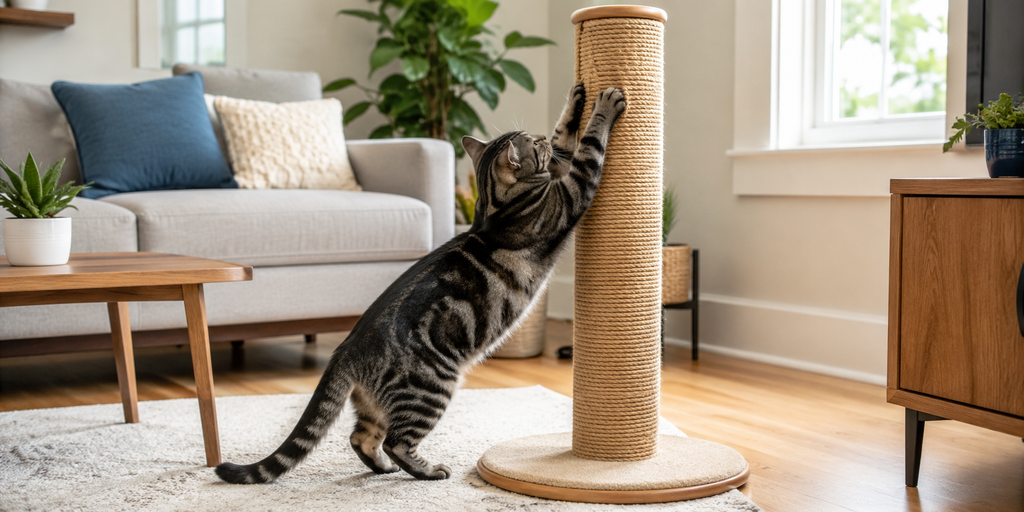
Scratching is expected feline behavior, not a sign that your cat is being destructive on purpose. Cats also climb because height can provide security and a better view of their surroundings. Hiding can be normal when a cat is sleeping, avoiding noise, or taking a break from interaction.
Short bursts of high-energy running are common too. Indoor cats may release stored energy when the home becomes active, after using the litter box, or around dawn and dusk. A predictable play routine can give that energy a better outlet.
Normal does not mean every version should be ignored. A cat that suddenly hides most of the day after being social for years deserves attention. So does a cat that starts climbing awkwardly, stops jumping to favorite places, or becomes reluctant to use stairs. The change matters more than the label.
Watch how quickly your cat returns to normal after excitement. A playful sprint followed by relaxed grooming is different from frantic pacing that continues for hours.
Common Behaviors and What They May Be Telling You
No single behavior has one guaranteed meaning, but these patterns can help you read the situation.
- Slow blinking: Often appears during relaxed social interaction.
- Kneading: Common comfort behavior that may continue from kittenhood.
- Head rubbing: Deposits facial scent and often occurs during familiar social contact.
- Watching from a high place: Gives the cat a secure view and control over distance.
- Hiding during visitors: Can be a normal coping choice if the cat returns once the home is quiet.
- Nighttime activity: May reflect normal activity rhythms, boredom, or a feeding routine that encourages early waking.
- Chattering at birds: Often occurs during intense visual interest in prey outside a window.
- Short play bites: May occur during overstimulated play, especially when hands are used as toys.
Body language should be read as a whole. Ears, tail, pupils, posture, movement, and distance all add context. A purring cat can still be uncomfortable, while a cat that walks away may simply be choosing space.
Zoomies are also easier to understand when you look at the rest of the day. A cat that sleeps through a quiet afternoon may become very active when people come home. Adding short play sessions earlier in the evening can shift some of that energy into a predictable routine without trying to eliminate normal bursts of activity.
What Hiding, Avoiding, or Becoming Clingy Can Mean
Social behavior varies widely between cats. Some follow people from room to room. Others prefer brief contact and spend long periods alone. Neither style is automatically healthier. What matters is whether the pattern is stable and whether the cat can choose social contact freely.
A new increase in hiding can signal fear, household stress, or pain. Look for recent changes such as visitors, construction, a new pet, altered furniture, or conflict around resources. Also watch eating, drinking, grooming, litter-box use, and movement.
A sudden increase in clinginess can matter too. Some cats seek more contact when anxious or unwell. Others become restless and vocal. Again, compare the behavior with your cat’s usual personality rather than assuming that more affection is always positive.
Give a hiding cat safe options and do not drag it out. If the change is persistent or comes with physical signs, schedule a veterinary check. Behavior and health are closely connected in cats.
When Normal Behavior Becomes a Reason to Pay Attention
The pattern around a behavior often tells you more than the behavior itself.
| Behavior | Often normal when | More concerning when |
|---|---|---|
| Hiding | Your cat chooses a quiet nap spot and comes out normally. | It begins suddenly and your cat also eats less or avoids movement. |
| Vocalizing | It happens around greetings, play, or a familiar meal routine. | There is new persistent crying, disorientation, pain, or nighttime distress. |
| Scratching | Your cat uses normal marking and stretching spots. | It appears with agitation, skin discomfort, or other sudden changes. |
| Running | There are short playful bursts followed by normal relaxation. | Your cat seems panicked, cannot settle, or repeatedly runs from apparent discomfort. |
| Grooming | The coat is maintained without skin damage. | There is baldness, broken skin, intense licking, or a sudden drop in grooming. |
One unusual afternoon is not the same as a clear change that persists. Write down when the behavior started and what else changed. A short video can also help your veterinarian or behavior professional understand what is happening at home.
Look for clusters of changes rather than relying on one sign. Hiding plus eating less carries more weight than hiding alone. New vocalizing plus restless pacing may deserve a different response than ordinary meal-time meowing. Several small changes appearing together can be more informative than one dramatic-looking behavior that has always been normal for your cat.
Why Indoor Cats Sometimes Develop Frustrating Habits
Indoor cats rely on the home for nearly every opportunity to hunt, explore, climb, scratch, and control social contact. When those opportunities are limited, some cats create their own. They may attack feet, knock objects down, wake people early, or scratch highly visible furniture.
Before calling a habit stubborn, check the environment. Does your cat have a stable scratching surface in the room it actually uses? Is there daily interactive play? Are food, water, litter, and resting places accessible without conflict? Can your cat retreat when it wants to?
Predictability helps too. Regular play and meal times can reduce constant attention-seeking. Food puzzles can turn part of a meal into a foraging task. Rotating toys can make old items more interesting without buying something new each week.
Do not use punishment to solve fear or stress. Yelling, spraying water, or chasing can make the person part of the problem. Change the trigger, environment, or reward pattern instead.
Enrichment should match the cat rather than follow a fixed checklist. Some cats love wand play, while others prefer food puzzles or watching birds from a window. A shy cat may value hiding and predictable interaction more than constant novelty. Use the activities that leave your cat relaxed and engaged afterward.
Behavior Changes in Multi-Cat Homes Can Be Subtle
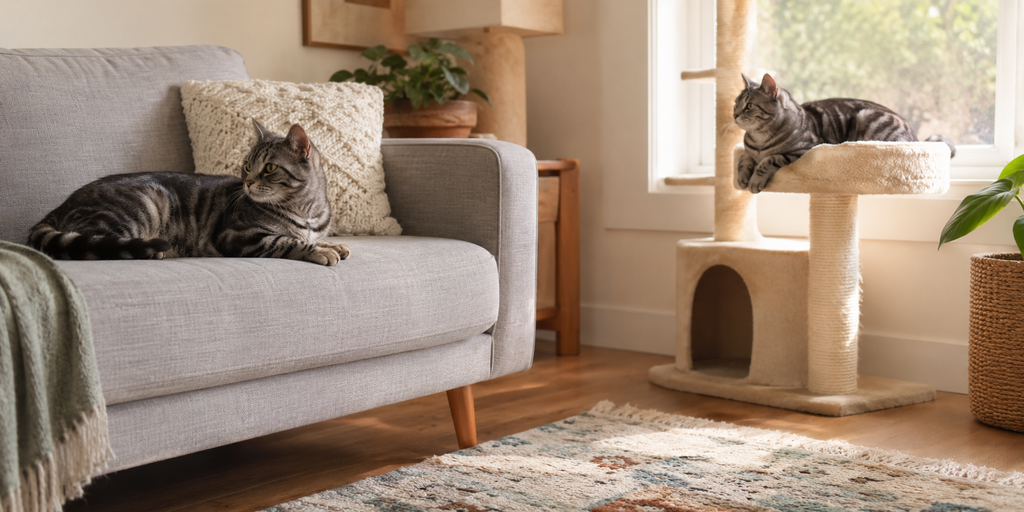
Conflict between cats does not always look like fighting. One cat may stare, block a hallway, guard a litter box, follow another cat, or consistently take the preferred resting place. The other cat may simply become quieter and use fewer parts of the home.
These patterns matter because a cat can experience tension without dramatic aggression. Resource distribution is one of the first things to review. Provide more than one feeding area, water source, litter location, scratching surface, and resting option.
Vertical space and alternative routes can help cats pass through a room without direct confrontation. In a tense household, placing every resource in one attractive cat station may make the problem worse because all valuable things are controlled from the same area.
If relationships deteriorate, do not force the cats to “work it out.” Persistent tension can affect welfare and may require a structured reintroduction or professional help.
Pay attention to which cat changes first. In a two-cat home, the quieter cat may show the earliest signs of tension by leaving a room, waiting to eat, or avoiding a litter box. The more confident cat may look completely normal. Watching access to space can reveal a social problem before obvious chasing or fighting begins.
Behavior Changes That Deserve a Vet Call
Contact your veterinarian when behavior changes are sudden, persistent, or paired with physical signs. Important examples include:
- Sudden hiding, withdrawal, aggression, or unusual sensitivity to touch
- Straining to urinate, repeated litter-box trips, or urinating outside the box
- Stopping food intake or eating much less than normal
- Repeated vomiting, diarrhea, or a major change in thirst
- New difficulty jumping, climbing stairs, or entering the litter box
- Overgrooming, bald areas, skin damage, or suddenly poor grooming
- Disorientation, persistent nighttime crying, or major sleep-wake changes
- Open-mouth breathing, collapse, severe weakness, or other signs of urgent distress
You know your cat’s normal routine better than anyone. A behavior that looks mild on a checklist can still matter if it is a sharp change for your cat. Videos, notes, and a timeline can make the veterinary discussion more useful.
Track Indoor Cat Behavior as a Pattern, Not a Single Moment
Understanding indoor cat behavior is mostly about context and change. Scratching, climbing, hiding, hunting play, and short bursts of activity are normal parts of being a cat. Problems are more likely when a behavior changes suddenly, causes distress, or appears with changes in appetite, mobility, grooming, or litter-box use.
Give normal behavior an appropriate outlet and learn your cat’s baseline. When the pattern shifts without a clear reason, take it seriously. A veterinary check can rule out pain or illness before you treat the issue as a training problem.
References
- Meeting the Physical and Emotional Needs of Indoor Cats — FelineVMA — Current guidance on environmental needs, normal behavior, play, safety, and reducing indoor stress.
- AAFP Feline Behavior Guidelines — FelineVMA — Veterinary framework for understanding and managing feline behavior concerns.
- 2024 AAFP Intercat Tension Guidelines — FelineVMA — Guidance on recognizing subtle conflict and supporting cats in multi-cat homes.
