

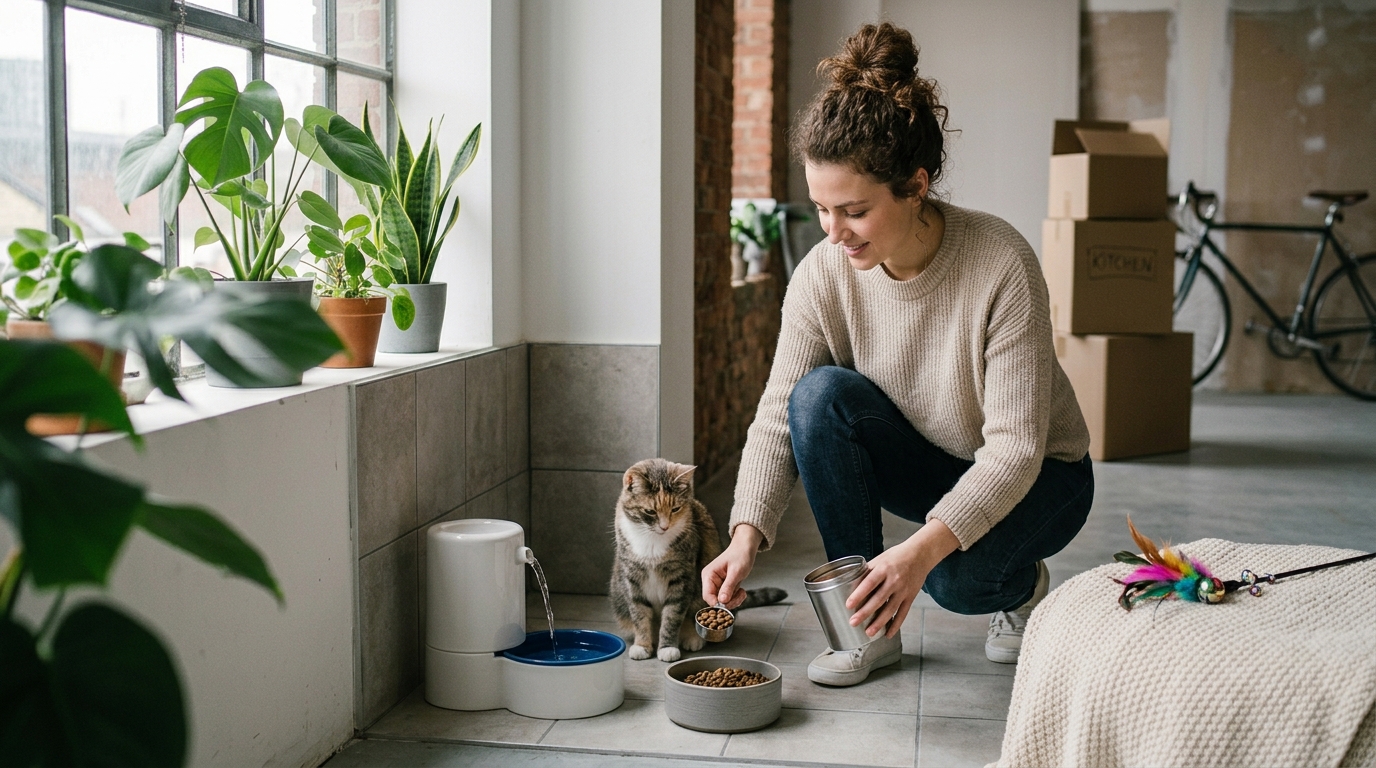
An indoor cat care checklist is most useful when it turns vague advice into a routine you can actually maintain. Beginners do not need to inspect every whisker twice a day or buy every product marketed to cats. They need a reliable system for food, water, litter, play, scratching, rest, home safety, grooming, preventive veterinary care, and noticing changes from normal. The easiest way to build that system is by frequency. Some tasks happen daily, some weekly, and others monthly or on a veterinary schedule. Age, health, lifestyle, and local risk shape the timing.
Set Up the Essentials Before Optimizing the Routine
Start with access. Your cat needs appropriate food, clean water, and an accessible litter box. Add scratching surfaces, resting and hiding places, safe opportunities to climb or observe, a secure carrier, and play. Put these resources where they work for the cat rather than where they look most symmetrical. A water bowl beside a noisy appliance or a litter box trapped in a dead-end closet may exist technically but still be poor access.
In multi-cat homes, duplicate important resources and spread them out so one cat cannot guard everything at once. For a single cat, separation still matters. Food and water do not need to sit beside the litter box. One resting option is also rarely enough for every temperature and social situation. A strong everyday health baseline for an indoor cat starts with a home where basic behaviors can happen normally.
Your Daily Indoor Cat Care Checklist Takes Only a Few Minutes
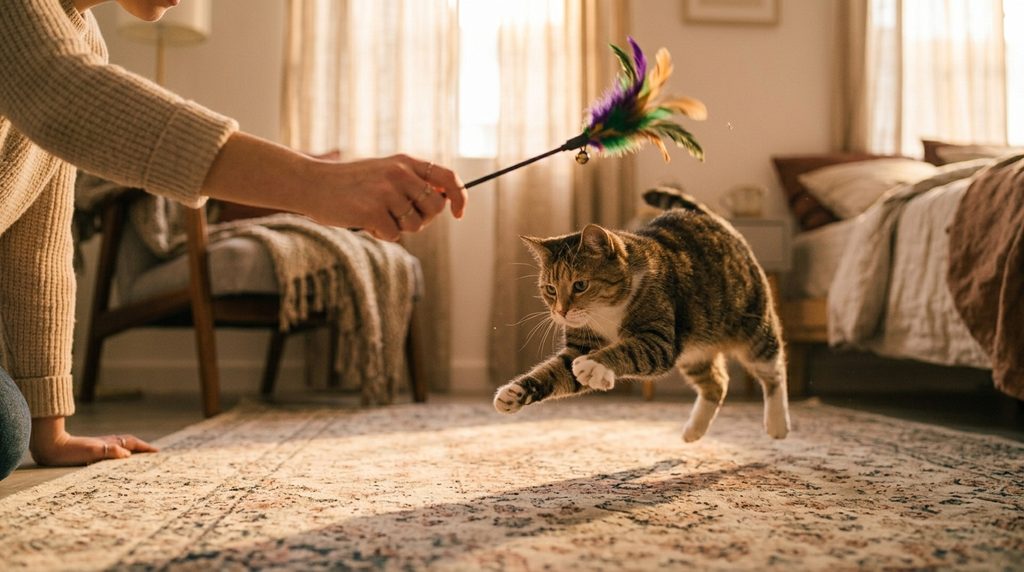
Daily care is less about performing tasks and more about noticing the cat while you perform them. Serve the planned amount of food, refresh water, scoop litter boxes. And spend some time on interactive play or another form of engagement the cat enjoys. While doing those jobs, notice whether appetite, thirst, urine, stool, movement, breathing, grooming, and social behavior look typical. You are building pattern recognition without turning the house into a clinic.
- feed the measured daily amount appropriate for the cat;
- refresh drinking water and check bowls or fountains for debris;
- scoop litter boxes and notice unusual output or repeated visits;
- offer interactive play, hunting-style activity, or food enrichment;
- look at overall energy, movement, posture, and social behavior;
- remove obvious hazards such as string, medication, or unsafe food left within reach.
If one item looks different, note it rather than changing five things at once. A simple observation is more useful than a complicated routine you cannot sustain.
Use a Weekly Reset for Cleaning, Grooming, and Enrichment

Once a week, step back from the daily rhythm. Wash food and water dishes thoroughly and clean the fountain according to its design. Wipe feeding mats, inspect litter boxes, vacuum resting areas, and rotate a few toys. Check scratching posts for loose fibers, unstable bases, exposed staples, or worn sections. Look over beds, blankets, and cat-tree fabric for soil or damage. This is also a practical time for a short grooming session based on coat type.
Weekly does not mean every task must happen exactly seven days apart. A long-haired cat may need combing more often, while a low-use blanket can wait. The point is to create a recurring maintenance window so small problems do not become invisible. If a fountain pump is slowing, a scratcher is wobbling, or the litter box has developed an odor despite scooping, you are more likely to catch it during a deliberate reset.
Do a Monthly Baseline Check, Not a Home Physical Exam
A monthly check is a good time to record body weight if you have a reliable scale and your cat tolerates the process. Look at the body from above and from the side. Notice whether the ribs are becoming harder or easier to feel. Compare photographs over time if that helps. Weight gain can creep up in indoor cats, while unexplained weight loss can be an early clue that deserves veterinary discussion. Avoid chasing daily scale fluctuations.
Also inspect nails, coat, ears, and mouth only to the extent your cat accepts handling safely. You are looking for obvious changes: overgrown claws, new mats, bald patches, persistent scratching, strong odor, drooling, or difficulty chewing. Do not insert swabs into ears or scrape dental tartar yourself. The monthly check is a trend review, not a substitute for a veterinary examination.
Keep one “cat care” note with the current food name, typical daily amount, usual litter brand, favorite hiding places, and normal quirks. This becomes unexpectedly useful when a sitter, partner, or veterinarian asks what changed. You do not need a diary of every meal. A short baseline is enough to tell the difference between “she has always left breakfast” and “she started leaving breakfast this week.”
Keep Feeding and Hydration Simple Enough to Measure
Beginners often make feeding complicated before they have a baseline. Choose a nutritionally complete food appropriate for life stage, measure the daily amount. And include treats in the overall calorie picture. If you feed wet and dry food together, decide how much of each belongs in the day rather than filling both bowls independently. Keep a small record of brand, formula, typical portion. And major changes so you can answer basic questions if appetite or weight shifts later.
For water, provide clean sources in quiet, accessible locations. Many cats benefit from more than one water point, and some prefer a fountain, but a fountain is not mandatory. Watch changes in drinking rather than trying to count every lap. If you need closer monitoring because of a medical concern, ask your veterinarian what information would be useful and how precise the measurements need to be.
For cleaning products, keep pet-safe basics near the area so good maintenance is easy. Enzymatic cleaner is useful for accidents because it removes odor cues rather than covering them. Store bleach, concentrated disinfectants, and fragranced products securely. Never mix cleaners, and let washed boxes dry and air out before refilling if the product requires rinsing.
Treat the Litter Box as a Daily Health Dashboard
Scooping is one of the best observational habits available to an indoor cat owner. You learn the normal number and rough size of urine clumps, stool consistency. And whether the cat enters, eliminates, covers, and leaves comfortably. That makes a sudden change easier to recognize. Do not wait for complete litter-box avoidance before paying attention. Straining, repeated trips, diarrhea, very hard stool, blood, or a marked urine change all deserve notice.
The box itself needs to remain appealing. Maintain an appropriate litter depth, top up after scooping, and wash the box on a schedule that fits the litter type. Strong perfumes and harsh cleaners can create aversion. If your cat starts eliminating outside the box, avoid punishment. Medical causes, location, substrate, cleanliness, access, and conflict all need consideration before labeling the behavior “bad.”
Play, Scratching, Resting, and Hiding Are Care Tasks Too
Indoor care is not complete when the bowls are full. Cats need opportunities to perform normal behavior. Interactive play lets them stalk, chase, pounce, and catch. Scratching maintains claws and leaves visual and scent signals. Elevated perches expand usable territory, while enclosed or protected resting spots give the cat control over social contact. These resources do not have to be expensive; placement and suitability matter more than matching furniture.
Notice what the cat actually uses. If a scratching post is ignored while the sofa corner is popular, the issue may be height, stability, material, or location. If the expensive cave bed stays empty but a cardboard box is occupied daily, the box may be meeting the need better. Good care adapts to observed preference instead of assuming the purchase decision was correct.
Home safety deserves its own recurring scan because hazards change as furniture, plants, hobbies, and household products change. Check window screens, balcony access, blind cords, string toys, and sewing supplies. Review toxic plants, essential oils, medications, cleaners, and small objects that can be swallowed. Secure tumble dryers and washing machines before use. If the cat starts opening cabinets or jumping to a new shelf, update the safety plan rather than assuming yesterday’s kitten-proofing still covers today’s behavior.
Emergency preparation is part of routine care too. Keep a carrier accessible, know how many cats you need to evacuate, and have a small supply of food, medications, and identification information ready. A recent photo of the cat and a note of medication doses can be useful if another person must help. These are low-frequency tasks, but they are easier to organize during a calm month than during a storm, fire alarm, or sudden hospitalization.
Preventive Veterinary Care Belongs on the Calendar
Indoor cats still need routine veterinary care. AAHA/AAFP life-stage guidance recommends regular examinations, with frequency adjusted for age and individual health; senior cats often benefit from more frequent review. Vaccination, parasite prevention, dental care, weight monitoring, reproductive status, screening tests, and microchip details should be individualized with the veterinary team. Indoor living lowers some risks but does not eliminate disease.
Keep a simple record with the clinic contact, vaccination history, and current medications or supplements. Add known reactions, the microchip number, insurance details if relevant, and carrier information. Make the carrier part of the home rather than an object that appears only before stressful trips. If you move, update contact details on the microchip registry and confirm where the nearest routine and emergency clinics are before you need them.
For households with multiple people, decide who owns each repeated task. “Someone scoops the box” is less reliable than a clear morning or evening responsibility. The same goes for feeding: duplicated meals happen when one person assumes the other forgot. A whiteboard, shared note, or simple tick box can prevent both missed care and accidental overfeeding without turning cat ownership into paperwork.
Keep the checklist visible enough that it prompts action, but short enough that you do not stop using it after a week. A one-page routine is usually more useful than a perfect tracker nobody updates.
A Beginner Checklist Works Best When It Survives Real Life
The best routine is the one you can continue on busy weeks. Keep daily tasks short, combine weekly maintenance into one reset, and review monthly changes without obsessing over perfect numbers. Add reminders for veterinary visits, parasite products, filter changes, or prescription refills when needed. If another person cares for the cat, write down the feeding amount, medication instructions, litter routine, and what would count as an unusual change.
As you learn your cat, the checklist becomes more individualized. A shy cat may need more protected routes through the home. Long-haired cats may require more combing. A senior may need lower entry litter boxes and easier access to warm beds. The beginner phase is not about memorizing every cat-care rule; it is about building a dependable observation-and-response system that lets you notice when your own cat’s normal life starts to change.
References
- AAHA — Feline Life Stage Checklists — Professional feline life-stage care guidance.
- Cat Friendly Homes — Tips and Resources to Make Your Home More Cat Friendly — Feline-veterinary guidance for home care and behavior.
- Cat Friendly Homes — Why You Need to Visit the Veterinarian — Feline-veterinary guidance for home care and behavior.
