

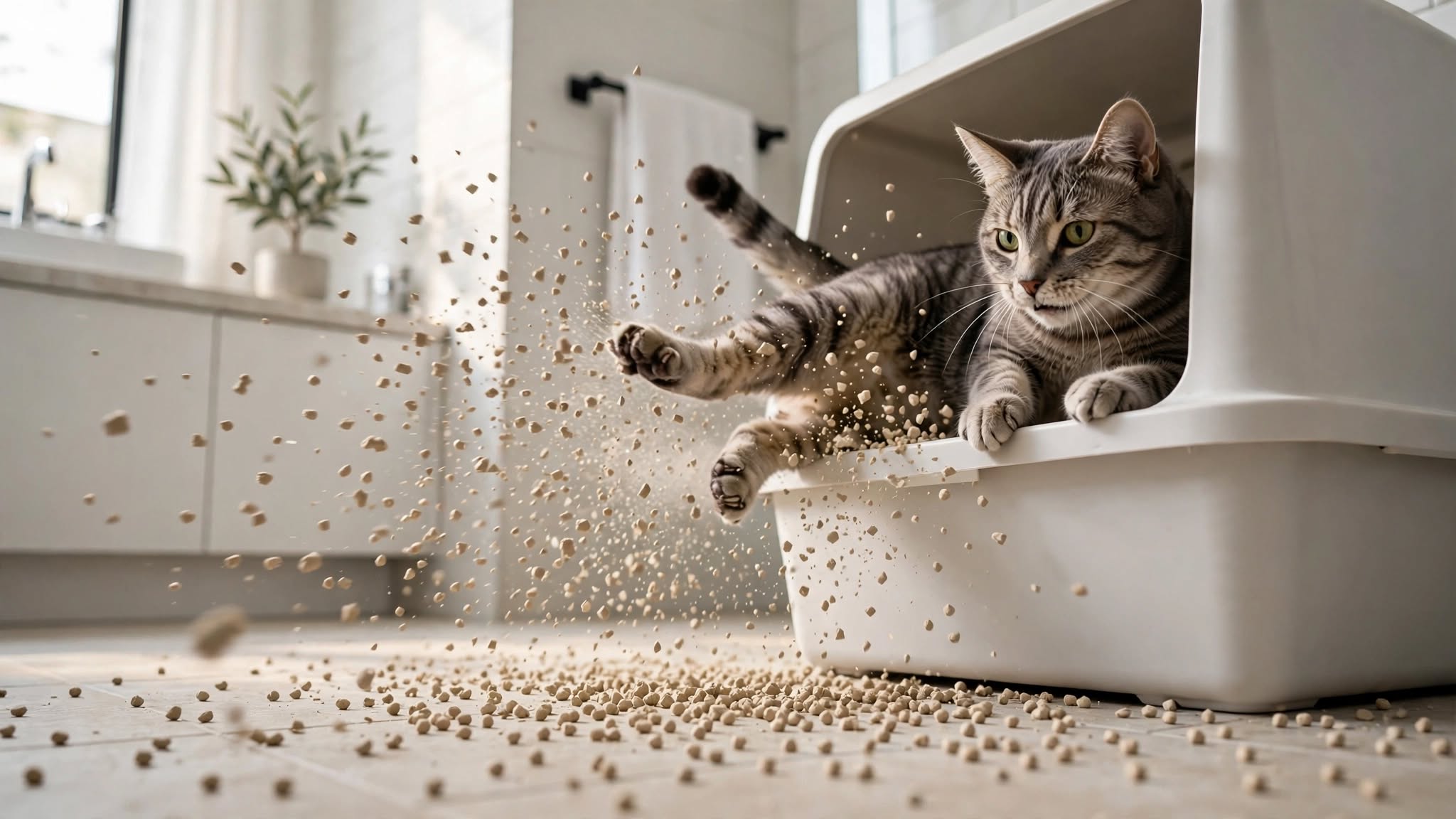
If you are wondering why your cat kicks litter everywhere, separate litter that is actively flung out during digging from litter that sticks to the paws and gets tracked through the house. Watching a cat kick litter everywhere can look extreme, but cats normally dig before and after elimination. An enthusiastic digger can move a surprising amount of substrate. A small box, low sides, very light litter, or too much depth can turn normal behavior into a daily mess. The aim is not to stop digging. It is to give the cat enough room to dig comfortably while containing more of the litter without making the box harder or less appealing to use.
First Decide Whether the Litter Is Being Kicked or Tracked
Clean the floor once, then watch where the next mess appears. Litter piled beside one wall points toward active digging. A trail that begins at the entrance and fades across the room suggests tracking. This simple reset can save you from changing the wrong part of the setup.
Kicked litter usually lands around the box during active digging. You may hear vigorous scratching and find a fan-shaped scatter beside the walls or entrance. Tracked litter travels farther. It clings to paws or fur and appears along the exit route, on rugs, or in other rooms. The solutions overlap, but they are not identical. Higher sides can contain kicked litter, while a suitable mat and substrate choice may matter more for tracking.
Watch one normal litter-box visit if you can do so without hovering. Watch whether the cat digs rapidly against one side. Notice if the hind end sits near the entrance, and check whether litter flies over a low wall or stays in the box until exit. Look at long fur between the toes as well. Knowing where the litter leaves the box prevents you from buying a covered box when the real issue is material sticking to the paws.
Why Does My Cat Kick Litter Everywhere? Give Digging More Room
Box orientation matters after size. If the longest side faces a wall and the cat has to turn tightly near the entrance, rotating the tray may create more usable movement space. Keep at least one clear exit route and avoid placing the box where a door can suddenly swing toward it.
A small tray forces the cat’s digging close to the walls. Larger boxes provide more surface area for turning, digging, squatting, and covering. Feline house-soiling guidance often recommends a box around one and a half times the cat’s body length from nose to the base of the tail. Many commercial boxes are smaller than that, especially for large adult cats.
A bigger footprint can reduce mess even without taller sides because the digging happens farther from the edge. When evaluating box size, entrance, litter depth, placement, and cleaning as one litter setup, prioritize comfortable use before containment. A beautifully enclosed box that the cat avoids is worse than a messy open tray the cat uses reliably. Measure the cat and the available floor space before assuming a new style is an upgrade.
High Sides Can Help, but Keep the Entrance Accessible
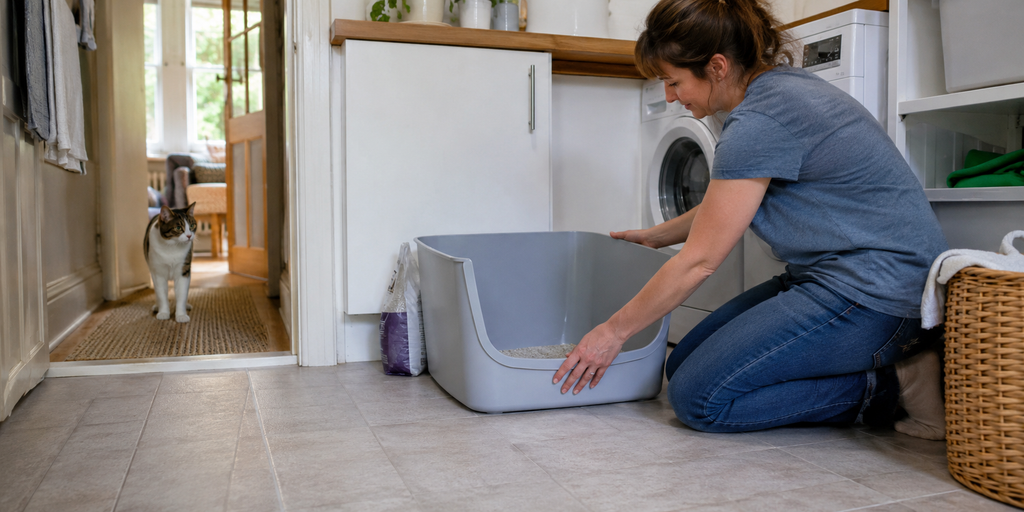
For cats that urinate high against a wall, taller sides may solve two problems at once, but do not add a lid solely for splash control without testing acceptance. An open box with three high walls and one low doorway often preserves easy access while catching much of the thrown substrate.
For an agile adult cat, a large box with higher sides can catch litter thrown backward or sideways. The entrance should still be easy to step through. Older cats, cats with arthritis, and cats recovering from injury may need a lower opening even when the other three walls are tall. Storage-style boxes can sometimes be adapted with a smooth low entrance, but any cut edge must be safe and free of sharp plastic.
Do not make every wall high if the cat looks uncomfortable climbing in. Observe whether the cat enters confidently and can turn without squeezing. A litter guard or wall extension may protect one particularly messy side while preserving an easy doorway. If litter is mainly launched through the entrance, rotate the box only if the new orientation keeps the route quiet and accessible. Location and social safety matter more than perfectly clean floors.
Litter Depth Changes How Much Material Can Fly
After scooping, redistribute the remaining litter rather than leaving deep piles in corners. Cats often dig where the substrate is deepest, which can push a mound directly over the side. A roughly even layer gives the cat more consistent footing and makes your depth experiment easier to evaluate.
Very deep litter gives an enthusiastic digger more material to move. Too little litter can also create prolonged scraping as the cat tries to cover waste. Feline educational material commonly describes around 1.5 inches as a general preference, with individual variation. Use that as a practical starting point, then adjust based on how the cat uses the box.
Keep depth fairly consistent for a week before judging. If one caregiver fills the tray shallowly and another pours in several inches, the mess will change for reasons unrelated to the cat. Marking a refill line inside the box can help. If your cat digs all the way to the plastic base, a small increase may improve covering. If the cat sends deep piles over the wall, reducing excessive depth may help without changing litter type.
Lightweight Litter and Long Fur Can Increase the Mess
Do not change litter solely on the basis of advertising claims about tracking. The cat’s acceptance is the first requirement. If you test a heavier or differently shaped substrate, compare actual box use, digging time, paw shaking, and accidents as well as the amount you sweep from the floor.
Some litter is easier to kick or track than others. Very light particles can travel farther when the cat digs. Fine material may cling to damp paws, while larger particles may be less comfortable for some cats. There is no universally mess-free substrate that every cat prefers, so do not sacrifice toileting comfort simply to reduce sweeping.
If you want to test a different litter, offer it in a second large box rather than replacing the familiar substrate overnight. Keep both boxes in acceptable locations and scoop them equally. Long-haired cats may carry particles in foot fur; gentle coat and paw-area grooming can help when appropriate. If the cat suddenly shakes or licks the paws after leaving the box, inspect for irritation, injury, or material caught between the toes rather than assuming the mess is purely behavioral.
Use a Litter Mat for Tracking, Not as a Trap
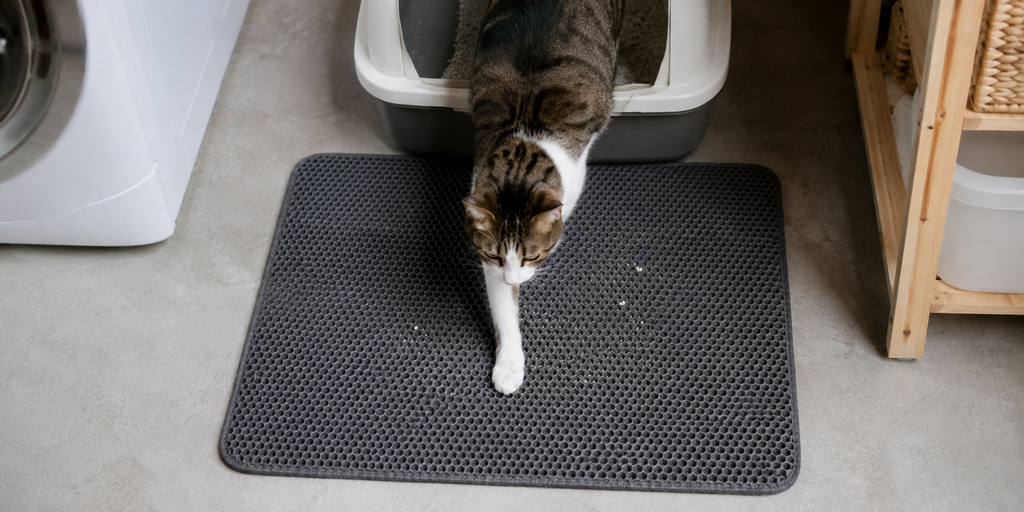
Place the mat where the cat naturally steps rather than forcing a long route across it. If the cat jumps directly from the box to avoid the texture, the mat may increase scatter. A smaller, softer mat that the cat actually walks on can outperform a large aggressive-texture design.
A mat can collect litter that falls from the paws after exit. Choose one that lies flat, does not slide, and is comfortable for the cat to walk across. A rough or unstable mat may make a cat leap over it, which can scatter even more litter. Keep the mat large enough to cover the normal exit path without surrounding the box with an unfamiliar obstacle.
- Shake or vacuum the mat before it becomes full of loose litter.
- Wash it often enough that odor does not build up.
- Keep it flat so older cats do not trip.
- Avoid sharp or highly textured surfaces that the cat refuses to step on.
- Do not block the only easy route away from the box.
- Use a waterproof layer if urine occasionally reaches the edge.
If litter is being thrown over the side during digging, a mat catches the result but does not address the box dimensions. Use it as part of the setup, not the only fix.
Covered and Top-Entry Boxes Are Not Automatic Solutions
Watch ventilation and cleaning access too. A design that is difficult for you to scoop may stay dirtier, while trapped odor can make the interior less appealing. Convenience for the floor matters only if the box remains comfortable enough that the cat continues to choose it.
It is tempting to contain litter with a lid, but covered boxes change odor, visibility, escape routes, and usable space. Some cats accept them readily; others prefer open boxes. A top-entry box can reduce tracking for certain agile cats, but it is not a good universal choice for kittens, seniors, painful cats, or cats that dislike jumping into a toilet space.
If you want to test an enclosed design, keep the familiar open box available. Choose a box large enough that the cover does not make turning cramped. Scoop frequently because odor can concentrate inside. Do not interpret refusal as stubbornness. The cat may be telling you the new design is less comfortable. A high-sided open tray often contains litter while preserving the visibility and easy exit of an uncovered box.
More Digging Can Be a Clue When the Pattern Suddenly Changes
Keep a photo or short note of the old pattern if the change persists. “Always dug hard” and “started spending three minutes digging this week” lead to different questions. Changes in stool consistency, urine amount, mobility, or another cat’s behavior can all alter the litter-box sequence.
A cat that has always kicked litter enthusiastically is different from a cat that suddenly spends several minutes digging, enters and leaves repeatedly, or cannot settle into a posture. Look at elimination itself. Straining, vocalizing, blood, frequent tiny urinations, very hard stool, diarrhea, or accidents outside the box need attention. Difficulty urinating can be urgent, particularly in male cats.
Cleanliness can change the digging pattern too. A box with several clumps may force the cat to search for a clean place and move more litter. Scoop at least daily and more often when needed. In multi-cat homes, add well-placed boxes rather than expecting one tray to stay comfortable for every cat. If the behavior improves when the box is clean and spacious, you have practical evidence that setup was part of the problem.
Contain the Litter Without Making the Toilet Worse
Prioritize reliable box use over a spotless floor. If a containment change makes the cat hesitate, perch on the edge, or choose another location, reverse it. A little sweeping is easier to manage than a litter setup the cat no longer trusts.
Begin with a larger box, a reasonable litter depth, and an entrance the cat can use comfortably. Add higher sides where mobility allows and a stable mat for tracking. Test substrate changes slowly. If the cat uses the box normally and the only remaining problem is a small amount of litter on the floor, accept some mess as the cost of natural digging rather than creating a setup the cat dislikes.
References
- Setting Up the Environment for Success — FelineVMA — Describes normal digging, substrate preferences, and feline elimination behavior.
- AAFP/ISFM House-Soiling Guidelines — FelineVMA — Covers box size, litter type, depth, access, and optimizing the litter setup.
- Not Using the Litter Box — Cat Friendly Homes — Updated information on litter-box design, cleanliness, location, and medical or social problems.
