

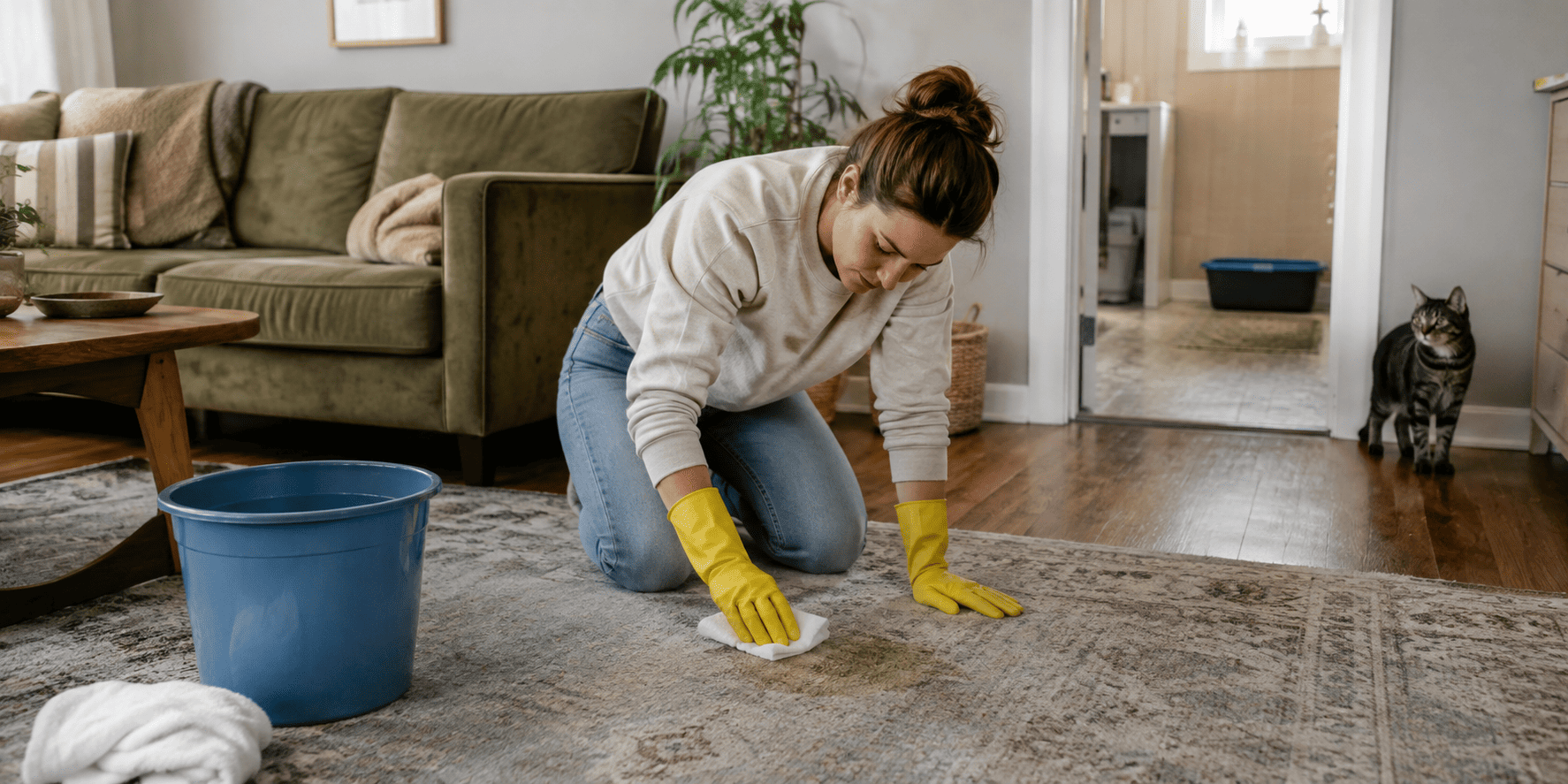
A cat peeing outside the litter box is giving you information, not making a point. The useful first split is medical versus environmental, followed by a second split: is the cat emptying the bladder on a horizontal surface, or urine-marking a smaller amount on a vertical target? Those patterns lead to different troubleshooting. Pain, urinary disease, litter-box aversion, poor access, and social pressure can also overlap, so the fastest route is to rule out urgent problems before changing several parts of the litter setup at once.
Puddle or Spray? Classify the Pattern Before You Change Anything
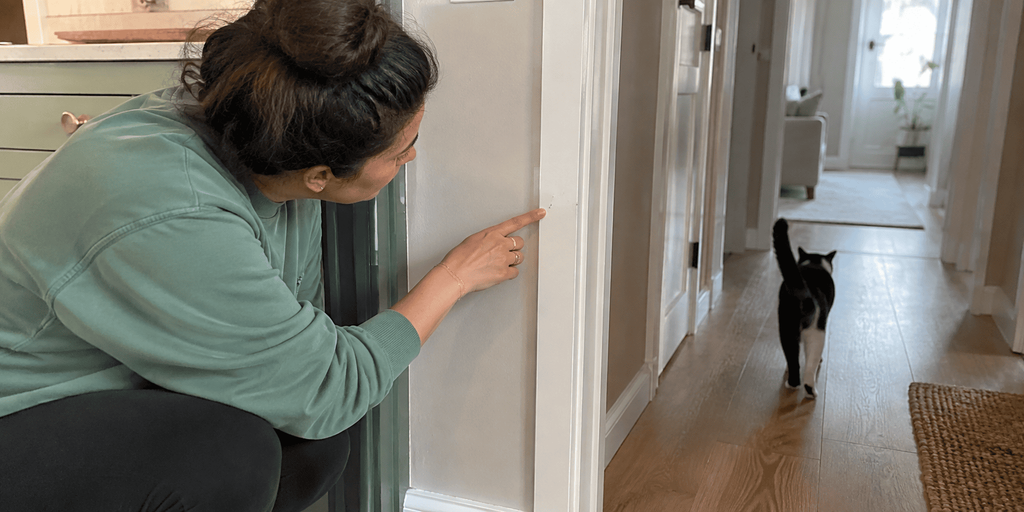
House-soiling and marking can look similar if you only find the urine afterward. These are patterns, not perfect rules. A veterinarian may still need to rule out medical problems even when marking seems likely. Think about the path to the box at night as well as during the day. A door that is sometimes closed, a dog sleeping in the hallway, or a dark staircase can turn reliable daytime access into an inconsistent route. The box has to be available every time the cat needs it. Marking can coexist with normal litter-box urination. A cat may still empty the bladder in the box and spray small amounts elsewhere. That is another reason to describe both box use and accident locations rather than treating every urine mark as the same behavior.
| Clue | Full urination outside box | Urine spraying |
|---|---|---|
| Surface | Often horizontal, such as carpet, bed, or floor | Often vertical, such as wall, door, or furniture side |
| Posture | Usually squats | Often stands with tail raised and may quiver |
| Amount | Can be a bladder-sized puddle | Often a smaller amount |
| Common context | Medical issue, box aversion, location, litter preference | Scent communication, social or territorial stress, sexual marking |
Cat Peeing Outside the Litter Box Can Start With Pain or Urinary Trouble
A new house-soiling problem deserves veterinary attention because urinary disease, pain, arthritis, kidney problems, diabetes, and other conditions can change litter-box use. Cats may associate the box with discomfort if urination hurts. Older cats may avoid a box when high sides or stairs become difficult. Repeated trips to the box, straining, crying, blood in urine, or producing little to no urine are especially important signs. A cat that cannot urinate normally may have an emergency. Male cats can develop life-threatening urinary obstruction. Do not wait to redesign the whole litter area if your cat appears painful or unwell. Medical causes and environmental problems can also occur at the same time. Look at where the urine lands.
Spraying often appears on doors, walls, furniture sides, or other vertical boundaries, while full urination more often leaves a larger puddle on a horizontal surface. If you never see the event, take photos of repeat locations so the pattern is easier to compare. Even if urine testing is normal, the veterinary visit is still useful. Pain from arthritis, constipation, mobility problems, or another condition can change box use without starting in the bladder. Give the clinic the full behavior timeline, not only the location of the urine.
Seek prompt veterinary care if your cat repeatedly strains, produces little or no urine, cries in the box, has blood in the urine, vomits, becomes weak, or seems severely distressed. Difficulty urinating can be an emergency. Bring useful observations. Tell the clinic whether your cat squats or sprays, where the urine appears, how often the cat visits the box, and whether appetite, thirst, or behavior changed at the same time.
The Accident Location Is Part of the Evidence
Where the urine appears can narrow the next question. A large puddle on a bed, bath mat, or carpet can point toward a preferred surface or a box that feels less comfortable. Repeated urine beside the box may suggest that the cat reached the toilet area but something about entry, posture, litter, or the box itself became a barrier. Small marks near doors, windows, or social boundaries fit a different pattern and make marking more likely.
Look for repetition rather than trying to interpret one accident perfectly. If the same room, surface, or time of day keeps appearing, write it down. A cat that urinates on the bath mat only when a hallway door is closed has given you a different clue from a cat that soils several soft surfaces after a painful urinary episode. Patterns help you choose one useful test instead of buying a new box, litter, cleaner, and calming product all at once.
Run a Seven-Day Reset Instead of Changing Everything at Once
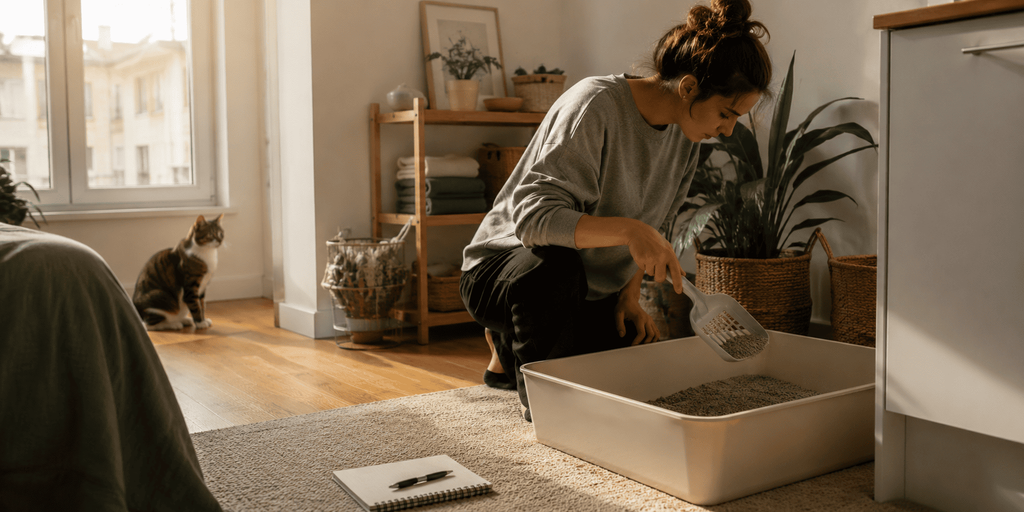
This short troubleshooting period can reveal whether the accidents cluster around one room, one box, a certain time of day, or a social trigger. Video from a home camera can sometimes reveal blocking that people never witness directly. Look for one cat waiting outside the litter room, following another after elimination, or occupying narrow pathways. The absence of fighting does not prove that access feels safe. If you add a new box, make it a genuinely good option rather than a test designed to fail. Use adequate size, a preferred litter, and a quiet route. A tiny tray beside the original problem area will not tell you whether your cat would accept a better toilet.
- Arrange a veterinary check for a new or unexplained urination change.
- Scoop every box at least daily and record where accidents occur.
- Add a large clean box in a quiet, accessible location.
- Use a soft, unscented clumping litter unless your cat has a known preference.
- Keep boxes separate rather than lining them all up together.
- Clean urine spots thoroughly with an appropriate pet-odor product.
- Watch for another cat blocking, staring, or following near the box.
- Photograph or note the urine location and pattern for your veterinarian.
Clean the Chosen Spot Without Turning It Into a Battle
Cleaning matters because residual urine odor can make a location easier for the cat to recognize and revisit. Use a product intended for pet urine on the specific surface, and treat a wider area if urine may have soaked into carpet padding, upholstery, grout, or wood. Avoid relying on fragrance to cover the smell. To a cat, a strongly scented cleaner can create another unfamiliar cue without removing the original one.
After cleaning, manage the location while you work on the cause. A washable cover can protect a bed, and temporarily closing a room may prevent rehearsal of the pattern. Avoid punishment, startling devices, or dragging the cat to the litter box. Those responses can add fear without making the preferred toilet safer. If the cat repeatedly chooses one practical location, a temporary litter box there can sometimes reveal whether location is the main issue before you decide where the long-term box should stay.
Audit the Box From the Floor Up
Review the basics. The box should be large enough for comfortable turning and squatting. Scoop it at least daily, and check whether the litter is soft and unscented. Entry should not require a painful or awkward climb. Location matters too. Noise can make a box beside a washer feel unpredictable. In a closet or narrow hallway, another cat may be able to block the exit. Covered boxes can also trap odor or feel too confined for some cats. A reliable reset starts with box size, placement, litter depth, cleaning, and enough separate boxes for the household. Change the most likely problem first. Replacing the box, litter, and location all at once makes it difficult to learn what your cat actually disliked.
Box count matters, but location matters just as much. Two boxes touching each other may function like one resource because a cat cannot choose a truly different route or social space. Spread boxes when possible so one bad experience does not make every toilet option feel unsafe.
Look at the approach as well as the box itself. A litter tray can be perfectly clean but still fail if the route passes a noisy appliance, a narrow doorway, or another cat’s resting place. Check whether the cat can enter, turn, eliminate, cover, and leave without feeling trapped. For an older cat, a lower entrance may matter more than adding another inch of litter. For a large cat, usable floor area may matter more than whether the box is marketed as “large.”
Check Whether Another Cat Controls the Route
Cats do not need to fight openly for one cat to feel unsafe. Staring, following, waiting in a doorway, or resting near the litter-box route can be enough to change where another cat urinates. Spread resources through the home. Give cats more than one route to important areas and avoid making every litter box part of a single station. In a multi-level home, boxes on different floors can improve access. Watch the less confident cat. It may wait until the room is empty, rush out of the box, or choose a quiet alternative surface. These subtle patterns can be easy to miss if you focus only on the urine. If tension persists, a structured behavior plan may be needed after medical causes are addressed.
Do not give human pain medicine or leftover antibiotics while you wait. Many human medications are dangerous to cats, and inappropriate treatment can complicate diagnosis. Keep the cat comfortable, provide easy litter access, and follow the veterinary clinic’s instructions. Separate food and resting resources too. Litter tension rarely exists in isolation if one cat controls important areas of the home. Improving the overall distribution of resources can reduce pressure around the boxes without making the litter area itself more complicated.
Soft Surfaces Can Become a Learned Preference
Beds, laundry, rugs, and bath mats are not random targets. They are quiet, absorbent, and often comfortable under the paws. After a painful or frightening litter-box experience, a cat may discover that one of those surfaces feels easier and then return to it. Simply removing the rug may move the accident somewhere else if the original box problem is still present.
Use the preference as a clue. A cat repeatedly choosing soft fabric may accept a finer, softer litter better than a coarse or strongly scented product. If the accidents began after a litter change, restoring the previous texture is a cleaner test than introducing several new litters. Keep at least one familiar option during the trial. The aim is to make the box easier to choose than the alternative, not to make every alternative unpleasant.
Test One Litter-Box Variable at a Time
Once medical problems are addressed, change one likely barrier at a time so the result teaches you something. Keep the familiar box available while testing a better option.
- Try a larger open tray before changing litter.
- Move one box to a quieter route instead of moving them all.
- Remove strong scents and scoop more often.
- Keep repeat urine spots thoroughly cleaned.
- Watch whether another pet blocks access.
References
- Not Using the Litter Box — Cat Friendly Homes — Updated feline-veterinary guidance on medical, environmental, location, cleaning, and social causes of house-soiling.
- Feline House-Soiling — FelineVMA — Caregiver guidance on litter-box design, number, location, social access, and treatment principles.
- Spraying — Cat Friendly Homes — Helps distinguish urine marking from full urination and explains common social and environmental triggers.
