

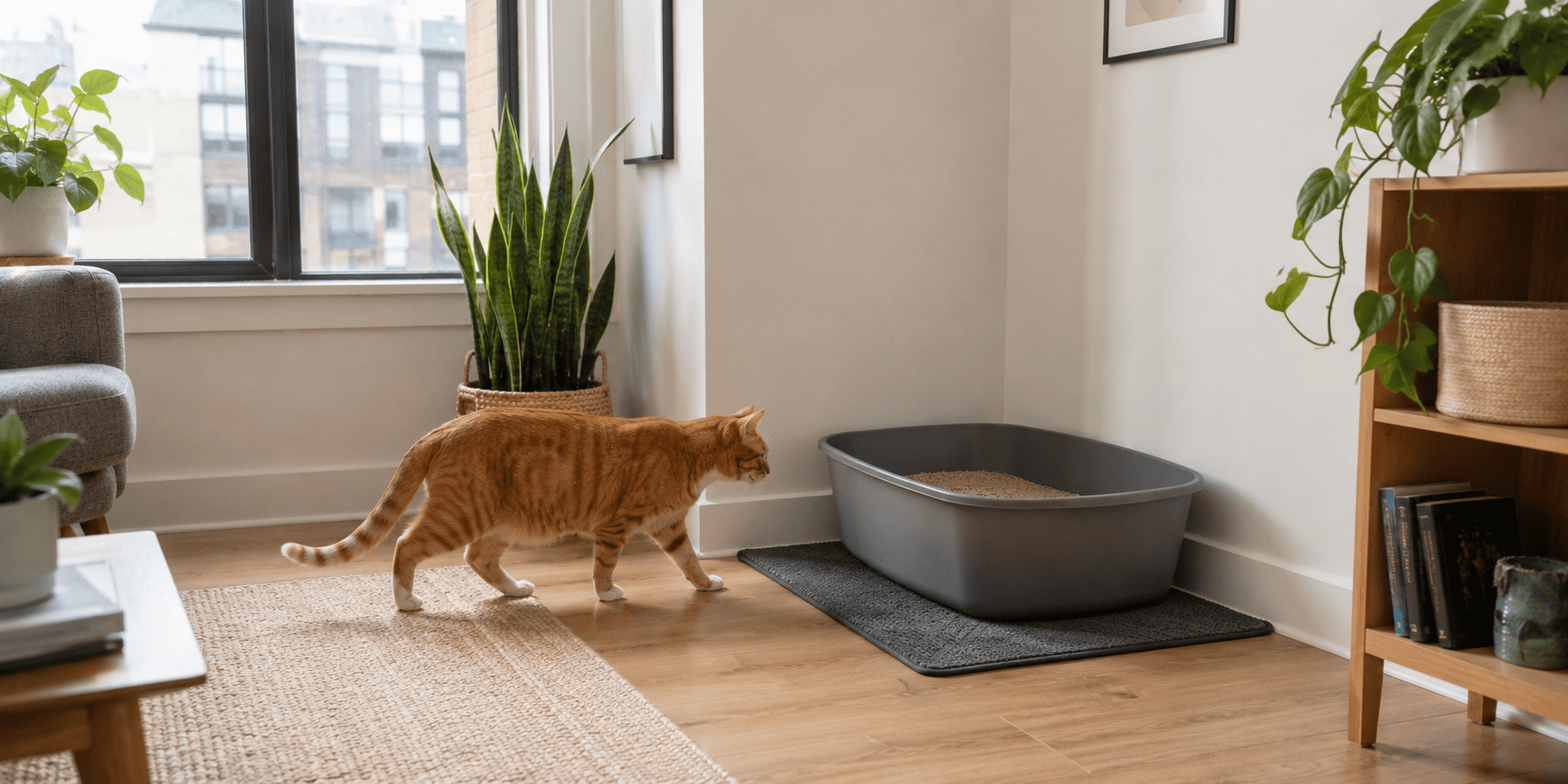
A good litter box setup for indoor cats is less about buying the fanciest box and more about making toileting easy, quiet, and predictable. Cats need enough room to turn, dig, and choose a comfortable position. They also need a location that feels safe. The litter should feel acceptable under the paws, and the box needs to stay clean enough that your cat wants to return.
Small setup choices can make a big difference. A box tucked beside a noisy washer may be convenient for you but stressful for a cat. A covered box may hide litter from view, yet some cats feel trapped inside it. The goal is to create a toilet area that works with normal feline behavior while still fitting your home.
Before changing anything, watch how your cat uses the current setup. Notice whether it digs for a long time, balances on the edge, hesitates before entering, or chooses one box more often than another. Those details can tell you whether the problem is space, access, litter feel, cleanliness, or location.
Litter Box Setup for Indoor Cats Starts With the Right Size
Most litter boxes sold for cats are smaller than many adult cats would choose. A useful rule is to look for a box around one and a half times your cat’s body length, measured from the nose to the base of the tail. Your cat should be able to enter, turn around, dig, squat, and leave without feeling cramped.
Large storage-style trays can work well when standard pet-store boxes are too small. The sides should be high enough to contain litter but not so high that entry becomes difficult. Kittens, senior cats, and cats with arthritis may need a lower entrance. You can still use higher sides on the other edges if your cat tends to kick litter out.
Covered boxes are not automatically better. They can contain scatter and odors for the household, but they also trap smells inside the box. Some cats dislike having only one obvious exit. If you use a hooded box, make sure it is roomy and keep it especially clean. When in doubt, offer an open option and watch which one your cat chooses.
Open, Covered, Top-Entry, or Automatic?
Each box style solves a different household problem. The cat’s comfort should come before the design.
| Box type | Useful when | Possible drawback |
|---|---|---|
| Open tray | You want easy access, good airflow, and a clear exit. | Litter scatter and odor are more visible to people. |
| Covered box | Your cat already accepts a hood and you need more litter containment. | Odor can build up inside, and some cats feel confined. |
| Top-entry box | A healthy, agile adult cat likes it and litter tracking is a problem. | It can be awkward for kittens, seniors, large cats, or cats with joint pain. |
| Automatic box | Your cat accepts the device and you can maintain it correctly. | Noise, motion, size, or a mechanical cycle may worry some cats. |
Do not force a cat to use a new style just because it looks cleaner in the room. If you want to change box types, place the new one near the familiar box for a while. Let your cat investigate and choose. Sudden replacement can turn a simple upgrade into a toileting problem.
Shape matters as much as the label on the box. Large cats often need more turning room than a standard tray provides. Cats that urinate high on the wall may benefit from taller sides, while cats with mobility limits need an easy entrance. Choose dimensions around the cat’s movement rather than the amount of floor space you want the box to occupy.
Where to Put the Litter Box
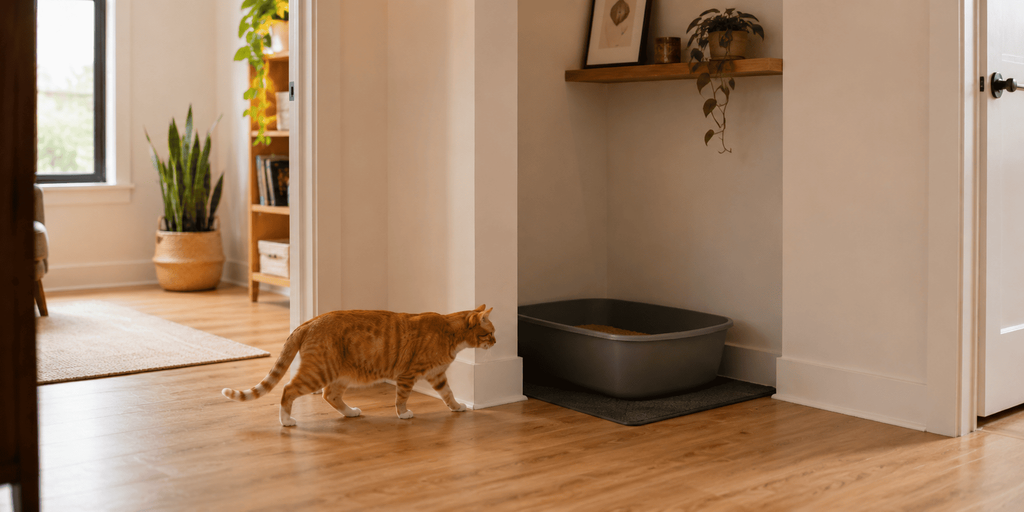
Choose a quiet place that your cat can reach without passing something frightening or competing with another pet. Avoid locations beside washers, dryers, loud ventilation units, or doors that slam. A corner can work, but make sure another cat cannot block the only path out.
Keep the box away from food and water. Cats naturally separate toileting from eating and resting areas. In a small apartment, the two resources do not need to be on opposite ends of the home, but they should not sit side by side.
Accessibility matters on every level of a home. A senior cat may not want to climb a full flight of stairs each time it needs to urinate. If your home has several floors, consider a box on more than one level. Think about the route as well as the final location.
Once your cat uses a location reliably, avoid moving the box without a reason. If you must relocate it, a gradual move is often easier than suddenly placing it in a completely different room.
Signs a Litter Box Location Is Not Working
Your cat cannot tell you that a corner feels unsafe, but behavior around the box can give useful clues.
- Your cat hesitates at the entrance or repeatedly looks around before going in.
- Your cat rushes out immediately after eliminating instead of covering normally.
- Another cat waits nearby, follows, stares, or blocks the route to the box.
- Your cat uses the box at quiet times but avoids it when appliances or people are active.
- Urine or stool appears near the box rather than in it.
- Your cat begins choosing a quiet rug, bathtub, closet, or other alternative location.
These signs do not prove that placement is the only problem. House-soiling can also be linked to pain, urinary disease, constipation, stress, litter preference, or box cleanliness. A new toileting problem should not be treated as bad behavior. If it appears suddenly or your cat strains, urinates frequently, cries, or seems unwell, contact your veterinarian.
Privacy does not have to mean isolation. A box can sit behind a visual barrier or at the quiet end of a room without being hidden in a difficult-to-reach closet. You should still be able to see and scoop it easily. Convenient maintenance helps the cat because boxes that are easy for people to access are more likely to stay clean.
Choosing Litter and Getting the Depth Right
Many cats prefer a soft, fine substrate that is comfortable to dig in. Unscented litter is a sensible starting point because cats have a strong sense of smell. Heavy perfumes may make the box smell cleaner to people while making it less appealing to the cat.
Depth matters too. More is not always better. A moderate layer gives your cat room to dig without creating an unstable surface. Around 3 cm is a useful starting point, although individual preference varies. Cats that dig vigorously may prefer slightly more, while others like a shallower layer.
If your cat already uses one litter reliably, there is usually no need to change it for novelty. When you do need to switch, make the transition gradually. Mix increasing amounts of the new litter into the old one over several days. Another option is to offer the new litter in a second box and let your cat show a preference.
Avoid changing the box, litter type, and location all at once. If your cat stops using the setup, you will not know which change caused the problem.
A Cleaning Routine Cats Can Live With
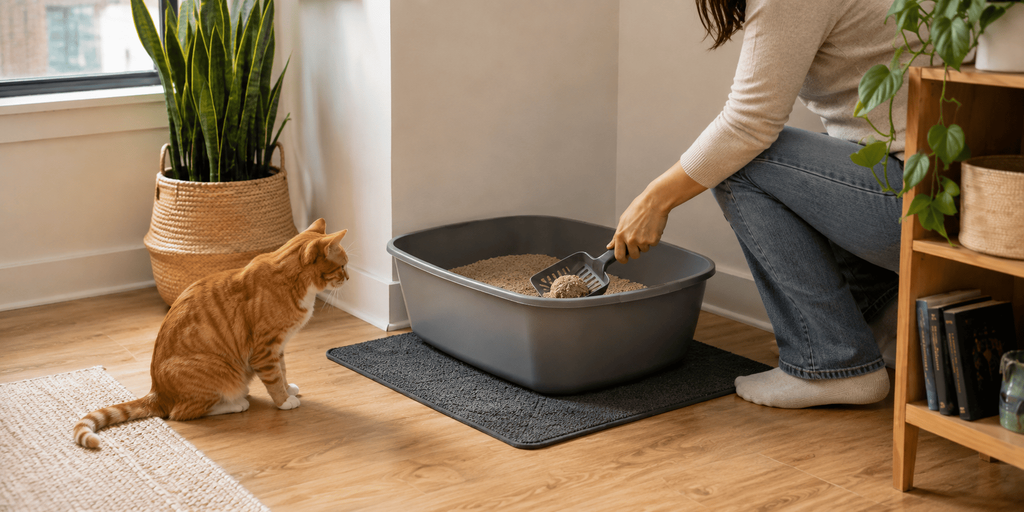
The box should smell like a familiar toilet area, not like a waste bin. A simple routine usually works best.
- Scoop at least daily: Remove urine clumps and stool before they build up.
- Top up as needed: Replace the litter removed during scooping so the depth stays comfortable.
- Wash the box regularly: Empty it and use mild soap or detergent with warm water.
- Rinse well: Strong cleaning residue can leave an odor that cats dislike.
- Skip heavy fragrance: Avoid turning the box into a perfume source with scented cleaners or deodorizers.
- Replace worn boxes: Deep scratches can hold odor even after washing.
The exact full-clean schedule depends on the litter, box, and number of cats. Clumping litter can often be maintained longer between full changes because waste is removed daily. Non-clumping litter may need more frequent replacement. Use your nose, your cat’s behavior, and the condition of the litter as practical guides.
Wash the scoop as part of the routine too. A dirty scoop can carry odor from one box to another and makes the area feel less clean overall. Keep a small bin or sealed disposal system nearby if that helps you scoop more consistently. The best cleaning routine is the one you can realistically repeat every day.
How Many Litter Boxes Do You Need?
For multi-cat homes, a common starting guideline is one box per cat plus one extra. Two cats would therefore have access to three boxes. The number matters, but distribution matters too. Three boxes lined up beside each other may function like one toileting station if a nervous cat cannot approach the area safely.
Spread boxes across different locations when possible. This gives each cat options and makes it harder for one cat to control access. Separate boxes are especially useful when cats have different preferences for litter, privacy, or box style.
A single-cat home can benefit from more than one box too. One cat may prefer one location for urine and another for stool. A second box also provides backup if a door is accidentally closed or the main box becomes dirty before you can scoop it.
Do not remove an extra box simply because it looks unused for a few days. Cats may use different boxes at different times depending on noise, visitors, household routines, or the presence of another pet.
When you add another box, do not assume it has to match the first one. Offering a slightly different size or location can reveal a preference. If your cat consistently chooses one option, use that information before buying more boxes. Preference testing is often more useful than guessing from product reviews.
Litter Box Mistakes That Create Extra Work
One common mistake is choosing the smallest box that fits a hidden corner. It saves floor space but may make elimination uncomfortable. Another is using fragrance to cover odor instead of increasing scooping. Strong scent can make the box less pleasant for the cat without solving the source of the smell.
Placing every box in the same laundry room is another problem in multi-cat homes. If that room becomes stressful, all toileting options disappear at once. It is also easy to overlook mobility. A high-sided box that worked at age four may become difficult at age fourteen.
Finally, avoid punishing accidents. A cat that urinates outside the box is not plotting against you. Clean the area, look for practical causes, and watch for medical signs. If house-soiling continues, a veterinary exam should be part of the plan before you keep changing products.
Keep Your Litter Box Setup for Indoor Cats Easy to Use
The best litter box setup for indoor cats gives the cat space, a safe location, comfortable litter, and reliable cleanliness. Start with a large accessible box and an unscented litter your cat accepts. Keep it away from noisy equipment and food. In multi-cat homes, provide several boxes in separate places.
Then watch how your cat actually uses the setup. Comfort, mobility, and preferences can change with age. If toileting behavior changes suddenly, especially with straining or signs of pain, contact your veterinarian instead of assuming the box is the only problem.
References
- 2014 AAFP/ISFM Guidelines for Diagnosing and Solving House-soiling Behavior in Cats — FelineVMA — Clinical guidance on litter box optimization, house-soiling, medical causes, and environmental needs.
- Litter Box Problems — ASPCA — Practical guidance on box numbers, placement, cleaning, and reasons cats may avoid the box.
- Setting Up the Environment for Success — FelineVMA — Practical guidance on toileting areas, substrate preference, placement, stress, and resource distribution.
