

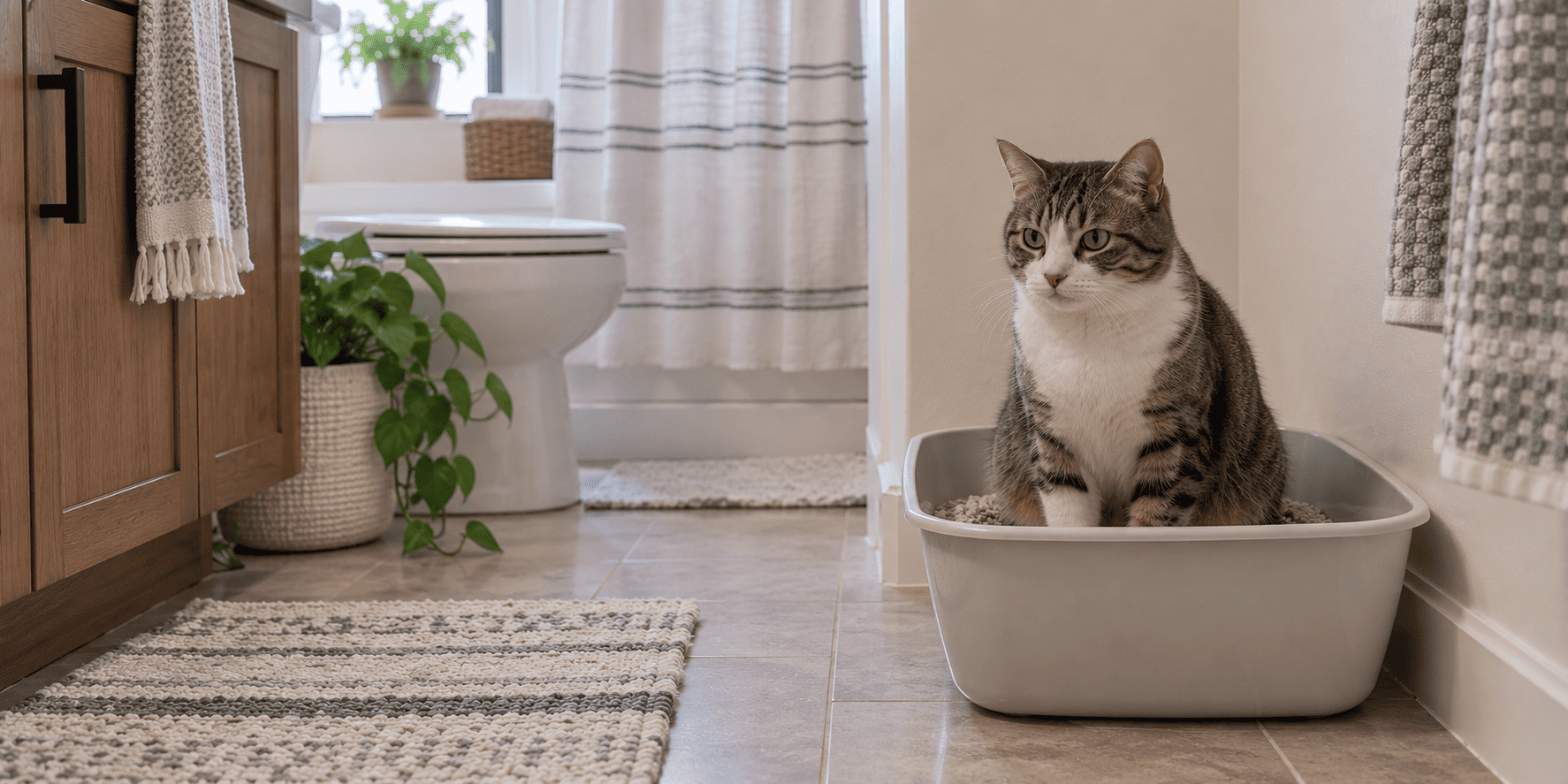
Litter box sitting for longer than usual can mean several things, so the first question is not “Why does my cat like the box?” It is whether the cat is resting there or repeatedly trying to urinate or defecate. Cats with lower urinary tract problems can make frequent trips, strain, and spend an unusual amount of time in the box. Urinary obstruction, especially in male cats, is an emergency. A cat may also linger because stool is difficult to pass, because the box feels like a protected place during stress, or simply because a kitten is investigating the environment. The timing, posture, output, and change from normal matter more than the sitting itself.
Litter Box Sitting: Watch What the Cat Is Actually Doing
Observe from a distance without interrupting. Is the cat squatting and straining, or sitting upright and looking around? Does urine or stool appear? Is the cat repeatedly entering and leaving within a short period? Does it lick the genital area afterward? A cat making repeated elimination attempts is in a different situation from a cat that finishes using the box and remains seated for a minute.
Check the litter after the cat leaves. Normal-size urine clumps or stool do not rule out every problem, but little or no output despite repeated attempts is important. A video can help if the posture is difficult to describe. Do not put your hands near a painful or distressed cat just to inspect more closely. If the behavior is new, note when it started and what else changed in appetite, thirst, activity, or vocalization.
Count visits for a short period if the cat is stable. One normal visit followed by a brief pause is different from six attempts in an hour. Check each clump. Note size. Listen for crying. Watch whether the cat settles afterward. Frequency makes the behavior much easier to describe to a clinic.
Repeated Sitting and Straining Can Be a Urinary Emergency
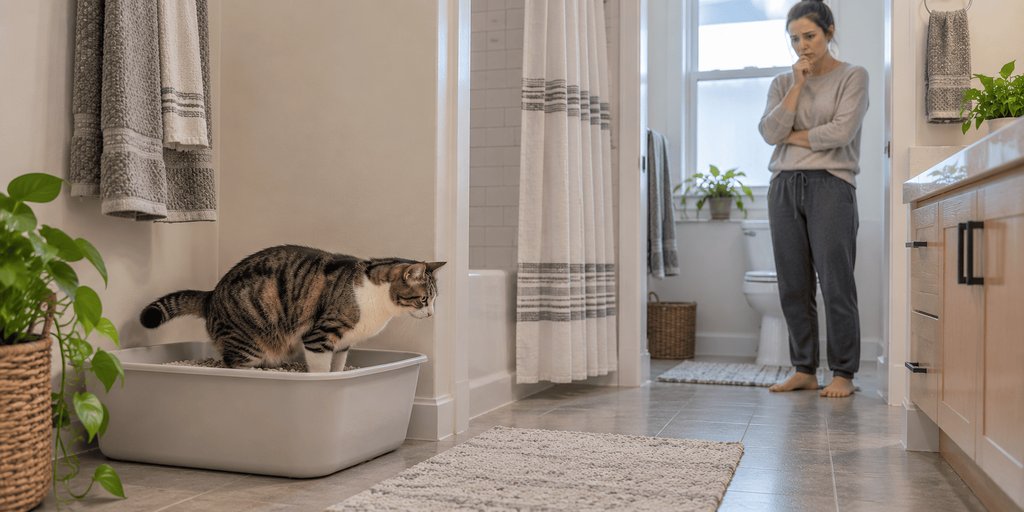
Lower urinary tract disease can cause painful urination, increased frequency, blood in the urine, inappropriate urination, and frequent genital licking. Cornell emphasizes that cats with urethral obstruction may strain repeatedly while passing little or no urine and become increasingly distressed. Complete obstruction can deteriorate rapidly and requires immediate veterinary treatment. Male and neutered male cats are at higher risk because of their narrower urethra.
If your cat keeps returning to the box, produces little or no urine, cries, vomits, becomes weak, or appears very distressed, seek urgent care. Do not wait to see whether changing litter helps. Do not assume the cat is constipated simply because the posture looks like straining. Urinary and defecation attempts can be difficult to distinguish at home. When you cannot tell what the cat is trying to pass, the safer response is to contact a veterinarian.
- Repeated trips with little or no urine
- Straining or crying in the box
- Blood in urine
- Vomiting or increasing distress
- Frequent licking around the genital area
- Sudden hiding, weakness, or collapse
Constipation Can Also Keep a Cat in the Box Longer
A cat that is trying to pass hard or difficult stool may remain in the box, reposition repeatedly, or return several times. Check whether stool has become small, hard, dry, infrequent, or absent. Constipation can have many causes, including dehydration, pain, reduced movement, medications, and medical disease. A cat may also avoid a comfortable posture if arthritis or another painful condition makes squatting difficult.
Do not treat constipation by giving human laxatives or oils without veterinary direction. If the cat is straining repeatedly, vomiting, eating poorly, appears painful, or has not passed stool as expected, contact your veterinarian. Again, if you are unsure whether the straining is for urine or stool, do not delay because urinary blockage can look similar and carries greater immediate risk.
Stool posture can also be misleading. Some cats crouch for a long time before passing a small hard stool. Others leave quickly after normal defecation. Note when the last normal bowel movement occurred. Report repeated failed attempts. Appetite and vomiting add important context. Do not guess from posture alone.
A Cat May Linger Because the Box Feels Like a Protected Space
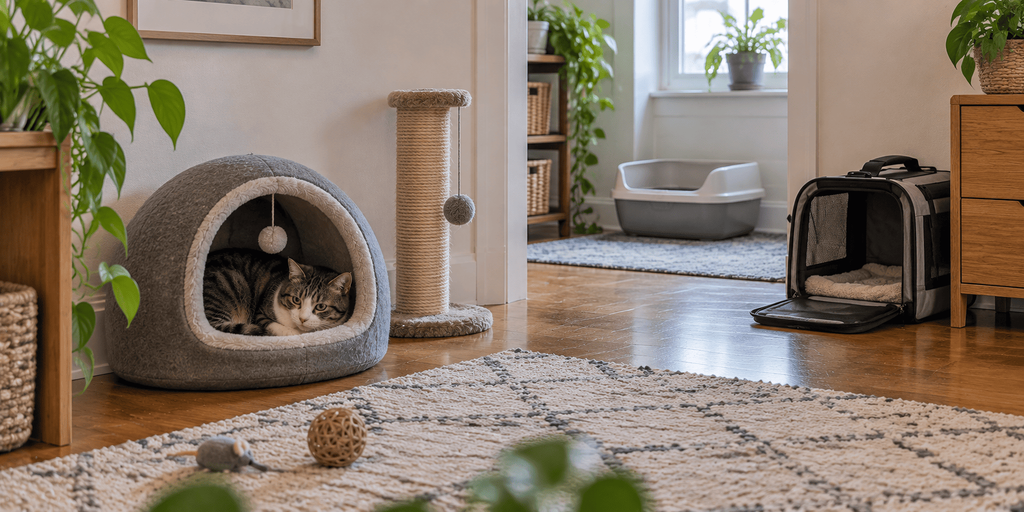
In some situations, a litter box can be one of the few enclosed or familiar-smelling places available. A newly moved, hospitalized, boarded, or highly stressed cat may spend more time near or inside a box because the environment feels unfamiliar. This is not a reason to turn the litter box into the cat’s intended bed. It is a clue to improve safer, cleaner hiding options elsewhere.
Provide a covered hide, open carrier, box, or elevated retreat that the cat can enter and leave voluntarily. Keep food, water, and resting areas separate from the litter resource. If another cat or dog controls access to the rest of the room, address that social pressure. The broader litter-box setup should provide enough space, quiet access, suitable litter, and a location where the cat can enter and leave without feeling trapped. A cat that chooses the litter box because no other place feels safe needs an environmental solution as well as observation for health problems.
Kittens Sometimes Investigate the Box More Than Adult Cats
Young kittens explore with their paws, noses, and bodies, and may spend extra time digging or sitting in a fresh box while learning the environment. Brief investigation without straining, distress, or abnormal output can be less concerning in an otherwise playful kitten. The box still needs to be kept clean, and the kitten should have attractive resting places away from litter.
Do not assume all kitten box-sitting is harmless. Kittens can develop diarrhea, constipation, parasites, urinary problems, and other illness. If the kitten repeatedly strains, cries, has blood, eats poorly, vomits, becomes lethargic, or produces abnormal stool or urine, veterinary care is appropriate. Behavior that persists after the kitten has settled into the home also deserves a closer look.
Cleanliness changes the observation too. Scoop before judging a preference when practical. A dirty box can make the cat search for an acceptable patch. Strong deodorizer can change the smell. A liner may bunch under the paws. Keep the trial simple. Clean, familiar litter gives you a clearer baseline.
Check Whether the Box Itself Is Creating a Long Elimination Routine
A cat may spend extra time trying to find a comfortable position if the box is too small, litter is too deep or unpleasant, the entrance is awkward, or the box is dirty. Large cats may turn repeatedly because usable floor area is limited. Senior cats can hesitate at a high side. Covered boxes may restrict turning or make a cat pause before exiting if the route feels blocked.
Watch how the cat enters, turns, digs, eliminates, covers, and exits. Long digging before or after elimination can be normal for some individuals, but a new change can signal discomfort or dissatisfaction. Clean the box regularly and provide an appropriately sized option in a quiet location. If you test a new box, keep the familiar one available so the cat has a choice. Do not change box, litter type, location, and cleaning products all at once.
| Pattern | What to check first |
|---|---|
| Repeated trips, little/no urine | Urgent urinary assessment |
| Long squat, hard/infrequent stool | Constipation and discomfort |
| Sitting upright after using box | Stress, environment, individual habit |
| Turns repeatedly before eliminating | Box size, entry, litter, pain |
| New kitten briefly plays or digs | Monitor output and overall health |
Offer a real resting alternative close enough to feel safe. A cardboard hide can work. An open carrier can work. A low covered bed may work. Keep it clean and separate from litter. If the cat immediately chooses the new hide, that observation supports an environmental component without ruling out health concerns.
Multi-Cat Pressure Can Make the Box a Complicated Place
A cat may stay in or near the box because another cat is outside the route, or may hesitate to leave if access feels blocked. Intercat tension can be subtle. Staring, following, sitting in doorways, and controlling narrow paths can affect resource use without an obvious fight. A covered or cornered litter location can worsen the problem because the cat has only one exit.
Spread litter boxes into different locations and avoid making every box part of one station. Provide multiple routes through important rooms when possible. Watch from a distance or use a home camera to see what happens before and after box use. If one cat regularly waits outside the box, follows the other, or causes the other to rush away, the solution is not simply more litter. Resource distribution and the broader cat-to-cat relationship need attention.
Young, newly adopted, and recently moved cats deserve special context. Their routines are not established yet. Watch food intake. Check urine and stool. Note hiding and play. A brief exploratory sit may disappear as the cat settles. Persistent box occupation should not be normalized simply because the environment is new.
Do Not Turn a Sudden Change Into a Behavior Experiment
If an adult cat that never lingered in the box suddenly starts sitting there, rule out physical causes before trying deterrents or behavior training. Do not place unpleasant textures around the box, spray the cat, or repeatedly remove it. Those responses can make a necessary toilet resource feel unsafe. Instead, collect information: output, frequency, posture, appetite, thirst, weight, stool, and any new household changes.
Also consider mobility. A painful cat may rest after the effort of entering or eliminating. A senior may stop using a preferred high resting spot and begin lingering in lower enclosed areas. If the cat seems stiff, stops jumping, resists touch, or changes grooming, mention those signs to the veterinarian. Litter behavior often intersects with health in ways that are not obvious from the box alone.
After veterinary causes are addressed, review the box again. Look at size. Check exit routes. Confirm litter depth. Reduce noise. Add another box if access is limited. Changes should make elimination easier, not make the box less attractive. Punishing the sitting behavior can create a new litter problem.
Write down the first normal urination or stool after the unusual sitting begins. That single detail can help. Record whether the cat then leaves the box and resumes normal activity. If the abnormal pattern continues, share the timeline with the clinic.
Why Does My Cat Sit in the Litter Box? Let Output Set the Priority
The most important distinction is whether the cat can urinate and defecate normally. Repeated straining with little or no urine is urgent. Difficult stool, pain, or digestive problems also need assessment. If output is normal and the cat appears physically comfortable, then look at stress, box design, resource access, and whether the cat has better hiding and resting choices elsewhere.
Litter box sitting may be showing you a medical problem, an environmental problem, or a brief individual behavior. Do not diagnose from the sitting alone. Watch what happens before, during, and after, and use a sudden change from your cat’s normal routine as a reason to take the behavior seriously.
References
- Feline Lower Urinary Tract Disease — Cornell Feline Health Center — Detailed overview of urinary signs, frequent litter-box trips, straining, and the emergency risk of urethral obstruction.
- Lower Urinary Tract Disease — Cat Friendly Homes — Caregiver-focused list of lower urinary tract signs including frequent trips, pain, straining, blood, and behavior changes.
- Feline Behavior Problems: House Soiling — Cornell Feline Health Center — Explains how medical problems, box aversion, location, mobility, and resource setup can change normal litter-box behavior.
