

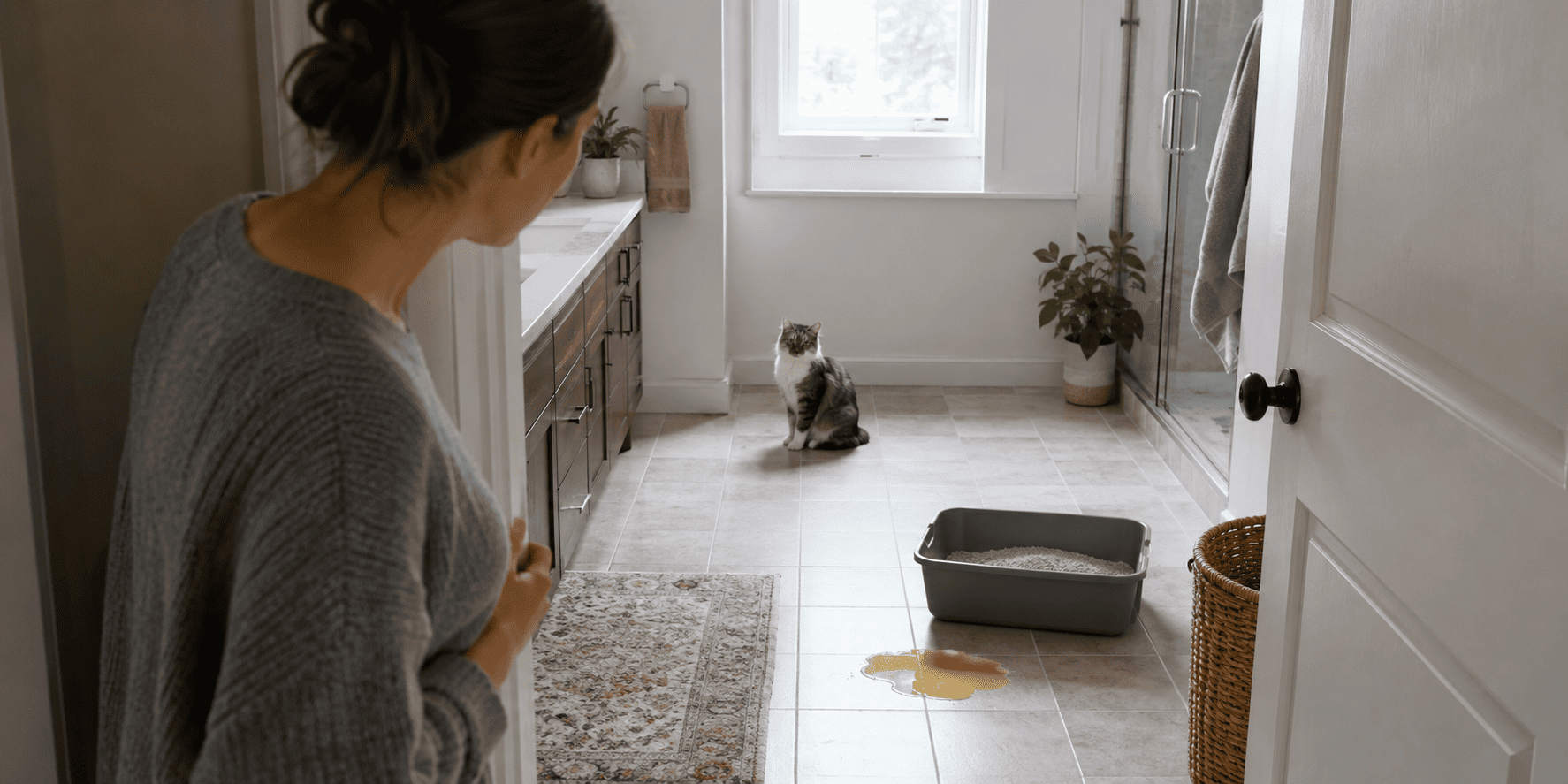
A cat peeing next to the litter box, the location is a useful clue. The cat reached the toilet area but something about entering, positioning, staying inside, or completing urination may not be working. A puddle touching the edge of the box can come from a tray that is too small, a high entrance, litter aversion, poor aim, pain, urinary urgency, a dirty box, or a negative experience near the location. It is not proof that the cat “knows where to go” and is being stubborn. Treat the distance from the box as evidence, then separate a simple geometry problem from a medical or behavioral one.
Look at Exactly Where the Urine Lands
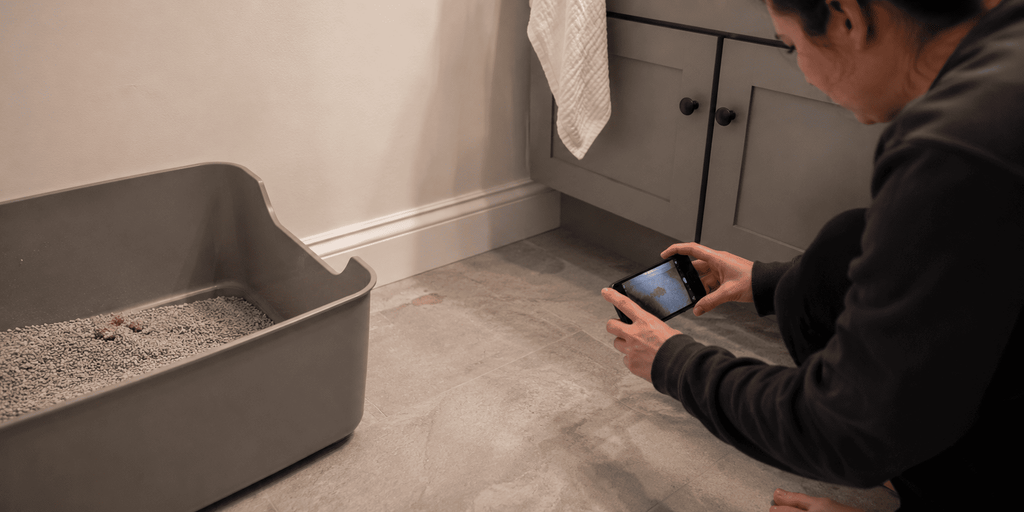
A puddle just outside the entrance suggests a different problem from urine running down the outside wall of the tray. If the cat stands with the front half inside and the rear outside, the entrance, box size, or posture may be part of the issue. If urine is found behind the box after the cat appears to squat inside, the stream may simply be going over a low wall. A large puddle beside a clean box can also mean the cat chose the location but rejected entering it. Photograph repeat patterns before cleaning so you can compare them.
| Pattern near the box | Possible clue | Useful first test |
|---|---|---|
| Puddle at entrance | High step, pain, reluctance to enter | Try a large low-entry box |
| Urine over back or side | Box too small or wall too low | Use a larger box with higher walls and easy entry |
| Puddle beside one dirty box | Cleanliness or box aversion | Scoop and add a clean alternative |
| Normal box use plus small vertical marks | Possible urine marking | Look at posture and social context |
Patterns do not diagnose the cause, but they help you test the right variable first instead of replacing everything at once.
Measure the distance from the tray as well. Urine directly touching the box edge is a stronger geometry clue than a puddle two meters away. If accidents gradually move farther from the box, aversion or another preferred location may be developing and the troubleshooting boundary should widen.
Cat Peeing Next to the Litter Box Can Be a Box-Size Problem
Many litter boxes are sized for human convenience rather than a cat’s full turn, dig, squat, and exit sequence. A cat can technically fit inside yet still stand partly over the edge when urinating. Large cats and cats with long bodies are especially likely to expose this problem. Watch one normal box visit if you can do so without hovering. Can the cat turn comfortably? Does the tail or rear press against a wall? Watch whether it immediately steps out before finishing covering. A storage-style tray can sometimes provide more usable floor area than a standard pet box.
When testing size, keep the litter familiar so you change only one major variable. Put the larger box in the same general area and leave the original available for a few days. If near-box puddles stop while the cat chooses the larger tray, you have stronger evidence than if you simultaneously changed size, litter, location, and cleaning products. The experiment should teach you something.
A taller wall is not always the answer because entry still matters. A large storage bin with one carefully cut low doorway can contain high streams while remaining accessible. Smooth any cut edges and make sure the cat can turn comfortably. The cat needs both containment and easy entry.
Entry Height and Pain Matter Even When the Cat Can Still Jump
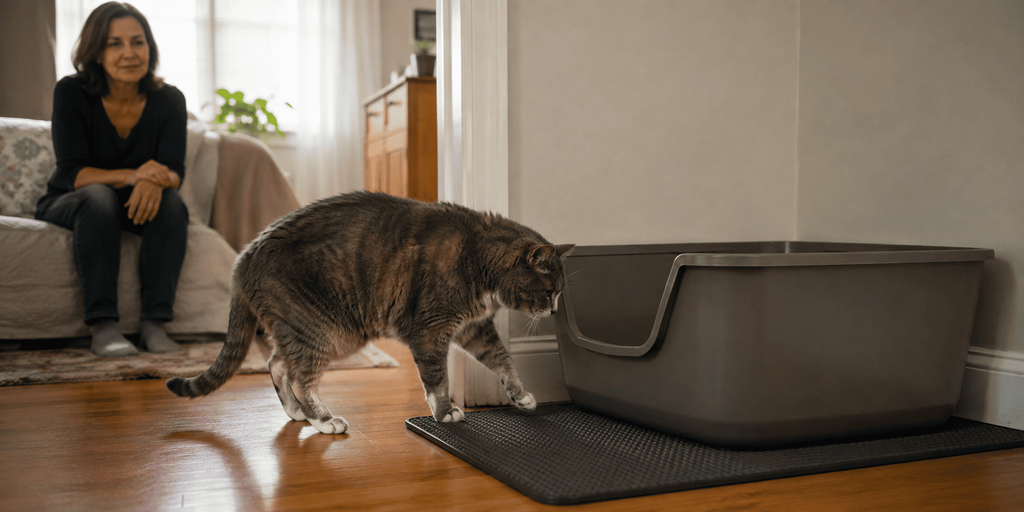
A cat with arthritis or other pain may still jump onto a sofa yet find repeated litter-box entry uncomfortable. Toileting requires stepping over the edge, turning, balancing on shifting litter, and holding a squat. A high-sided box can become the point where the cat hesitates. Senior cats may stand beside the entrance, place the front paws in, and urinate before bringing the hind legs over. Kittens, injured cats, and cats recovering from surgery can have similar access problems.
A low doorway cut into a larger high-sided box can preserve easy entry while keeping urine inside. Add a non-slip surface outside the box if the floor is slick. If the cat suddenly changes posture, stops jumping elsewhere, resists touch, or appears stiff after resting, do not treat the problem only as litter-box design. Environmental adjustments can reduce the barrier while a veterinarian evaluates possible pain.
Watch the full movement after the cat steps over the edge. Stiff turning, bracing on the rim, or rushing out can suggest that the tray feels physically difficult even if the cat completes elimination. A video taken from a respectful distance can be useful to show your veterinarian.
Urgency Can Bring the Cat to the Box but Not Fully Into It
Urinary inflammation, infection, bladder problems, increased urine production, or other medical issues can change how quickly a cat feels the need to urinate. A cat may head toward the familiar toilet location but squat before fully entering. Repeated trips, straining, vocalizing, blood, licking the genital area, or producing only small amounts are more concerning than one isolated near-box accident. Male cats that cannot pass urine normally can develop a life-threatening obstruction.
Medical causes and box problems can coexist. A cat with painful urination may begin to associate the box with discomfort, then continue avoiding full entry even after treatment. If the change is sudden or repeat accidents occur, arrange veterinary assessment rather than running weeks of litter experiments first. Tell the clinic that the urine is consistently beside the box, but also describe volume, frequency, posture, appetite, and behavior.
Urinary urgency can also make a previously minor box flaw suddenly visible. A cat with less time to position may no longer tolerate a narrow entrance or long route. That is another reason a new near-box accident deserves medical context even when upgrading the tray seems to help.
For a stable cat with full-sized puddles and no other signs, a systematic box test can be useful. The fact that the cat urinates beside the box narrows the troubleshooting field, but it does not make the issue trivial. The most productive response is to make full entry easier, more comfortable, and safer while ruling out medical reasons the cat may not be able to complete the normal routine.
Litter Texture or Depth Can Create a Last-Second Refusal
Some cats approach the box, sniff, step in briefly, then back out because the litter itself has changed. Strong fragrance, coarse pellets, unfamiliar texture, or a very deep unstable layer can alter footing and comfort. A recent brand change is especially relevant if the near-box urination began at the same time. Do not assume the cat should “get used to it” after several accidents. Return one box to the previous litter or offer a soft unscented alternative while keeping other variables stable.
Depth also matters. More litter is not automatically better. A cat that dislikes sinking may hover at the edge or keep weight on the rim. Another may reject a box that has too little material for digging. Box size, placement, litter depth, and cleaning work together as one usable toilet setup, so adjust the feature most closely tied to the timing of the problem rather than treating litter preference as an isolated personality trait.
If you test litter preference, offer two boxes rather than mixing different litters in one tray. A blended surface gives a muddy result. Separate options let the cat make a clear choice, and you can keep the preferred texture once the pattern is obvious.
Cleanliness Can Turn the Floor Beside the Box Into the Backup Toilet
A cat may still prefer the litter area while rejecting a dirty tray. If urine or stool remains in the box, the clean floor next to it can become the closest acceptable alternative. Scoop at least daily and more often when several cats share boxes. Replace litter and wash the tray often enough that odor does not build up. Avoid masking smell with strong deodorizers, because fragrance can create another reason to avoid the box. A clean unscented setup is easier to interpret.
In multi-cat homes, box numbers and location matter as much as cleaning. Two clean boxes touching each other can function like one resource if another cat guards the room. Spread options so a cat can choose a different route. If near-box accidents happen only when one tray is occupied or after another cat uses it, social access may be the hidden variable rather than hygiene alone.
Cleanliness includes the outside of the box. Urine caught under a mat, around a seam, or beneath a liner can keep the area smelling like a toilet even after the visible puddle is gone. Inspect the tray base and floor, not only the litter surface.
The Space Around the Box Can Make Full Entry Feel Unsafe
A litter box in a closet, narrow hall, or dead-end room can be easy for another cat or dog to block. Noise from a washer, furnace, or door can create a negative experience right as the cat enters. If the cat was startled, cornered, medicated, or chased near the box, it may still approach the familiar location but avoid committing to the enclosed space. Watch the route before and after elimination. A cat that looks over its shoulder, rushes out, or waits until the room is empty may not feel secure.
- Keep at least one box in a quiet area with an open escape route.
- Separate boxes instead of lining every tray in one room.
- Do not give medication or perform stressful handling at the litter box.
- Prevent dogs and children from trapping the cat near the toilet area.
- Use a home camera if subtle blocking happens when people are absent.
Safety around the box is part of litter preference because a perfect tray is not useful if the route feels risky.
Social pressure can be time-specific. A box may be safe during the day but difficult at night when another cat sleeps in the hallway. If accidents cluster at one time, observe the route then. Resource access is a moving situation, not just a floor plan.
Run a One-Variable Test for Seven Days
Choose the most likely barrier from the pattern and test it without redesigning the whole litter area. If the puddle is at a high entrance and the cat is older, add a large low-entry box with the same litter. Urine going over the back wall points toward a larger high-sided tray with an easy doorway. When the problem began after a litter change, restore the previous texture in one box. Keep the original option during the test so the cat has choice and you can compare use.
Record where accidents occur, which box was used, urine amount, stool, and any social event near the area. Clean the floor thoroughly with an appropriate pet-urine product so residual odor does not keep pulling the cat back to the same spot. Do not punish or carry the cat into the box after an accident. Fear adds a new variable to a problem you are trying to simplify.
During the seven-day test, resist adding deterrents such as foil, noise devices, or strong scent beside the accident spot. Those methods can make the entire toilet area less comfortable. Make the correct option better rather than making the nearby floor frightening.
Once the cause is identified, keep the successful setup long enough to rebuild reliable use. A cat that developed a painful association may need time even after treatment. Consistent comfort is more persuasive than repeatedly moving the box back to the original arrangement.
Know When the Near-Box Location Stops Being the Main Question
If the cat is straining, producing little or no urine, crying, vomiting, showing blood in urine, or becoming weak, the exact puddle location is no longer the priority. Seek prompt veterinary care. A sudden repeated change also deserves veterinary advice even when the box setup looks imperfect, because pain and illness can make a previously acceptable tray fail. Bring photos of the accident pattern and a short timeline if they do not delay care.
References
- Not Using the Litter Box — Cat Friendly Homes — Updated feline-veterinary guidance on medical, environmental, location, social, and litter-related causes of house-soiling.
- Feline House-Soiling — FelineVMA — Owner guidance on box size, location, number, cleaning, negative experiences, social access, and systematic troubleshooting.
- Setting Up the Environment for Success — FelineVMA — Explains how resource placement, normal elimination behavior, stress, and environmental access affect feline behavior in the home.
