

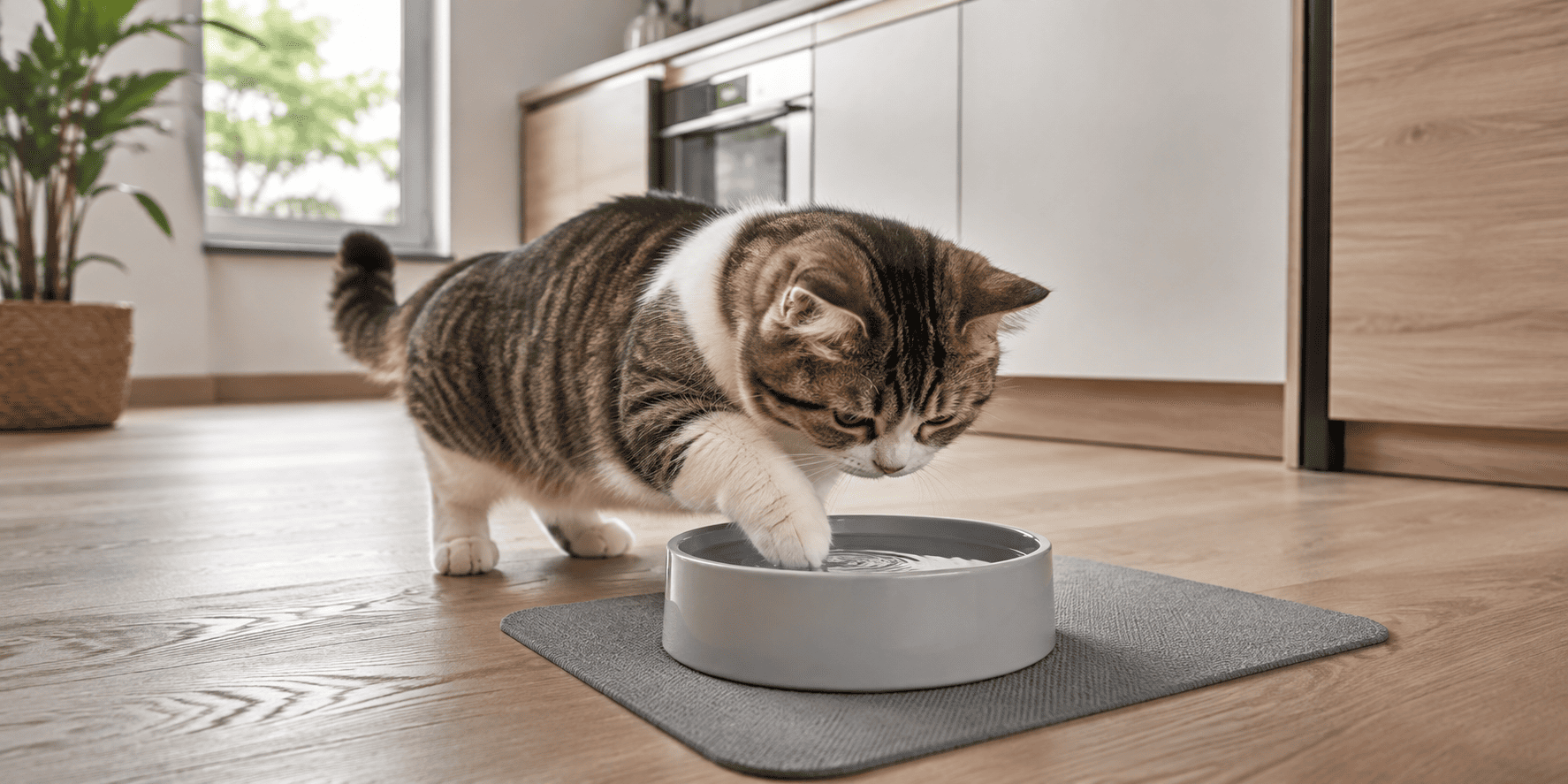
If you are asking why your cat paws at the water bowl, watch what happens immediately before and after the paw touches the water. Pawing can be exploration, play, an attempt to create movement, a response to an awkward bowl, or simply part of an individual drinking routine. Some cats dip a paw and lick it. Others tap the surface before lowering their face. A cat may paw at the water before drinking and still have completely normal intake. The behavior is usually harmless when drinking and urination are normal. It becomes more useful to investigate when it is new, when the cat spills large amounts of water, or when pawing replaces comfortable drinking.
Map the Sequence Before You Change the Bowl
Use a short phone video if the behavior happens predictably and you want to compare details. Film from a distance so the cat is not focused on you. Look for whether the paw touches the rim, the surface, or the floor first, and whether the cat actually swallows water afterward.
One quick tap is different from repeated splashing. Watch whether your cat paws before drinking, during drinking, or instead of drinking. Does the cat lick water from the paw? Does it stare at the surface first? Is the bowl moved across the floor? Does the behavior happen only when the water level is low? The sequence can tell you whether the cat is interacting with the water, testing the edge, or struggling with the setup.
Also note location. A bowl beside a reflective window, under bright lights, or on a glossy floor may create visual effects that invite investigation. A lightweight bowl may slide when touched, turning one tap into a game. In a multi-pet home, a cat may approach cautiously because another animal uses the same route. Do not assume the pawing means thirst or dislike until you have watched the whole routine.
Why Does My Cat Paw at the Water Bowl? Test Width, Depth, and Stability
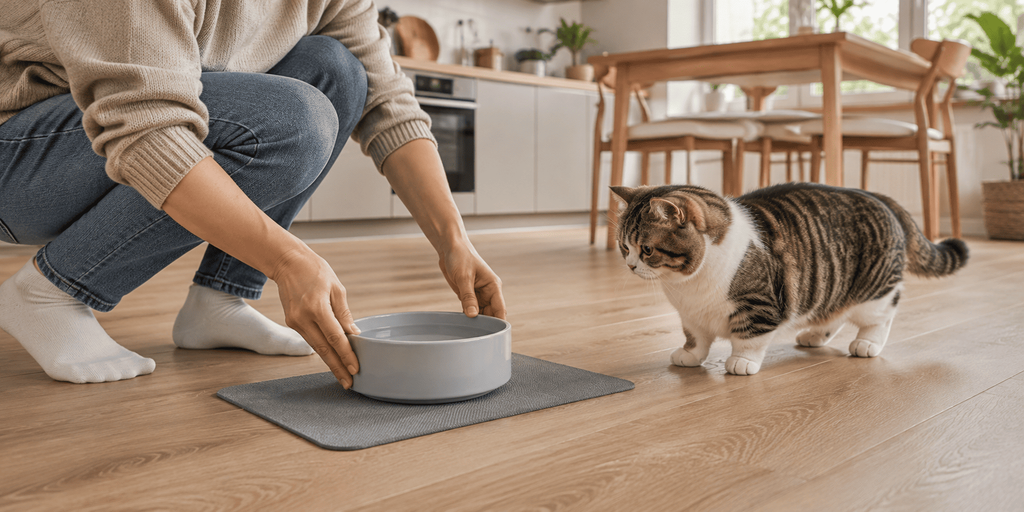
Try the least expensive change first. A stable dinner plate-style water dish can test whether width matters without committing to a fountain. If the cat immediately drinks with less pawing, you have learned something useful. If nothing changes, restore the familiar bowl and test another feature later.
Cat Friendly Homes recommends wide or shallow ceramic or glass bowls as useful water options, partly because narrow dishes can be less comfortable around the whiskers. A deep narrow bowl also makes the water surface harder to reach as the level drops. If your cat paws only when the bowl is half empty, refill it and see whether the behavior changes. That simple test can tell you more than buying a fountain immediately.
Stability matters too. Put the bowl on a level non-slip surface. A lightweight bowl that skates across tile can encourage more pawing or make drinking awkward. Avoid tall unstable stands that wobble when touched. If you change the bowl, keep the water location familiar for a few days so you are testing shape rather than shape and location together. The broader picture of how drinking and food moisture combine into total water intake is more important than stopping a harmless pawing habit.
Some Cats Seem to Create Movement Before They Drink
Do not interpret every ripple-making behavior as a sign the bowl is wrong. A cat may tap the surface once for years and still drink comfortably. The behavior becomes a setup problem only when it interferes with intake, creates repeated spills, or appears with other signs that the cat is dissatisfied or unwell.
A paw tap makes ripples, changes reflections, and gives the cat sensory feedback about the water surface. It is reasonable to interpret this as exploratory behavior when the cat then drinks normally, but avoid turning it into a rigid rule such as “cats cannot see still water.” Cats can drink from ordinary bowls. Individual preferences vary, and many cats never paw at water at all.
If your cat appears interested in movement, you can offer a fountain as an optional second source. Keep a regular bowl available while you test it. Some cats enjoy fountains; others dislike pump noise or vibration. You can also refresh a bowl more often or gently pour new water in while the cat watches. The useful outcome is reliable drinking from a source you can keep clean, not proving why the cat taps the surface.
Pawing Can Turn Into Play When the Setup Rewards It
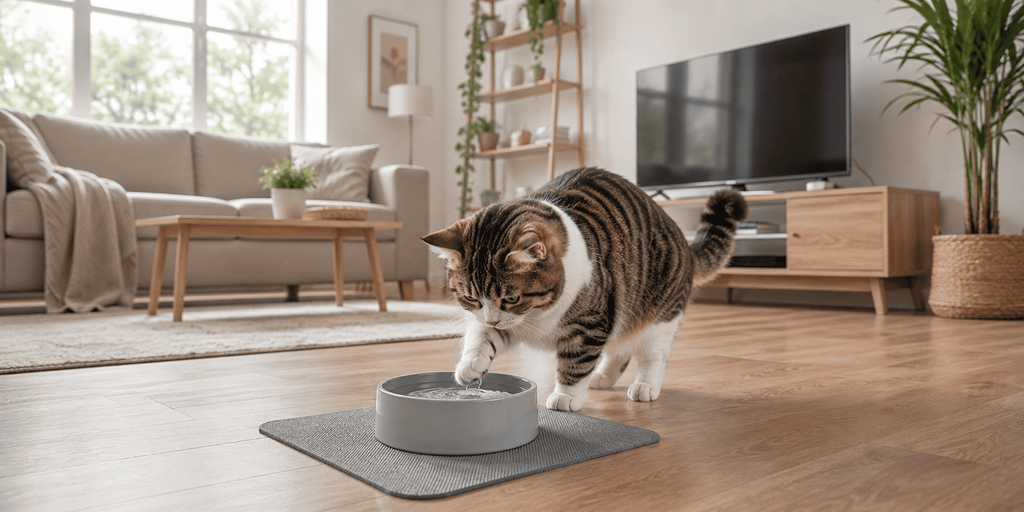
Young cats may return to the bowl during high-energy periods even when they are not thirsty. If the splashing clusters around evening zoomies or play, schedule an interactive play session before that time and see whether the water behavior changes. That is a cleaner test than scolding the cat at the bowl.
Water moves, reflects light, and splashes, so some cats play with it. A wide shallow tray may become especially interesting to a playful kitten. If the cat drinks normally and the main problem is a wet floor, manage the environment rather than punishing the behavior. Place the bowl on a waterproof non-slip mat, move it away from electronics, and choose a heavier vessel that cannot be tipped easily.
Do not react dramatically every time the cat splashes. Running over, talking excitedly, and immediately refilling the bowl can make the event socially interesting. Quietly clean the area and make sure enough water remains available. Add other play opportunities elsewhere in the day. Interactive wand play, food puzzles, and safe solo toys can give a young cat more outlets without turning the water station into the only interesting object in the room.
Check Whether the Water Level Makes Drinking Awkward
Use the same bowl and location during this test so only the level changes. Refill to a consistent point for several days and note whether pawing falls. If it does, you may simply need a routine that keeps the water surface easier to reach throughout the day.
Some cats paw when the bowl is nearly empty or when the water sits far below the rim. Keep the level reasonably consistent for several days and watch whether the pattern changes. If the cat drinks more comfortably from a full bowl, you may have found a simple practical preference. A wider vessel can also keep the surface easier to reach while reducing contact with the sides.
Do not overfill to the point that ordinary drinking spills water everywhere. Find a level that stays stable. If several pets share the station, refresh it often enough that one animal does not leave food debris or saliva that discourages another. Multiple quiet water locations can be easier than trying to make one communal bowl work for every pet. The cat should not have to wait for a dog to leave or squeeze past another cat to drink.
Clean the Bowl Before You Interpret the Behavior
Pay attention to what happens after meals. Cats can transfer food particles from the mouth into nearby water, especially when bowls sit close together. Moving water a little farther from food can keep it cleaner and may reduce repeated pawing or sniffing caused by debris floating on the surface.
A film on the bowl, floating hair, food crumbs, or a strong cleaning-product smell can change how a cat approaches water. Wash bowls regularly with a mild product that rinses clean. Replace scratched or damaged plastic if it is difficult to keep clean. For fountains, clean the pump, filter housing, and hidden channels as well as the visible drinking surface.
- Refresh water daily or more often if it becomes dirty.
- Use a bowl that is easy to wash thoroughly.
- Keep water away from litter and strong household smells.
- Place the bowl on a stable, non-slip surface.
- Offer a second water source if several pets share the home.
- Rinse away soap or cleaning residue completely.
- Watch actual drinking rather than judging hydration from pawing alone.
If the cat paws, sniffs, and walks away repeatedly, a cleaner or different water source is worth testing.
Do Not Correct Pawing With Fright or Punishment
If the floor must stay dry, create containment that does not change access. A shallow boot tray or washable waterproof mat beneath the bowl can catch small spills. Make sure its edge is low and the surface does not wobble, curl, or feel unstable under the cat’s paws.
Spraying the cat, clapping, or startling it near the water source can make the station feel unsafe. The result may be less comfortable drinking without solving the reason for the pawing. If mess is the problem, change the physical setup. A heavier bowl, waterproof mat, larger tray beneath the bowl, or different location can protect the floor while the cat keeps access to water.
Keep the alternative easy. Do not replace a familiar bowl and move it to a new room on the same day if you are trying to understand preference. If the cat uses the new bowl comfortably, great. If not, restore the familiar option and change one variable at a time. You are not training a performance; you are building a drinking setup that is reliable and maintainable.
A New Water Routine Can Be More Important Than the Pawing
Compare urine as a trend, not a single clump. A clear increase over several days alongside more drinking is more informative than one unusually large clump. In multi-cat homes, individual patterns are harder to see, so tell your veterinarian when you cannot confidently identify which cat is drinking or urinating more.
Pay attention if pawing appears alongside a clear increase or decrease in drinking. Larger urine clumps, weight loss, appetite change, vomiting, lethargy, or a sudden obsession with water deserve veterinary attention. Conversely, if a cat paws repeatedly but seems unable or unwilling to drink, total intake may be falling. The behavior itself does not diagnose dehydration or disease.
Keep notes if the change persists. Record food type, visible drinking, urine output, appetite, and any new household changes. A short video of the bowl behavior can be useful if you are unsure how to describe it. Do not restrict water to test thirst. Fresh water should remain available at all times while you seek advice.
Keep the Habit if Drinking Is Comfortable and the Floor Is Manageable
Do a final reality check after any change. The best water setup is the one your cat uses consistently and you can keep clean every day. If pawing decreases but drinking also decreases, restore the previous option. A tidy floor is not a win if access to water becomes less reliable.
A cat that taps the water once and then drinks normally may not need fixing. Make the bowl stable, clean, and easy to reach, protect the floor if necessary, and watch for changes in the larger hydration pattern. The behavior matters most when it replaces drinking, becomes suddenly intense, or appears with other health changes.
References
- Enhancing Water Intake for Your Cat — Cat Friendly Homes — Covers bowl width, material, location, fountains, and individual water preferences.
- Hydration — Cornell Feline Health Center — Explains food moisture, drinking, dehydration, and changes in fluid needs.
- What Is Normal for Your Cat? — Cat Friendly Homes — Supports comparing new drinking and urination behavior with the cat’s normal baseline.
