

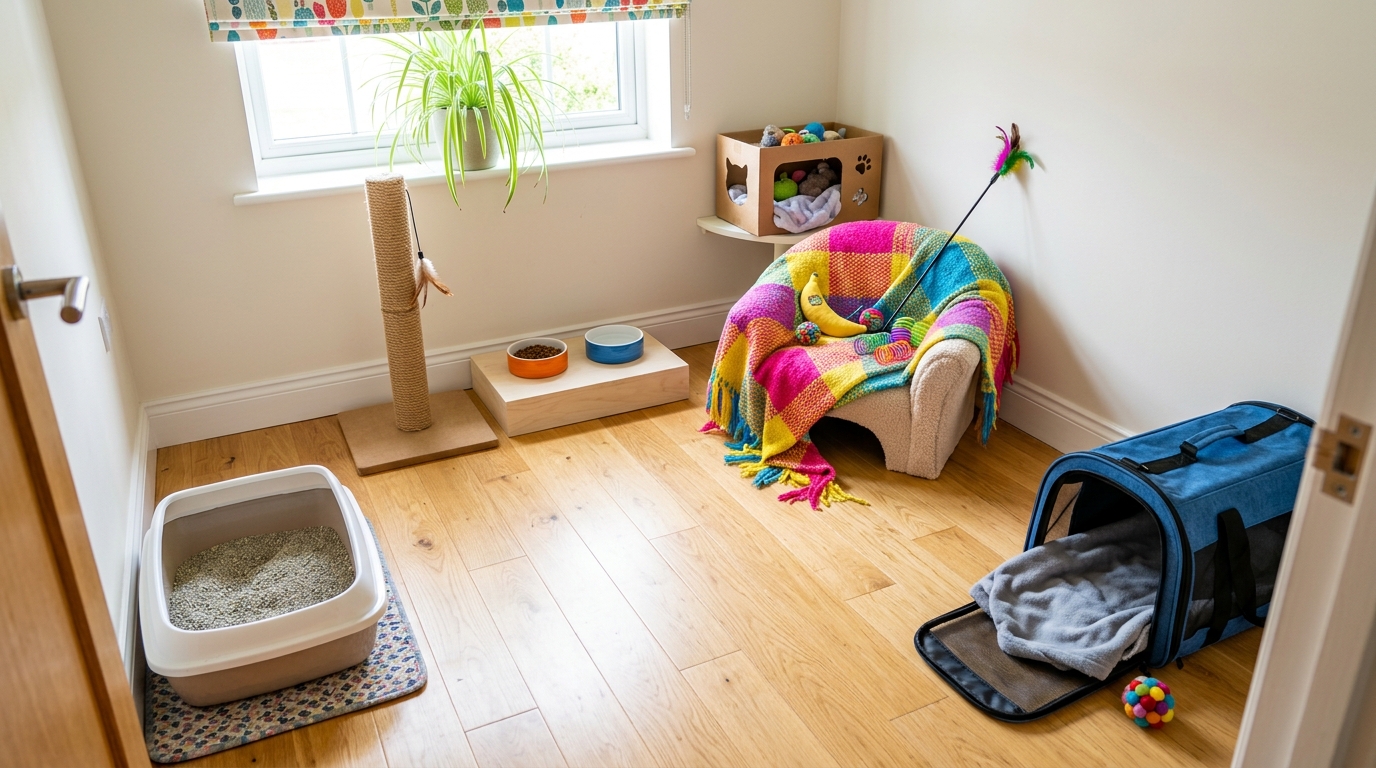
What to buy before bringing a cat home should be a short, practical list of things that make the first days safe and predictable—not a cart full of products chosen before you know the cat. Buy the resources the cat must use immediately: food, water bowls, litter setup, a secure carrier, a hiding place, a scratcher, and a few simple comfort items. Delay preference-driven purchases such as premium beds, elaborate fountains, automatic feeders, or large furniture until you know what the cat actually uses. The smartest pre-arrival shopping plan separates “must work on day one” from “can wait until the cat shows you.”
Buy the Day-One Resources Before You Buy Upgrades
A new cat needs a small set of reliable resources immediately. Food and water should be ready before arrival. The litter box should be assembled, filled, and placed in a quiet accessible location. The carrier should be secure enough for the trip home and future veterinary visits. Add a simple hide, a resting surface, a stable scratching option, and a few safe toys. These items solve real first-day needs without assuming the cat will prefer a particular bed shape, fountain sound, or toy style.
Ask the shelter, foster home, breeder, or previous caregiver what food and litter the cat currently uses. Familiar basics can reduce the number of changes happening at once. If you plan to switch food or litter later, you can do it after eating and toileting are stable. Buying the “better” product before arrival is not automatically helpful if the cat refuses it. Keep packaging and receipts for items that can be returned, especially when size or preference is uncertain.
What to Buy Before Bringing a Cat Home: The Must-Have List
Think in functions rather than brands. The cat needs a way to eat, drink, eliminate, hide, rest, scratch, travel, and play. One inexpensive object can sometimes serve more than one function. A sturdy cardboard box can be a hide, and the carrier can become a familiar resting spot when left open. The list below is enough to make the first room usable without turning it into a showroom.
- Complete and balanced food appropriate for the cat’s life stage
- Food and water bowls that are easy to wash
- A large accessible litter box
- Enough familiar or suitable unscented litter to fill and refresh the box
- A sturdy litter scoop and simple waste container
- A secure carrier sized for the cat
- A stable scratching surface
- A cardboard hide or covered resting option
- A washable blanket or bed surface
- A wand toy plus one or two safe solo toys
- Basic grooming supplies suited to coat length
Do not buy several versions of each item “just in case.” Start with one good option, then expand based on use.
Ask Three Questions Before You Choose Food and Litter
Also ask how the cat is currently served. A cat accustomed to an open tray with fine clumping litter may hesitate at a covered box filled with pellets. A cat eating small wet meals may not adjust smoothly to a bowl of dry food left out all day. Matching the familiar routine first gives you a cleaner baseline.
Food and litter are the two purchases most likely to create unnecessary problems when changed abruptly. Before shopping, ask what exact food the cat is currently eating, how often it is fed, and whether there are medical or dietary instructions. Then ask what litter texture and box style the cat already uses. A cat that arrives after a stressful trip does not need a simultaneous food change, litter change, and new household.
If the previous food is appropriate and available, buy enough for the transition period. If a veterinarian has prescribed a diet, follow that plan rather than substituting a similar-looking retail formula. For litter, familiarity is useful even if you eventually prefer another product. Keep litter unscented unless you know the cat tolerates fragrance. Avoid buying a huge bulk supply before you know the cat accepts it. A small initial quantity makes it easier to change later without wasting an entire stockpile.
Choose the Carrier Like Safety Equipment, Not Storage
Practice the route from your front door to the car before pickup day. Make sure the carrier fits through doors, sits level on the vehicle seat, and can be secured so it does not slide. Put an absorbent towel inside for the trip and carry a spare in case of an accident.
The carrier is one of the few purchases that should work before the cat ever enters your home. It needs to close securely, fit the cat comfortably, and be easy enough for you to carry without flexing or opening. A top-opening or removable-top design can make veterinary handling easier for some cats, but the basic requirement is safe containment. Do not rely on a decorative basket, open tote, or cardboard box for transport.
Once home, leave the carrier open in the cat’s transition area with familiar bedding. It can become ordinary furniture rather than an object that appears only before stressful travel. That small choice can make later veterinary visits easier. If you are adopting a kitten, consider adult size rather than buying a carrier that will be outgrown quickly. If the cat is large or has mobility problems, check whether the doorway and base allow comfortable entry without squeezing or jumping.
Buy for the Room You Have, Not the Home You Imagine
Measure the space before ordering large cat furniture. A tall tree is not useful if it blocks a walkway, wobbles on the floor, or cannot be placed where the cat wants height. Choose a scratcher long enough for a full stretch and stable enough to stay still under force. The litter box must fit both the cat and the chosen location, not merely the dimensions shown in a product photo. Water bowls should sit where they are easy to refresh and where another pet cannot quietly control access.
Planning around the actual room also prevents clutter. The transition space should be easy to clean and easy for the cat to understand. Separate litter from food and water. Leave a clear route between resources. Provide a hide without blocking the cat somewhere unreachable. If you are still deciding which indoor-cat products are worth adding after the basics are covered, wait until you have watched the cat use the room for several days. Preference is better shopping data than advertising. It also keeps the first room easier to clean, easier to navigate, and less visually overwhelming for a cat that is still learning the space.
These Purchases Can Usually Wait Until After Arrival

Many popular products are useful for the right cat, but they are not necessary before you know the cat’s habits. Waiting can save money and produce a better setup. For example, a fountain is helpful only if the cat likes it and you can keep it clean. An automatic feeder matters if your schedule or feeding plan benefits from timed meals. A premium bed is wasted if the cat prefers a folded blanket on a chair. A wall-climbing system should match the cat’s confidence, mobility, and the wall you can safely secure it to.
| Buy before arrival | Often safe to wait |
|---|---|
| Carrier | Automatic feeder |
| Food and water bowls | Water fountain |
| Litter box and litter | Self-cleaning litter box |
| Simple scratcher | Large cat tree or wall system |
| Simple hide and bedding | Premium beds and caves |
| Basic toys | Electronic or specialty toys |
Waiting is not deprivation. The cat already has the essential function covered while you collect better information about preference.
Do a Safety Purchase Check Before the Cat Arrives
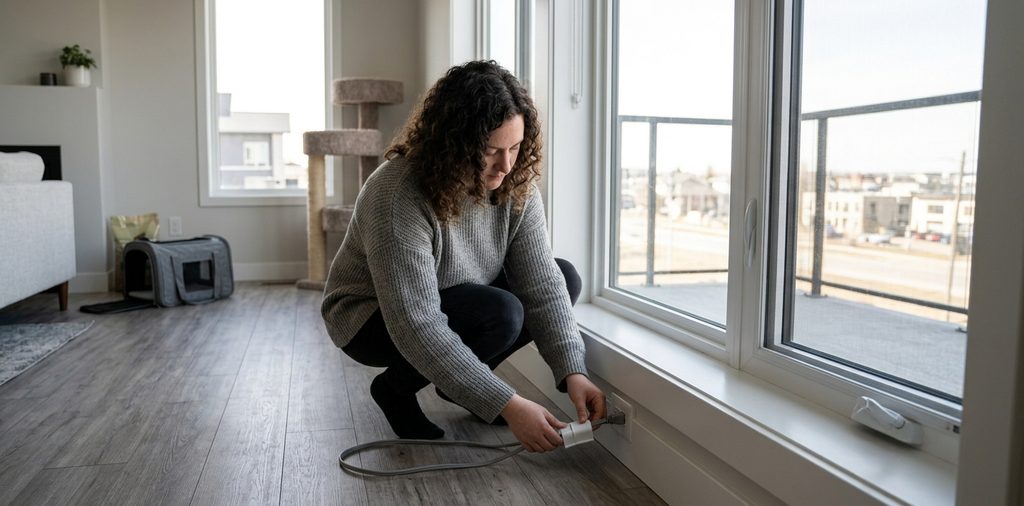
Do not assume a product labeled “for cats” is automatically right for unsupervised use. Check scratchers for staples or unstable bases, toys for loose elastic or string, and beds for parts a cat could chew off. Practical inspection matters more than packaging claims.
Some of the most useful “cat purchases” are ordinary household items that reduce risk. Window screens may need repair or reinforcement. Cord organizers can remove dangling loops. A lidded container can secure medication, hair ties, thread, and small swallowable objects. Cabinet latches may be useful where cleaning products are stored. If you have toxic plants, the safer solution may be removal rather than buying a shelf and assuming the cat cannot reach it.
Check toys for loose strings, small detachable pieces, and materials that should not be left unsupervised. Wand toys are excellent for interactive play, but long strings should be stored when play ends. Make sure the litter scoop, waste bags, and cleaning supplies are convenient enough that daily maintenance will actually happen. A product that makes care harder is not an upgrade. Before arrival, walk through the room from cat height and look under furniture, behind appliances, and around windows for gaps or hazards you normally ignore.
Do Not Forget the Human-Side Supplies
A small measuring cup or food scale can also prevent confusion if the cat comes with a specific ration. Label the food container with the current daily amount instead of relying on memory. If medication is involved, keep the written dosing instructions separate from ordinary feeding notes.
Preparation is easier when the caregiver has what they need too. Save the veterinary clinic number, emergency clinic details, adoption records, microchip information, and any medication instructions in one place. Keep a small towel near the carrier for travel or handling. Have an enzyme-compatible pet cleaner available for accidents, but avoid filling the transition room with strong fragrance. A kitchen scale can become useful later for measured food portions, but it is not essential before arrival unless a feeding plan already requires grams.
Also decide who in the household feeds, scoops, plays, and handles veterinary appointments. Duplicate feeding is a common problem when several people assume someone else has not fed the cat. A simple written routine is more useful than another gadget. If children live in the home, prepare rules before the cat arrives: do not pull the cat from hiding, do not chase, and let an adult manage doors during the first days.
Shop Again Only After the Cat Gives You New Information
Give new items enough time to be evaluated. A nervous cat may ignore a scratcher or perch during the first two days because the entire room is unfamiliar. Wait for normal exploration to emerge before deciding an item failed, unless the product is unsafe or clearly unsuitable.
The first shopping trip creates a safe baseline. The second should respond to the cat in front of you. If the cat scratches horizontally, add that orientation. Low water use that improves with a second bowl location tells you where to expand. A cat that repeatedly seeks height may justify a stable perch. Ignoring every plush bed while sleeping in the carrier gives you the answer already. Good buying decisions follow observed behavior rather than trying to predict every preference before arrival.
References
- Welcome Your New Cat or Kitten — FelineVMA — Lists core resources such as food, water, litter, beds, perches, hides, scratchers, toys, and carriers.
- Introducing a New Cat Into Your Home — Cat Friendly Homes — Covers transition-room preparation, separated resources, and gradual adjustment.
- General Cat Care — ASPCA — Provides practical guidance on housing, grooming, identification, scratching, litter, and everyday care.
