

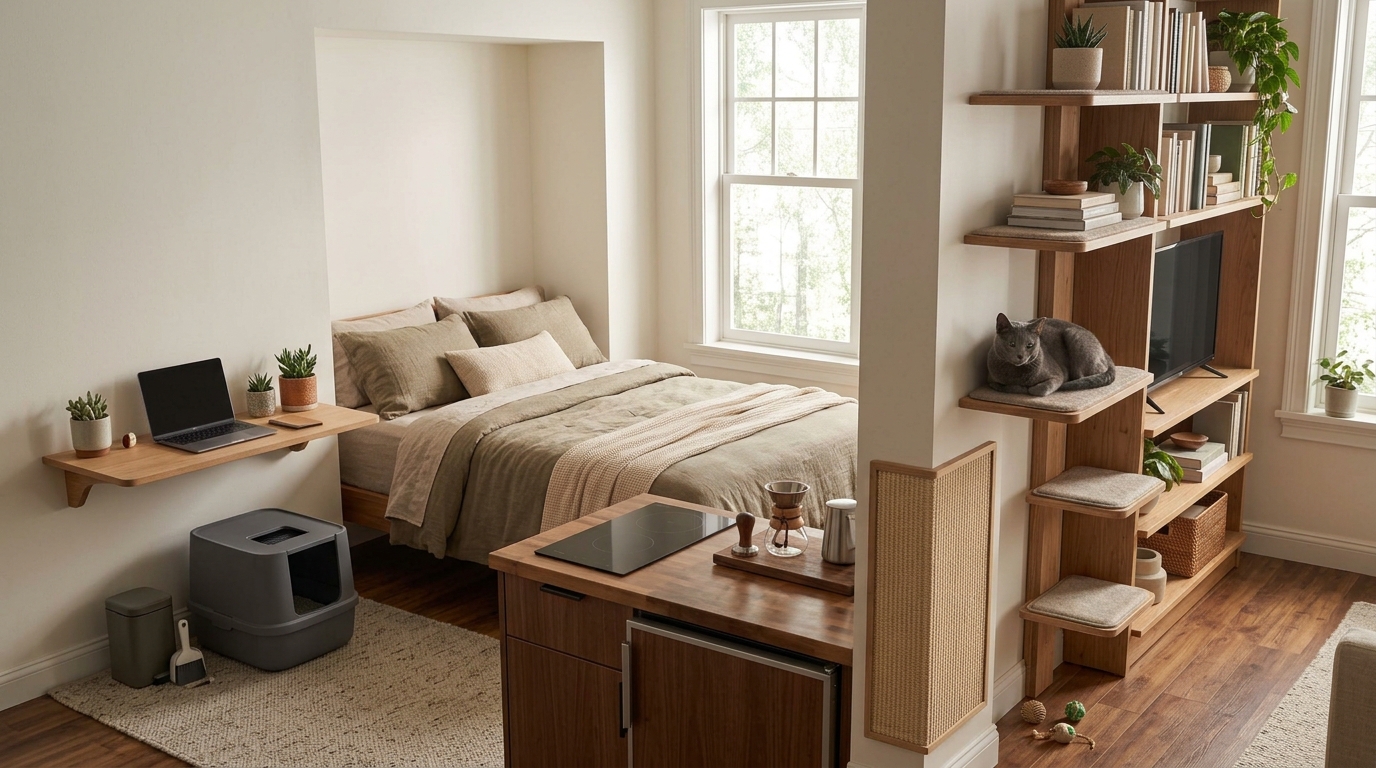
A studio apartment for a cat can work well even when the bed, kitchen, desk, sofa, and litter box all share one room. The challenge is not the lack of square footage by itself. It is the lack of doors and separate rooms. In a studio, you have to create separation with distance, furniture, height, timing, and visual barriers instead. A cat still needs places to eat, drink, toilet, scratch, hide, climb, play, and sleep without every resource collapsing into one crowded corner.
Think in Micro-Zones Instead of Rooms
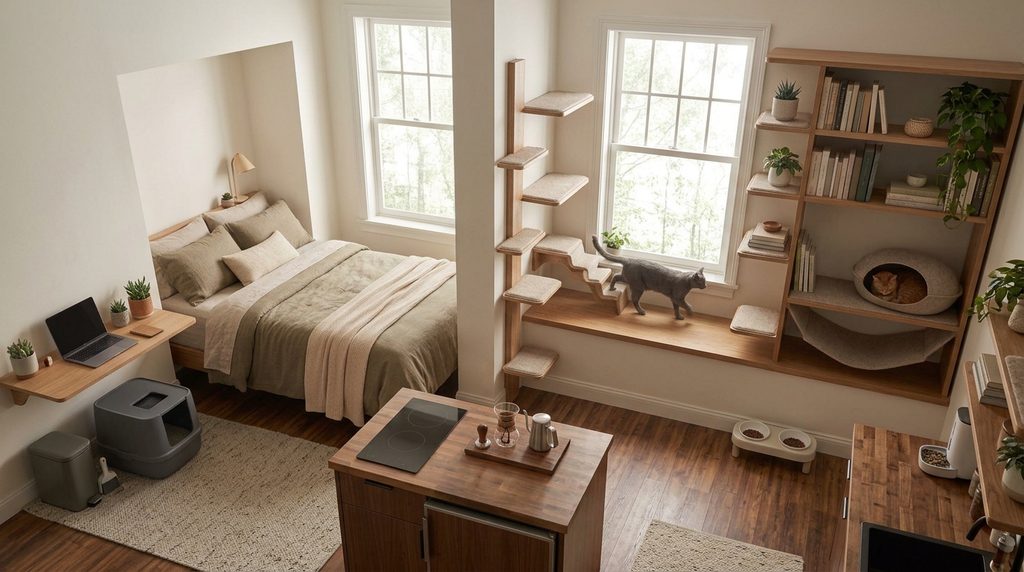
Draw the studio as if it contains several tiny rooms. The sleeping area may be one zone, the window another, the kitchen edge another, and a quiet corner near the bathroom another. Assign cat functions to those zones based on noise and traffic. A litter box near the quietest edge may work well. Do not squeeze it beside food simply because both fit under the same shelf.
Visual separation can do a surprising amount of work. A bookcase, side table, open shelving unit, folding screen, or the back of a sofa can make two resources feel less connected. Keep routes open so the cat is not trapped behind furniture. The aim is to create choices within one room. When the home has no doors, small changes in sightline and distance become the tools that replace them.
Put the Litter Box Where It Is Quiet but Still Easy to Scoop
In a studio, litter placement affects both the cat and the person every day. Avoid the temptation to hide the box in the most inaccessible corner. The cat needs reliable access, and you need to scoop often enough that odor does not take over the room. A large open box may use more floor space than a decorative compact box, but adequate size can make toileting more comfortable.
Use furniture to give privacy without creating a dead end. A low screen or side table can block the direct view from the bed while keeping more than one route around the box. Keep food and water away from the litter area. The broader principles of separating key resources while preserving safe routes through the home matter even more when every resource sits within the same room.
- Choose the quietest workable floor area.
- Keep the entrance clear at all times.
- Avoid placing the box beside food or water.
- Use visual privacy without enclosing the cat on three sides.
- Scoop daily so the one-room home stays comfortable for both of you.
Measure landing surfaces before buying wall furniture. A shelf can look wide in a photo and still feel cramped to a large cat. Check the route at night. Remove unstable decor. Add non-slip material where needed. Leave one easy way down. A vertical system should reduce crowding. It should not create a series of risky jumps that you worry about every time the cat gets excited.
Use Vertical Space as the Studio’s Second Floor
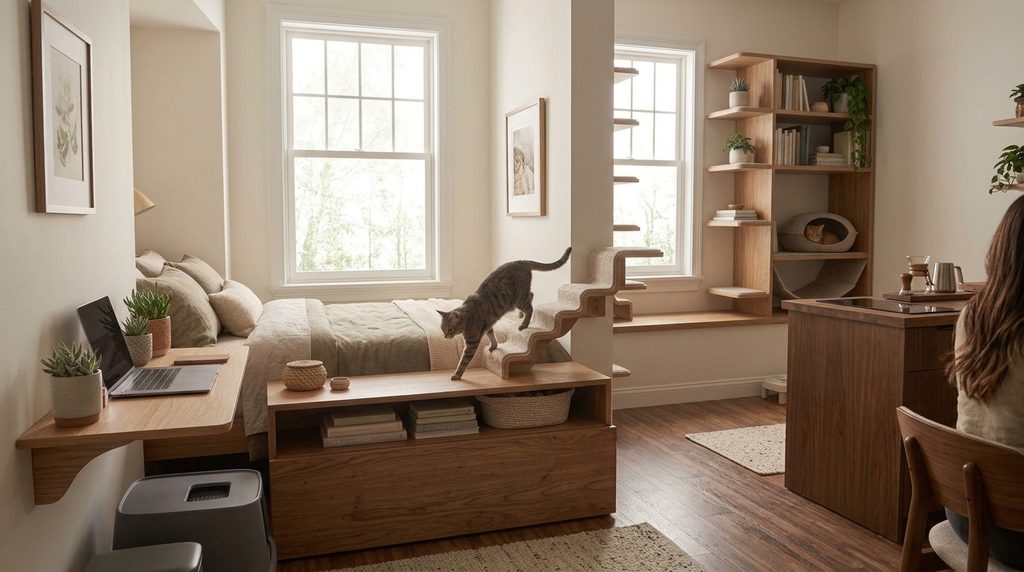
Height adds territory without taking the center of the room. A stable cat tree, window perch, sturdy bookcase top, or secure shelf route can create places for observation and rest. The route up matters as much as the destination. A cat should be able to climb and descend safely. Avoid routes that require launching across fragile furniture or landing on the work desk.
Use existing furniture when it is safe. A bench can become an intermediate step. A clear section of a bookshelf can create a perch. Renter-friendly tension systems can add height without drilling, but they still need secure installation. Do not pack every elevated option into one wall if the cat would benefit from choices. Even two separated high spots can make a one-room home feel less flat.
Make One Protected Hide That Is Not Under the Bed
Studios often offer accidental hiding places such as the gap behind a refrigerator, inside a sofa base, or under a bed loaded with storage. Those spaces may be hard to access in an emergency. Create at least one intentional hide that is safe, easy to locate, and left undisturbed. An open carrier with a blanket, a cardboard box on its side, or a covered bed under a table can work.
Position the hide away from the main walking path and work area. The cat should be able to retreat when visitors arrive or when you are moving around the studio. Do not repeatedly reach into the hide to pet the cat. Its value comes from control. In a one-room home, the ability to become “unavailable” for a while can matter because the cat cannot simply leave for another room.
Use edges rather than the middle floor. A water bowl can sit beside a stable cabinet. Food can stay near the kitchen on another edge. A slim mat defines each station. This keeps the center route clear. It also reduces accidental kicks and spills. In one room, circulation space is valuable to both species. Protect the paths before adding another piece of furniture.
Separate Food and Water Even When the Kitchen Is Tiny
The refrigerator does not need to become the center of every cat resource. Place food where the cat can eat without being stepped over, and put water in a second comfortable location if space allows. A bowl on the opposite side of the room may be only several meters away, but that still creates a distinct resource. Choose washable bowls and avoid narrow traffic lanes.
If you work from home, consider what happens around meal times. A bowl beside your desk may seem convenient until chair wheels, calls, and foot traffic make the area unpredictable. A calm feeding corner can be created with a mat, side table, or the end of a kitchen counter if the cat can access it safely. Keep portions measured so a small home does not turn constant food availability into the main source of activity.
Plan one “clear lane” that can become active space for five minutes. It may run from the bed edge to the window. Put movable objects away before play. Use the lane for chasing and wand movement. Then return the room to normal. The cat gets a predictable burst of movement. You do not need to preserve a permanently empty playroom inside the studio.
Build a Play Route That Does Not Require an Empty Living Room
Interactive play needs movement, but it does not require a large open floor. Use the perimeter. Move a wand toy around chair legs, along a rug edge, through a tunnel, and toward a low perch. Let the cat stalk, chase, and catch rather than waving the toy in place. Short sessions can fit around work and daily routines more easily than one long session.
Store most toys between sessions so the floor stays usable. Rotate a few safe solo toys rather than leaving a pile everywhere. Puzzle feeders can add activity using part of the normal ration. Avoid string or ribbon left out unsupervised. In a studio, toy storage matters because clutter can quickly take over the same floor routes the cat uses for running and the person uses for walking.
Choose Furniture That Does More Than One Job
Multifunction furniture is especially useful in one room. A sturdy cat tree can combine scratching, climbing, and resting. Meanwhile, a bench can provide storage plus an intermediate step to a window. A side table can create a protected hide underneath while serving the person above. An open carrier can remain part of the room rather than being stored away until vet day.
| Human item | Possible cat function | Safety check |
|---|---|---|
| Bookcase | Elevated resting spot | Stable, clear landing area, safe route down |
| Bench | Step, perch, storage | Non-slip surface and no tipping |
| Side table | Covered hide underneath | Open exit and no trapping |
| Sofa edge | Rest and observation | Provide scratcher nearby if targeted |
| Window area | Observation perch | Secure screen and stable support |
Do not count furniture as a cat resource just because the cat can technically reach it. Stability, access, and permission matter. A shelf full of breakable objects is not useful vertical territory. Clear the surfaces you genuinely want the cat to use.
Keep a small basket for noisy toys. Put bells and hard plastic balls away overnight. Leave quieter toys available. Check whether the litter scoop, food containers, or storage doors rattle when used. Tiny noises feel larger at two in the morning. A studio works better when nighttime enrichment and human sleep are planned together instead of competing every night.
Control Sound, Smell, and Nighttime Conflict in One Room
Every noise is closer in a studio. A fountain pump, automatic feeder, washing machine, or loud air purifier may sound stronger at night. Test equipment before making it the only option. The cat also experiences cooking smells, cleaners, fragrance, and litter odor in the same shared air. Keep litter clean and avoid heavily scented products that try to cover odor with stronger odor.
Nighttime activity can affect sleep when the cat is only a few meters away. Instead of trying to eliminate normal nocturnal movement, build a predictable evening routine. Use interactive play, serve a planned meal, then leave quiet solo options available. If early-morning feeding becomes the problem, a timed feeder can release part of the normal daily ration away from the bed rather than teaching the cat that waking you produces food.
Create a Temporary Transition Area Without a Spare Room
A new cat usually benefits from a smaller starting territory, but a studio may not have a separate bedroom. Use the bathroom if it is safe and large enough for short-term transition, or create a defined section of the main room with furniture and a visual barrier. The cat should have litter, water, food, a hide, scratching, and a resting spot without being forced into constant interaction.
Keep the first days quiet and predictable. Do not invite a stream of visitors simply because the cat cannot be isolated behind a bedroom door. Let the cat expand into the full studio at its own pace. If another cat already lives there, introductions are much harder without true separation, and a studio may not be suitable for adding a second cat unless you can create safe, controlled territories during the introduction period.
A Studio Apartment Works When the Cat Has Choice Inside One Room
To make a studio apartment work for a cat, use the room in layers. Separate litter from food and water, create height, protect at least one hide, keep routes open, and use furniture for more than one function. The studio does not need dozens of cat products. It needs enough meaningful choices that the cat can eat, toilet, rest, observe, scratch, and play without every activity happening in the same two square meters.
Review the layout when the cat’s age or mobility changes. A young cat may use high shelves that later become difficult. A litter location that worked before new furniture arrived may become blocked. The advantage of a studio is that you can see the whole system at once. Use that visibility to notice which areas the cat chooses and which resources are technically present but rarely comfortable to use.
References
- Environmental Needs — FelineVMA — Explains separated key resources, safe places, vertical space, predictable interaction, and environmental choices that support feline wellbeing.
- What Your Cat Needs to Feel Secure — Cat Friendly Homes — Practical guidance on food, water, toileting, safe sleeping, elevated spaces, and resource distribution.
- Home Modifications for Your Cat — Cat Friendly Homes — Covers low-stress resource placement, mobility-friendly access, resting areas, and ways to adapt the home as a cat’s needs change.
