

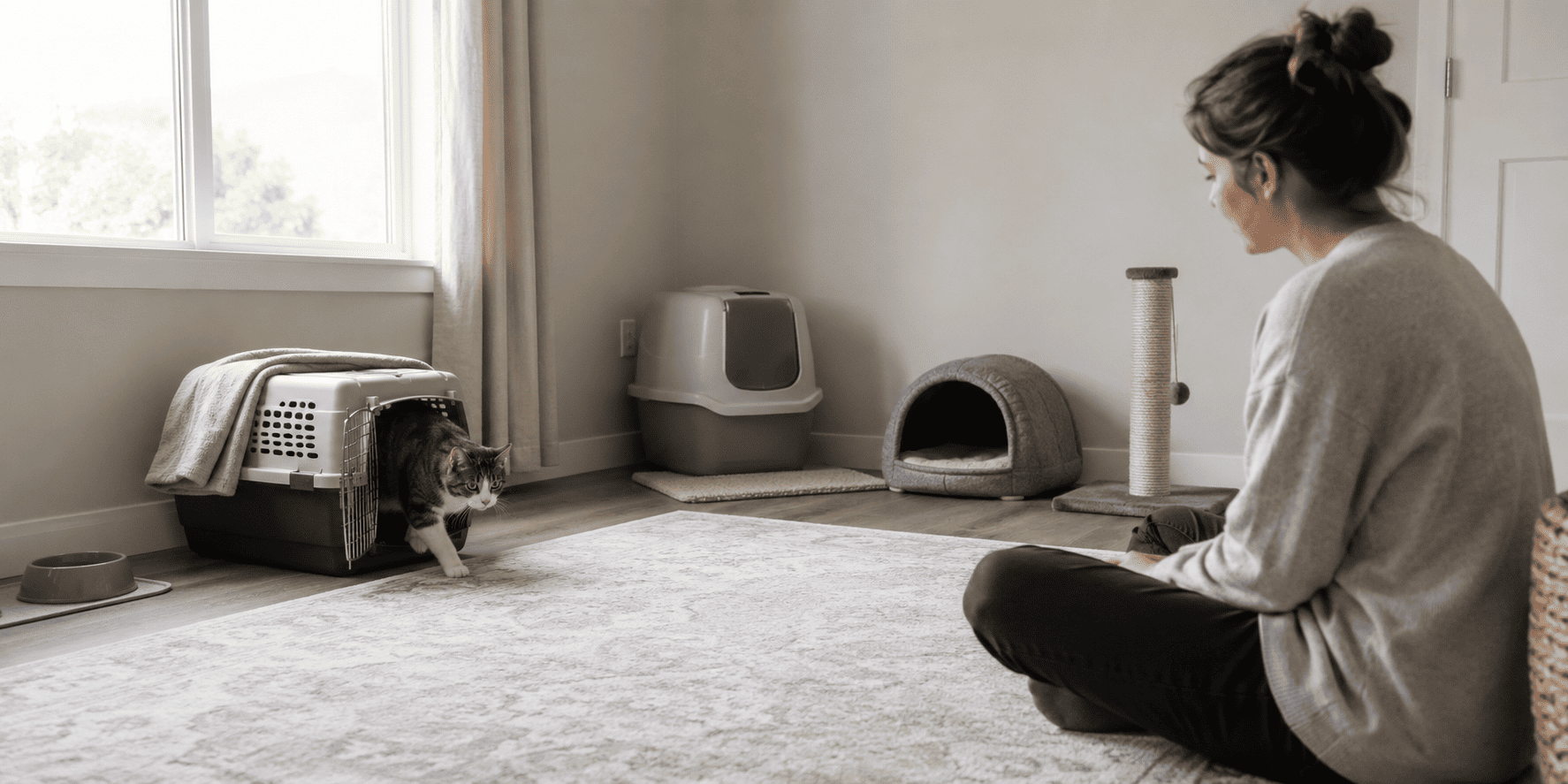
The first 24 hours with a new cat at home should feel smaller and quieter than most people imagine. Your job is not to introduce every room, every person, and every toy. It is to get the cat safely from the carrier into one prepared base, make food, water, litter, hiding, and rest easy to find, and then reduce pressure. Some cats explore within minutes. Others wait until the home is silent before eating or leaving the carrier. Both can be normal. The timeline below focuses on what to do during the first day, what not to force, what information to watch, and which signs justify veterinary advice.
First 24 Hours With a New Cat: Go Straight to the Prepared Base
Carry the closed carrier directly to the safe room or transition area. Close the room door before opening the carrier. Set it on the floor, open the door, and give the cat time to exit voluntarily when possible. Do not start with a tour of the house or pass the carrier around for greetings. A cat that stays inside is already using a secure space; the carrier can remain open while the room becomes familiar.
Keep voices low and movement ordinary. Show children where to sit rather than asking them to reach inside. Resident pets should stay outside. If the cat came with familiar bedding, place it near the carrier or chosen hide. The first half hour is mostly about preventing escape and removing pressure, not measuring how friendly the cat is.
Before opening the carrier, make sure everyone knows the room door stays closed. Many first-day escapes happen because one person assumes another person is watching. A simple household rule for the first hour reduces risk more effectively than trying to catch a frightened cat in a larger home.
Hour 1–3: Let Hiding and Observation Happen
A cat that goes under a chair or into a prepared box is not failing to settle. Hiding gives the cat control over distance while new sounds and smells are processed. Sit quietly for short periods and let the cat watch you. Reading, working on a laptop, or simply refreshing water can be more useful than repeated attempts to coax the cat out. Avoid blocking the exit from the hide or leaning over the cat.
If the cat explores, let it inspect the safe room rather than opening the whole house. A small territory makes it easier to locate litter, food, and water. resource placement becomes more important as the cat eventually learns the rest of the home, but the first few hours benefit from keeping those choices simple and predictable.
Keep your body low and slightly turned rather than leaning directly over the hide. Avoid sustained staring. These small changes can make your presence less intense while the cat watches. If the cat chooses to approach, let that decision set the pace for the first contact.
Do not open the whole house just because 24 hours have passed. Territory should expand when eating, litter use, and body language show growing comfort. Keep the original base available as you add one area at a time. The first day succeeds when the cat is safe, resources are being found, and pressure stays low—not when the cat reaches a particular social milestone.
Hour 2–6: Offer the Familiar Food Without Hovering

Offer a small normal meal using the food the cat was already eating when possible. A sudden diet change is one more variable during an already stressful day. Put the bowl in a calm spot away from the litter tray, then step back. Some cats eat immediately. Others wait until the room is quiet or until nighttime. Note whether the cat sniffs, takes a few bites, eats normally, or shows no interest, but do not cycle through five foods in the first hour.
Fresh water should be available regardless of whether you see drinking. If the cat is on a wet diet, visible bowl drinking may be low. Avoid force-feeding or syringing water unless a veterinarian has given specific instructions. The first meal is useful information, not a test the cat must pass on command.
If the cat came from a shelter with a known feeding time, staying close to that timing can add predictability. The exact clock is less important than avoiding several unnecessary changes at once. Once appetite is stable, you can gradually shift meals to the household routine.
The First Litter-Box Visit May Happen When You Are Not Watching
Use a large accessible box with familiar or suitable litter and place it away from food and water. Scoop it before bedtime so any new urine or stool is easy to notice. Do not carry the cat into the tray repeatedly or move paws through the litter. Most cats can locate the box in a small room. If the cat arrived after a long trip, it may take time before elimination occurs.
Watch for repeated straining, frequent unsuccessful attempts, crying, or signs of pain rather than focusing on whether the box was used at an exact hour. If you cannot tell whether the cat is trying to urinate or defecate and little or nothing is produced, contact a veterinarian. For a stable cat, one quiet afternoon without a visible box visit is different from obvious distress.
Do not change litter immediately unless there is a safety or medical reason. Familiar texture can make the first toilet visit easier. If you want to transition later, introduce the new litter after reliable box use is established so you are not troubleshooting arrival stress and litter preference together.
Evening: Keep the House Boring on Purpose
The first evening is not the time for a welcome party. Limit visitors and let the room settle into normal household sounds. Use a short wand-toy session only if the cat shows interest. A confident cat may play, groom, and rest in the open. A shy cat may remain hidden and begin moving after people leave. Both responses can fit a normal first day. Predictable meals and calm entries to the room are more useful than constant social stimulation.
- Refresh water and remove stale food.
- Scoop the litter box and note any urine or stool.
- Check windows, doors, and hiding gaps again.
- Leave the carrier open as a familiar option.
- Store string toys and unsafe small objects.
- Keep resident pets separated overnight.
A short bedtime check should make the environment safer, not restart the interaction process.
Keep television, vacuuming, loud music, and repeated door opening to a minimum around the base. The rest of the home can continue normally, but the transition room should not become a performance space. Quiet gives the cat a chance to choose exploration rather than react to constant novelty.
If the cat chooses to sleep rather than interact in the evening, let that happen. Travel, shelter routines, and the stress of a new environment can be tiring. Resting quietly in the open is often a stronger sign of comfort than constant exploration.
On day two, change only what the first day taught you needs changing. If the cat ignored a bed but used the carrier, leave the carrier. If it ate only after midnight, keep offering meals calmly. Early observations should refine the setup rather than trigger a complete redesign.
The First Night: Expect Activity After the House Gets Quiet

Many new cats explore more after lights dim and people stop moving. You may hear litter digging, eating, play, or movement around the room. That can be reassuring, but you do not need to sleep in the room unless there is a practical reason. Leave low-level lighting if the space becomes completely dark and make sure routes to litter and water are clear. Avoid moving resources after the cat has finally started using them.
Some cats vocalize at night because the environment is unfamiliar. Respond calmly without turning every call into a large interaction. If the cat becomes increasingly distressed, pants, repeatedly vomits, or shows physical signs of illness, that is different from ordinary calling. A camera can help you see nighttime activity, but it is optional; the litter box and food bowl will often tell you plenty by morning.
By morning, the most reassuring signs may be subtle: food disturbed, litter dug, a toy moved, or the cat resting in a different place. Nighttime exploration often happens unseen. Use those clues instead of assuming no visible daytime movement means the cat did nothing.
Resident Cats Should Not Meet Face to Face on Day One
If another cat already lives in the home, keep the newcomer in the transition room during the first 24 hours. The cats can become aware of each other through scent and sound without direct contact. Do not hold one cat while presenting the other at the doorway. A confined cat cannot choose distance, and a tense first encounter can make later introductions harder. Preserve the resident cat’s normal meals, litter access, resting areas, and attention as much as possible.
Scent exchange can begin gently only if both cats are stable. A small bedding swap is enough; there is no need to rub a cloth over one cat and push it into the other cat’s bed. If either cat stops eating, camps at the door, growls continuously, or becomes highly aroused, reduce the intensity. The first day is for safety and baseline behavior, not relationship testing.
Resident cats may spend time outside the closed door. Redirect prolonged staring or guarding rather than letting the doorway become a confrontation point. Give the resident cat normal attention elsewhere so the newcomer’s room does not become the center of every household interaction.
Know Which First-Day Changes Deserve a Veterinary Call
Stress can reduce appetite temporarily, but cats should not be allowed to go on for a prolonged period with little or no food without veterinary advice. Contact your veterinarian if the cat refuses food, seems ill, vomits repeatedly, has significant diarrhea, appears painful, or shows unusual weakness. Seek urgent care for difficulty breathing, collapse, seizures, major trauma, or repeated straining with little or no urine. Existing medical conditions may also change the threshold for calling.
If you adopted from a shelter or rescue, follow the medical plan and appointment recommendations provided. Keep records accessible. Do not give human medication or leftover veterinary drugs to “help the cat relax” unless prescribed for that cat. The first 24 hours should produce observations, not home diagnoses.
Have the veterinary clinic number and emergency option available before the first night. You may never need them, but knowing where to call prevents frantic searching if the cat develops breathing trouble, repeated vomiting, urinary straining, or another urgent sign.
Keep the second morning simple even if the night went well. Feed, scoop, refresh water, and spend a short calm period together before adding new rooms or visitors. A good first night does not mean the cat needs a busier second day. Confidence grows more reliably when successful routines repeat before the next layer of novelty is added.
Morning 2: Use Behavior to Decide the Next Step
By the next morning, look at what happened rather than asking whether the cat is “settled.” Was food eaten? Is there urine or stool? Did the cat groom, explore, play, or rest outside the deepest hide? Does it approach when you enter, or remain tightly withdrawn? A confident cat may be ready for more interaction while still staying in the safe room. A cautious cat may need the same simple routine for several more days.
References
- Welcome Your New Cat or Kitten — FelineVMA — Current guidance on preparation, transition rooms, supplies, veterinary care, and helping a new cat settle into the household.
- How to Introduce a New Cat to Other Cats in Your Home — FelineVMA — Step-by-step framework for separation, scent work, visual access, and gradual introductions between resident and new cats.
- Adoption Tips — ASPCA — Practical preparation and adjustment advice for bringing a newly adopted pet into the home.
