

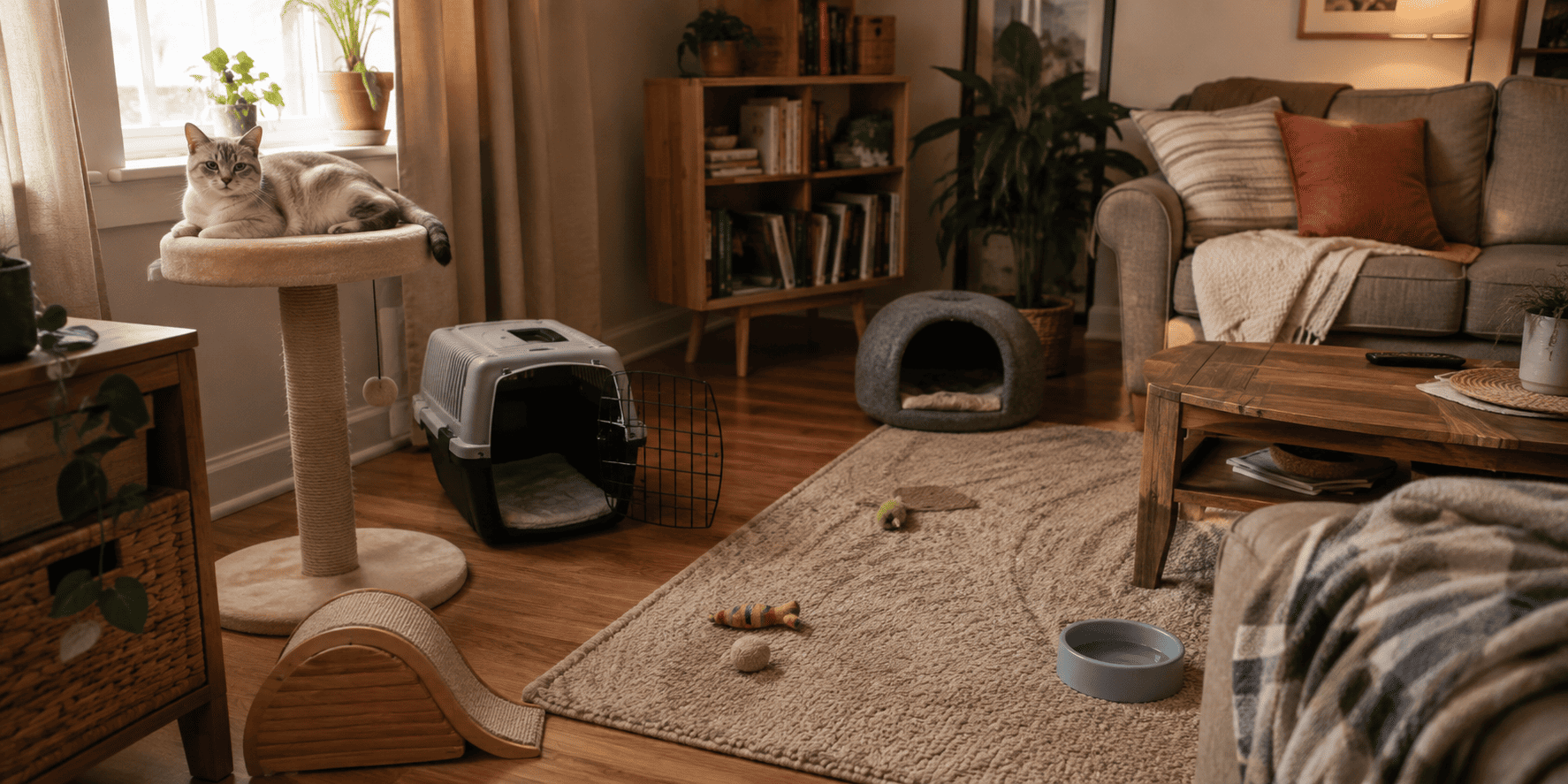
The essential things every indoor cat needs are functions, not a shopping list: reliable food and water, comfortable toileting, places to rest and hide, scratching surfaces, height, play, safe transport, and social interaction the cat can choose. One object can meet several needs, and ordinary furniture can be part of the solution. Buy around the cat’s behavior and the layout of the home rather than trying to recreate a product checklist from social media.
The essential things every indoor cat needs are resources and opportunities, not a collection of premium products. Cover nutrition, water, litter, scratching, rest, hiding, climbing, play, safe transport, and positive interaction first. Then watch your cat. Spend more only where an upgrade solves a real problem or makes good care easier to maintain. A cat-friendly home is defined by access and choice, not by how many cat products appear in the room.
Before buying anything, name the problem the item is supposed to solve. Is the cat missing a stable vertical scratcher, avoiding a guarded water station, or struggling to reach a favorite perch? Then ask whether placement, stability, cleaning, or access could solve the same problem first. This keeps purchases tied to observed behavior. It also prevents a common mistake: owning the “right” product but placing it where the cat has little reason to use it.
Maintenance belongs in the decision too. A fountain that is hard to clean or a bed that cannot be washed may become less useful over time. Choose solutions you can keep functional.
Start With a Needs Checklist, Not a Shopping Cart
This list describes needs, not brands. A cat may meet several of them with ordinary household furniture plus a few well-chosen cat-specific items. Resource placement should change with mobility. A young cat may happily jump onto a counter for water, while a senior cat may stop using that station before you notice stiffness. Keep at least one important resource on an easy route at floor or low height.
- Complete and balanced food for the correct life stage
- Fresh water in clean, accessible locations
- A large litter box with comfortable litter
- A safe hiding place where the cat can retreat
- Comfortable resting areas at more than one height
- Stable scratching surfaces
- Vertical space or secure elevated perches
- Interactive and solo play opportunities
- A secure carrier for veterinary visits and emergencies
- Positive, predictable human interaction
Use the checklist as a room-by-room audit. Ask whether your cat can reach water without crossing a stressful bottleneck, scratch somewhere that matches its preferred orientation, hide without becoming trapped, and rest at both low and elevated levels. A need is not truly met because the product exists somewhere in the home. It is met when the cat can use it comfortably and you can maintain it. This distinction helps reveal why an expensive item may sit untouched while a cardboard box or ordinary chair becomes a daily favorite.
Essential Things Every Indoor Cat Needs Are Functions, Not Products
Every indoor cat needs a complete and balanced diet appropriate for life stage, fresh water, and a clean litter area. These resources should be easy to access without passing through stressful bottlenecks. Food, water, and litter do not need to be grouped together. In fact, separating them often creates a more comfortable setup. Place water in one or more quiet locations. Keep litter boxes away from feeding areas. How well those basics work depends on where food, water, litter, scratching, and resting resources sit in the home, not simply whether you own them. In multi-cat homes, duplicate important resources and spread them out. One large “cat station” can become easy for one cat to control. Not every need requires a separate purchase. One stable cat tree may provide climbing, scratching, resting, and observation.
A carrier can double as a familiar hide when left open. Thinking in functions keeps the home less cluttered and the budget focused. Think of access over ownership. Having a water bowl does not meet the need if it is dirty or guarded. Having a scratcher does not help if it wobbles or sits in a room the cat never uses. Resources count when the cat can use them comfortably.
Add Territory With Height, Hiding, and More Than One Route
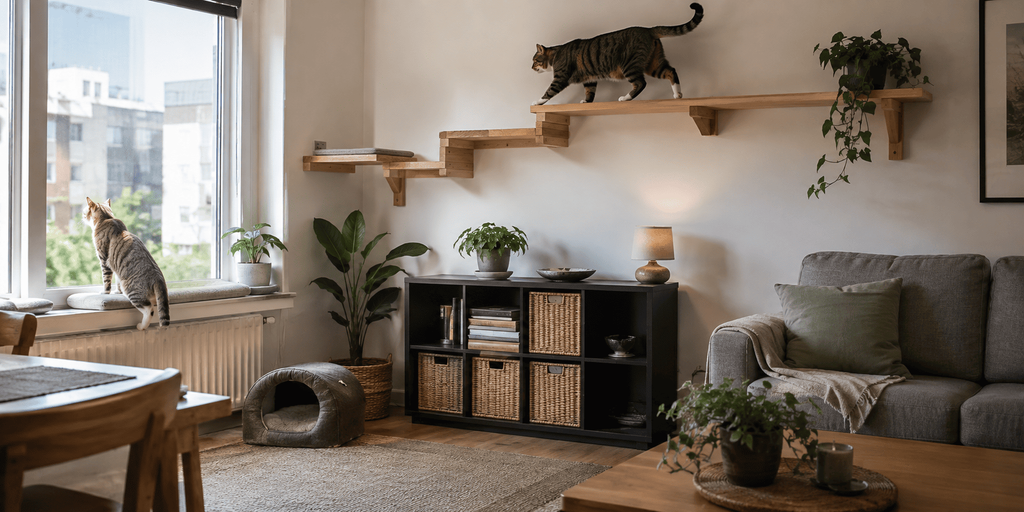
Vertical space expands usable territory without taking much floor area. A secure windowsill, stable shelf, or cat tree gives a cat a place to observe and rest away from traffic. Hiding is equally important. A cat should be able to withdraw when visitors arrive, the vacuum runs, or it simply wants to sleep undisturbed. Do not repeatedly pull a cat from a chosen safe place. Offer options at different heights and temperatures. Cats may choose a warm bed one day and a cool floor the next. In multi-cat homes, height and multiple pathways can reduce direct confrontations. A room becomes easier to share when cats do not have to pass nose-to-nose to move through it. Predictability can be enriching too. Cats often benefit from knowing when play, meals, and quiet time happen.
A short daily routine that reliably includes hunting-style play may be more valuable than random bursts of attention followed by long periods with nothing to do. Routes up and down matter as cats age. A high shelf is only useful if the cat can reach it safely. Adding a lower stool or intermediate step can preserve access without removing a favorite elevated space.
Put Scratching Where the Cat Already Wants to Scratch
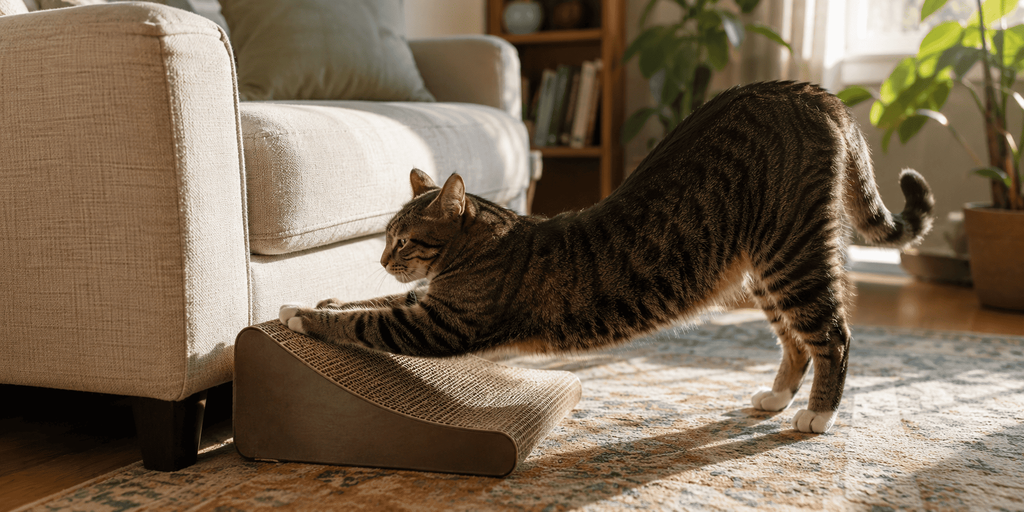
Cats scratch to stretch, maintain claw condition, and leave scent and visual marks. Give them surfaces where scratching is allowed. A vertical post should be stable enough that it does not wobble during a full-body stretch. Some cats prefer horizontal cardboard or carpet-like surfaces. If you do not know the preference, offer both orientations. Place scratchers near sleeping areas, room entrances, or furniture the cat already targets. Location is often more important than price. A perfect post hidden in a spare room may lose to the sofa because the sofa sits where the cat wants to mark and stretch. A worn scratcher is not automatically trash. Familiar texture and scent can make it more valuable to the cat. Choice also reduces conflict with people.
A cat that has an acceptable high perch is less likely to need the kitchen cabinet as its only lookout. A cat with a protected hide can retreat from visitors without disappearing behind an appliance. Good options make boundaries easier to maintain. If your cat ignores a new scratcher, do not assume scratching is the problem. Test placement and orientation first. Put the scratcher directly beside a current target and make sure it is tall or long enough for the way your cat stretches.
Food and Water Should Be Easy to Maintain
Choose bowls you can wash easily and place them where your cat can eat or drink without feeling trapped. Water should always be available. Some cats prefer several bowls, while others enjoy a fountain. Preference matters more than the technology. Meal portions should fit the cat’s body condition and life stage. Indoor cats can gain weight gradually when food is always available, so measured feeding is useful for many households. Keep feeding stations away from litter boxes. In homes with several cats, separate feeding areas can prevent food stealing and reduce social pressure. Do not build a feeding setup that is so complicated you cannot maintain it. Clean bowls and predictable meals are more valuable than an elaborate system that becomes difficult to wash. The best feature can be something you already own.
A sturdy bench may provide an intermediate climbing step. A clear shelf can become a perch with a non-slip mat. Reusing safe furniture keeps the home functional and helps you test what the cat values before buying a dedicated product. Keep feeding and drinking equipment simple enough that cleaning is routine. Narrow fountain channels, decorative bowls with difficult corners, and complicated feeder parts can become maintenance problems. If care becomes annoying, the resource is more likely to stay dirty.
Build Enrichment Into Existing Routines
Enrichment should match the cat. A shy senior may prefer gentle play and observation, while a young active cat may need several energetic sessions. Add identification and emergency planning to the practical side of indoor life. Even indoor cats can slip through an open door during a repair, move, or emergency. Ask your veterinarian about appropriate identification, and keep recent photos and medical information accessible. Place resources where they are actually usable. A beautiful perch that becomes hot in direct sun or a scratcher squeezed behind furniture may technically exist but still fail the need. Access, stability, and location determine whether an item counts as a real resource for the cat. End interactive play before your cat becomes exhausted or frustrated. Several short sessions can fit indoor life better than one long session. The best length is the one that leaves your cat engaged and able to settle afterward.
- Use a wand toy for short interactive hunting-style sessions.
- Rotate a few safe toys instead of leaving everything out constantly.
- Put part of a normal meal into an easy puzzle feeder.
- Offer cardboard boxes or paper bags without handles for exploration.
- Create a safe window-watching spot.
- Move toys like prey rather than pushing them directly at the cat.
- Let the cat catch the toy during play instead of creating endless frustration.
Multi-Cat Homes Need Resources That Are Truly Separate
Two bowls or two litter boxes do not create much choice if they sit side by side and one cat can guard the entire station. In multi-cat homes, important resources work better when they are distributed through different parts of the home. Separate food, water, litter, resting places, scratching surfaces, and elevated routes so a less confident cat does not have to pass another cat every time it needs something.
Watch access rather than assuming the resource count tells the whole story. One cat may wait until the hallway is empty before using a box, abandon food when another cat enters, or stop visiting a favorite perch because the route is controlled. Those are signs that the home needs more usable choice, not necessarily more products. Sometimes moving an existing bed, adding a second route, or spacing bowls farther apart solves more than buying another large cat tree.
Revisit the layout when relationships change. A resource arrangement that worked for years may stop working after illness, aging, a move, or the arrival of another animal.
Keep the Carrier Out Before You Need It
A secure carrier belongs in the everyday setup because it supports veterinary care and emergency readiness. Leave it open with familiar bedding so it becomes ordinary furniture instead of a warning sign. Review screens, cords, toxic plants, small swallowable objects, and unstable furniture at the same time. The essential list should evolve as your cat ages: a young climber and a senior with reduced mobility may need the same functions delivered in different ways.
References
- Meeting the Physical and Emotional Needs of Indoor Cats — FelineVMA — Current position statement on safe places, separated resources, play, social interaction, and sensory needs indoors.
- AAFP/ISFM Environmental Needs Guidelines — FelineVMA — Foundational evidence-based framework for the environmental resources and choices cats need in the home.
- Welcome Your New Cat or Kitten — FelineVMA — A practical resource list covering food, water, litter, beds, perches, hiding places, scratching, toys, and carriers.
