

The right schedule for indoor cat vet visits depends on age and health. For a healthy adult cat, at least one preventive examination each year is a widely used minimum. Indoor living does not remove the need for routine veterinary care. Kittens need more frequent visits because vaccinations, parasite plans, growth, nutrition, sterilization, and development are changing quickly. Senior cats often benefit from checkups at least every six months. Those are starting points rather than rigid rules. A cat with chronic disease, new symptoms, medication monitoring, dental problems, or meaningful weight change may need a schedule designed specifically for that condition.
Annual Indoor Cat Vet Visits Are the Baseline
AAHA preventive-care guidance recommends at least annual veterinary examinations for cats, and the 2021 AAHA/AAFP feline life-stage guidelines use ongoing preventive care as a foundation across life stages. An annual visit creates a consistent point for physical examination, weight and body-condition tracking, dental assessment, nutrition review, behavior discussion, and preventive planning.
That does not mean every healthy adult cat needs the same tests every year. Vaccines, parasite control, bloodwork, urine testing, and dental procedures depend on age, lifestyle, previous findings, local disease risk, and veterinary judgment. The exam is the place where those decisions are individualized. Indoor status is one piece of the history, not a reason to skip the history.
The preventive exam also gives your veterinarian a chance to compare today’s findings with previous visits. Heart rate, dental disease, muscle mass, coat quality, and body condition are easier to interpret as trends than isolated snapshots. Bring up small changes you might not consider ‘symptoms,’ such as jumping to a lower shelf, leaving food behind, or sleeping in a warmer spot. Those observations can guide whether further testing is worthwhile.
Preventive plans should also reflect household changes. A new cat, move, boarding stay, travel, or access to a balcony can alter infectious-disease and parasite exposure. Tell the veterinarian when lifestyle changes, even if the cat never becomes visibly ill. Recommendations that were appropriate two years ago may no longer fit the current home.
Kittens Need a Series of Visits During the First Year
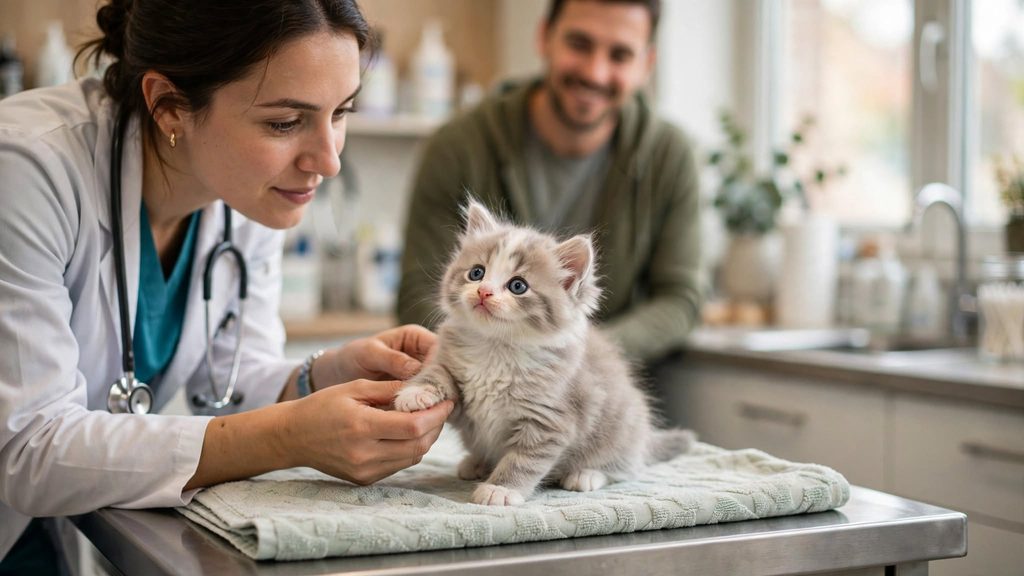
Kittens change too quickly for a once-a-year schedule. Early visits cover more than vaccines. Your veterinary team checks growth, congenital concerns, parasites, nutrition, behavior, litter habits, and the timing of sterilization and microchipping. Vaccination series require multiple appointments because maternal antibodies and developing immunity affect when protection can be established.
The exact schedule depends on the kitten’s age, prior records, health, and local recommendations. If you adopt from a shelter or breeder, bring every medical document rather than assuming “vaccinated” means the series is complete. The first-year plan should end with a clear date for the next routine exam so preventive care does not disappear once kitten appointments stop.
Early visits are also when handling habits can be shaped. Ask the veterinary team to show you how to trim nails, check ears, assess body condition, and make the carrier less frightening. A kitten that learns calm carrier entry and brief examination handling may be easier to care for for years. Preventive medicine is not only what happens on the exam table; it includes building routines that make future care possible.
Keep a written first-year record of vaccines, parasite treatments, weights, and major findings. It prevents confusion when clinics change and gives the adult-care team a clear starting history.
Young and Mature Adults Still Change Between Visits
A one- to six-year-old indoor cat may appear unchanged for years, but weight, teeth, muscle condition, heart sounds, skin, behavior, and lifestyle can shift gradually. A yearly exam helps create a trend. This is especially valuable for weight because a slow gain of a few hundred grams can be easy to miss when you see the cat every day.
Mature adults, roughly seven to ten years in the 2021 life-stage framework, deserve closer attention to subtle changes. Your veterinarian may recommend screening tests based on age and individual risk. The useful mindset is not “my cat is indoors, so nothing can happen.” It is “my cat has a stable baseline, so small departures are easier to catch.”
Dental health is a good example of why annual exams matter even when a cat looks normal. Cats can continue eating despite painful oral disease, and owners rarely see the back teeth clearly at home. An exam can identify gingivitis, resorptive lesions, broken teeth, or tartar that deserves closer assessment. The same principle applies to subtle muscle loss and early mobility change: absence of obvious complaint does not equal absence of disease.
Senior Cats Often Benefit From Checkups Every Six Months
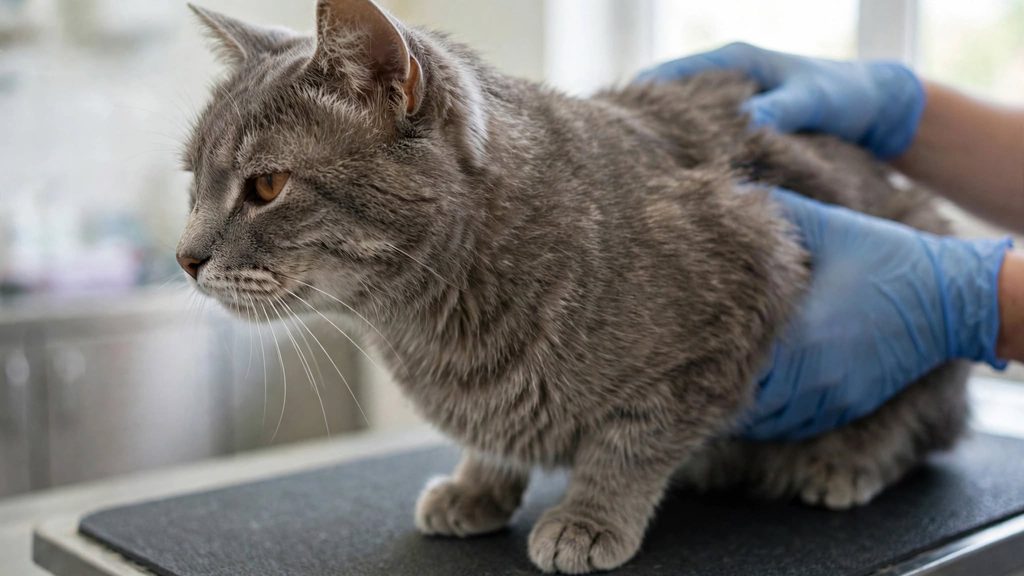
AAHA/AAFP guidance recommends at least every-six-month examinations for senior cats. At this stage, kidney disease, hyperthyroidism, arthritis, dental disease, hypertension, diabetes, and other age-associated problems become more relevant. Six months is a meaningful amount of biological time for an older cat, and subtle changes can develop between annual visits.
More frequent exams do not mean automatically performing every test twice a year. The visit frequency and diagnostic plan should reflect the individual cat. A senior with stable lab results and no symptoms may have a different plan from one losing muscle or taking daily medication. The value of the shorter interval is having more chances to notice change while intervention is still easier.
For seniors, home observations become especially valuable between visits. Weigh the cat monthly if it can be done without stress, and note changes in jumping, stair use, litter-box entry, thirst, appetite, and vocalization. A small weight decline repeated over several months is more informative than a single dramatic number. Bring that trend to the six-month exam rather than waiting until bones are visibly prominent.
Indoor Cats Still Have Preventive Risks
Indoor cats can develop dental disease, obesity, arthritis, kidney disease, thyroid disease, diabetes, skin problems, and cancer. They can also escape, encounter parasites brought indoors, or need vaccines based on local law and exposure risk. Preventive care is therefore broader than infectious-disease protection.
| Life stage | Common starting cadence | Why visits matter |
|---|---|---|
| Kitten | Several visits in first year | Vaccines, growth, parasites, development |
| Young adult | At least yearly | Baseline exam, weight, dental, prevention |
| Mature adult | At least yearly | Age-related screening decisions |
| Senior | At least every 6 months | Earlier detection of age-related change |
Your veterinarian may shorten any interval when risk is higher.
Indoor status can lower exposure to some infectious hazards but may increase other lifestyle risks. Low activity and unrestricted calorie intake contribute to obesity. Limited environmental variety can mask reduced mobility because the cat does not need to travel far. Dental disease and endocrine disorders are unrelated to whether the front door stays closed. Preventive planning should reflect the whole life the cat is living, not one label.
Vaccination decisions are another reason indoor status needs nuance. Core-vaccine recommendations, local legal requirements, and individual exposure do not reduce to ‘indoor equals none.’ Your veterinarian can explain which vaccines are due, which are optional for the cat’s risk, and which intervals apply. Bring prior records so unnecessary repeat vaccination can be avoided.
Routine Visits and Sick Visits Answer Different Questions
A preventive appointment asks, “What has changed since the last baseline, and what should we do next?” A sick visit asks, “What is causing this current problem?” Do not wait for the annual exam when your cat stops eating, strains to urinate, has difficulty breathing, loses weight, vomits repeatedly, becomes suddenly weak, or develops another concerning change.
This boundary keeps this article separate from symptom-based triage. Knowing your cat’s everyday health baseline helps you recognize when a routine schedule is no longer appropriate. Preventive timing is for cats that are well between visits. New illness changes the timetable.
A useful rule is that scheduled preventive care should never become a waiting period. If the next annual visit is four months away and the cat develops a persistent cough, reduced appetite, new lump, or behavior change, call now. The clinic can decide whether the concern needs an urgent appointment, routine sick visit, or monitoring. Owners do not need to perfectly triage every sign before making contact.
What to Track Between Appointments
You do not need to perform home medicine. Track simple trends: body weight when possible, appetite, thirst, urine and stool patterns, mobility, grooming, sleep location, play, and social behavior. Photograph unusual skin lesions or litter-box output if that will help describe a short-lived change. Bring a medication and supplement list to appointments.
- Record the date of the last exam and next recommended visit.
- Keep vaccine and laboratory records in one place.
- Note gradual changes rather than waiting for dramatic symptoms.
- Bring questions about diet, behavior, teeth, and weight—not just vaccines.
Good preventive care is a conversation built on accurate history.
Weight is worth recording because it connects several systems. Gain can increase risk for diabetes and joint disease, while unexplained loss can accompany kidney disease, hyperthyroidism, cancer, dental pain, and many other conditions. Home scales do not replace clinical assessment, but a consistent method can reveal direction. Use the same scale and similar time of day, and focus on trend rather than tiny day-to-day fluctuations.
Photos of the cat standing from above and the side can also help you notice body-shape change over months. They are not a substitute for body-condition scoring, but they can reveal a disappearing waist, more prominent spine, or altered stance. Bring the images if the change is gradual enough that memory is unreliable.
Make Vet Visits Easier Before You Need Them
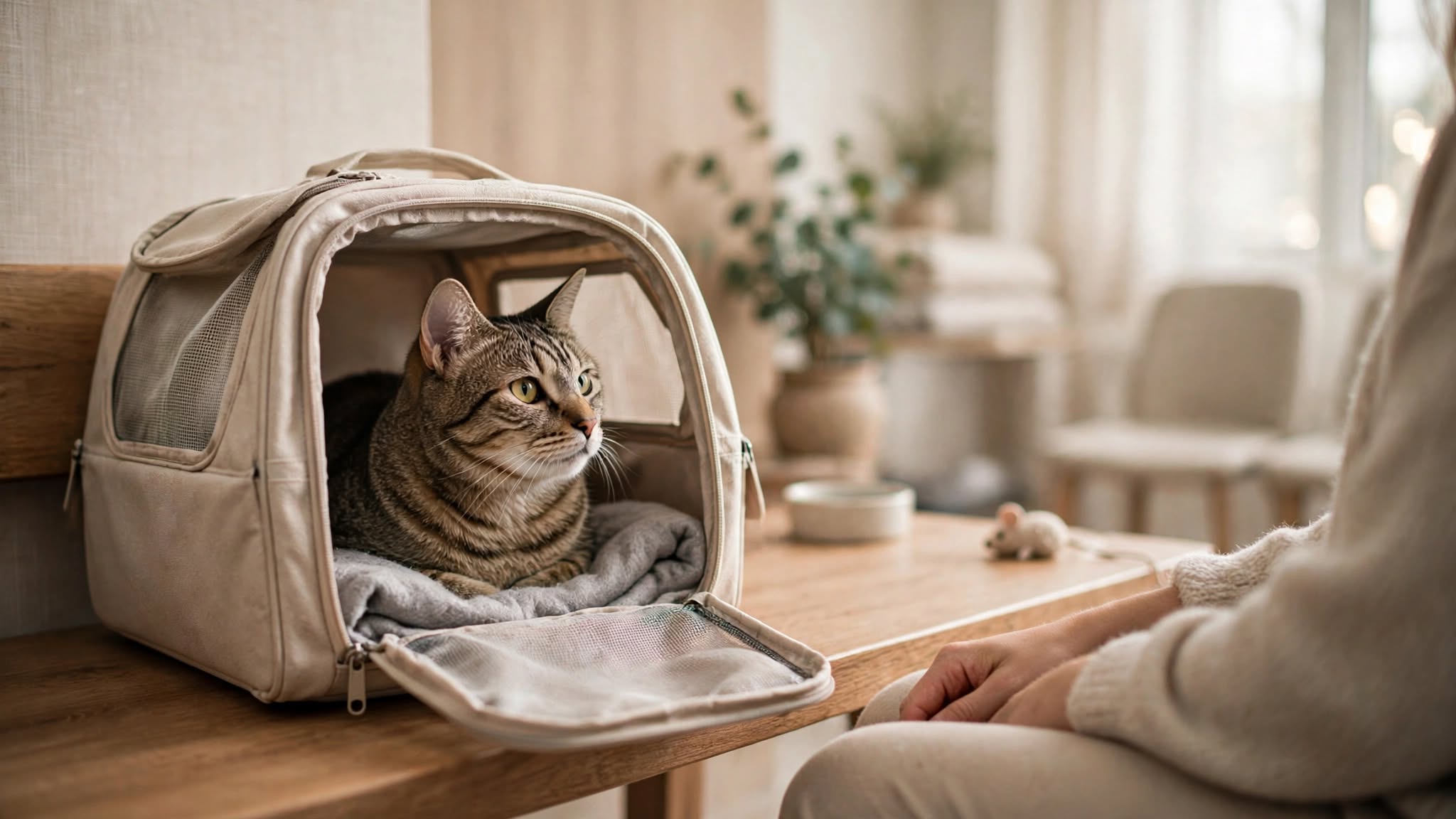
Carrier stress is one reason cats receive less veterinary care. Keep the carrier out as furniture rather than retrieving it only before appointments. Add familiar bedding and occasional treats. Practice brief car rides if your cat tolerates them. Ask the clinic about feline-friendly handling and whether pre-visit medication is appropriate for a cat with severe travel anxiety.
Preparation matters because the easiest appointment to postpone is the one that becomes a two-hour struggle before you leave home. Building carrier comfort during calm months makes both routine and urgent care more accessible later.
For very fearful cats, ask about pre-visit pharmaceuticals rather than skipping examinations. Many clinics use medications prescribed in advance to reduce travel and handling anxiety. The exact drug and dose must come from the veterinarian who knows the cat. Pairing medication with carrier training and a quieter appointment time can make preventive care more humane and more repeatable.
Build a Schedule Around the Cat, Not the Calendar Alone
For many indoor cats, the simple rule is: several kitten visits, at least annual adult exams, and at least twice-yearly senior exams. Then adjust for individual disease, medication, dental needs, risk, and previous findings.
Put the next visit on the calendar before the current one becomes a distant memory. Preventive care works best as a continuing record rather than a series of disconnected emergencies. Your cat’s age provides the framework; their actual health determines the final schedule.
References
- AAHA-AVMA — Feline Preventive Healthcare Guidelines — Recommends at least annual examinations, with more frequent visits based on individual needs.
- AAHA — Feline Life Stage Checklists — Summarizes preventive discussion and examination needs across feline life stages.
- Cat Friendly Homes — Why You Need to Visit the Veterinarian — Current feline guidance supporting annual preventive care and more frequent senior follow-up.
