

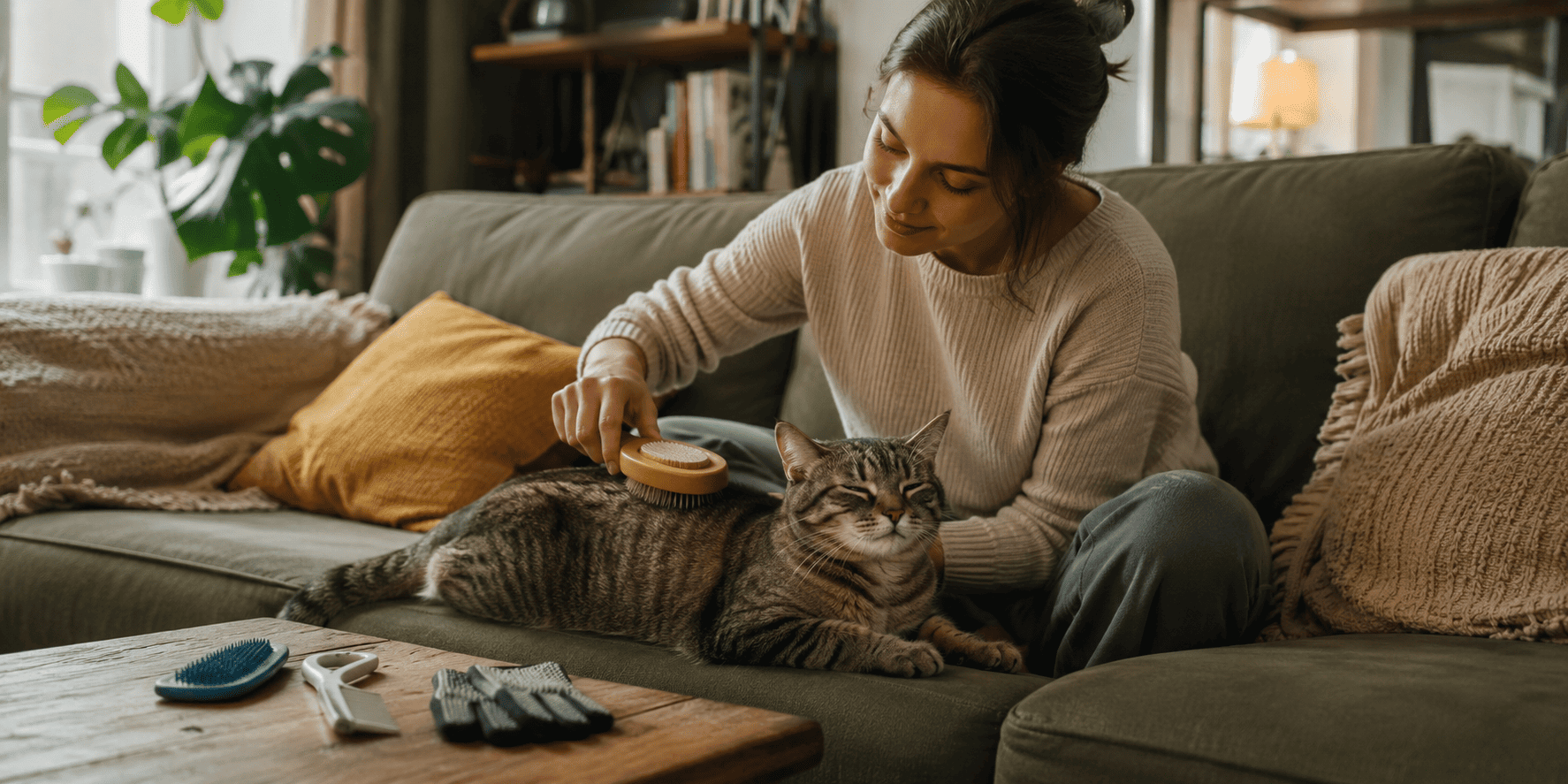
The best cat brushes for shedding depend on the coat in front of you. A short dense coat, fine single coat, plush double coat, and long coat do not release loose hair in the same way. The cat’s tolerance matters just as much as the tool. An aggressive de-shedding device that removes a large pile of fur in one session is not “best” if it irritates the skin or makes the cat avoid grooming. Start by identifying the grooming job: loose surface hair, deeper undercoat, tangles, or simply making short regular sessions pleasant enough to repeat.
Part the hair in several body areas because coat density is not always uniform. The back may feel sleek while the chest, hindquarters, or belly holds more undercoat. Choosing one tool based only on the easiest area can leave tangles or loose hair where the coat is denser.
Observe where loose hair collects in the home as another clue. Fine short hairs on upholstery may respond well to frequent surface grooming, while visible tufts from a plush coat suggest deeper seasonal shedding. The pattern does not diagnose coat type, but it can help you choose what the first tool needs to accomplish.
Start by Feeling the Coat, Not Reading the Brush Package
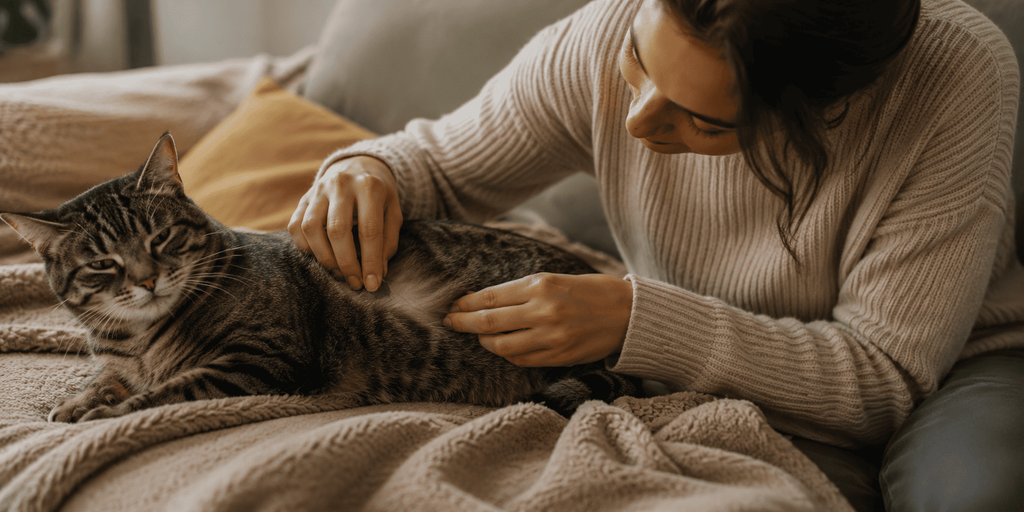
Run your fingers through the coat and notice length, density, and whether you can easily reach the skin. Some short-haired cats have thick plush undercoats, while others have sleek coats with little depth. Long-haired cats may develop tangles in friction areas even when the visible topcoat looks smooth.
Choose the tool for the coat structure. Marketing categories such as “short hair” or “long hair” are useful starting points, but hands-on observation tells you more about what needs to be removed.
Rubber tools also work best on a coat that is not already tangled. They lift surface hair but can pull uncomfortably across knots. If the tool catches, stop and inspect the area rather than applying more pressure. A grooming glove should feel like grooming, not friction.
Use rubber tools with the direction of hair growth first. Circular rubbing can loosen fur quickly but may create friction or tangling in longer coats. If your cat enjoys the tool, keep the motion calm and predictable rather than trying to maximize the amount removed in each pass.
Rubber Grooming Tools Work Well for Loose Surface Hair
Soft rubber or silicone grooming tools can lift loose hair from many short coats while also providing a massage-like sensation some cats tolerate well. They are less useful for working through deep tangles or dense long undercoat.
Use light pressure and short strokes. If the tool drags, pulls, or creates static, adjust technique. Rubber tools are often a good introduction for cats that dislike the sound or feel of metal teeth.
Comb slowly enough to feel resistance before it becomes a pull. Long strokes through the entire coat are less useful when tangles are present. Work from the ends toward the skin in small sections and stop if the cat becomes tense. Comfort is part of effective grooming.
Use the comb as a finishing check rather than as a punishment for tangles. After brushing one small section, run the comb through gently. If it passes from skin level to the ends without catching, you know the area is truly separated. If not, return to smaller sections rather than pulling harder.
Combs Help You Find What a Brush Can Miss
A metal comb is useful for checking whether you can move through the coat from skin level to tip, especially in longer hair. Wider teeth can start the pass, while closer teeth help reveal smaller tangles and loose hair.
Do not pull a tight mat through with force. Hold the fur close to the skin to reduce tugging when working on a small loose tangle, and stop if the area is painful. Dense mats close to the skin may need professional handling because scissors can easily injure a cat.
Undercoat tools deserve restraint because efficient hair removal can make overgrooming by the person feel productive. Follow the tool instructions and avoid repeated passes over the same patch. Removing fur that is not ready to shed can irritate skin or thin the coat unnecessarily.
Slicker brushes vary widely in pin length and stiffness. A model comfortable on a long dense coat may feel harsh on a thin short coat. Test with very light pressure and stop if the cat flinches. The tool should move through hair, not scratch across exposed skin.
Best Cat Brushes for Shedding Should Match the Grooming Goal
Slicker-style brushes can help lift loose hair and separate longer coats, but the pins should not scrape the skin. Undercoat tools can remove deeper loose fur in suitable coats, yet overuse can thin or damage the coat. The goal is maintenance, not producing the largest possible pile.
In the rest of an indoor cat’s grooming routine, brushing works best alongside nail care, coat checks, and gentle handling rather than as an occasional intense de-shedding event.
Keep the brush where grooming naturally happens. If the cat relaxes on one chair each evening, storing the everyday tool nearby makes short sessions easy. Building grooming into an existing calm routine often works better than carrying the cat to a special grooming station.
Pair grooming with a predictable ending. Stop while the cat is still comfortable, offer the normal reward or activity that follows, and put the tool away. Ending before irritation builds makes the next session easier. A routine that preserves trust is more effective than removing every loose hair in one sitting.
Use the Tool That Lets You Groom Often

Cornell recommends regular brushing because it removes loose hair before the cat swallows it or it ends up around the home. Frequency and tolerance matter. Several two-minute sessions can remove more hair over a week than one stressful twenty-minute session.
Choose a tool you can control easily and the cat accepts. A slightly less efficient brush used consistently often outperforms a technically powerful tool that comes out only when shedding becomes overwhelming.
Loose hair can hide small skin changes. Use your fingertips to notice bumps, scabs, greasy areas, or heat while brushing. Photograph a new patch if you need to monitor it. Routine grooming becomes more valuable when it helps you detect changes rather than simply reducing fur on furniture.
Pay attention to the brush after each session too. A sudden increase in broken hairs, skin flakes, or greasy debris can be worth noting. The tool is collecting information as well as fur. If the pattern persists or the cat is itchy, ask your veterinarian what should be examined.
Watch the Skin While You Remove Hair
- Stop if the skin becomes red or irritated.
- Use lighter pressure over bony areas.
- Check for dandruff, sores, parasites, or hair loss.
- Do not repeatedly scrape the same patch to “finish” the shed.
- Notice new sensitivity that was not present in earlier sessions.
Brushing is also a skin check. A sudden change in coat quality or tolerance can be more important than the amount of fur in the brush.
Static and dryness can make long coats harder to manage in some environments. Avoid spraying human hair products onto the cat. If the coat is persistently dry, brittle, or difficult to maintain, ask your veterinarian or a qualified groomer about safe coat care rather than improvising with household products.
Schedule matters because a small tangle is easier to address than a tight mat. Check high-friction areas frequently during shedding seasons. If your cat allows only brief handling, rotate body zones across several sessions instead of insisting on finishing the whole coat at once.
Long-Haired Cats Need Tangle Prevention, Not Just De-Shedding
For long coats, preventing knots can be more important than removing seasonal undercoat. Focus on friction areas such as behind the ears, armpits, chest, belly, and hindquarters where tangles can tighten quickly.
A comb can verify that a brushed area is actually free of knots. If the brush glides over the surface while the comb catches underneath, the grooming session did not reach the problem layer. Work in small sections rather than trying to cover the whole cat at once.
Seasonal shedding can make the amount of loose fur look dramatic without causing bald areas. The key distinction is whether the coat remains evenly covered and the skin looks healthy. Patchy loss, broken hairs, intense licking, redness, or pain moves the concern beyond normal coat turnover.
Take a photo of the coat if you are unsure whether thinning is progressing. Use similar lighting and angle a week or two later. Photos cannot diagnose skin disease, but they can help you notice whether a patch is expanding and give your veterinarian a clearer timeline.
Excessive Shedding Can Be More Than a Grooming Problem
Seasonal shedding and individual variation are normal, but bald patches, intense itching, sores, sudden coat thinning, excessive licking, or a major coat change deserve veterinary attention. Skin disease, parasites, allergies, pain, and other health problems can change the coat.
Cornell also notes that frequent hairballs can be influenced by loose-hair ingestion. Brushing can reduce swallowed hair, but repeated retching, appetite loss, or signs of illness should not be treated as a brush-selection problem.
Start with the least complicated kit that solves the problem. For many short-haired cats, a gentle rubber tool plus a fine comb for checking the coat is enough. For long coats, a comb and carefully chosen brush may be more useful. Add specialized tools only when you can name the job they perform.
Tool quality matters where parts contact the cat. Check for rough seams, bent pins, sharp edges, or loose handles before each session. Replace damaged tools. A simple well-made comb and comfortable brush are safer than a drawer full of specialized devices that are difficult to control.
Clean tools regularly so loose hair, skin oils, and debris do not build up between sessions. Follow the manufacturer’s cleaning guidance for rubber, metal, or cushioned brushes, and let tools dry fully before storage. A clean tool is easier to inspect for damaged pins or rough edges.
If your cat tolerates only one tool, start there. You can add a second comb later if the coat needs deeper checking. Building a usable routine in stages is better than introducing several unfamiliar sensations at once and turning grooming into a struggle.
Choose a Small Tool Kit Instead of One “Magic” Brush
Many cats need only two complementary tools: one comfortable everyday brush and one comb for checking deeper coat. Long or dense coats may benefit from an additional specialized tool used carefully. More tools are not automatically better.
Buy for the coat, the cat’s tolerance, and the job you actually need to do. The best brush is the one that safely removes loose hair, lets you monitor skin, and fits a routine your cat can accept week after week.
References
- Choosing and Caring for Your New Cat — Cornell Feline Health Center — Recommends regular brushing or combing to remove loose fur, monitor skin, and reduce hair swallowed during grooming.
- The Danger of Hairballs — Cornell Feline Health Center — Explains loose-hair ingestion, seasonal shedding, hairball risk, and the role of regular brushing.
- Feline Skin Diseases — Cornell Feline Health Center — Reviews skin and coat changes that may require veterinary examination rather than routine grooming alone.
