

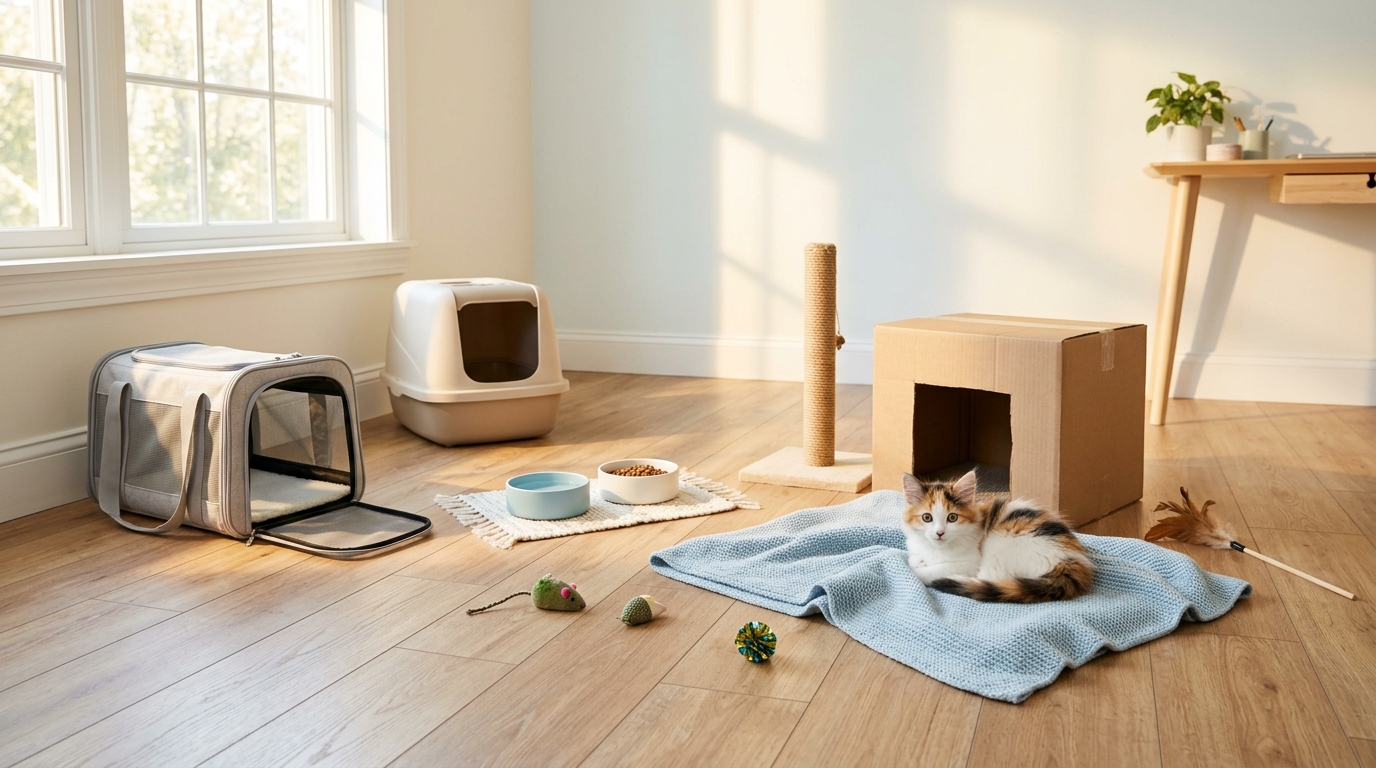
The best starter kits for new cat owners are not the biggest bundles. A useful starter kit covers the first practical needs: safe transport, familiar or appropriate food, water, litter, scratching, hiding, rest, simple play, and basic grooming. It also leaves room to learn what the individual cat prefers before money is spent on large beds, fountains, automatic feeders, or elaborate furniture. Think of the kit as a functional first-week system rather than a shopping haul.
Build the Starter Kit Around Needs, Not Product Categories
Start with what the cat must be able to do on day one: eat, drink, eliminate, hide, rest, scratch, and travel safely. One item can cover more than one function. An open carrier with familiar bedding can become a hide. A stable cat tree can provide scratching, climbing, and resting. A cardboard box can be a perfectly good temporary safe place.
This keeps the kit smaller and more adaptable. The broader question of which cat products are genuinely useful depends on whether they solve a real care or behavior need. A starter kit should therefore favor basic reliable items over specialized upgrades whose value you cannot judge before meeting the cat.
Buy only a small supply of consumables at first. One bag of litter and a modest amount of the current food are easier to change than bulk purchases. If the cat rejects a texture or your veterinarian recommends a different diet, you will not be left with months of unused product. Bulk buying makes sense after the routine is stable.
The Core Day-One Kit Should Fit in a Short List
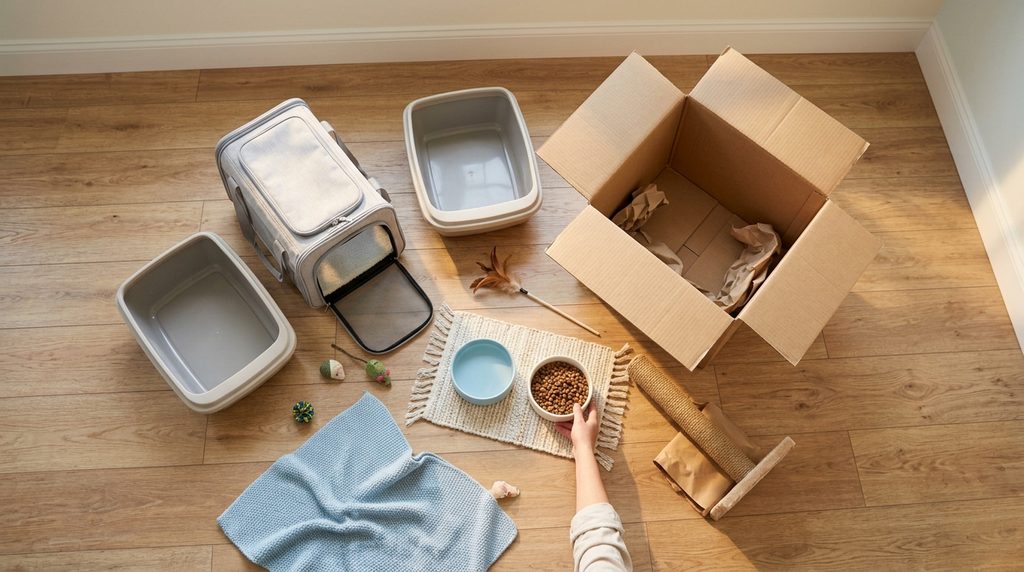
- A secure carrier sized for the cat
- Complete and balanced food appropriate for life stage
- Food and water bowls that are easy to clean
- A large accessible litter box and suitable litter
- A scoop and simple litter-cleaning supplies
- A stable scratching surface
- A hide, box, or covered resting option
- A washable blanket or simple bed
- A few safe toys for solo and interactive play
- Basic grooming tools appropriate for the coat
Ask the shelter, breeder, foster caregiver, or previous owner which food and litter the cat already uses. Keeping familiar basics during the first days can reduce the number of simultaneous changes. You can transition later if a different product is more appropriate.
Practice the carrier setup before arrival. Check the latches, door, bedding, and the route from the home to the car. Make sure the carrier fits where it will be stored open. A product can be technically secure but awkward to move through a narrow doorway. Small logistical checks matter most on the day you actually need to leave quickly.
Choose the Carrier Before the Decorative Bed
A carrier is part of routine veterinary care and emergency readiness, so it deserves priority. Choose one that is secure, easy to clean, and large enough for the cat to turn and lie comfortably. A hard-sided carrier with a removable top can be practical for many cats because veterinary handling can sometimes occur with part of the carrier removed.
Leave the carrier open in the home instead of storing it only for stressful trips. Add familiar bedding and let it become ordinary furniture. This gives the purchase daily value and makes future travel less abrupt. A premium bed can wait until you learn whether the cat prefers open, covered, high, low, firm, or soft sleeping surfaces.
Add a litter mat only if it solves tracking without making entry awkward. Some thick or textured mats bother sensitive paws. Test the simplest setup first. A hand broom or small vacuum can manage tracking while you learn where the cat prefers the box. Do not surround a new litter area with accessories that make the approach feel narrow.
Do Not Let a Prepacked Litter Kit Choose the Box for You
Commercial starter bundles may include a small litter tray because it ships easily. That does not mean the tray is comfortable. Choose box size and entry based on the cat. Many cats prefer a large box with room to turn and dig. Seniors or cats with mobility problems may need a lower entrance.
Use unscented litter unless you know the cat has a different established preference. Keep a scoop nearby and make daily cleaning easy. A liner, deodorizer, mat, or decorative enclosure is optional. The core need is a clean, accessible toilet in a suitable location. Do not let accessories make maintenance slower.
Buy One Scratcher That Matches the Cat’s Likely Use
Scratching is a normal need, but you do not need a room full of scratchers before arrival. Start with a sturdy vertical post or a large horizontal cardboard option. If you know the cat’s existing preference, match it. Otherwise, choose a stable product and watch how the cat uses it.
Placement matters more than branding. Put the scratcher near a sleeping area, room entrance, or furniture the cat begins targeting. If it is ignored, move it before buying another. A cheap scratcher in the right place can be more useful than an expensive one hidden in a corner the cat never visits.
| Need | Starter choice | Wait before upgrading |
|---|---|---|
| Rest | Washable blanket or box | Luxury bed until preference is known |
| Water | Easy-clean bowl | Fountain until drinking preference is known |
| Feeding | Simple bowl and measured portions | Automatic feeder unless timing is a problem |
| Play | Wand plus a few simple toys | Large electronic toy collection |
| Climbing | Stable furniture or modest cat tree | Permanent wall system before observing routes |
Have at least one backup bowl. A spare matters during washing, breakage, or travel. It also gives you a second water location without buying a fountain. Choose materials that can be cleaned easily and do not retain strong odor. The best starter equipment supports daily maintenance without creating a complicated routine.
Keep Food and Water Equipment Simple Enough to Wash
Wide simple bowls are easy to clean and replace. Avoid choosing a complicated feeder or fountain as the only option before you know the cat. Some cats enjoy moving water; others prefer still water. A fountain also adds cleaning, filters, pump maintenance, and noise. It is an upgrade, not a day-one requirement for every cat.
For food, buy a small amount of the current diet first when possible. Do not stock months of a new flavor before the cat has eaten it reliably. If a diet change is needed, transition according to veterinary advice and the cat’s tolerance. Reliable eating is more important than building a visually coordinated feeding station.
Include one toy that supports interaction with you and one that the cat can use alone. This gives the first week both social play and independent exploration. Keep sessions short at first. A new cat may need several days before play appears. Lack of immediate interest does not mean the toy was a bad purchase.
A Small Toy Kit Works Better Than Twenty Toys at Once
Use one interactive wand toy and a few safe solo toys with different movement or texture. Rotate them rather than leaving everything available constantly. The cat may show a clear preference for chasing, batting, kicking, carrying, or food puzzles. That information should guide future purchases.
Store string and wand toys safely when not supervised. Remove damaged toys. Avoid tiny pieces that can be swallowed. A cardboard box, paper bag without handles, or a crumpled safe toy may earn more use than an expensive electronic gadget. Starter kits should leave room for discovery.
Ask who will maintain each item before buying it. Fountains need cleaning, cat trees need vacuuming and stability checks, and litter enclosures add surfaces to wipe. If the household cannot maintain a product reliably, a simpler item may be the better starter choice even when the upgrade looks convenient.
Grooming Tools Should Match Coat and Tolerance
A short-haired cat may need only a simple comb or rubber grooming tool. Long-haired cats need tools that can reach through the coat and help prevent tangles. Add nail clippers if you are comfortable using them, but do not assume the first week is the right time for a full grooming session with an unfamiliar cat.
Handle slowly and let the cat settle. A basic brush can wait on the shelf while trust builds. If the cat arrives with mats, skin disease, ear problems, or overgrown nails, professional veterinary or grooming help may be safer than trying to fix everything at home immediately.
Set a two-week no-upgrade rule for nonessential purchases if the cat is settling normally. During that time, write down actual inconveniences and preferences. Maybe the cat never uses the bed but loves the windowsill. Perhaps litter tracking is the real issue. Waiting turns shopping into problem-solving instead of reacting to every product recommendation you see online.
Budget for veterinary care separately from the product kit. A larger toy collection cannot replace an initial health examination, parasite plan, vaccines, identification, or treatment when the cat is unwell. Keeping some money unspent can be more useful than buying every accessory before arrival. The starter budget should support care as well as equipment.
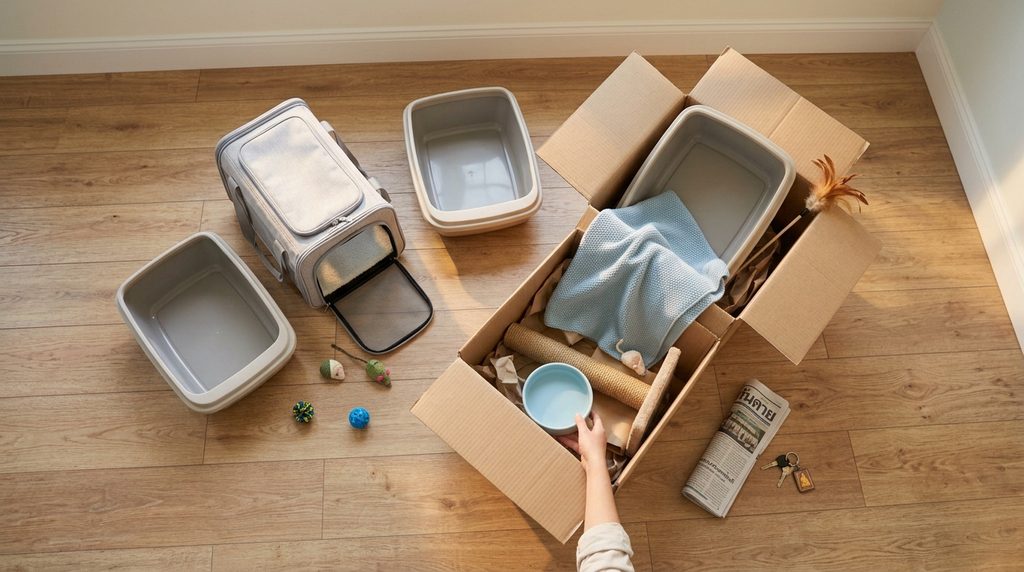
Keep packaging until the cat has used major items successfully. The carrier may be too small, the scratcher may wobble, or the cat may simply avoid the bed. Any of those items may need to be exchanged. This is another reason not to remove labels and assemble every optional product before you understand the cat’s size and preferences.
Optional Upgrades Should Solve Problems You Can Name
After a few weeks, you will know more. Maybe the cat wakes you early for food, making a timed feeder useful. Perhaps the cat drinks from taps, making a fountain worth testing. A shy cat may benefit from more covered hides. An athletic cat may use additional vertical space. These purchases now answer observed needs.
- Buy a fountain because the cat prefers moving water, not because fountains are fashionable.
- Buy a timed feeder because meal timing is difficult, not because every cat needs automation.
- Add a larger cat tree because height is being used, not because the room looks empty.
- Choose specialty grooming tools when coat type creates a real maintenance problem.
- Add a microchip feeder when food access between cats needs protection.
A starter kit should reduce uncertainty, not lock you into a full product ecosystem.
The Best Starter Kit Leaves Room to Learn the Cat
A new owner needs dependable basics and a home prepared for observation. Start with the carrier, food, water, litter, scratching, resting, hiding, play, and simple grooming. Keep receipts for optional items. Watch what the cat actually uses during the first weeks.
That approach is both more economical and more cat-friendly. Instead of assuming every product is essential, you build around the cat’s real preferences and the layout of the home. The result is a smaller starter kit that is more likely to become a useful long-term setup.
References
- Must-Have Supplies and Essentials for Your Cat — Cat Friendly Homes — Lists core new-cat supplies including food, bowls, litter resources, carrier, scratching, resting, toys, and other practical basics.
- Client Education: The Three Ps of Cat Adoption — FelineVMA — Advises preparing resources before arrival and highlights food, water, litter, beds, perches, hiding areas, scratching, and toys.
- Choosing and Caring for Your New Cat — Cornell Feline Health Center — Provides general new-cat care context, health observations, grooming, nutrition, and the importance of veterinary care.
