

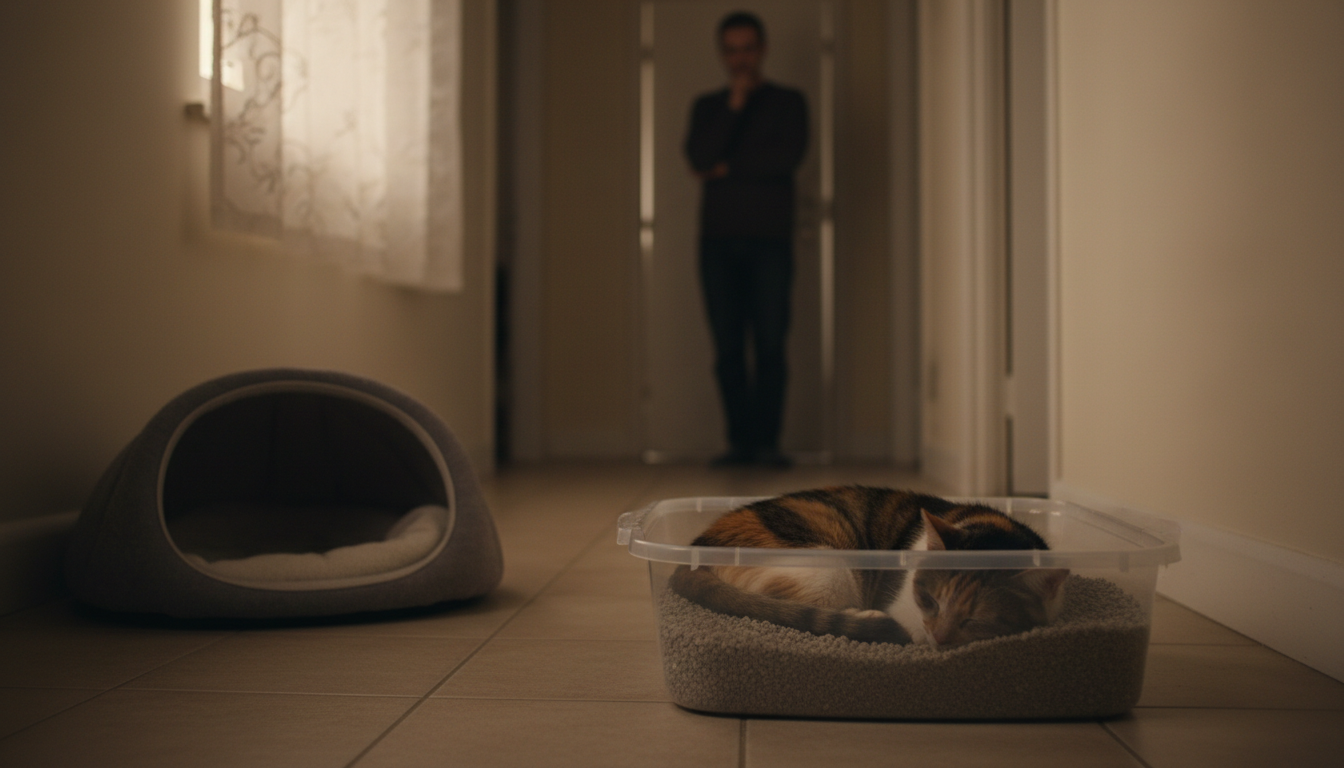
If your cat sleeps in the litter box, treat the behavior as a change worth interpreting rather than a quirky new nap spot. Some cats may choose the box because it feels enclosed, familiar, and strongly scented with their own odor, especially during stress. However, a cat that suddenly rests or sleeps there may also be staying close to the toilet because urination or defecation is uncomfortable or frequent. The key distinction is whether the cat is genuinely settling down to sleep or repeatedly entering, posturing, straining, and remaining near the box because something is wrong.
First Confirm That Your Cat Is Actually Sleeping
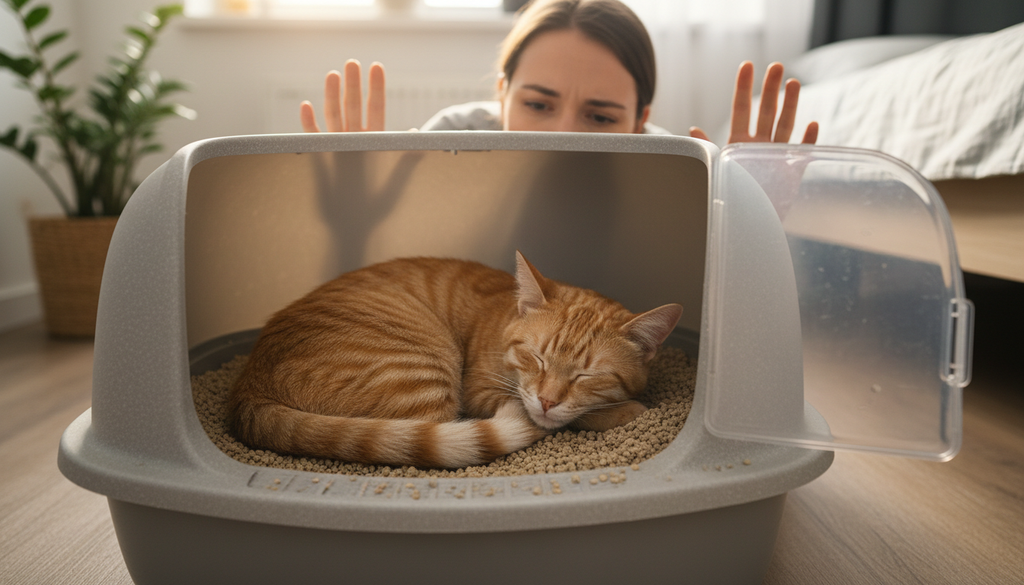
Watch what happens for several minutes. A sleeping cat usually settles into a resting posture, closes or softens the eyes, and remains relatively still. A cat with urinary or digestive discomfort may lie down between attempts but repeatedly stand, squat, dig, lick the genital area, or move in and out of the box. Those patterns should not be described simply as “sleeping.” They are more useful as toileting observations.
Check the litter after the cat leaves. Is there a normal urine clump or stool? Are there many small clumps, no output, diarrhea, or hard dry stool? The answer changes the priority. A cat that naps in a clean box during a stressful move is a different situation from a male cat making repeated trips with little or no urine. When you cannot tell whether urine is being produced, contact a veterinarian promptly.
Check the rest of the room before changing anything. Is there another covered place to rest? Can the cat reach it without passing a dog? Is that bed beside a television or doorway? Cats choose locations, not product labels. A quiet litter box can beat a soft bed in a busy spot. Move one safe hide to a calmer area. Then watch which place the cat chooses.
Cat Sleeping in the Litter Box Can Be a Safe-Place Choice
Cats often choose snug, protected spaces for sleep. A litter box can accidentally meet that need because it has walls, carries familiar scent, and may sit in a quiet corner. This is more likely when the home does not offer enough safe resting options or when the cat is coping with a move, visitors, another pet, construction, or a new environment. In shelters or transition spaces, the litter box may be one of the few objects that smells strongly like the cat.
Do not solve this by simply blocking access to the litter box. The cat still needs unrestricted toileting. Instead, provide a better safe place nearby: a cardboard box on its side, an open carrier with bedding, a covered bed, or a protected shelf. Place it where the cat can rest without being cornered. Familiar fabric can make the alternative more appealing. The cat may begin choosing the new hide while toileting stays normal. In that case, stress and safe-place seeking become more plausible explanations.
Count normal clumps for the next several hours if the cat otherwise looks stable. Do not wait all day for a suspected blockage. You are looking for clear evidence of normal output. One normal clump is useful. Repeated dry squats are not. Keep the litter level normal. Avoid adding extra litter just to make output easier to see. Sudden setup changes can confuse the observation.
Urinary Signs Change This From a Resting Question to a Medical One
Urinary discomfort can keep a cat near the litter box because the urge to urinate returns quickly. Watch for repeated entries, prolonged squatting, crying, licking, blood, very small urine clumps, or attempts that produce little to no urine. A cat may appear to “camp” in the box when it is actually trying to manage repeated urgency. Male cats are at particular risk of dangerous urethral obstruction, but any cat with abnormal urination needs veterinary attention.
Do not wait for dramatic illness if the cat is repeatedly straining. Inability to pass urine can be an emergency. Vomiting, weakness, collapse, severe distress, or a painful abdomen makes the situation more urgent. The practical rule is simple: if you are unsure whether a cat lying in the box is resting or failing to urinate, focus on output first. A normal nap can wait for interpretation; absent urine cannot.
- Repeated trips with little or no urine
- Straining or crying in the box
- Blood in urine
- Frequent genital licking
- Vomiting, marked weakness, or severe distress
- A male cat repeatedly trying to urinate without producing a normal clump
Look at the rear of the cat after a trip. Check for stool stuck in long fur. Notice repeated licking. Watch whether the cat sits hunched afterward. These clues are simple. They can help separate a quiet nap from discomfort. Take a photo of unusual stool when useful. Do not save a sample unless the clinic asks for one. Call first if the cat seems unwell.
Constipation or Diarrhea Can Keep a Cat Close to the Box Too
Digestive problems can create the same “staying near the toilet” pattern. Constipation may cause repeated attempts, hard small stool, discomfort, reduced appetite, or vomiting. Diarrhea can create urgency and frequent trips. A cat may rest in or beside the box between attempts because it does not feel confident leaving the area. Again, the litter output is more informative than the resting posture alone.
Record stool consistency and frequency rather than repeatedly changing litter or food. A sudden food switch can create more digestive upset and muddy the picture. If the cat strains, produces very hard stool, has repeated diarrhea, vomits, or seems painful, contact your veterinarian. If you cannot tell whether the cat is trying to urinate or defecate, treat that uncertainty seriously because urinary obstruction can look like constipation to an observer.
Offer a floor-level bed near the cat’s usual resting area. Make the surface stable. Keep the entrance wide. Add familiar bedding. Then compare use over the next day. A sore cat may accept an easier bed quickly. That does not prove pain is absent. It only shows that access mattered. New stiffness, hiding, or touch sensitivity still deserves a health review.
Pain and Reduced Mobility Can Make the Box Feel Like the Easiest Place to Stay
A cat with pain may change both toileting and sleeping locations. Arthritis, injury, abdominal discomfort, or recovery from a procedure can make movement harder. If the litter box is one of the few low, enclosed places on the floor, a sore cat may settle there rather than jump to a usual bed. The same cat may also struggle with a high box entrance or a long walk to the toilet.
Look for broader mobility clues. Has the cat stopped jumping, hesitated at stairs, changed grooming, or started sleeping in lower places? A low-entry box and easy resting options can reduce effort, but environmental changes should not replace veterinary assessment when pain is suspected. If sleeping in the litter box began after surgery or another medical event, contact the treating clinic for guidance instead of assuming the cat is merely seeking comfort.
Make the Litter Area Good for Toileting, Not the Best Bed in the Home
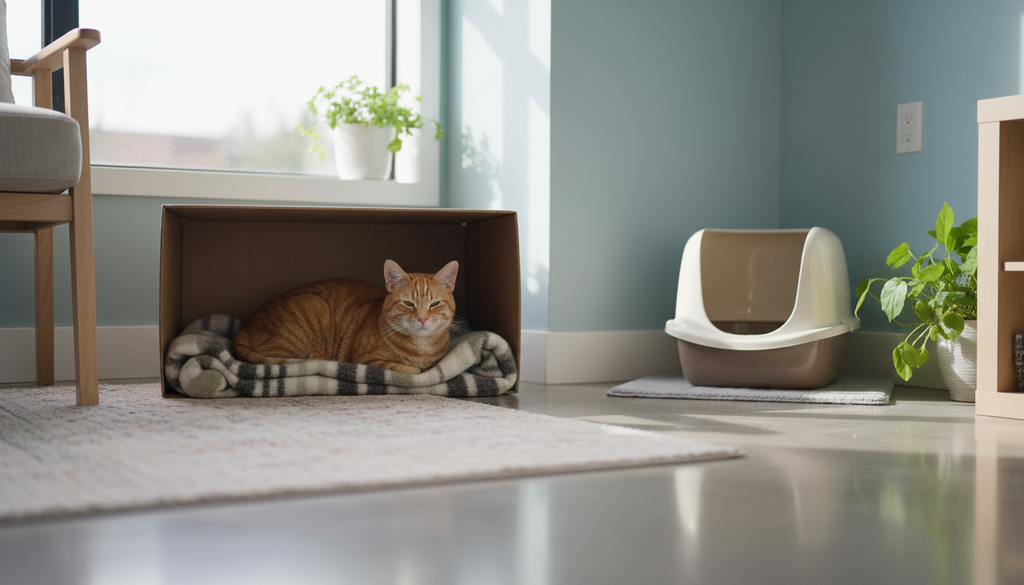
The litter box should be easy to access, appropriately sized, clean, and located somewhere quiet. Those features support toileting, but the rest of the home should offer equally safe or better places for sleep. A box buried in a closet may feel secure because it is the only low-traffic retreat. Improving the size, location, access, litter, and surrounding escape routes of the toilet area helps separate litter problems from a simple lack of comfortable resting choices.
Add sleep options that match what the cat appears to like. If the litter box is covered, try a covered bed or open carrier. In a dark corner, place a hide in another quiet area. When another pet controls the sofa or bed, distribute safe resting resources around the home. Do not move the only litter box simply to discourage sleeping unless the replacement location is equally accessible and acceptable for toileting.
Keep one observation log for two days if there are no urgent signs. Write the time of each litter-box visit. Mark sleep, urine, stool, and meals separately. Short notes are enough. A timeline can reveal a pattern. Maybe the cat sleeps there only after visitors arrive. Maybe every episode follows repeated urination. That difference matters more than the total hours spent in the box.
Cleanliness Matters, but Do Not Punish the Cat for Choosing the Box
A cat sleeping in used litter can soil the coat and paws, especially with loose stool or urine. Scoop promptly and replace heavily soiled litter as needed. If the cat is long-haired, check the coat around the rear and feet for clumps. Gentle cleaning may be necessary, but avoid turning the box into a place where the cat is grabbed or scolded. That can create a negative litter-box association and introduce a second problem.
Do not spray deterrents, make loud noises, or physically eject the cat every time it settles. Provide a more attractive safe resting place and investigate why the box became appealing. The behavior may stop after the environment becomes calmer. Keep the new sleeping options available. Continued litter-box sleeping despite normal toileting deserves discussion with your veterinarian. This is especially true when the behavior is new in an adult or senior cat.
Consider temperature too. Some litter areas are cooler than beds near windows. Others are warmer because they are enclosed. Move a safe resting option to a similar temperature zone. Keep it dry and quiet. If the cat chooses the new spot, comfort may have contributed. If litter-box sleeping continues with normal options available, keep looking at stress, pain, and elimination.
Use the Timing of the Behavior to Narrow the Cause
When the behavior began can be revealing. Sleeping in the box on the first night after adoption may point toward insecurity. Starting after a noisy renovation may reflect a loss of safe territory. Beginning alongside frequent urination, diarrhea, reduced appetite, or a change in mobility raises the medical priority. A cat that has always occasionally rested in an empty, freshly cleaned box may have a different pattern from a cat that suddenly spends hours there.
| Pattern | More useful clue | Next step |
|---|---|---|
| Settles calmly, normal urine and stool | Safe-place preference or stress | Add protected resting options and monitor |
| Repeatedly gets up to squat | Urinary or digestive discomfort | Check output and contact a veterinarian |
| New behavior after move | Environmental insecurity | Reduce pressure and add familiar hides |
| New behavior with stiffness | Pain or mobility change | Make access easier and arrange assessment |
| No urine or tiny repeated amounts | Possible urinary emergency | Seek prompt veterinary care |
Why Does My Cat Sleep in the Litter Box? Let Output Decide the Priority
A cat sleeping in the litter box may be seeking a protected place, but a sudden change should never be interpreted from the sleeping position alone. Confirm whether the cat is actually resting, then check urine, stool, appetite, movement, and the timing of the behavior. Normal output plus recent stress points toward a different path than repeated straining or frequent small attempts.
Give the cat better safe places to sleep while keeping the litter box clean and fully accessible. If the behavior appears with urinary difficulty, constipation, diarrhea, pain, vomiting, weakness, or a major appetite change, contact your veterinarian. The box may look like a bed, but the most useful clue is still what the cat is doing there and what comes out afterward.
References
- Cat Sleeping Positions and What They Mean — PetMD — Veterinarian-reviewed discussion noting that sudden litter-box sleeping can reflect medical problems or, in some cases, stress and lack of safe hiding places.
- Feline Behavior Problems: House Soiling — Cornell Feline Health Center — Explains how urinary, digestive, mobility, environmental, and social problems can change litter-box behavior.
- What Your Cat Needs to Feel Secure — Cat Friendly Homes — Covers safe resting places, separated resources, predictable environments, and litter-box access that support feline security.
