

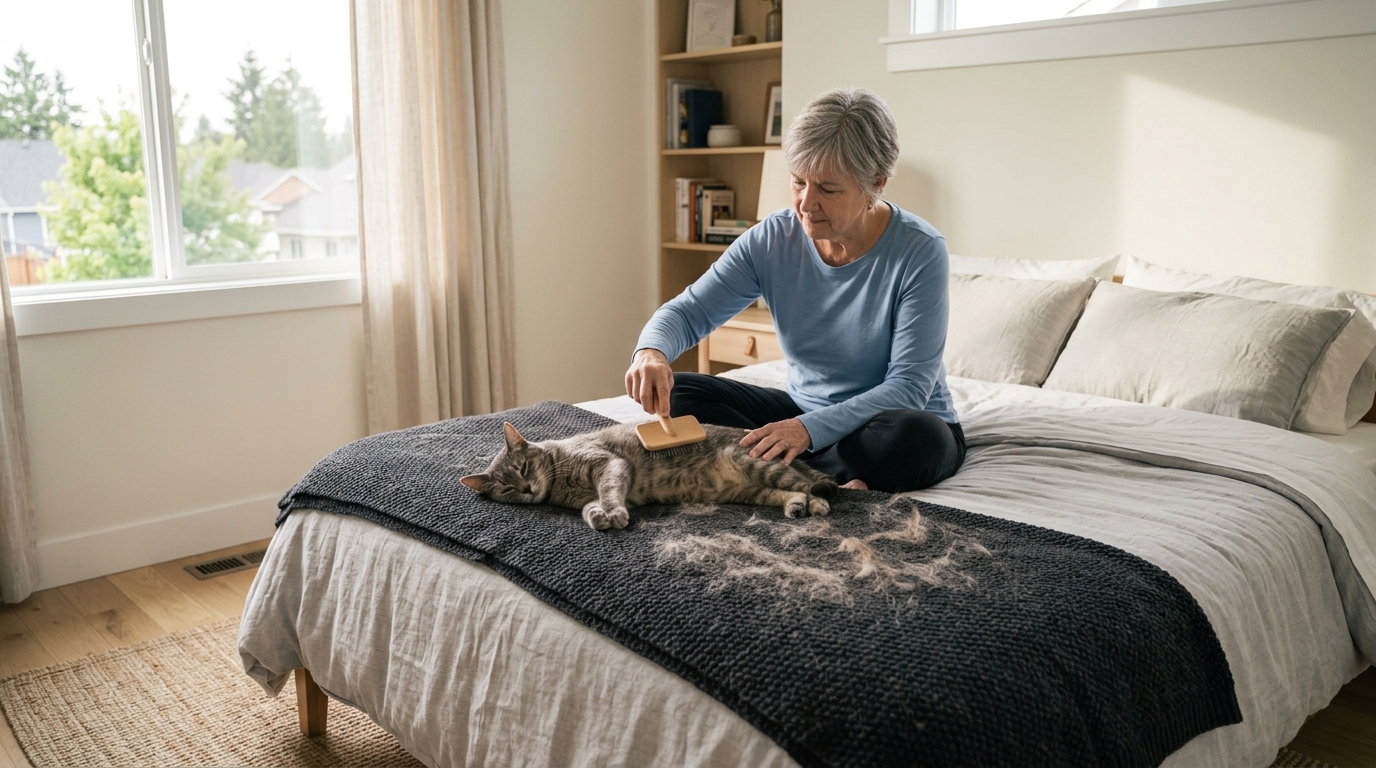
If you are wondering, why is my cat shedding so much, first separate loose hair from true hair loss. Indoor cats can shed at low levels throughout the year, and some cats have heavier seasonal shedding. A dense undercoat can make a normal coat change look dramatic on furniture and clothing. The picture changes when shedding comes with bald patches, broken hairs, itching, skin redness, dandruff, a greasy coat, sores, weight loss, or a sudden change in grooming. Brushing can control loose fur, but it cannot fix a skin disease or medical problem that is causing abnormal coat loss.
Decide Whether You Are Seeing Shedding or Hair Loss
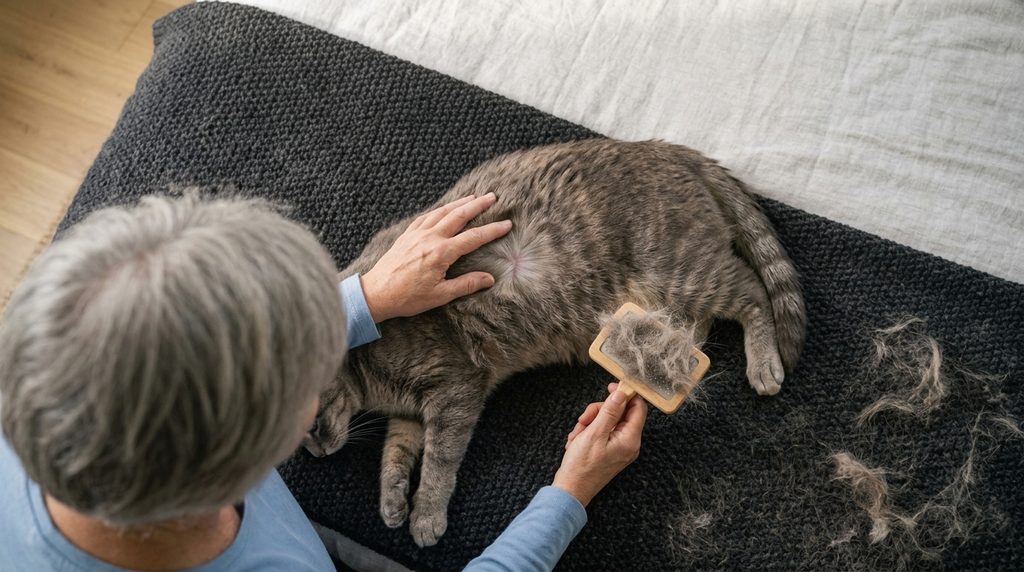
Normal shedding releases old hair while the coat remains evenly covered. You may find more fur on bedding, brushes, and clothing, but the skin should not become exposed in patches. Hair loss, or alopecia, is different. It may appear as thin areas, bald spots, broken hairs, or symmetrical regions where the cat has licked hair away. The skin may look normal, inflamed, scaly, crusty, or irritated depending on the cause.
Run your hands gently through the coat and look at the pattern rather than counting individual hairs. If loose fur is coming from the whole body while the coat still looks full and healthy, shedding is more likely. If one area is thinning, the cat is chewing or licking intensely, or hair is breaking close to the skin, think beyond routine grooming. Regular brushing, coat checks, nail care, and other indoor-cat grooming routines are useful partly because they make new skin and coat changes easier to notice early.
Make a quick coat map with your hands. Check the neck, back, belly, tail base, and hind legs. Normal loose hair should not leave sharply defined bald zones. Skin should not look raw. The cat should not flinch at one spot. A repeated difference in one region is more informative than the total hair in the brush.
Indoor Cats Can Shed Throughout the Year
Outdoor light and temperature patterns contribute to seasonal coat changes, but indoor cats live under artificial lighting and climate control. VCA notes that cats sharing our homes may shed undercoat and guard hairs at low levels all year. Some cats still have more obvious shedding periods, while others seem to leave hair behind every month. Coat type makes a major difference. A dense double coat can release far more visible fur than a short, sleek coat even when both cats are healthy.
Look for a stable personal pattern. If your cat has always shed heavily during certain months and the skin remains healthy, that history is reassuring. A sudden change from the cat’s usual pattern is more useful than comparing your home with someone else’s cat. Moving to a new climate, spending more time near sunny windows, or changing indoor temperature can also alter what you notice. The practical question is whether the coat still looks healthy and whether the cat feels and behaves normally.
Brush for Coat Type, Not for the Amount of Hair on the Sofa
More shedding does not automatically mean you should brush harder or use a more aggressive de-shedding tool. The right grooming method depends on coat length, density, tangles, and what the cat comfortably accepts. Short-haired cats may do well with a soft brush, grooming mitt, or suitable comb used regularly. Long-haired or dense-coated cats often need more frequent combing to prevent loose undercoat from forming tangles or mats. Gentle technique matters more than removing the maximum amount of fur in one session.
If a brush catches repeatedly, stop and check for a mat rather than pulling through it. Skin can be dragged into tight mats, making forceful brushing painful and risking injury. Keep sessions short for cats that become overstimulated. A few calm minutes repeated regularly are more useful than a long struggle once a month. Brushing also gives you a chance to feel for lumps, fleas, scabs, tender areas, or changes in body condition. That monitoring value is just as important as reducing fur around the home.
- Use gentle strokes and stop if the skin pulls.
- Choose tools that suit the coat instead of the most aggressive de-shedding option.
- Check behind ears, armpits, groin, and hind legs for tangles.
- Keep string-like loose hair away from the cat after grooming.
- Clean brushes so you can tell whether shedding is changing over time.
Excessive Licking Can Look Like Excessive Shedding
Cats spend a large part of the day grooming themselves. When licking becomes excessive, they can remove hair faster than it regrows. Cornell notes that owners may not notice overgrooming until hair loss or skin lesions are obvious. A cat may lick because an area is itchy, but pain can also focus grooming on one body region. Stress can contribute in some cases, yet it should not be assumed until medical causes of itch or pain have been considered.
Watch what the cat does before the hair appears on the floor. Repeated biting, chewing, or licking of the abdomen, inner legs, tail base, or another specific area suggests self-removal rather than simple shedding. Fleas and flea allergy, other parasites, allergic skin disease, infection, and pain are among the problems veterinarians may evaluate. A cat that is losing hair because it is licking should not be managed with brushing alone. Brushing removes loose coat; it does not address why the cat is creating the hair loss.
Parasite prevention history matters. Indoor cats can still encounter fleas. One household pet may bring them inside. Flea allergy can cause intense irritation in a sensitive cat. Do not use dog flea products on a cat unless a veterinarian specifically confirms safety. Some canine products are dangerous to cats.
Skin Changes Move the Problem Out of the Normal-Shedding Category
Look at the skin wherever the coat seems thinner. Redness, bumps, crusts, sores, scaling, dandruff, greasy areas, unpleasant odor, or visible parasites are reasons to investigate. Cornell lists allergies, fleas, mites, infections, and other conditions among causes of feline skin disease. Ringworm can cause broken hair, scaling, crusting, and areas of hair loss, and it can spread to people. Because several skin problems can look similar, home appearance alone is not enough to identify the cause.
Do not repeatedly apply shampoos, oils, essential oils, flea products meant for another species, or human skin treatments without veterinary guidance. Cats groom substances from their coat, and some products that are safe for people or dogs can be unsafe for cats. If the coat problem returns quickly after grooming or bathing, that is another clue that the issue is not simply loose hair. A veterinary examination can assess the pattern and may include testing for parasites, infection, fungal disease, or other causes.
Nutrition and General Health Affect Coat Quality
A complete and balanced diet provides the protein, fats, vitamins, and minerals needed for normal skin and hair. VCA notes that inadequate nutrition can contribute to a dull, dry coat and excessive shedding. This does not mean a healthy cat with loose fur needs supplements. Adding unneeded supplements can unbalance the diet or create other problems. If the cat is eating an appropriate complete diet, focus on the actual skin and coat pattern before buying “coat health” products.
Systemic illness can also change coat quality because a cat that feels unwell may groom less or because disease affects metabolism. Hyperthyroidism, digestive disease, parasites, cancer, arthritis, and obesity are among conditions that can alter the coat or grooming ability. Older or overweight cats may develop dandruff or mats over areas they can no longer reach comfortably. A greasy or unkempt coat with weight loss, thirst changes, appetite changes, or reduced mobility deserves a broader health assessment rather than a stronger brush.
Hairballs do not measure shedding perfectly. A cat may swallow more hair because grooming increased. Another may shed heavily but cough up few hairballs. Repeated vomiting should not be dismissed as normal grooming. Note frequency. Report poor appetite, constipation, weight loss, or repeated retching to your veterinarian.
Stress Can Increase Shedding, but Do Not Stop the Investigation There
Many owners notice a burst of loose fur during a veterinary visit, car ride, or frightening event. Stress can influence shedding and grooming. Chronic household stress may also change coat condition indirectly if the cat overgrooms, hides, eats differently, or loses access to preferred resting and resource areas. However, “stress” is too broad to be a final explanation for persistent abnormal shedding.
If the change began after a move, new pet, renovation, or household disruption, improve predictability and safe access while also checking the skin and general health. Provide hiding places, separate key resources in multi-cat homes, and maintain familiar routines. If the cat is biting the skin, developing bald areas, losing weight, or showing another physical change, veterinary assessment remains important. Behavioral and medical factors can coexist.
Reduce Fur Around the Home Without Over-Grooming the Cat
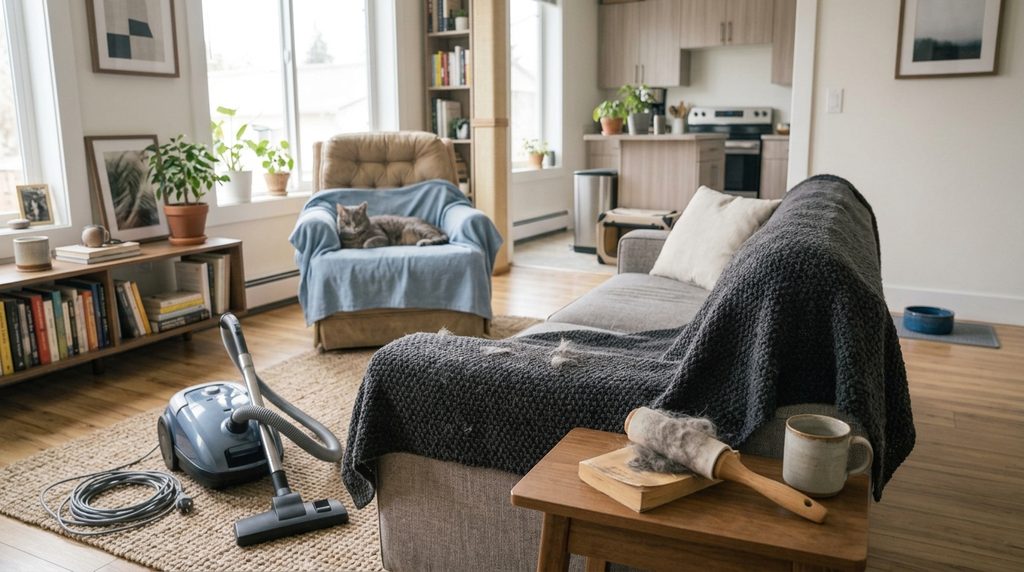
Managing normal shedding is partly a housekeeping problem, and solving it that way can reduce pressure on the cat. Washable throws on favorite resting areas, regular vacuuming, lint rollers, and easy-to-clean bedding can control loose hair without turning grooming into a daily battle. Brush when the cat is relaxed and stop before irritation builds. For a cat that dislikes handling, use very short sessions paired with something positive rather than restraining the cat to remove every loose hair.
Hairballs are another reason people increase brushing. Removing loose hair can reduce the amount swallowed during self-grooming, but frequent vomiting of hairballs should not automatically be treated as normal. Repeated vomiting, constipation, poor appetite, or weight loss needs veterinary discussion. The aim of grooming is a healthy coat and comfortable cat, not a perfectly hair-free home.
Track grooming tolerance as well. A cat that once enjoyed brushing may begin avoiding it. The change can reflect skin pain, joint pain, or overstimulation. Shorten the session first. Do not force the cat through discomfort. Persistent sensitivity deserves examination, especially when one body area is consistently difficult.
Compare brushes from week to week. Take one coat photo. Use the same lighting. Check the same body areas. Note new dandruff. Note new grease. Watch for scratching at night. Small repeated observations are more useful than trying to save or measure every loose hair.
When Cat Shedding So Much Needs a Veterinary Check
Arrange veterinary care when the shedding is a clear new change or comes with bald patches, itching, broken skin, sores, crusting, odor, heavy dandruff, a greasy coat, or repeated overgrooming. Also report weight loss, appetite changes, increased thirst, vomiting, diarrhea, reduced mobility, or a cat that has stopped grooming normally. Those clues widen the problem beyond the coat itself.
If the skin looks healthy, the coat remains full, and the cat is otherwise normal, a heavy but familiar shed may simply require more regular gentle brushing and more vacuuming for a while. A cat shedding so much is most concerning when the pattern changes, the coat becomes abnormal, or the cat’s behavior and health change with it. Use the fur as a clue, not as the whole diagnosis.
References
- Grooming and Coat Care for Your Cat — VCA Animal Hospitals — Covers year-round and seasonal shedding, brushing frequency by coat type, mat prevention, tool choice, and when coat changes deserve veterinary attention.
- Coat and Skin Appearance in the Healthy Cat — VCA Animal Hospitals — Explains how nutrition, stress, parasites, allergy, metabolic disease, obesity, and arthritis can affect coat quality and shedding.
- Feline Skin Diseases — Cornell Feline Health Center — Overview of common feline skin diseases, signs such as hair loss and inflammation, and why veterinary examination is needed to distinguish causes.
