

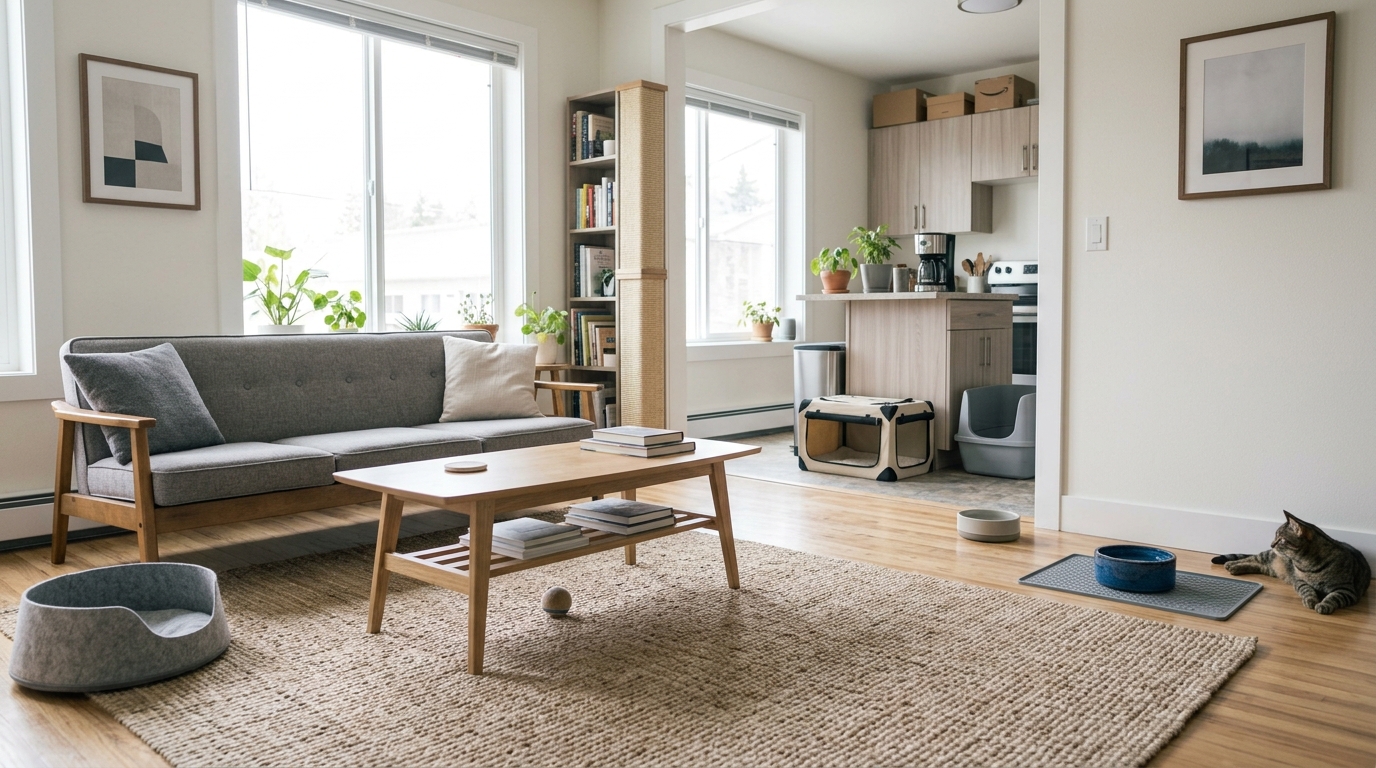
The necessary cat products are fewer than most shopping lists suggest. A cat needs reliable food and water access, a comfortable place to toilet, safe rest and hiding options, scratching opportunities, a secure carrier, play, and basic grooming support. Those needs can be met with simple products, ordinary household items, or one object serving several functions. The mistake is shopping by category before you know the cat: buying a fountain, automatic feeder, enclosed litter cabinet, five beds, and a huge tree does not guarantee that any of them fit the cat’s preferences or your home.
Necessary Cat Products Should Solve a Real Need
Start by asking what the item allows the cat to do. A cardboard box can meet a hiding need. A sturdy chair beside a window can provide height. Simple open litter trays can outperform complicated self-cleaning systems when a cat dislikes enclosure or noise. Placing a scratching pad at the right sofa corner may also work better than hiding an expensive post in another room. Thinking by function keeps the budget focused and reduces clutter.
The broader set of indoor-cat products worth considering should be judged by whether they solve a real care or behavior need, not by whether they appear on every “must-have” list. For a new cat, buy enough to create a safe, workable first setup. Then observe. The cat’s litter preference, scratching orientation, favorite resting height, play style, and eating habits will tell you where an upgrade is likely to earn its space.
Food and Water Need Simple, Washable Equipment
You need a way to serve complete and balanced food and fresh water hygienically. That does not require a matching designer bowl set. Choose bowls that are stable, easy to wash, and comfortable for the cat to use. Ceramic, stainless steel, or other easily cleaned materials are practical choices when kept in good condition. Have enough bowls to rotate through cleaning. In a multi-cat home, more than one feeding or water location may be more important than buying premium bowls.
A fountain is optional. Some cats like moving water and some do not. If a fountain encourages your cat to drink and you can clean the pump and internal surfaces regularly, it may be worthwhile. If the cat ignores it or maintenance becomes difficult, a clean bowl is still a valid water source. Automatic feeders are also optional. They can solve schedule problems, portion meals, or reduce early-morning feeding pressure, but they should be bought for a specific routine rather than because automated feeding sounds more advanced.
A Good Litter Box Matters More Than a Decorative Litter System
A litter box is essential. The expensive features are not. Prioritize enough usable space for the cat to turn, dig, and posture comfortably; an entry the cat can manage; and a location that feels safe. Many cats do well with simple open trays and unscented litter. Enclosed boxes, furniture cabinets, top-entry boxes, and automatic systems can work for some households, but they introduce tradeoffs such as trapped odor, smaller usable space, noise, moving parts, or difficult access.
Buy a scoop you will actually use every day and a mat only if it helps contain tracking without making the entrance awkward. Liners and deodorizing products are optional and may be disliked by some cats. In a multi-cat home, box number and distribution matter more than premium features. Spending the entire litter budget on one impressive device can be less useful than providing several simple boxes in different locations.
| Need | Usually necessary | Optional upgrade |
|---|---|---|
| Food | Washable bowl or feeding surface | Timed or microchip feeder |
| Water | Clean stable bowl | Fountain |
| Toileting | Appropriately sized litter box, litter, scoop | Automatic box or furniture enclosure |
| Scratching | Stable preferred scratching surface | Large tree with integrated scratchers |
| Rest/hide | Safe comfortable place | Specialty bed or heated bed |
| Transport | Secure carrier | Premium crash-tested or expandable carrier |
Every Cat Needs a Scratching Option
Scratching is normal feline behavior, so an allowed scratching surface is a practical necessity in an indoor home. The exact product depends on preference. Some cats stretch vertically and need a tall, stable post. Others prefer horizontal cardboard. Many use both. Location matters as much as material. Put scratchers near sleeping areas, room entrances, or furniture the cat already targets instead of arranging them where they look best in a catalog.
A cat tree is not automatically necessary. It can be excellent value when it combines a stable scratcher, elevated rest, and climbing in one footprint. In a small home, that multifunction design may justify the cost. In another apartment, existing furniture plus a separate scratcher and window perch may meet the same needs more effectively. Buy the tree when it solves a vertical-space problem, not because a cat household is expected to own one.
Multi-cat homes may need duplicates of some essentials. Each cat needs reliable access to key resources. That does not mean buying two of every toy. It may mean separate food stations, more litter boxes, several resting places, and enough secure transport. Duplicate function where competition or safety requires it.
A Secure Carrier Is an Essential Even If You Rarely Travel
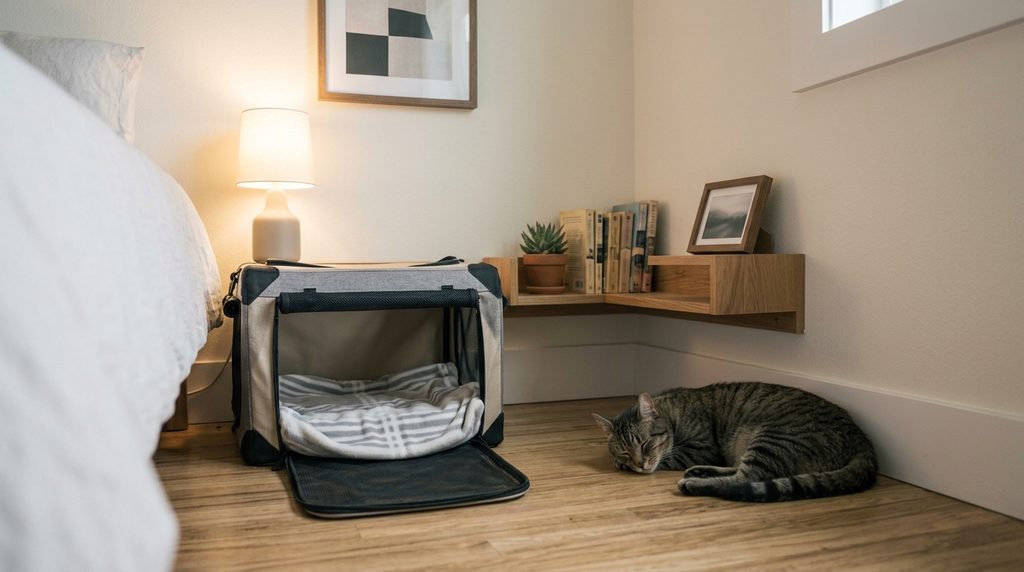
A carrier is part of veterinary care and emergency readiness. Choose one that closes securely, has enough room for the cat to turn and rest, and is manageable for you to carry. Hard-sided and soft-sided designs can both work when well constructed. Features such as a removable top or multiple openings can make veterinary handling easier. The carrier should not appear only on appointment day; leaving it open with familiar bedding can help it become ordinary furniture.
Do not postpone buying a carrier because the cat is indoor-only. Fires, building repairs, evacuations, illness, moves, and veterinary visits still happen. In a multi-cat home, plan enough secure transport for the cats rather than assuming they can all share one carrier under stress. A carrier is one of the few products that serves a safety function even when the cat does not choose to use it day to day.
Beds Are Optional; Safe Resting and Hiding Places Are Not
Cats need places to rest and withdraw, but they do not necessarily need a product labeled “cat bed.” Many choose a folded blanket, chair, shelf, cardboard box, or part of the sofa. Before buying several beds, notice preferred temperature, height, enclosure, and texture. A cat that always sleeps on a high chair may ignore a plush floor bed. A shy cat may value a covered hide more than a soft open cushion.
Use washable materials where possible. Replace or repair anything with loose threads, exposed foam, or damaged structure that could be swallowed or trap a claw. Heated pet beds can be useful for some cats, especially seniors, but they are optional and should be used according to safety instructions. The essential need is comfortable choice: somewhere quiet, somewhere protected, and ideally more than one resting option.
Toys Do Not Need to Be Numerous to Be Useful
Indoor cats need opportunities for play and predatory behavior, but quantity is not the same as enrichment. A wand toy for interactive sessions, a few safe solo toys, and simple objects such as boxes can provide plenty of variety when rotated. Toys that mimic prey movement often become more interesting when a person controls them. Puzzle feeders can add foraging when introduced at an easy level and filled with part of the normal food allowance.
Avoid leaving string, ribbon, yarn, or wand toys accessible when unsupervised if they can be swallowed or entangle the cat. Throw away damaged toys that expose stuffing, wires, bells, or small pieces. Rather than buying a large toy collection at once, learn whether the cat likes chasing along the ground, batting lightweight objects, climbing after toys, or working for food. Then spend on the play styles that actually get used.
Check product condition on a routine schedule. Replace cracked bowls. Tighten loose cat-tree hardware. Throw away toys with exposed wire or stuffing. Inspect carrier latches. Wash fabric beds. A basic product that stays safe and clean is more valuable than a premium product that becomes difficult to maintain.
Borrow information before buying duplicates. Ask the shelter what litter the cat uses. Ask what food is familiar. Note the preferred scratcher shape. Check carrier size. Measure the available floor space. These small facts prevent many unnecessary purchases during the first week.
Basic Grooming Tools Depend on the Coat and the Cat
Most cats benefit from some grooming support, but the tool list varies. A short-haired cat may need only a gentle brush or comb and nail clippers. A long-haired cat may need a suitable metal comb and more frequent coat checks. Dental care supplies may be recommended by your veterinarian, but do not buy a large dental kit before you know what method your cat can tolerate. Human toothpaste is not appropriate for cats.
You may not need shampoo at all for a healthy indoor cat that grooms normally. Specialty de-shedding tools, grooming gloves, dematting tools, and clippers are optional and can cause skin injury if used aggressively or incorrectly. If the cat has tight mats, painful skin, or strongly resists grooming, professional or veterinary help may be safer than buying a sharper tool.
Safety claims deserve scrutiny. Read weight limits. Check recall information when relevant. Confirm that replacement parts exist. Avoid unverified electrical gadgets near water. Be cautious with strong fragrances and essential oils around cats. “Pet product” is a marketing category, not a guarantee that every item suits every cat.
Keep a replacement rule for basics. Bowls need smooth intact surfaces. Scratchers need stability. Carriers need secure latches. Litter scoops should be easy to clean. Toys need intact seams. Beds need washable covers. These checks are simple. They often matter more than adding another feature or app.
Delay Expensive Convenience Products Until a Real Problem Appears
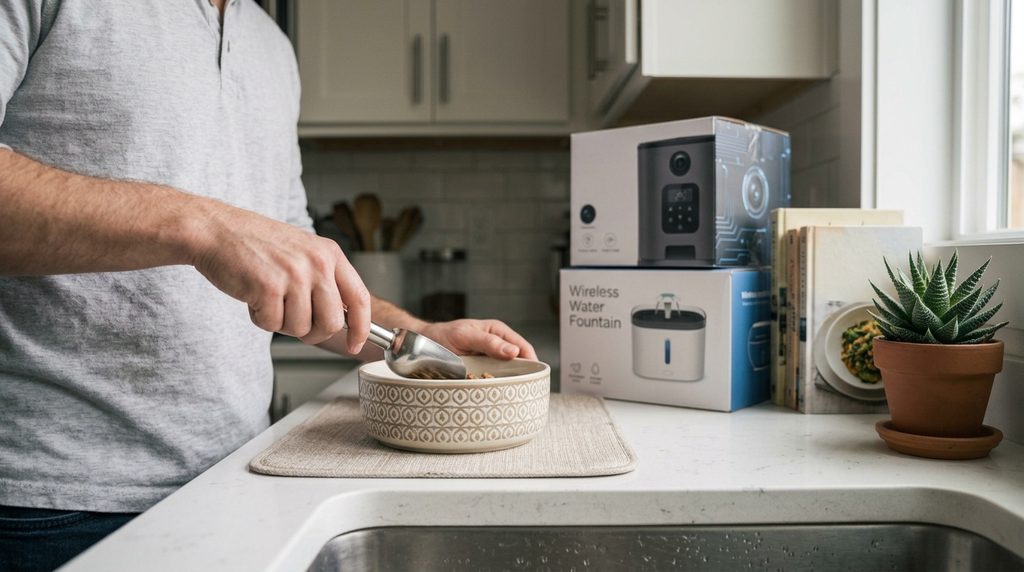
Automatic litter boxes, app-connected fountains, camera feeders, GPS devices, robotic toys, air purifiers, and furniture systems can be genuinely useful in the right household. They are not universal necessities. A timed feeder may transform life for a cat that wakes the household at dawn. A microchip feeder may be valuable when two cats need different diets. An air purifier may help the people in a small home manage dust. The justification is the problem solved.
- For day one, prioritize food and water equipment, litter setup, a secure carrier, scratching, safe rest, and a few toys.
- After observing preferences, consider a bed, specialized scratcher, puzzle feeder, fountain, or larger climbing structure.
- For a defined problem, consider a timed feeder, microchip feeder, automatic litter box, mobility steps, or specialty grooming tools.
- Skip if it adds maintenance without improving care.
Before an expensive purchase, ask what happens if the cat refuses to use it, how difficult it is to clean, whether replacement parts are available, and whether a simpler option would meet the same need.
Keep the List Functional
The core list is simple: hygienic food and water access, an appropriate litter setup, a secure carrier, at least one good scratching surface, safe places to rest and hide, and opportunities for play. Grooming tools should match the coat and care routine. Everything else is an upgrade, a convenience, or a solution to a specific problem.
Choosing necessary cat products by function keeps the home easier to maintain and leaves room to adapt once you know the individual cat. A product earns its place when it improves access, safety, hygiene, normal behavior, or your ability to provide consistent care. Price, automation, and popularity do not make it essential.
References
- 2025 Meeting the Physical and Emotional Needs of Indoor Cats — FelineVMA — Evidence-based framework for the safe places, separated resources, play, social interaction, and sensory needs products should support.
- Setting Up the Environment for Success — FelineVMA — Practical explanation of essential feline resources, scratching, hiding, climbing, play, and the importance of correct placement.
- Choosing and Caring for Your New Cat — Cornell Feline Health Center — Covers core care needs including food, litter, grooming, scratching, play, safe housing, and routine veterinary care.
