


If your cat is suddenly drinking more water, the change is more important than whether the bowl volume matches an online average. A new increase in thirst can happen after a switch to drier food, hotter conditions, or another routine change, but it can also accompany conditions that increase urine production or fluid loss. Chronic kidney disease, diabetes, hyperthyroidism, vomiting, diarrhea, and some medications are among the possibilities veterinarians consider. The useful first step is to confirm that the increase is real and look at urine, appetite, weight, food moisture, medications, and behavior together rather than trying to diagnose the cause from thirst alone.
Confirm That Your Cat Is Actually Drinking More
In a shared household, a faster-emptying bowl does not prove one cat is drinking more. Another pet may be using it, the fountain may be splashing, or warm dry air may increase evaporation. If the change matters enough to investigate, create a short period of cleaner observation. Refill to a consistent level, note which stations the cat uses, and avoid constantly topping up without checking. In a multi-cat home, separate resources for part of the day may help identify the cat producing the change, provided separation itself is not highly stressful.
You do not need laboratory precision to notice a meaningful shift. “I refill this bowl once every two days and now it is empty by evening” is useful history. So is “the cat now waits at the sink every morning.” Record the pattern, not an invented milliliter value. A clear change in behavior plus larger urine clumps is stronger evidence than a single empty bowl.
Also compare the timing of drinking. A cat that now wakes at night to drink, waits by a sink, or makes repeated trips after meals may be showing a stronger change than one extra visit on a hot afternoon. Describe the pattern in ordinary terms rather than trying to estimate every sip.
Cat Suddenly Drinking More Water? Check Food Moisture First
A move from wet food toward dry food can make bowl drinking rise for a normal reason. Wet diets contain substantial moisture, so cats eating them often obtain part of their daily water through meals. If breakfast changed from a wet pouch to dry kibble last week and bowl visits increased at the same time, the diet change belongs near the top of the explanation list. The reverse is also true: increasing wet food can reduce visible drinking without reducing total fluid intake.
That is why total water intake includes both drinking and the moisture that arrives with food. Record the food format when you record thirst. If nothing about the diet changed, or if thirst increases despite a stable wet-food routine, look harder at urine output, appetite, weight, and health. A diet explanation should fit the timing rather than being used to dismiss a persistent change.
If a diet changed gradually, thirst can change gradually too. Check the proportion of wet versus dry calories across the whole day, not just the main meal. A new dry snack or larger kibble portion can reduce food-derived moisture even when dinner still looks the same.
The Litter Box Can Show Whether Thirst and Urine Are Moving Together
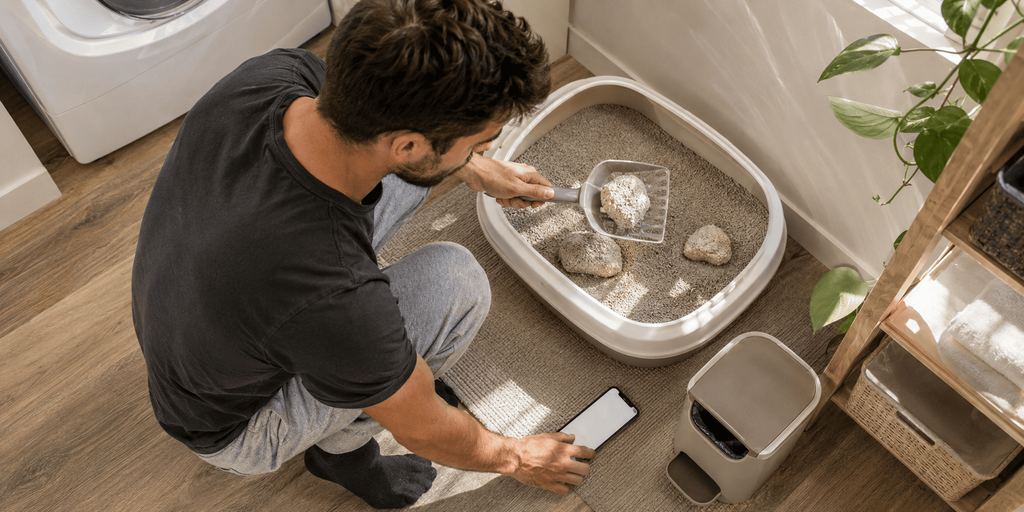
Conditions that increase thirst often increase urine output too. Learn the usual number and approximate size of urine clumps in your litter. If the cat suddenly drinks more and the box also contains larger or more frequent clumps, report both changes together. Do not try to estimate urine volume from clumps as if the litter box were a measuring device. Brand, depth, and clumping behavior affect size. Trends under the same setup are more useful.
More trips to the box are not always the same as producing more urine. Repeated straining, small spots, vocalizing, or frequent attempts with little output can signal a urinary problem and may be urgent. Increased urine volume tends to produce genuinely larger output. If you cannot tell which pattern you are seeing, a veterinary call is safer than assuming increased thirst explains every litter-box change.
Large urine clumps are especially useful when the litter brand and depth have stayed stable. If you recently switched litter, comparison becomes less reliable because different products clump differently. Mention the litter change to your veterinarian so the apparent increase in urine is not treated as a precise measurement.
Common Medical Causes Share the Same Early Clue
Increased drinking is a symptom, not a diagnosis. Chronic kidney disease can reduce the kidneys’ ability to concentrate urine, so cats urinate more and drink to compensate. Diabetes can cause glucose to spill into urine, pulling water with it and increasing thirst and urination. Hyperthyroidism may also be associated with increased thirst, appetite, activity changes, or weight loss. Vomiting and diarrhea can create fluid losses that make a cat drink more. Some medications, including diuretics used for certain heart conditions, can also change fluid balance.
These conditions are not distinguishable by water-bowl behavior alone. Age can shift probability, but it does not identify the cause either. A senior cat with new thirst deserves attention, while a younger cat can still develop illness. The useful home role is to notice the change, record associated signs, and provide enough context for a veterinarian to decide what testing is appropriate.
Several causes can also occur together. A senior cat with kidney disease may develop another condition, and a cat taking medication can still become ill. Do not stop investigating because one possible explanation already exists. A new level of thirst should be interpreted against the cat’s current medical baseline.
Weight and Appetite Help Separate Different Patterns
Thirst becomes more informative when you combine it with weight and appetite. Drinking more while losing weight despite a strong appetite creates a different picture from drinking more while eating less and becoming lethargic. A cat with kidney disease may lose appetite or weight as illness progresses. A cat with diabetes can lose weight even while eating well. Hyperthyroid cats may also show weight loss with increased appetite. None of these patterns is specific enough for home diagnosis, but each is useful history.
If you have a reliable home scale, record weight under similar conditions once or twice a week while waiting for an appointment. Do not weigh obsessively several times a day. For food, note how much of the normal portion is actually eaten rather than whether the cat “seems hungry.” Small objective details make the thirst change easier to interpret and can show whether the trend is progressing.
Take weight loss seriously even when it is subtle. A cat may look nearly the same from day to day while losing a meaningful amount over several weeks. If you have no home scale, your veterinary clinic can compare the current weight with previous visits and show whether the change predates the thirst.
Review Medications and Recent Routine Changes
Before assuming disease, review what changed in the same period. A newly prescribed diuretic can increase urine and thirst. Switching to dry food can increase bowl drinking. A new fountain may simply make water more appealing and visible. Hotter indoor temperatures, increased activity, or a second water station can change behavior too. The important question is whether the explanation is strong enough to match the size and persistence of the change.
- Write down new prescriptions, dose changes, and supplements.
- Note any wet-to-dry or dry-to-wet food change.
- Record new fountains, bowls, locations, or water flavors.
- Compare urine output with the same litter setup.
- Watch appetite, weight, vomiting, stool, and activity.
Never stop a prescribed medication because it might explain thirst unless the veterinary team tells you to. The medication may be doing essential work, and the correct response may be monitoring or dose review rather than discontinuation.
Ask whether the medication is expected to change thirst and urine, and what level of change the clinic wants reported. That question is more useful than deciding on your own that a side effect is harmless. Some treatments require fluid balance to be watched closely, especially in cats with heart or kidney disease.
A Three-Day Log Is More Useful Than Constant Bowl Watching

If your cat is otherwise stable and the increase is not accompanied by urgent signs, a short log can turn a vague concern into clear information. Record meal type, bowl refills, obvious drinking events, urine-clump pattern, appetite, stool, vomiting, and any weight data you already collect. Keep the setup stable during the observation window. If you change the bowl, food, fountain, and room temperature at once, you lose the ability to see what changed with what.
Do not restrict water to make the measurement easier. Fresh water should remain freely available. The purpose of the log is not to prove a diagnosis or hit a target. It is to show whether the change persists and which other routines are moving with it. Bring the log to the clinic or summarize the pattern in a few sentences.
A three-day log is often enough to show whether the pattern is stable, increasing, or difficult to confirm. If the cat is clearly unwell, however, do not delay care just to complete the log. Observation is useful only when it does not postpone evaluation of a cat that needs help.
You do not need to arrive with a theory about kidney disease, diabetes, or thyroid disease. Bring the timeline instead. Tell the veterinarian when you first noticed the increase, whether food format changed, how urine clumps changed, whether weight moved, and what appetite and energy look like. Include medication names and doses. If more than one cat shares the home, explain how confident you are that the drinking and urine belong to the same cat.
When Increased Thirst Should Move to Veterinary Care
A clear new increase in thirst that persists deserves veterinary advice, especially in an older cat or when urine output also rises. Contact your veterinarian sooner if the change comes with weight loss, reduced appetite, vomiting, diarrhea, weakness, poor coat condition, major behavior change, or a known medical condition. The clinic may recommend examination, blood tests, urine testing, blood pressure measurement, or other evaluation based on the full history.
Urgent care is appropriate when the cat is severely weak, collapses, has trouble breathing, repeatedly vomits and cannot keep fluids down, or strains to urinate with little or no urine. Those signs change the priority from tracking thirst to assessing the cat. Increased drinking by itself is rarely an emergency, but it can be the first visible clue to a problem worth finding early.
Even without emergency signs, persistent increased thirst is worth mentioning because many underlying conditions are easier to manage when identified before the cat looks severely ill. Waiting for dramatic symptoms can remove the advantage of noticing a subtle change early.
That level of detail is more useful than saying “she drinks a lot.” It also protects against false reassurance from one normal day. If the pattern has been clear for two weeks and happens to look quieter on appointment day, your notes still show the trend. Sudden thirst is a signal to investigate thoughtfully, not a number to chase at the water bowl.
Bring the Pattern, Not a Guess, to the Appointment
Bring the actual food name or a photo of the label if diet moisture is part of the question. Include any fountain change, new supplements, and recent medication. These details can save time because the veterinarian can separate plausible environmental explanations from changes that need diagnostic testing.
References
- Hydration — Cornell Feline Health Center — Explains total water intake, dehydration, and conditions such as kidney disease, diabetes, vomiting, diarrhea, hyperthyroidism, and medications that affect fluid balance.
- Chronic Kidney Disease — Cornell Feline Health Center — Describes how reduced urine-concentrating ability in CKD can lead to larger urine volumes and increased drinking.
- Feline Diabetes — Cornell Feline Health Center — Covers common clinical signs of feline diabetes and the veterinary evaluation and treatment context.
