

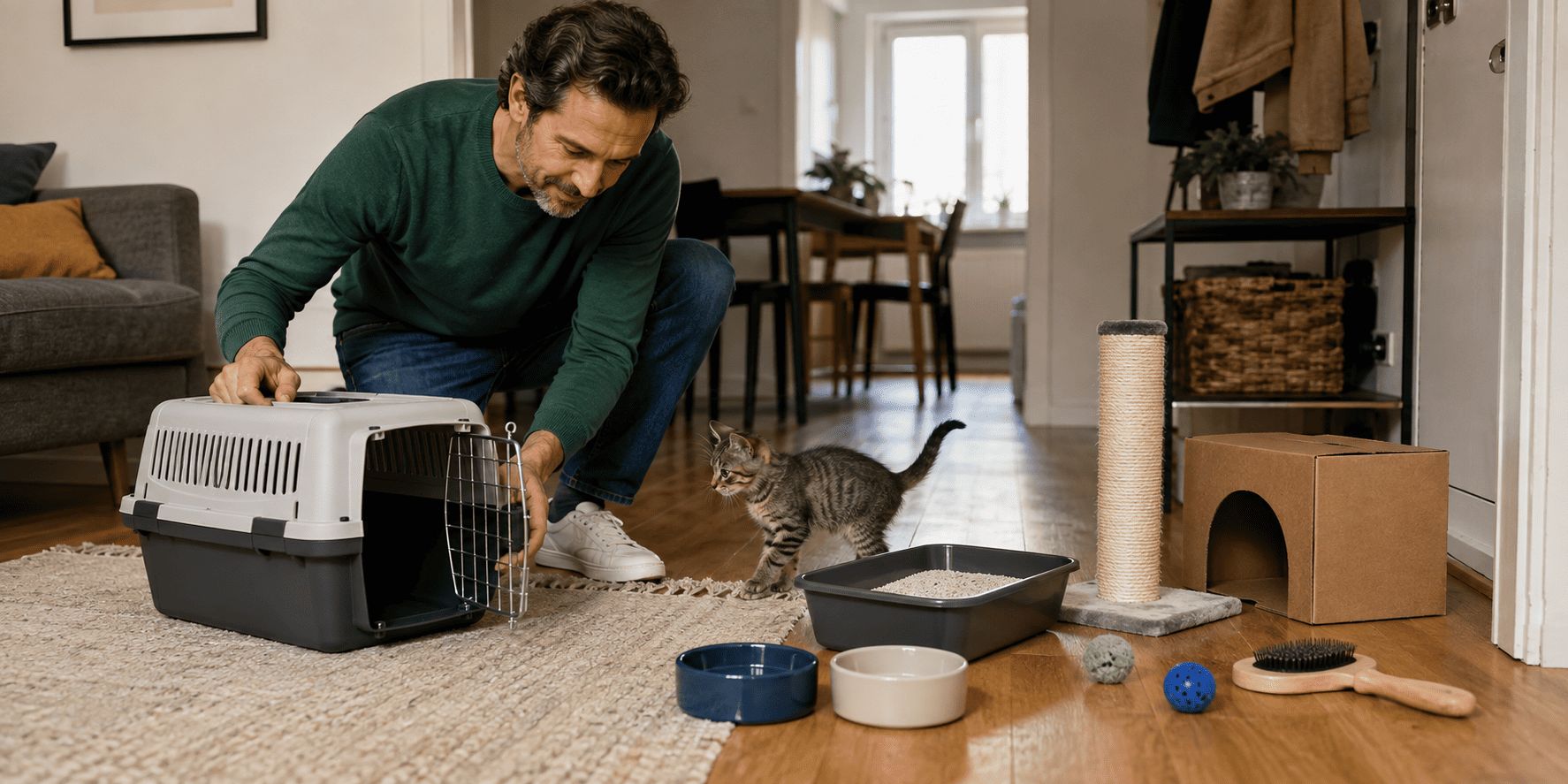
A new indoor cat shopping list can become expensive very quickly, yet the first week usually requires fewer products than people expect. Buy the items that make eating, drinking, toileting, hiding, scratching, resting, transport, and safe play possible. Leave upgrades until you know the cat’s size, preferences, mobility, and habits. A large open litter tray may outperform an expensive automatic box. A cardboard hide may be chosen over a designer bed. This list separates what needs to be ready before arrival from what is smarter to buy after the cat has shown you how the home will actually be used.
New Indoor Cat Shopping List: Buy the First-Week Essentials
- Complete and balanced food the cat already eats, plus washable food bowls.
- Fresh-water bowls in at least one quiet, easy-to-reach location.
- Large litter box, scoop, and enough familiar or suitable unscented litter.
- Secure carrier sized for the cat, with a removable or easy-open top if possible.
- Simple hiding place and a washable resting surface.
- At least one stable scratching surface.
- A few safe toys for interactive and solo play.
- A brush or comb suited to the coat and a basic nail trimmer.
That list is deliberately functional. It covers the first days without assuming your cat wants a fountain, covered bed, wall shelves, automated feeder, premium scratcher, or self-cleaning litter box. You can add those later when they solve a real problem. If you are adopting from a rescue, foster home, or previous caregiver, ask what food, litter, bowl style, and carrier the cat already knows. Familiar basics reduce the number of changes happening at once and can prevent you from buying a second version two days later.
Keep receipts for optional items. The first week is a preference test as much as a settling period.
Before shopping, ask the shelter or previous caregiver what items already come with the cat. A familiar carrier, blanket, food, or litter can be more useful than a brand-new replacement during transition. The first purchase may therefore be less about upgrading and more about filling gaps in what the cat already knows.
Household needs matter as much as cat preferences. In a tiny apartment, vertical space may justify one good cat tree. A multi-level home may need duplicate water and litter access. For several cats, extra resources often matter more than premium versions of single shared resources.
Food Supplies Should Make Portions and Cleaning Easy
For food, begin with the diet the cat is currently eating unless a veterinarian has advised an immediate change. A sudden switch can add digestive upset to an already unfamiliar week. Choose bowls that are stable and easy to wash. You do not need a matching feeding station, elevated stand, slow feeder, and automatic dispenser on day one. Those are solutions to specific problems. First learn whether the cat eats too quickly, grazes, prefers small meals, steals another cat’s food, or needs medication tied to meals.
A small digital kitchen scale is one of the few inexpensive upgrades that can be useful from the beginning, especially for calorie-dense dry food. It makes portions repeatable and helps different people in the home feed the same amount. If you buy wet food in larger cans, add food-safe storage containers or lids. The useful feeding kit is the one you can clean, measure, and maintain every day, not the one with the most accessories.
Skip decorative bowl sets that make cleaning harder. A second inexpensive water bowl in another quiet room may add more value than a premium feeding mat. Think in terms of redundancy: if one bowl is dirty, blocked, or being washed, the cat should still have a practical way to eat or drink.
A spare washable placemat or tray can help with cleanup, but it is optional. Choose it only if it makes the feeding area easier to maintain.
Choose Litter Gear for the Cat, Not the Laundry Room
The litter box is a place where size and access matter more than appearance. Many commercial boxes are smaller than ideal for an adult cat, so compare the tray with the cat’s body length rather than the empty corner where you plan to hide it. An open box gives you a simple starting point and makes cleaning easy. Low entry can matter for kittens, seniors, or cats with mobility problems. Buy a scoop with openings that suit the litter and place a small waste container nearby if that makes daily cleaning easier.
Avoid stocking several giant bags of a new scented litter before you know the cat accepts it. Familiar or soft unscented litter is often a safer starting choice. In a multi-cat home, budget for more than one box and separate locations rather than one expensive unit. Convenience for the person matters because a setup that is awkward to scoop tends to stay dirty longer. Good litter equipment should make the correct daily habit easy.
Measure the proposed litter area before buying furniture around it. A larger tray may need more space than expected, and squeezing it behind a door can create an awkward entrance. It is easier to choose a better box first and adjust the room around it than to buy a small box because a decorative cabinet was purchased first.
A Carrier Is an Everyday Safety Item, Not a Travel Extra
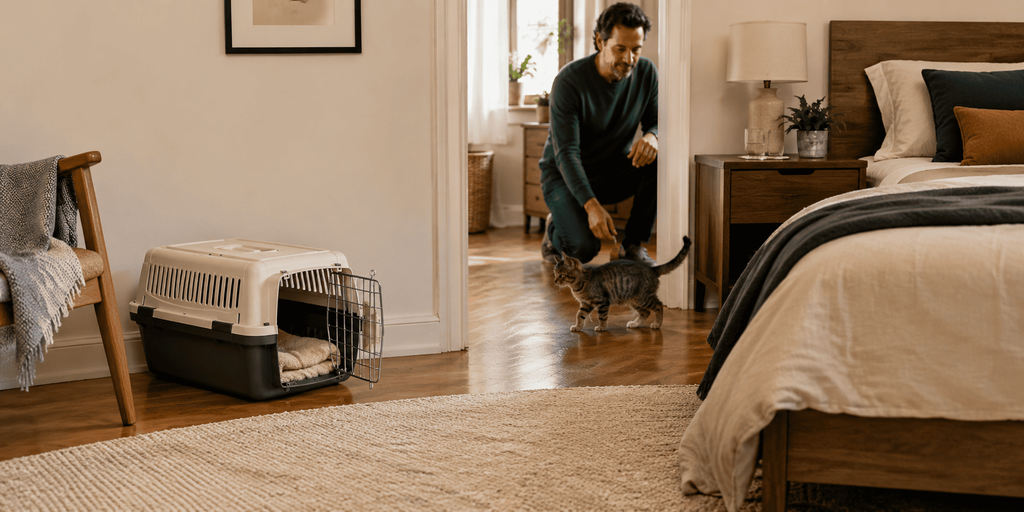
Buy the carrier before the cat arrives, not the morning of the first veterinary visit. It needs to be large enough for the cat to turn and lie comfortably, but not so oversized that the cat slides around during transport. Hard-sided carriers with a removable top can make veterinary handling easier for some cats because the top can be lifted away instead of pulling the cat through a narrow door. Whatever style you choose, check the latches and base before trusting it with weight.
Once home, leave the carrier open with familiar bedding so it becomes part of the room. This changes it from an object that appears only before stressful trips into a normal hiding or resting option. If the cat starts sleeping in it, that is a successful use of the purchase. A carrier does not need to sit in storage to count as emergency equipment.
Emergency usefulness is another buying test. A carrier that opens securely, can be cleaned, and is easy to lift matters during a veterinary visit, evacuation, or sudden illness. Fashion features matter less than hardware, ventilation, and access. Test the empty carrier before arrival so you understand every latch before the cat is inside.
Hiding, Resting, and Scratching Can Start Simple
A new cat needs places to withdraw and surfaces where scratching is allowed, but none of those needs require a large cat tree immediately. Cardboard boxes with two openings can provide a safe hide. A folded washable blanket on a chair may become the preferred bed. One sturdy cardboard scratcher can reveal whether the cat likes horizontal scratching before you buy a tall post. If the cat repeatedly scratches vertically beside the sofa, that observation justifies the next purchase.
This needs-first approach is also how useful cat products earn their space by solving a real daily need rather than simply appearing on a checklist. One well-placed object can meet several functions. A stable cat tree may offer scratching, height, rest, and observation. A bench beside a window may provide the same height without buying anything new. Let the home and the cat tell you which upgrade is worth the footprint.
A new cat may choose a paper grocery bag with handles removed over an expensive bed. Treat that choice as information, not rejection of the purchase. Once you learn whether the cat prefers enclosed, elevated, warm, or open resting spots, you can buy a more durable version of something the cat has already shown interest in.
Before checking out, remove anything you are buying only because it appears on a generic “must-have” list. Keep what covers a known need, improves safe access, or makes care easier to maintain. The strongest shopping list gets shorter as it becomes more specific. Your cat can tell you what deserves to be added next once the first-week essentials are in place.
Buy Fewer Toys, Then Learn the Cat’s Play Style
A huge toy basket is not necessary at the start. Choose a small mix: one wand-style interactive toy, one or two lightweight toys the cat can bat or carry, and perhaps a simple food puzzle if the cat is confident around food. Store string, ribbon, feather wands, and other toys that are not safe for unsupervised use. Rotate a few toys instead of leaving everything on the floor. Novelty often comes from availability and movement, not from constantly buying new objects.
Watch how the cat plays before choosing more. A cat that stalks low across the floor may enjoy toys moved like small prey. Another may prefer kicking, climbing, or chasing rolling objects. A shy newcomer may not play much in the first days at all. Do not interpret that as proof the toys are wrong. Settling and appetite come first. Buy the next toy after you see what kind of movement reliably gets attention.
Toy safety deserves the same attention as toy variety. Put loose strings, ribbons, hair ties, and small swallowable pieces away when unsupervised. A simple wand toy used interactively can provide more value than many unattended novelty toys. The shopping goal is not maximum stimulation; it is repeatable safe play.
Wait on the Expensive Products Until a Need Appears
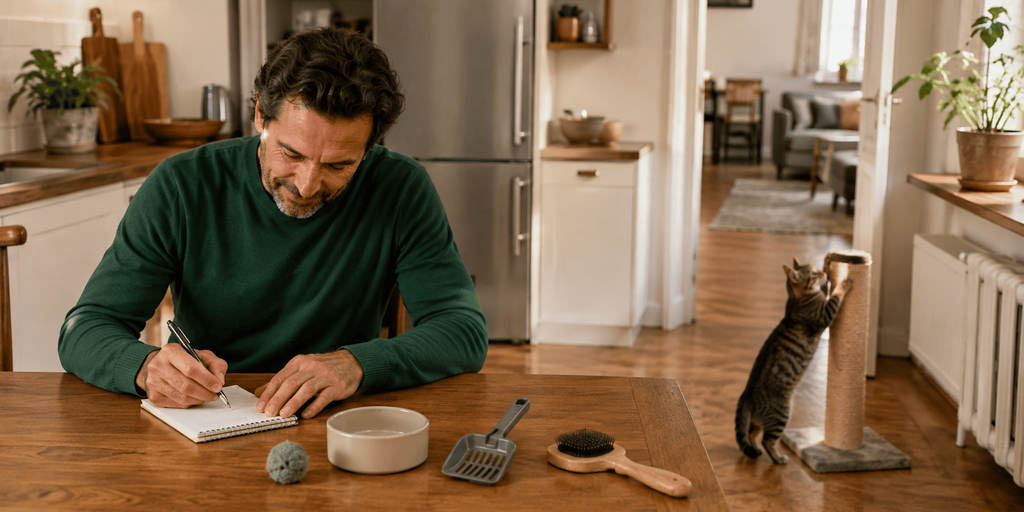
Fountains, automatic feeders, microchip feeders, self-cleaning litter boxes, heated beds, exercise wheels, wall systems, cameras, and smart health devices can be useful, but they are not universal first-day essentials. Each product creates its own cleaning, space, power, noise, and training requirements. A fountain is only helpful if the cat drinks from it and you clean the pump. A self-cleaning box is only helpful if the cat accepts the entry, litter, motion, and location. An automatic feeder is valuable when timing solves a routine problem.
Use a simple test before any major purchase: name the problem in one sentence. If you cannot say what the product will improve, wait. After the first two weeks, you may discover that the money is better spent on a second litter box, a taller scratcher, a veterinary visit, or a secure window perch. Preference data is more valuable than shopping momentum.
Large purchases also create maintenance costs. Replacement filters, specialty litter, batteries, app subscriptions, or proprietary parts can turn a useful-looking device into an expensive routine. Before buying, check whether the product still works safely when power, Wi-Fi, or replacement supplies are unavailable.
Kittens need extra attention to small-object safety and may outgrow beds, collars, and carriers. Seniors may need low-entry litter boxes, floor-level water, non-slip surfaces, and steps to favorite resting places. Long-haired cats need coat tools that reach through the fur, while short-haired cats may need much less grooming equipment. Multi-cat homes require duplicate resources and enough distance between them so one cat cannot quietly control everything. A home with a dog may need barriers that preserve cat-only routes and feeding areas.
Make the List Fit Your Cat’s Age, Coat, and Household
One final budget check helps: reserve money for the first veterinary visit, parasite control, identification, and unexpected replacements instead of spending the entire setup budget on accessories. A new cat may need medical care or a different litter box sooner than it needs a second bed. Keeping some flexibility makes the shopping list more useful after arrival.
References
- Welcome Your New Cat or Kitten — FelineVMA — Current caregiver guidance on transition spaces, food, litter, carriers, grooming tools, identification, and other supplies for a new cat.
- Meeting the Physical and Emotional Needs of Indoor Cats — FelineVMA — Explains the functions a home should provide, including safe places, separated resources, play, social choice, and environmental enrichment.
- General Cat Care — ASPCA — Practical background on basic cat care, housing, litter, scratching, grooming, and routine supplies.
