

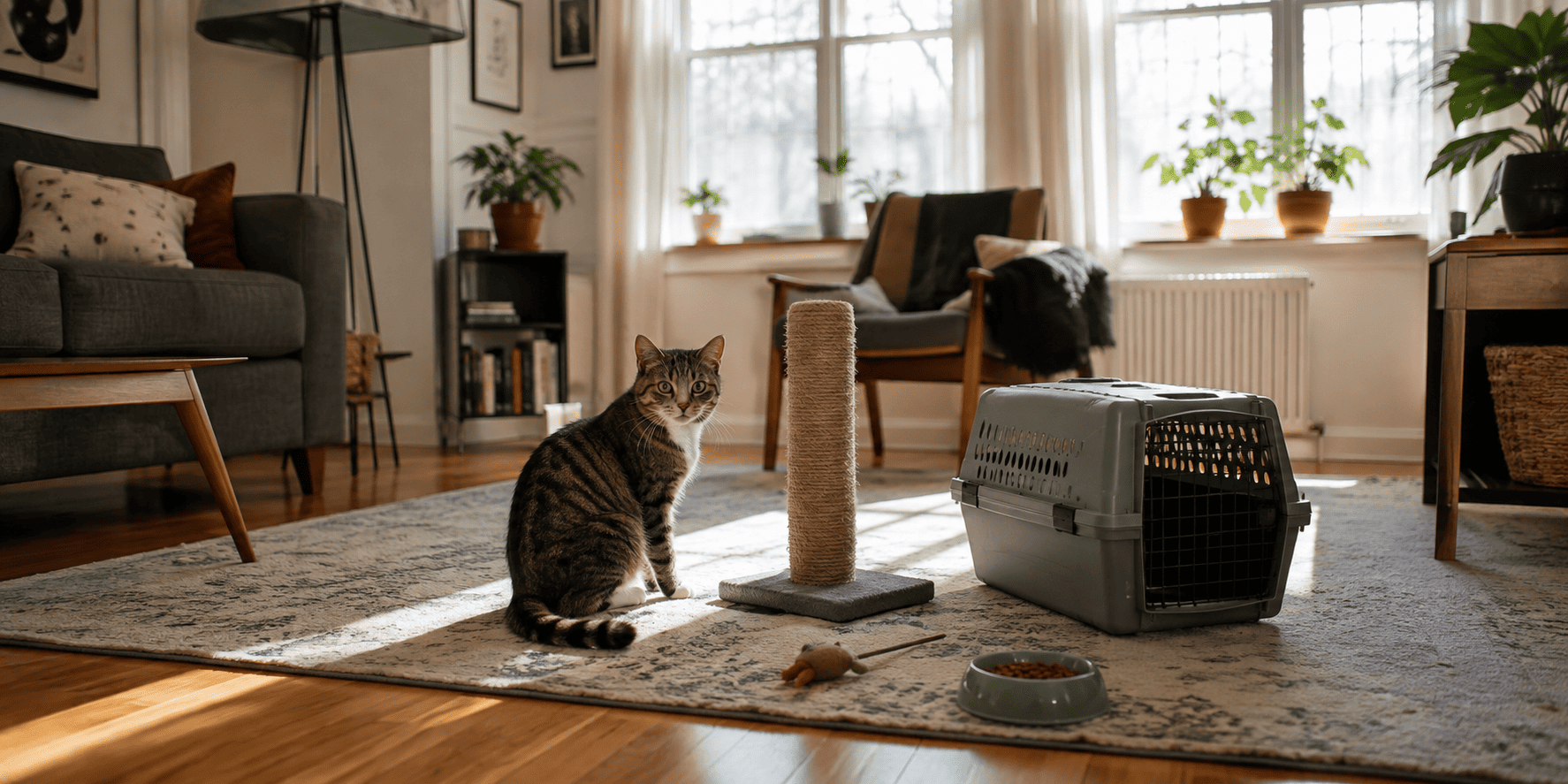
Shopping for cat products for indoor cats can get expensive before the cat even comes home. Pet stores make almost everything look essential, from designer beds and automatic feeders to activity centers and smart litter boxes. In reality, cats need a relatively small group of well-chosen resources. Many upgrades are useful only when they solve a specific problem.
The best approach is to buy for function first. Your cat needs food and water access, a comfortable litter setup, safe resting places, scratching surfaces, play opportunities, and a secure carrier. After that, spend money where it improves daily life for your particular cat and household.
Before shopping, list the problem you are trying to solve. “My cat needs enrichment” is broad. “My cat wakes me at 5 a.m. for breakfast” points toward a timed feeder. “My cat scratches the sofa arm” points toward a stable scratcher placed beside that exact area. Specific problems lead to better purchases.
Cat Products for Indoor Cats: Buy These Basics First
Before buying upgrades, make sure the essentials are covered.
- Complete and balanced cat food: Choose a food suitable for your cat’s life stage.
- Food bowl or feeding surface: Easy to wash and stable during meals.
- Water bowl or fountain: Fresh water should always be available.
- Large litter box and suitable litter: Prioritize size, accessibility, and cleanliness over appearance.
- Stable scratching surface: Ideally include a tall vertical option and, if useful, a horizontal one.
- Secure cat carrier: Large enough for comfortable transport and easy enough to clean.
- Interactive toys: A wand-style toy is a simple way to create active play.
- Basic grooming tools: Match the brush or comb to your cat’s coat and keep nail clippers available.
You may already own suitable resting spots. A folded blanket, sturdy box, chair, or windowsill can be more popular than a dedicated cat bed. Do not feel pressured to buy a product when an existing safe household object already meets the need.
Spend More on Products That Affect Daily Comfort
If your budget is limited, spend first on items your cat uses every day. A roomy litter box is usually worth more than a decorative toy basket. A stable scratching post is more useful than a cheap post that tips when the cat stretches against it.
Durability matters for carriers too. A secure carrier protects the cat during transport and reduces the risk of escape. Features such as a top opening or a removable top can make veterinary handling easier. The most stylish carrier is not necessarily the safest one.
Food and water products should be easy to clean. Complicated shapes, narrow tubing, and difficult pumps add maintenance. If a fountain takes too long to wash, you may clean it less often. A simple water bowl that stays fresh is better than an elaborate fountain that becomes slimy.
Think about replacement cost. Scratching cardboard is meant to wear out. A cat tree should last longer. Spend according to how the product is used, not how impressive it looks online.
Ease of cleaning should influence almost every purchase. Bowls, fountains, litter tools, beds, and carriers all become less useful when they are awkward to wash. Check whether parts can be removed, whether fabric covers are washable, and whether replacement filters or accessories are easy to find before buying.
Worth It, Optional, or Usually Unnecessary?
These categories help separate genuine needs from convenience purchases.
| Product | General value | Best reason to buy |
|---|---|---|
| Large litter box | High | Every indoor cat needs comfortable toileting space. |
| Sturdy scratching post | High | Supports normal scratching and stretching in the right location. |
| Secure carrier | High | Needed for veterinary visits, travel, and emergencies. |
| Cat tree or window perch | Often worth it | Adds useful vertical territory where height is limited. |
| Water fountain | Optional | Useful if your cat prefers moving water and you will clean it reliably. |
| Automatic feeder | Optional | Helps with meal timing, early waking, or measured small meals. |
| Automatic litter box | Optional | Convenience for a cat that accepts the size, movement, and box style. |
| Designer cat bed | Low priority | Worth it only if your cat actually likes that bed type and location. |
No product is universally worth it. A fountain may be excellent for one cat and ignored by another. An automatic feeder can solve a real scheduling problem, yet it adds little in a home where someone already feeds measured meals on time.
Choose Scratching Products by Behavior, Not Decor
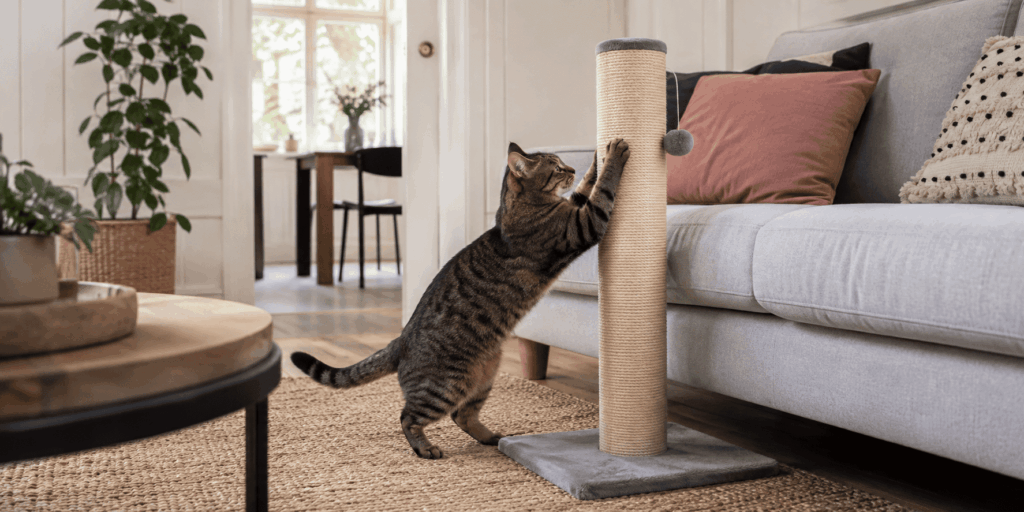
Scratching is one area where buying the wrong product creates repeated spending. A narrow, unstable post may look neat, but many cats cannot stretch fully against it. If it moves when scratched, the cat may return to the sofa.
Watch the surface and direction your cat already prefers. A cat that scratches the side of furniture may like a tall vertical post. A cat that scratches rugs may prefer flat cardboard or another horizontal surface. Some cats use both.
Placement matters as much as the product. Put a scratcher near a current scratching target, sleeping area, or room entrance. Once your cat uses it reliably, you may be able to shift it gradually if needed.
Do not replace a well-used scratcher just because it looks rough. Familiar scent and shredded texture may be part of the appeal. Replace it when it becomes unstable, unsafe, or too damaged to function.
Measure before ordering a large scratcher or tree. Product photos can make furniture look smaller than it is. Check the base width, platform size, and total height against the exact spot in your home. A product that blocks a doorway or wobbles on an uneven floor will not be a good long-term solution.
Cat Trees, Beds, Tunnels, and Hideouts: Buy for the Space You Have
A cat tree can be a very good purchase when it adds vertical territory. Look for a wide stable base, useful platform sizes, and a height that makes sense in the room. A tall tree beside a window often offers more value than one hidden in a spare room.
Beds are more unpredictable. Cats choose resting spots based on warmth, height, privacy, softness, and proximity to people. Before buying several beds, watch where your cat sleeps now. A simple washable pad placed in a favorite location may work better.
Tunnels and hideouts can be useful for play and retreat. Foldable tunnels are easy to store and rotate. Cardboard boxes also provide excellent temporary hiding spaces for almost no cost.
Small homes do not need large amounts of cat furniture. Use vertical surfaces and existing furniture safely. The goal is to create options, not fill every empty corner with a product.
When Convenience Products Are Actually Worth Buying
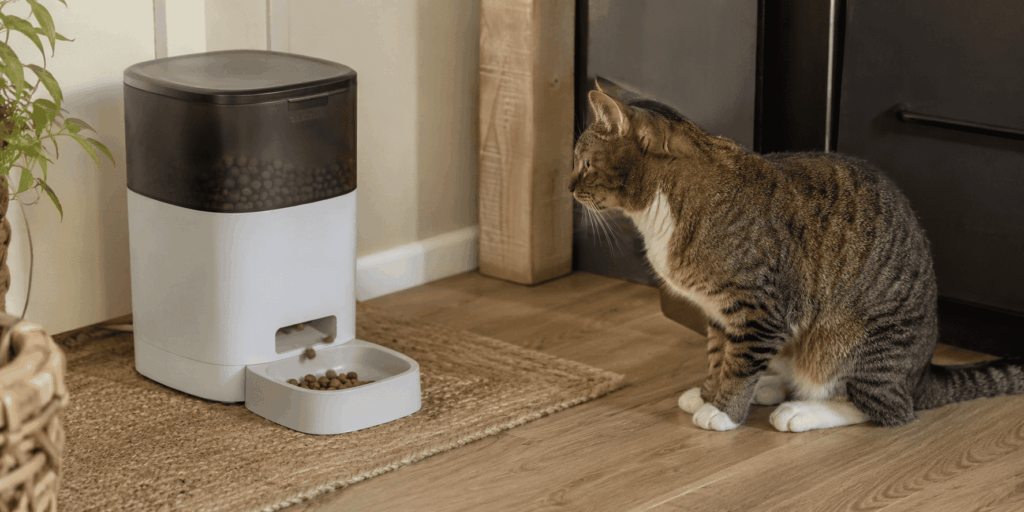
Convenience products make sense when they solve a repeated problem.
- Automatic feeder: Useful for reliable small meals, early-morning feeding, or a changing work schedule.
- Water fountain: Worth considering if your cat seeks running water and you can clean the fountain often.
- Litter-catching mat: Helpful when tracking is a daily cleaning problem.
- Handheld vacuum: Useful near litter and feeding areas if quick cleanup makes routines easier.
- Pet camera: Helpful for checking routines, meal timing, or behavior when you are away, but not a basic cat need.
- Automatic litter box: Consider only if the box is large enough, your cat accepts it, and you can monitor waste changes.
Convenience should not remove useful observation. If an automatic litter box hides urine and stool patterns completely, you may miss a health change. If a feeder makes it impossible to tell which cat ate in a multi-cat home, it may create a new problem.
Automation also needs a backup plan. A feeder can jam, a fountain pump can stop, and an automatic litter box can fail. Make sure your cat still has access to water, food, or a conventional litter option when a device is being cleaned or repaired.
Toys Are Better When You Rotate Them
You do not need a huge toy collection spread across the floor. Cats often become less interested in objects that never change. Keep a small selection available and rotate others back in later.
Interactive wand toys are especially useful because you control the movement. Move the toy like prey rather than shaking it directly in the cat’s face. Let your cat stalk, chase, and catch it. Put string-style toys away after supervised play so they are not chewed or swallowed.
Small balls, springs, toy mice, and kick toys can support solo play. Food puzzles turn part of a normal meal into a foraging activity. Start with an easy puzzle so your cat learns how it works before making the task harder.
Novelty does not require constant shopping. A cardboard box, paper packing material without dangerous strings, or a rearranged tunnel can make familiar toys interesting again.
Observe how your cat plays before buying more toys. Cats differ in prey preference. Some chase objects that move like birds, while others prefer ground-level movement that resembles mice or insects. Matching movement style can make one inexpensive toy more useful than a basket full of random options.
What You Can Skip Until Your Cat Shows a Need
Do not buy every possible solution before you know the problem. A special slow feeder is useful if your cat eats too quickly, but unnecessary if meals already take a normal amount of time. A grooming glove is not essential when your cat happily accepts a basic comb.
The same applies to smart devices. App-connected fountains, cameras, feeders, and litter boxes can provide convenience or data, but they also add cleaning, batteries, subscriptions, replacement parts, and points of failure.
Be careful with products built mainly around human preferences. Strongly scented litter products, fragranced sprays, and tiny hidden litter boxes may make the room look or smell better to us while making the resource less comfortable for the cat.
Wait, observe, then buy. Your cat’s actual habits will tell you where an upgrade is likely to earn its space.
For expensive items, consider whether you can test the idea cheaply first. Before buying a premium window bed, see whether your cat uses a folded towel on that sill. Before buying a large tunnel system, try a simple foldable tunnel. Your cat’s response is the best evidence that an upgrade will be worth the money.
Choose Cat Products for Indoor Cats by the Problem They Solve
The smartest way to shop for cat products for indoor cats is to start with needs, not trends. Cover food, water, litter, scratching, resting, play, grooming, and safe transport first. Then upgrade the parts of daily life that genuinely need help.
A product is worth buying when your cat uses it, it makes care easier, and it fits your home. More products do not automatically create a better indoor life. Good placement, regular maintenance, and attention to your cat’s preferences usually matter more.
References
- General Cat Care — ASPCA — Includes a practical cat supply checklist plus guidance on litter boxes, scratching, grooming, housing, and basic care.
- Meeting the Physical and Emotional Needs of Indoor Cats — FelineVMA — Defines essential indoor resources, including safe places, play, toileting, vertical space, food, and water.
- Destructive Scratching — ASPCA — Practical guidance on choosing stable scratching surfaces and matching them to feline preferences.
