

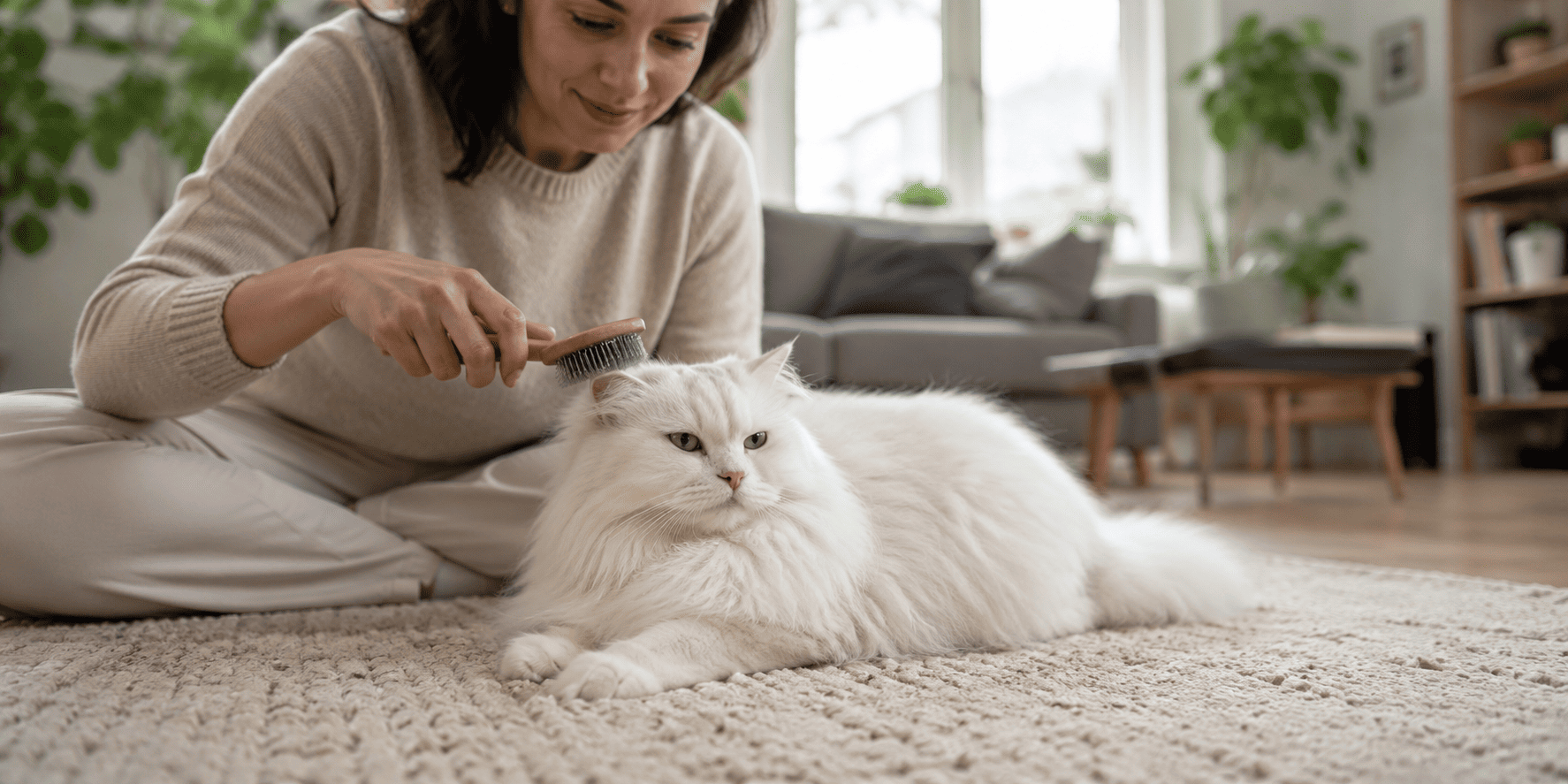
Learning how to groom an indoor cat is mostly about creating a calm routine, not giving your cat a full salon treatment. Cats do a lot of their own coat care, but they still benefit from regular brushing, nail checks, dental care, and simple ear observation. Grooming also gives you a chance to notice skin, coat, mouth, or mobility changes early.
The right routine depends on the cat. A short-haired adult may need only brief brushing sessions. A long-haired cat may need much more help preventing mats. Senior cats can become less flexible and may stop grooming certain areas well. Start with what your cat comfortably accepts, then build from there.
Grooming should also fit your cat’s physical comfort. Use a non-slip surface so the paws feel secure. Older cats may prefer grooming on the floor rather than being lifted onto a counter. If your cat has arthritis or another painful condition, ask your veterinarian which positions and tools are safest.
How to Groom an Indoor Cat Without Turning It Into a Battle
Choose a time when your cat is already relaxed. A grooming session after play or a meal often works better than approaching an energetic cat with a brush. Keep the first sessions short. Ten calm brush strokes are more useful than a long session that ends in struggling.
Let your cat inspect tools before you use them. Touch the shoulders or cheeks with the back of the brush first. Reward calm behavior with praise, petting, or a small treat if your cat likes food rewards.
Watch body language. Tail flicking, skin twitching, ears turning back, looking sharply at the tool, or trying to leave can mean your cat has had enough. Stop before the situation becomes a fight. The goal is to make the next session easier, not to finish every task today.
Some cats tolerate brushing but dislike paw handling. Others accept nails but hate mouth contact. Treat each grooming skill separately and build tolerance at your cat’s pace.
A Basic Grooming Kit for Most Indoor Cats
You do not need a drawer full of specialized tools. Start with a few items that match your cat’s coat and needs.
- Brush or comb: Choose one that reaches through the coat without scratching the skin.
- Fine comb: Useful for checking small tangles, especially around friction areas.
- Cat nail clippers: Small, sharp clippers give better control than dull tools.
- Pet toothbrush: A small cat toothbrush or finger brush can be used for dental care.
- Cat-safe toothpaste: Never use human toothpaste for your cat.
- Soft cotton pad or gauze: Useful for wiping the visible outer ear if your veterinarian recommends cleaning.
- Towel: Helpful for creating a stable surface or supporting gentle handling.
Buy tools for a specific job instead of collecting products because they are marketed as grooming essentials. If a brush pulls or creates static, try another style. Comfort and consistency matter more than having the most expensive kit.
Keep the kit easy to reach. If the brush is buried in a cabinet, short maintenance sessions are less likely to happen. A small grooming pouch near the place your cat relaxes can make two-minute sessions part of normal life. Store sharp tools safely when they are not in use.
Brushing: Match the Tool and Frequency to the Coat
Regular brushing removes loose hair, helps prevent mats, and lets you look at the skin. Short-haired cats may need brushing only once or twice a week, while long-haired cats often need more frequent attention. Shedding season can change the schedule.
Brush in the direction of hair growth and use light pressure. Start with areas many cats enjoy, such as the cheeks, shoulders, and back. Be more careful around the belly, armpits, groin, and back legs because skin can be sensitive and mats often form there.
Do not pull hard on a mat. Tight mats can sit very close to the skin, and cat skin is easy to cut. Scissors are risky because the skin can be drawn up into the mat. If you cannot separate a mat safely with gentle combing, ask a veterinarian or experienced groomer for help.
Sudden poor grooming can be a health clue. Dental pain, arthritis, obesity, skin disease, or illness can make self-grooming difficult.
Grooming Tasks and a Practical Starting Schedule
There is no perfect calendar for every cat, but this gives you a useful starting point.
| Task | Starting frequency | What changes the schedule |
|---|---|---|
| Brushing | Weekly for many short-haired cats | Long coat, shedding, mats, senior mobility, or hairball issues |
| Nail check | Every 2–3 weeks | Scratching habits, age, activity, or nails approaching the pads |
| Teeth | Ideally frequent home brushing | Your veterinarian’s dental plan and your cat’s tolerance |
| Ear look | Brief check during normal grooming | Odor, debris, redness, scratching, or known ear disease |
| Full body check | During regular petting or brushing | Age, skin problems, lumps, pain, or medical conditions |
Your cat may need a different schedule. Long-haired cats, older cats, and cats with mobility problems often need more hands-on coat care. A cat with healthy nails and frequent scratching may need less trimming than a sedentary senior.
Use the schedule as a reminder to look, not as a demand to perform every task. A clean ear does not need cleaning just because a week has passed. A short-haired cat with little shedding may need less brushing at some times of year. Grooming should respond to what you see.
Trim Nails Before They Become a Problem
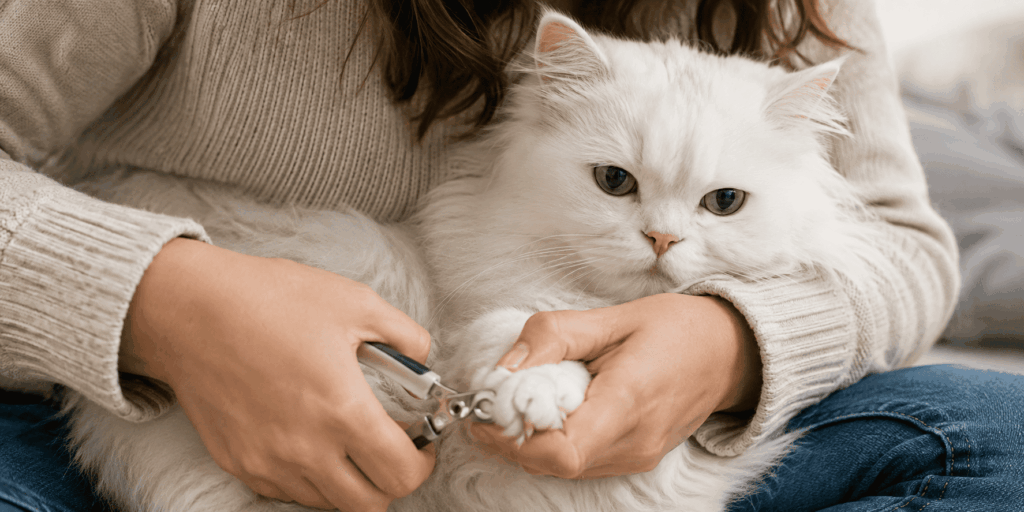
Indoor cats still use their claws for climbing, stretching, play, and scratching. Scratching surfaces help remove old claw sheaths, but they do not always keep nails short enough. Check the front and back paws regularly.
Press gently on the toe pad so the claw extends. Trim only the sharp transparent tip and avoid the pink quick, which contains blood vessels and nerves. If you cannot see the quick clearly, take off a very small amount.
You do not need to trim every nail in one session. One or two paws at a time can be much easier for a cat that is learning. Pair paw handling with something positive and stop before your cat becomes frightened.
Senior cats need extra nail checks. Less scratching and reduced mobility can allow nails to thicken, curve, or grow toward the paw pad. If a nail is embedded, painful, or bleeding, veterinary care is appropriate.
When trimming nails, good lighting makes the job safer. Position yourself so you can see the transparent tip clearly. If your cat has dark claws or you are unsure where to cut, trim only a tiny amount. Your veterinary team can demonstrate the technique before you try a full trim at home.
Make Tooth Brushing a Gradual Skill
Dental home care works best when the cat learns the routine in small steps.
- Start by touching the outside of the cheeks and lifting the lip briefly.
- Let your cat taste a small amount of cat-safe toothpaste if recommended for home brushing.
- Introduce the toothbrush without immediately trying to clean the whole mouth.
- Focus on the outer tooth surfaces where plaque commonly accumulates.
- Keep sessions short and reward calm cooperation.
- Stop if your cat shows pain, bleeding, or strong resistance that is new.
Home brushing does not replace professional dental assessment. Bad breath, red or bleeding gums, drooling, dropping food, chewing on one side, pawing at the mouth, or eating less can signal dental disease. Cats may continue eating despite significant mouth pain, so appetite alone does not rule it out.
Dental care is easier when you build handling tolerance before there is a problem. Briefly lifting the lip during calm petting teaches your cat that mouth checks are not always followed by an unpleasant procedure. That skill can also make future veterinary examinations easier.
Dental products vary widely, and brushing remains the most direct home-care method when a cat tolerates it. If brushing is not realistic, ask your veterinarian which evidence-based alternatives are appropriate. Do not assume that hard kibble alone cleans the teeth well enough to replace dental assessment.
Check Ears, but Do Not Overclean Them
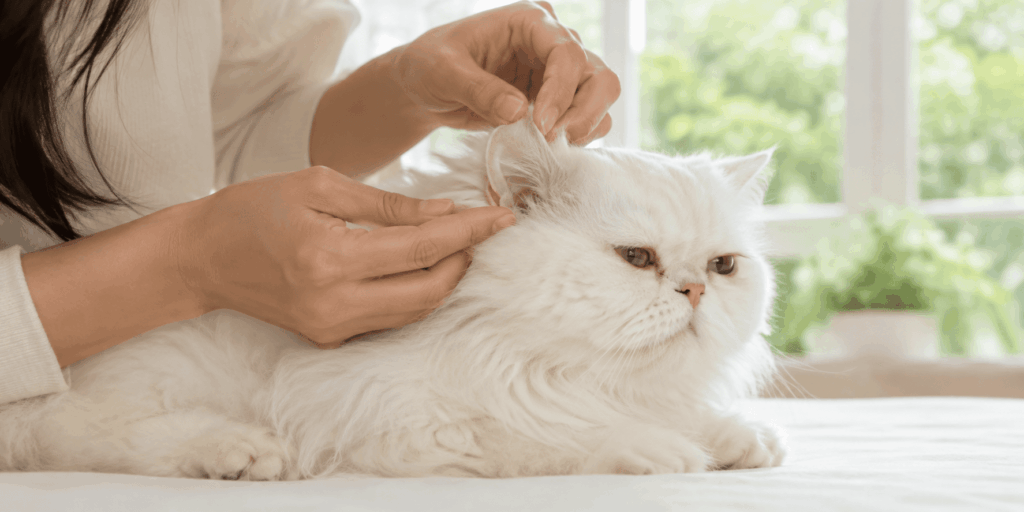
Healthy ears do not need aggressive routine cleaning. During grooming, simply look at the visible outer ear and notice whether it appears clean and comfortable. A small amount of normal wax can be present.
Persistent dark debris, strong odor, redness, swelling, frequent head shaking, or repeated scratching deserves attention. Ear mites, infection, allergies, polyps, or other problems can create similar signs. Cleaning repeatedly without knowing the cause can delay treatment.
Do not insert cotton swabs deep into the ear canal. If your veterinarian recommends an ear-cleaning product, ask for a demonstration. Use the product only as directed and stop if your cat seems painful.
Ear handling is another useful skill to teach gradually. Briefly touching and lifting the ear flap during calm petting can make future checks less stressful.
If the ears look normal, leave them alone. Overcleaning can irritate delicate tissue and turns an easy observation step into a stressful procedure. Cats with a history of ear disease may need a different routine, but that plan should come from the veterinarian treating the underlying problem.
Bathing Is Usually the Exception, Not the Routine
Most healthy indoor cats do not need frequent full baths. Their normal self-grooming and regular brushing handle everyday coat care. Bathing may be useful when a cat gets into something dirty, sticky, or unsafe to lick, or when a veterinarian recommends medicated bathing.
If a bath is needed, prepare everything before bringing the cat to the sink or tub. Use a non-slip surface and lukewarm water. Choose a product made for cats. Keep water away from the eyes and ears, and dry the cat in a warm room.
Do not use essential oils, human shampoos, or fragranced products simply to make the coat smell different. Cats groom by licking, so anything left on the fur may be ingested.
A greasy or unkempt coat can also be a health sign rather than a bathing problem. If your cat suddenly stops maintaining the coat, look for pain, dental issues, obesity, or illness with your veterinarian.
Between full grooming sessions, use ordinary petting to check difficult areas. Run your hand gently along the chest, under the front legs, and over the back legs if your cat enjoys it. Small tangles are much easier to manage before they tighten into mats.
Keep How to Groom an Indoor Cat Calm and Useful
The easiest way to remember how to groom an indoor cat is to focus on short, repeatable care. Brush according to coat type, check nails before they overgrow, build tooth brushing gradually, and inspect the ears without overcleaning them. Use each session to notice changes in skin, coat, mouth, paws, and comfort.
If grooming suddenly becomes difficult, do not assume your cat has become stubborn. Pain can change tolerance quickly. New mats, poor grooming, mouth discomfort, or resistance to touch may be reasons to call your veterinarian.
References
- Choosing and Caring for Your New Cat — Cornell Feline Health Center — Practical guidance on brushing, nail trimming, veterinary care, and routine cat maintenance.
- Your Cat’s Dental Health — FelineVMA — Caregiver guidance on dental disease signs, including bad breath, gum changes, drooling, and chewing problems.
- General Cat Care — ASPCA — Covers brushing, nail care, scratching, housing, preventive care, and essential home supplies.
