

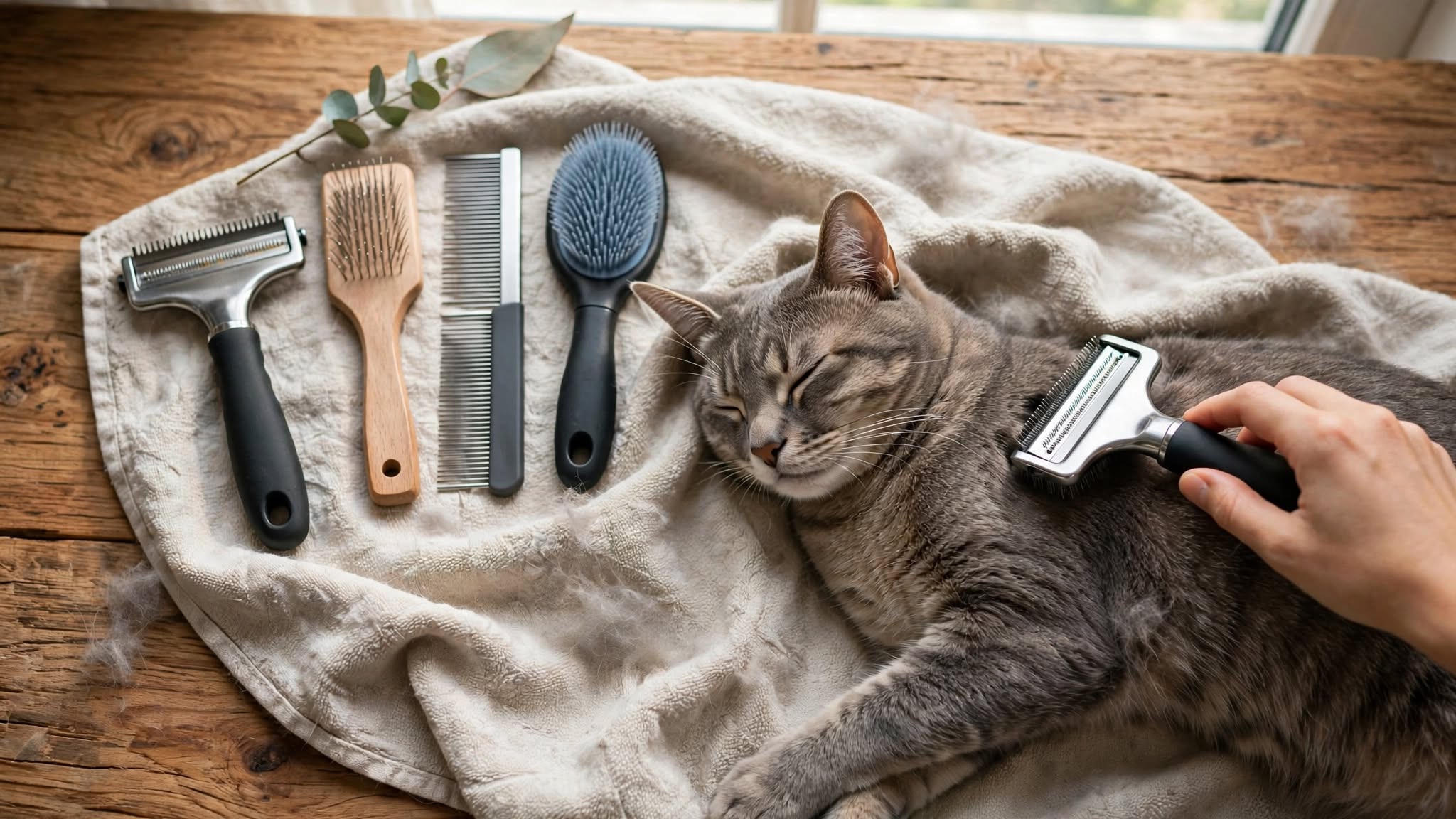
The best deshedding tools for cats are not simply the tools that pull out the biggest pile of fur in one session. A good choice removes loose coat efficiently without turning grooming into a fight or encouraging over-brushing. Coat length, undercoat density, skin sensitivity, tolerance for pressure, and whether your cat mats easily all change what “best” means. For most homes, the smartest setup is one main deshedding tool plus a gentler everyday brush or comb. A drawer full of interchangeable metal edges is unnecessary. The current models below solve different problems. So choose by coat and handling style rather than by the most dramatic before-and-after photo.
Best Deshedding Tools for Cats at a Glance
| Tool | Best for | Why it stands out |
|---|---|---|
| FURminator Undercoat deShedding Tool | Dense shedding undercoat | Coat-specific short/long-hair versions and controlled metal edge |
| SleekEZ 2.5-inch Small Grooming Tool | Loose surface coat, short to medium coats | Small footprint and light pulling action |
| KONG Cat ZoomGroom | Touch-sensitive cats, short coats | Flexible rubber texture doubles as massage and bathing tool |
| Safari Shed Magic for Cats | Medium-to-long coats or heavier seasonal shed | Purpose-built cat deshedding options by coat length |
| EquiGroomer 5-inch EasyGroomer | Surface shed and cats that dislike pin brushes | Wide, shallow working edge with simple handling |
The table is a starting point, not a ranking that applies to every cat. A short-haired cat with sensitive skin may do better with ZoomGroom than a more aggressive undercoat tool. A dense-coated cat that leaves tufts everywhere may benefit from FURminator used correctly once or twice a week. The limiting factor is always the cat’s skin and tolerance.
FURminator Works Best When You Actually Need Undercoat Removal
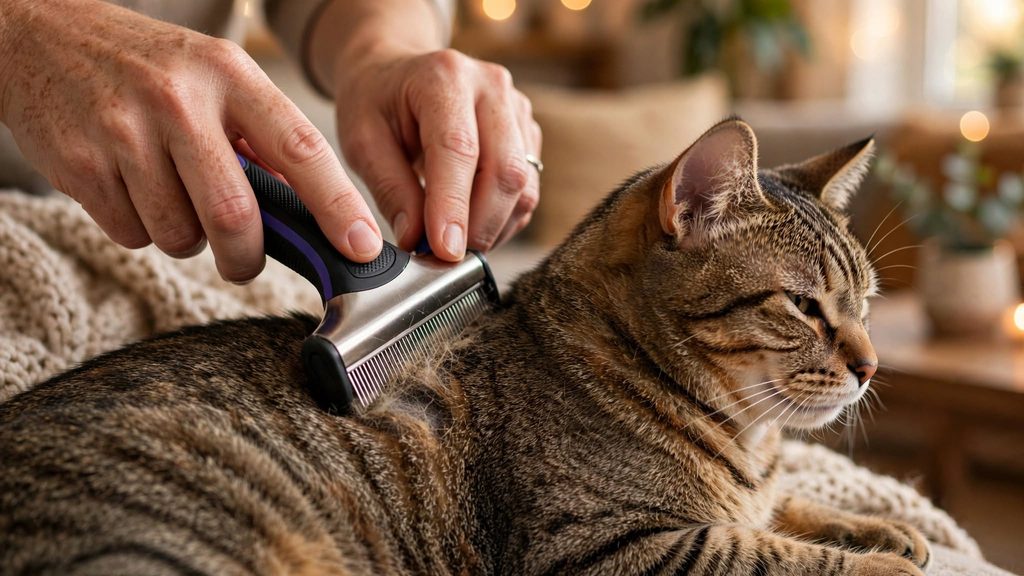
FURminator’s current cat tools are divided by coat length and cat size. That matters because the stainless-steel edge reaches through the topcoat instead of behaving like an ordinary slicker brush. The manufacturer directs users to work on a dry, unmatted coat and inspect the skin first. Use gentle strokes with hair growth and avoid repeatedly working one spot. That restraint is important. An efficient tool can still irritate skin when used with pressure. Stop before “just one more handful” turns into repeated work over the same area.
This is a strong choice for cats that genuinely have a noticeable shedding undercoat and tolerate structured grooming. It is less appealing for fragile skin, very thin coats, or cats that react badly to firm metal contact. If mats are present, remove or professionally address those first rather than trying to rake through them. Deshedding and dematting are different jobs.
Coat condition can also tell you whether the tool is reaching the right layer. If the back looks smooth but the armpits, chest, or hind legs begin forming small tangles, the routine is too focused on the easy surfaces. For long-haired cats, use a comb as a “depth check” after deshedding: it should pass through from near the skin to the ends without snagging. Do not keep scraping the back simply because that is where the tool produces the most satisfying pile.
SleekEZ Is a Good Middle Ground for Loose Surface Hair
The 2.5-inch SleekEZ Small Grooming Tool is compact enough for cats. Its fine wave-pattern edge catches loose hair without functioning as a clipper. The manufacturer specifically notes that it is not intended for detangling or mat removal. That distinction makes it useful for cats whose main problem is expired surface coat and dander rather than thick knots. It can also feel less “brush-like” to cats that dislike rows of long pins.
Because the teeth are shallow, technique still matters. Use light passes and let the tool contact the coat rather than pressing it into the skin. Short sessions over the back and sides may be enough. SleekEZ may not replace a coat-specific undercoat tool on a very plush double coat. It can still be an easier maintenance option between heavier shed periods.
KONG ZoomGroom Is the Gentlest Pick for Many Sensitive Cats
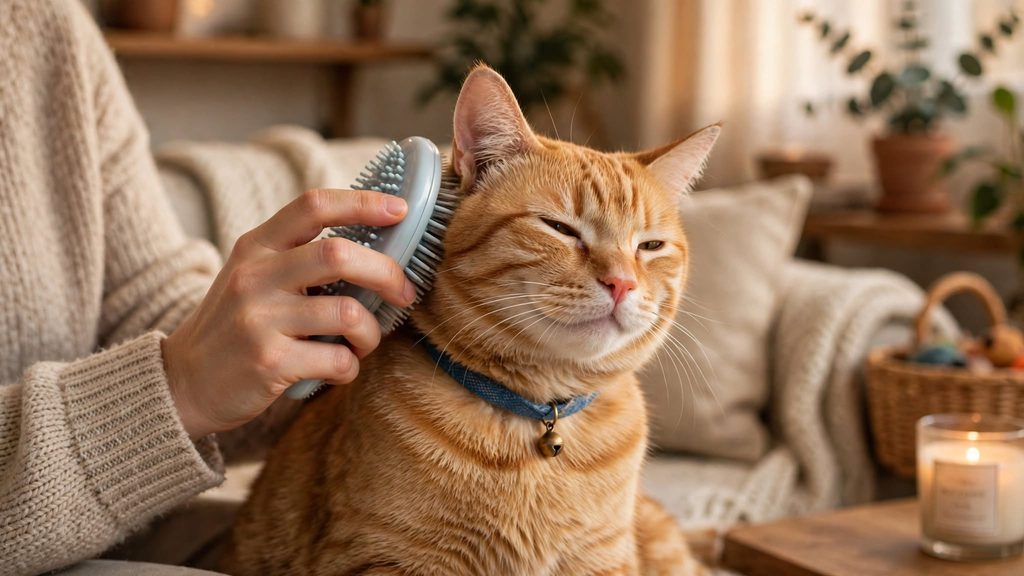
KONG’s Cat ZoomGroom uses flexible rubber rather than metal teeth. It is marketed for all coat types and can be used for dry grooming or bathing. Its biggest advantage is not maximum hair removal. Many cats tolerate the massage-like contact better than a rake or deshedding blade. For a short-haired cat that sheds steadily but hates firm tools, that can make it more useful than something technically more powerful.
The trade-off is precision. Rubber nubs mainly lift loose surface coat. A long-haired cat with a dense undercoat may still need a comb to check for tangles. ZoomGroom can be a sensible introduction for kittens or cats with a poor grooming history. It lets you build a positive handling routine before adding more efficient tools. A tool the cat accepts for three calm minutes often removes more hair over a month than a “better” tool that causes avoidance.
Safari Shed Magic Gives You Coat-Length Options Without Going Generic
Coastal Pet currently lists Safari Shed Magic versions for short-to-medium hair and medium-to-long hair. That makes the line easier to match to coat structure than one universal deshedding blade. The design is intended to remove loose hair and undercoat. Treat it as an efficient shed-removal tool rather than a daily finishing brush. Use it on a coat that is free of mats and stop if the skin becomes pink or the cat’s tolerance drops.
This can be a practical choice for homes where the cat’s coat changes seasonally. A medium-haired cat may need only light combing most of the year but benefit from a few controlled Shed Magic sessions during a heavier shed. The mistake is turning a seasonal tool into a daily ritual because it produces visible fur. Visible output is not proof that the coat needed more removal.
Store metal-edged tools where the teeth cannot be bent or damaged. A warped edge can drag unevenly across the coat, so replace a tool that no longer moves smoothly despite cleaning.
EquiGroomer Suits Cats That Prefer a Broad, Shallow Stroke
The 5-inch EasyGroomer from EquiGroomer is sold for dogs, cats, and small pets. Its wide working edge and simple shape make it useful for long passes over the back and sides. It can be a good fit for cats that dislike the prickly sensation of pin brushes but tolerate a flatter scraping motion. Because it works differently from a deep undercoat rake, it is best thought of as a loose-hair collector rather than a universal replacement for combing.
For a cat with a short, sleek coat, this type of tool may be all you need during shedding periods. For long coats, pair it with a comb that reaches through the coat. Use the comb to check the armpits, chest, belly, and hindquarters for tangles. Those are places where “I removed a lot of hair from the back” can create false confidence while hidden mats continue developing elsewhere.
Match the Tool to Coat Structure, Not the Amount of Fur on Your Sofa
Before buying anything, run your hands through the coat and identify what you are trying to remove. Loose hairs sitting at the surface need a different solution from dense undercoat or early tangles. Short coats usually need less aggressive equipment. Long coats often benefit from a metal comb for checking depth, even if a deshedding tool helps during seasonal coat release. Cats with skin disease, wounds, recent surgery, or painful areas should not be brushed aggressively around those sites.
- Short, smooth coat: start with rubber or shallow-tooth tools.
- Dense undercoat: consider a coat-specific deshedding edge used sparingly.
- Long coat: keep a comb in the routine to detect tangles below the surface.
- Touch-sensitive cat: prioritize flexible tools and very short sessions.
- Mats present: do not pull a deshedding tool through them.
That approach fits naturally within a grooming routine built around coat type and tolerance rather than product hype.
Season matters as well. Indoor cats can shed year-round because household light and temperature are relatively stable, yet many still have heavier periods. During a coat release, increase frequency cautiously rather than increasing pressure. Once the shed settles, reduce use of the high-efficiency tool. A deshedding routine should respond to the coat in front of you, not to a fixed schedule printed on a calendar.
Take a quick photo of the coat before changing tools if you are unsure whether shedding is improving. Compare the coat condition and skin visibility over several weeks rather than judging success by the size of the fur pile after one session.
Technique Matters More Than Tooth Count
Reward placement can change tolerance too. Give a small treat after a few strokes rather than holding food in front of the cat while you brush continuously. That creates natural pauses and lets the cat choose whether to stay. For cats that dislike being restrained, grooming while they stand on a stable counter or mat may be calmer than holding them on your lap.
Brush in the direction of hair growth unless the tool’s instructions say otherwise. Support the skin gently when working over loose areas, avoid bony prominences. And reduce pressure around the belly, legs, groin, and tail. Stop before your cat becomes irritated. Tail flicking, skin twitching, turning toward the tool, crouching, ears rotating back, or walking away are useful signals that the session has reached its limit.
Short, predictable grooming sessions are usually better than one long weekly battle. You can do a few passes, reward the cat, and finish while the interaction is still neutral or positive. Clean hair out of the tool as you go so you are not dragging collected coat back through the fur. If you are using a high-efficiency metal edge, count passes rather than grooming until no more hair comes out. Some loose coat will always be available.
Keep the skin visible enough to evaluate as you groom. Part the coat in a few places, especially where the cat has been licking. And look for redness, flea dirt, scabs, dandruff, or broken hairs. If you find a sore, do not repeatedly brush around it to “clean” the fur. Stop that area and get veterinary advice when the change is persistent or uncomfortable.
Heavy Shedding Is Sometimes a Health Clue, Not a Tool Problem
Seasonal shedding and normal household hair can be dramatic, especially in dense-coated cats. Still, a sudden change deserves context. Bald patches, broken hair, redness, scabs, or a greasy coat need more than aggressive deshedding. The same applies to excessive licking, obvious itch, weight loss, or a sudden drop in normal grooming. Skin disease, parasites, pain, stress, nutrition issues, and other medical problems can change the coat.
If the coat looks healthy and the cat feels well, choose the least aggressive tool that does the job and use it consistently. The best deshedding tool is the one that matches the coat, removes loose hair without damaging skin, and allows the cat to remain cooperative. A smaller pile of fur after a calm session is a better outcome than a huge pile produced by overworking the coat.
References
- FURminator — Undercoat deShedding Tool for Cats — Current manufacturer use and safety guidance.
- SleekEZ — The ORIGINAL Small Grooming Tool — Current manufacturer product and use details.
- Cat Friendly Homes — Grooming Tips — Feline-veterinary guidance for home care and behavior.
