

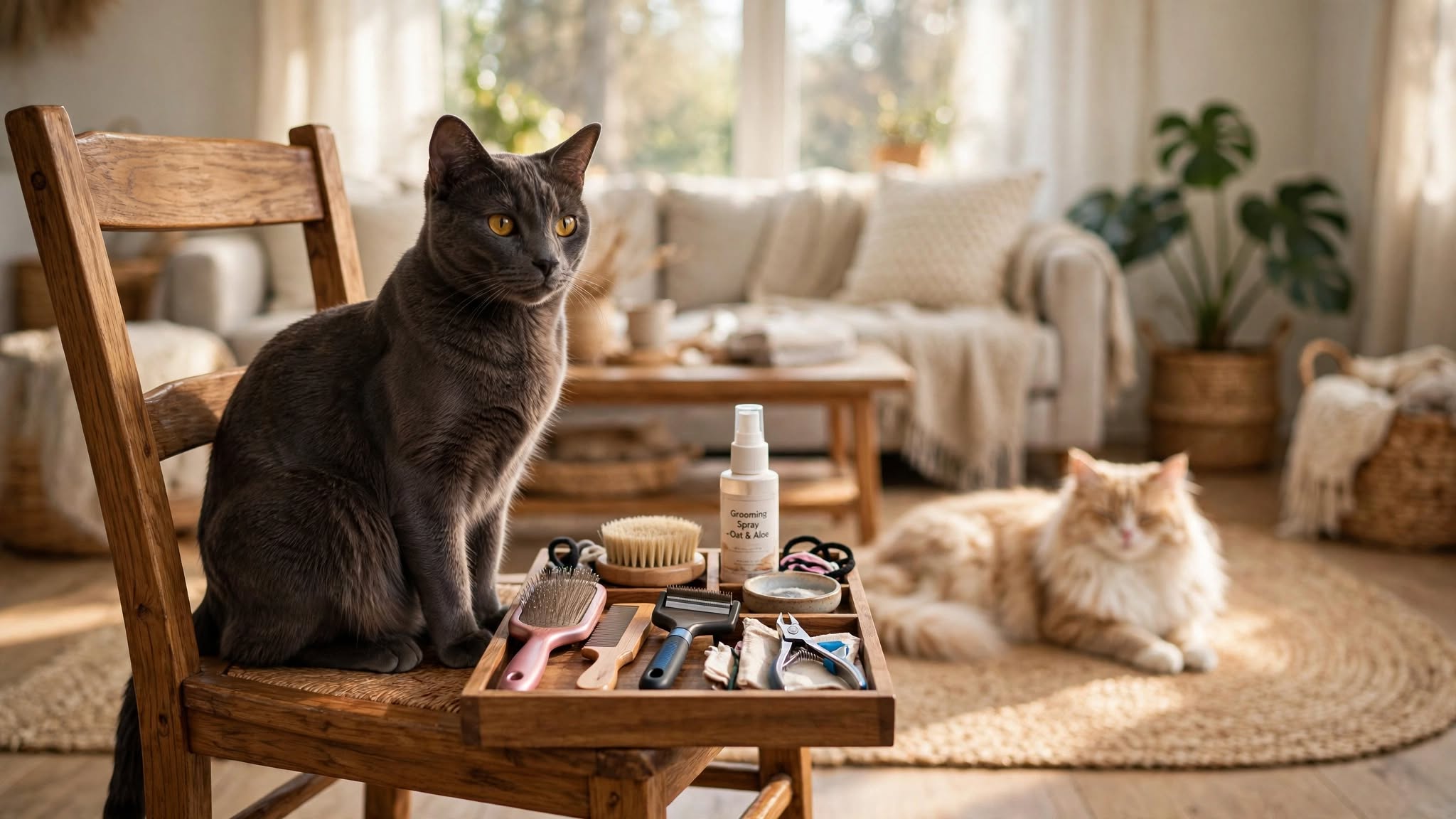
Short-haired vs long-haired cat grooming differs mainly in how quickly loose hair, tangles, and mats can build up. Short-haired cats often need less frequent brushing because the coat is less likely to knot, while long-haired cats usually benefit from more frequent combing to prevent tangles from tightening close to the skin. Coat length is not the only factor. Density, texture, age, body condition, health, shedding season, and the cat’s own grooming ability all change the routine. The best schedule is the one that keeps the coat clean and untangled without turning grooming into a fight.
Coat Length Changes the Main Grooming Risk
With short hair, the everyday job is often removing loose fur, checking skin, and helping with areas the cat grooms less effectively. Mats can still happen, especially in dense coats, overweight cats, or cats with reduced mobility, but they are generally less common than in long coats. A rubber grooming tool or fine comb may remove loose hair efficiently.
Long hair creates more opportunities for individual strands to twist, trap loose undercoat, and form tangles. Small knots can tighten quickly in friction areas such as the armpits, chest, belly, behind the legs, and around the rear. Prevention is easier than trying to remove a mature mat. This is why long-haired grooming usually needs to happen more often and reach down through the coat rather than only smoothing the surface.
Build frequency around the fastest problem that develops. If a long-haired cat forms small underarm tangles after three days, grooming every other day may be appropriate even when the rest of the coat looks fine. If a short-haired cat stays smooth for a week but sheds heavily on furniture, two short sessions may be enough. The schedule should prevent problems before they require painful correction.
Short-Haired vs Long-Haired Cat Grooming Needs Different Frequency
Many short-haired cats do well with brushing once or twice a week when the coat is healthy and the cat grooms normally. During heavier shedding, aging, illness, or reduced self-grooming, more frequent sessions may help. Long-haired indoor cats often need grooming every few days, and some coats benefit from daily attention in high-risk areas.
Frequency should remain flexible. The broader routine for brushing, nails, teeth, ears, and coat checks works best when each task is matched to the individual cat. A long-haired cat with a silky coat may tangle less than a dense medium-haired cat. Let the actual coat condition guide the schedule instead of relying only on breed labels.
Test a new tool on a small, easy area such as the shoulder. Use very light pressure and check the skin afterward. A tool that removes a dramatic amount of hair can still be too harsh if the cat becomes sensitive or the skin looks irritated. More hair in the brush is not automatically better grooming.
Use Tools That Reach the Coat You Actually Have
A short-haired coat often responds well to a metal comb, soft bristle brush, or rubber grooming tool that lifts dead hair without excessive pulling. Long hair usually needs a comb that can reach through the full coat depth. A slicker may help with loose hair and small tangles, but it should be used gently and never scraped repeatedly over skin.
| Coat need | Useful tool type | What to watch |
|---|---|---|
| Short loose hair | Rubber brush or soft comb | Do not overwork one area |
| Long coat check | Wide-to-fine metal comb | Comb should reach near skin without pulling |
| Small tangle | Fingers plus gentle combing | Stop if skin is pulled |
| Dense mat | Professional help may be safest | Do not cut close to skin with scissors |
The right tool is the one the cat tolerates and that actually reaches the problem. A brush that skims the top of a long coat can make the fur look neat while hidden mats continue forming underneath.
Work from the ends of a small tangle toward the skin rather than pulling through the entire knot at once. Hold the fur near the base gently so the skin is not tugged. If the cat becomes uncomfortable, stop. Repeated pulling can make the cat avoid grooming even after the original mat is gone.
Long-Haired Cats Need Extra Attention in Friction Areas
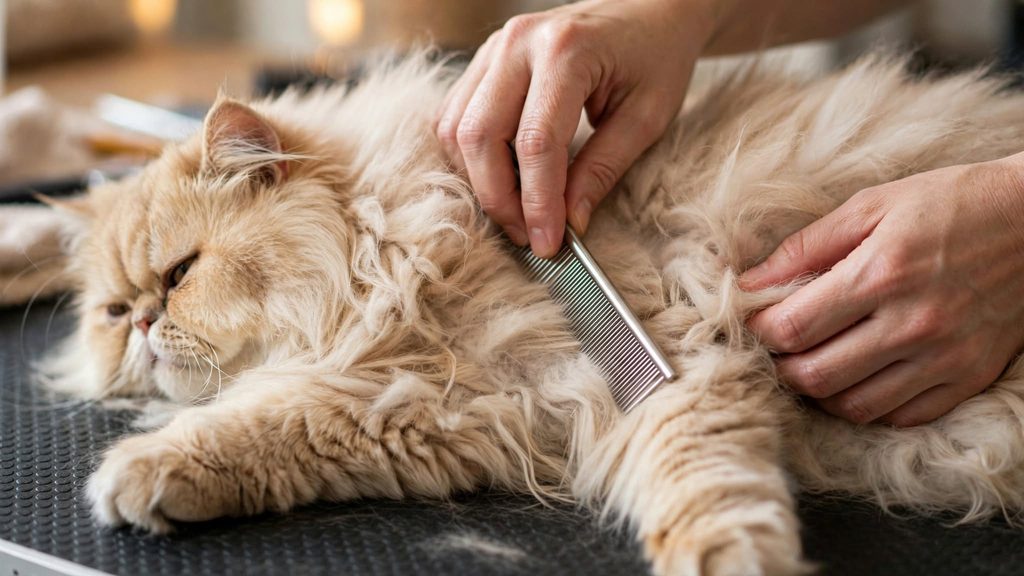
Check behind the ears, under the front legs, along the chest, belly, inner legs, and around the rear. These areas move frequently or collect moisture and debris. Use your fingers to feel for small knots before they become obvious visually. A mat can pull on skin every time the cat walks, making it more than a cosmetic issue.
If you find a tight mat close to the skin, avoid sliding scissors underneath it. Cat skin is thin and can be pulled up into the mat, making accidental cuts possible. A veterinarian or experienced professional groomer can advise on safe removal, especially when mats are extensive or the cat is painful.
Use the coat check to notice body condition too. Ribs, spine, shoulders, and hips can feel different before a casual glance shows a weight or muscle change. Grooming does not replace veterinary assessment, but regular hands-on contact gives you a baseline. A new lump, painful spot, or sudden loss of muscle deserves follow-up.
Use good light during coat checks. Natural daylight can make dandruff, redness, fleas, and small bald areas easier to notice without repeated handling.
Short-Haired Cats Still Benefit From Hands-On Coat Checks
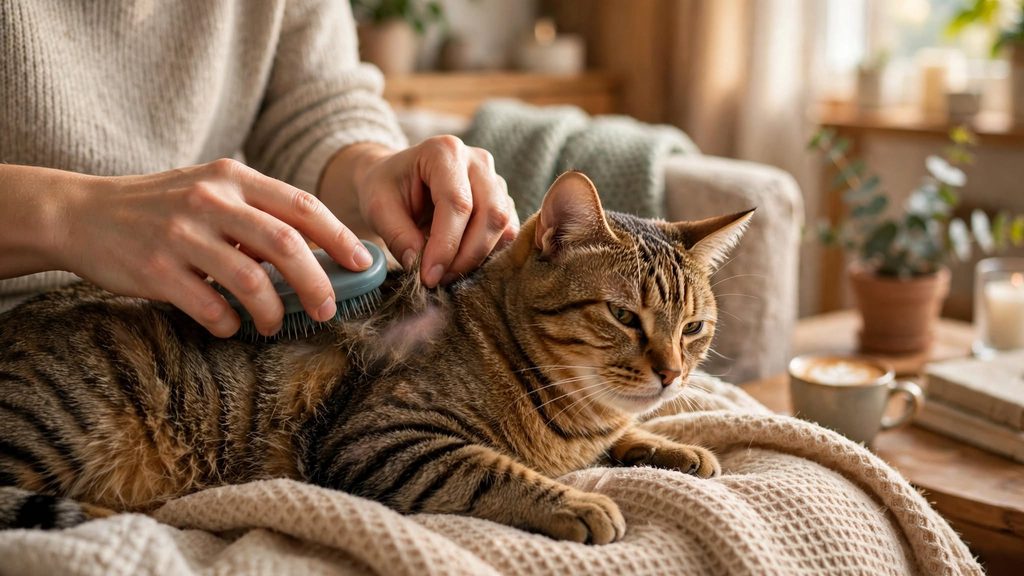
A sleek coat can hide small scabs, lumps, flea dirt, greasy areas, or changes in muscle condition. Use brushing as a regular opportunity to run your hands over the body. Notice whether the coat feels different from last month, whether one area is sensitive, or whether the cat suddenly resists touch it previously accepted.
Short-haired cats that groom less because of obesity, arthritis, dental pain, or illness may develop greasy or flaky areas even without long tangles. If coat quality changes alongside reduced activity, weight change, appetite change, or unusual behavior, discuss the pattern with your veterinarian rather than simply increasing brushing pressure.
Household cleaning needs can tempt owners to over-brush a shedding cat. Keep the grooming goal on coat health rather than removing the maximum possible fur. Brush until loose hair decreases and the cat remains relaxed, then stop. Another short session later is safer than continuing until the skin is sensitive. Use vacuuming and washable covers for the rest of the hair-management problem.
Shedding Is Not the Same as Matting
Both short- and long-haired cats shed. Long fur is more visible, but coat length alone does not tell you how much hair is being released. Seasonal changes, indoor lighting, health, nutrition, stress, and individual coat cycles can affect shedding. Brushing removes loose hair before it reaches furniture or is swallowed during self-grooming.
- Increase brushing gradually during heavier shedding periods.
- Keep sessions short enough that the cat remains comfortable.
- Check skin rather than focusing only on the amount of fur collected.
- Look for bald patches, redness, sores, or broken hair.
- Seek veterinary advice for sudden major coat changes or excessive grooming.
A large pile of loose fur after brushing does not automatically mean disease. Sudden patchy loss, skin inflammation, or a major change from baseline is more important.
Choose the setting carefully. A non-slip mat on a low table or floor may feel more secure than grooming on a slippery countertop. Keep the brush within reach so you do not restrain the cat while searching for tools. Short sessions are easier when setup takes seconds. The environment can reduce resistance before the brush even touches the coat.
Grooming Tolerance Matters More Than Finishing the Whole Cat
Long-haired cats may need more grooming, but forcing a long session can make future care harder. Break the body into zones. Comb the chest and sides today, then the belly and hindquarters later. End while the cat is still relaxed. Offer a reward if food is appropriate and the cat enjoys it.
For a cat that dislikes brushing, begin with a few strokes on accepted areas. Pause when the tail begins lashing, ears rotate back, skin twitches, or the cat leans away. A five-minute calm session repeated often can accomplish more than one weekly struggle. Coat maintenance has to be sustainable for both the cat and the caregiver.
Body shape can make self-grooming difficult at any age. An overweight cat may struggle to reach the lower back or rear even with short fur. A thin or ill cat may lack energy for normal grooming. Coat neglect can therefore be a clue rather than a grooming failure. When self-care changes, look beyond coat length and consider the cat’s overall health.
Older Cats May Need More Help Regardless of Coat Length
Aging can reduce flexibility and make it harder to groom the lower back, hips, or rear. Arthritis, obesity, dental disease, and weakness can all change self-grooming. A senior short-haired cat may therefore need more hands-on care than a young long-haired cat that maintains its coat well.
Modify the session for comfort. Groom on a stable surface. Avoid forcing joints into awkward positions. Use shorter sessions and focus on areas the cat can no longer reach easily. If grooming tolerance suddenly falls, consider pain. The cat may be objecting because touch or positioning has become uncomfortable.
Seasonal shedding can change the workload without changing coat length. During a heavier shed, increase frequency temporarily and then reduce it when loose hair falls. Keep notes if the coat changes dramatically outside the usual pattern. Sudden thinning, bald areas, dandruff, greasy patches, or excessive licking can point to skin or health problems rather than a simple grooming need.
Keep grooming equipment clean. Remove trapped hair from brushes and wash tools according to their material and manufacturer instructions. Do not share grooming tools between animals with active skin disease or parasites unless your veterinarian says it is safe. A simple clean kit prevents the grooming routine from adding avoidable skin contamination.
Photograph recurring problem areas if that helps you track change. A small tangle behind one leg every week suggests a routine adjustment. A new bald patch or skin lesion is different. Photos are not a diagnosis, but they can show progression and help a veterinarian understand what changed between visits.
Use Coat Condition to Set the Routine, Not a Fixed Calendar
Short-haired cats generally need less intensive coat work, while long-haired cats need more frequent tangle prevention. Beyond that, the routine should respond to the real coat. If a long-haired cat stays knot-free with grooming every three days, there is no benefit in turning daily brushing into conflict. If a short-haired senior becomes greasy and sheds heavily between weekly sessions, increase support.
Track what the coat feels like, where tangles begin, and which tools the cat tolerates. Regular grooming should make the next session easier, not repeatedly reset a neglected coat. When mats, skin disease, parasites, pain, or sudden coat changes appear, move beyond home grooming and involve a veterinary professional.
References
- Cat Grooming Tips — ASPCA — Provides separate brushing guidance for short-haired and long-haired cats, plus coat checks, tangle prevention, and grooming considerations.
- How to Groom an Indoor Cat — Purr & Place pillar source framework via FelineVMA — Includes routine-care context and environmental considerations that support calm handling and regular observation of an indoor cat.
- Cats That Lick Too Much — Cornell Feline Health Center — Explains that excessive grooming can have medical or stress-related causes and that coat or skin changes may require veterinary evaluation.
