

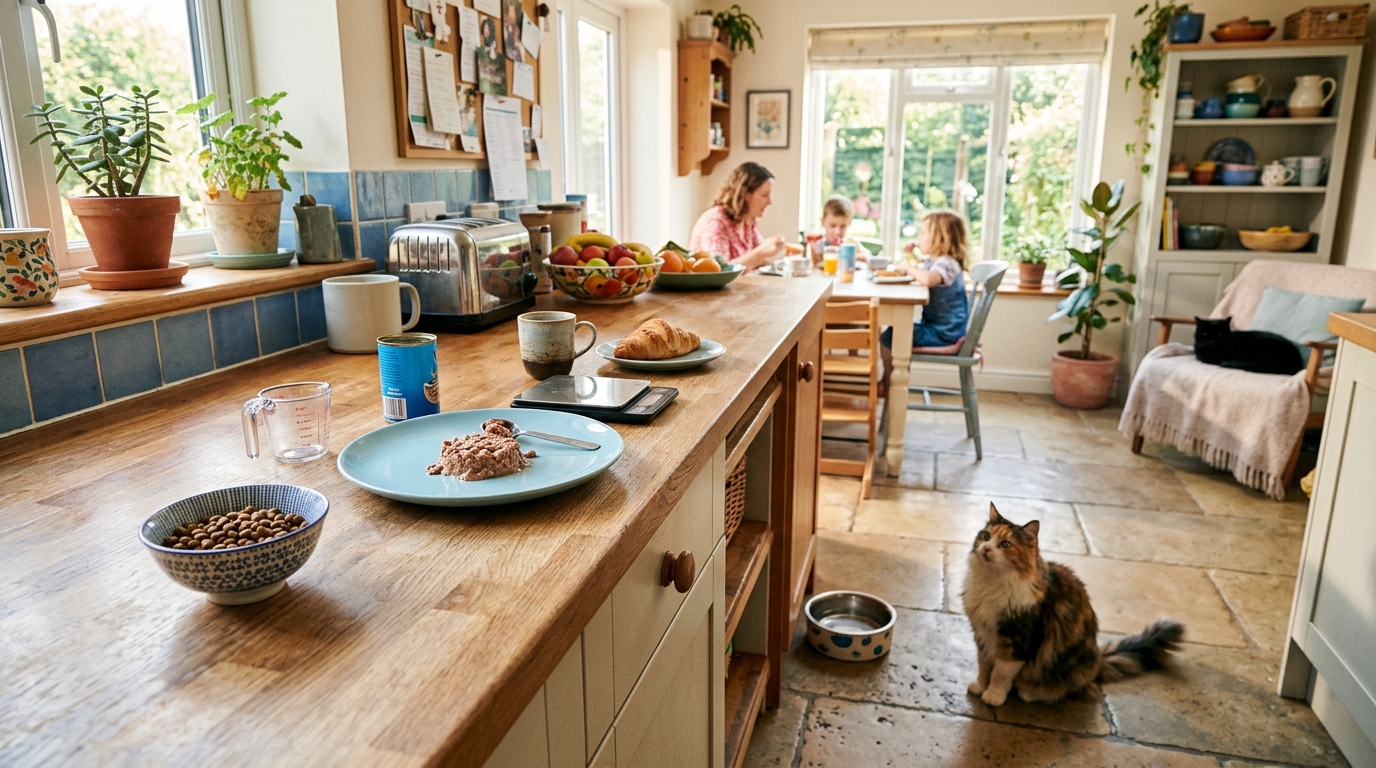
Can cats eat wet and dry food together? Yes, many healthy cats can eat a mixed diet as long as both foods fit the cat’s nutritional needs and the combined daily calories are appropriate. The main mistake is treating wet and dry food as two separate full rations. Mixed feeding works when you decide the whole day first, then divide that allowance between formats. The benefit is flexibility: wet food adds moisture and may be highly palatable, while dry food can be convenient for measured feeders or food puzzles. The right balance depends on the individual cat, not a universal wet-to-dry ratio.
Mixed Feeding Is One Daily Ration in Two Formats
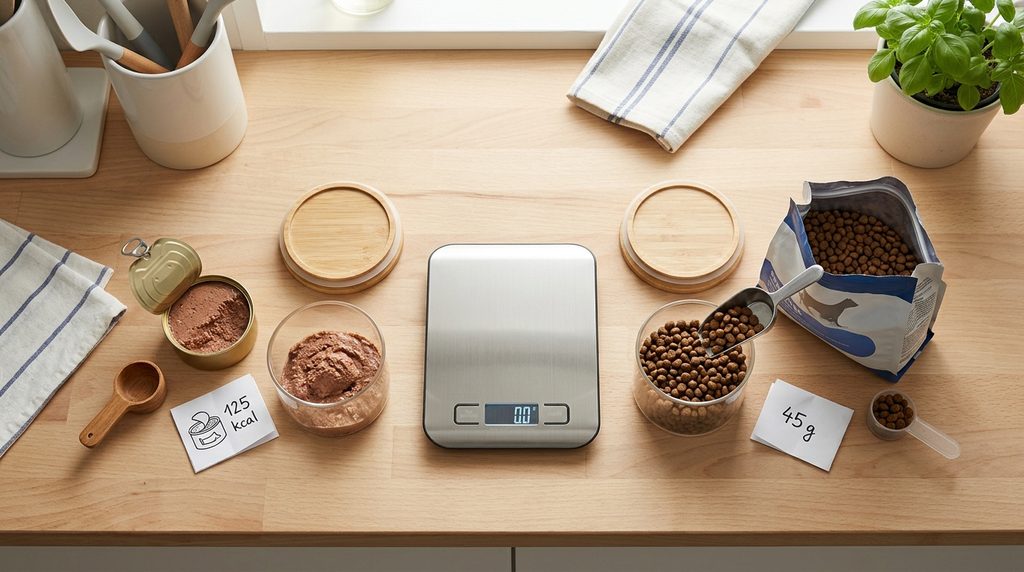
Think in calories rather than containers. If a cat needs a certain daily amount, wet food calories and dry food calories both count toward that number. Feeding the full package recommendation for dry food and then adding a can of wet food can push intake well above the intended amount. This is especially easy with calorie-dense dry food because a small-looking scoop can contain substantial energy.
Find the calorie information on both foods. It may be listed per can, pouch, cup, kilogram, or gram. Decide how much of the daily ration you want to come from each format. Then calculate the remaining portion. The exact split can change over time, but the arithmetic should still add up to one day.
| Example only | Calories | How it fits a 220 kcal day |
|---|---|---|
| One wet can | 90 kcal | Leaves 130 kcal for other food |
| Dry food | 400 kcal per cup | 130 kcal is about 0.325 cup |
| Treats | 10 kcal | Reduce meal calories accordingly |
The numbers above are not a feeding recommendation. Use the calorie values of the exact foods you feed and adjust according to your cat’s body condition, weight trend, life stage, and veterinary advice.
Decide the split using a repeatable method. Suppose the cat maintains healthy condition on 220 calories per day. If a wet meal contributes 100 calories, the remaining food, treats included, needs to fit into roughly 120 calories. The exact numbers will vary by cat and food. The useful habit is subtracting before serving, rather than treating the wet meal as a bonus on top of the usual kibble ration.
Can Cats Eat Wet and Dry Food Together in the Same Bowl?
They can, but they do not have to. Some cats enjoy the textures mixed. Others eat more reliably when wet and dry food are served separately. Mixing can make dry pieces soften quickly, which changes texture and may reduce appeal. It also means the whole mixture should be handled like wet food rather than left out for a long period.
Serving the formats in separate meals gives you more control. For example, wet food can be offered at breakfast and dinner, with a measured dry portion in a timed feeder or puzzle toy during the day. This makes leftovers easier to judge and keeps the dry portion available for enrichment. There is no nutritional prize for physically combining the foods if the cat prefers them apart.
Mixed feeding can also make appetite changes easier to notice. A cat may reject the wet meal but still eat dry food, or do the reverse. Record which format changes first. That distinction can be useful if the cat develops dental discomfort, nausea, texture preference, or medication-related appetite changes. Do not assume “still eating something” means the normal intake is intact.
Wet Food Changes Moisture Intake Even if Bowl Drinking Falls
Canned food contains much more water than dry food. When you add wet meals, you may notice fewer visits to the water bowl because the cat is getting more fluid through food. That can be a normal response. Fresh drinking water should still remain available at all times.
This is one reason food format, daily amount, life stage, and the way meals fit together should be considered as one feeding plan. Moisture is only one part of the decision. The diet also needs to be complete and balanced, appropriate for the cat, and fed in an amount that maintains healthy body condition.
If the household uses a timed feeder, load only the amount reserved for that feeding window. Do not keep a backup bowl of unlimited kibble beside it. This defeats the portion plan and makes it impossible to know whether the feeder schedule is working. In multi-person homes, pre-portioning the day into labeled containers can prevent duplicate feeding.
Use Dry Food for Convenience Without Turning It Into Unlimited Food
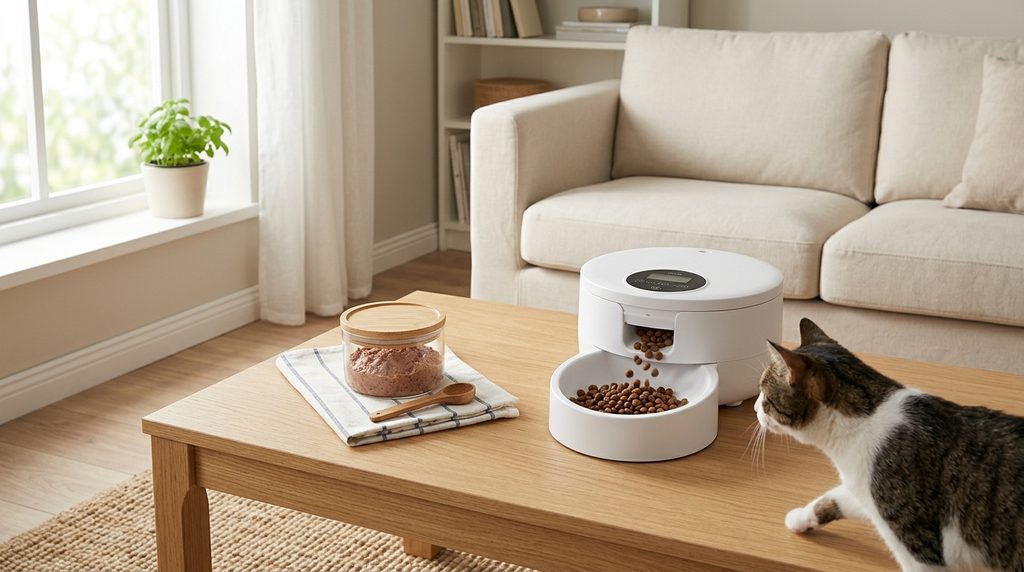
Dry food works well in timed feeders and some puzzle feeders because it can remain stable for longer than opened wet food. That convenience is useful in mixed feeding, but it can also hide overfeeding if the bowl is repeatedly topped up. Measure the entire dry allowance for the day before serving any of it. Treat the feeder as a delivery tool, not an extra food source.
- Weigh the daily dry ration in grams when possible.
- Reserve part of that measured ration for puzzles or training.
- Do not refill the bowl without checking what remains.
- Count treats and toppers in the same daily plan.
- Use separate measured containers if several people feed the cat.
This makes mixed feeding easier to adjust. If weight begins to rise, you know what was actually served. If the cat leaves food, you can see which format was rejected instead of guessing from a constantly full bowl.
Mixed feeding is easier when storage is planned before the routine begins. Keep a covered container for refrigerated wet-food leftovers and a dry measuring scoop or scale in one predictable place. Note how many meals each package provides. Small systems reduce accidental overfeeding because nobody has to estimate how much of the previous portion remains.
Wet Food Needs a Different Handling Routine
Opened canned or pouch food should not be treated like kibble. Refrigerate unused portions according to the manufacturer’s directions and normal food-safety practices. Serve portions in a way that keeps them fresh and appealing. Some cats dislike food straight from the refrigerator, so bringing a portion closer to room temperature may improve acceptance, provided it is handled safely.
Do not leave a wet-and-dry mixture sitting out simply because part of it is kibble. Once the dry food is coated with wet food, the entire bowl behaves like a moist meal. If your cat eats slowly, smaller fresh servings can work better than one large mixed bowl.
A cat that consistently leaves one format may need the plan recalculated. Do not keep serving calories the cat never eats and then compensate unpredictably with treats. Measure what is actually consumed for several days. If one food is reliably refused, decide whether it should be replaced, offered differently, or discussed with the veterinarian rather than remaining a theoretical part of the diet.
Watch for Selective Eating When One Format Is Preferred
Some cats lick the wet food and leave the dry pieces. Others eat kibble first and abandon the wet portion. This can distort the calorie plan if you assume the cat consumed everything you served. Watch the bowl during the first week of a new mixed routine. Weigh or estimate leftovers consistently enough to know which food is actually being eaten.
Selective eating can also matter when one food has a special purpose. If a veterinarian prescribes a therapeutic diet, adding a substantial amount of another food may interfere with the intended plan. Ask whether mixed feeding is appropriate before combining a prescription diet with regular food, treats, or toppers.
Mixed feeding can be adjusted without changing both foods at once. If the cat gains weight, first confirm the measured daily total. Then reduce calories in a controlled way under appropriate guidance rather than removing all wet food or all dry food immediately. Changing one variable preserves the ability to see which adjustment affects appetite, weight, stool, and routine.
Mixed Feeding Can Help With Routine, but It Does Not Fix Poor Portion Control
Many households like mixed feeding because it provides structured wet meals and convenient dry-food opportunities between them. That can support a routine without requiring food to be available all day. It may also work well for cats that prefer several small eating opportunities.
However, mixed feeding does not automatically prevent hunger behavior, weight gain, or food stealing. Those problems depend on total calories, access, schedule, activity, and social setup. If a cat becomes overweight, measure both formats before assuming one type is responsible. If one cat steals the other’s wet meal and then grazes on dry food, the household needs access control as well as calorie math.
Change the Mix Gradually if Your Cat Is Sensitive to Diet Changes
If the cat is already eating one format reliably, do not replace half the diet overnight unless your veterinarian has advised a specific change. Gradual transitions can reduce digestive upset and help you see whether the cat accepts the new texture. Keep the familiar food available while the new pattern is introduced in measured amounts.
- Change one part of the feeding routine at a time.
- Track stool quality and appetite during the transition.
- Keep the total daily calories in view as proportions change.
- Do not force fasting to make the cat accept a new food.
- Contact your veterinarian if the cat eats markedly less or stops eating.
A cat that refuses a new format is giving you useful information. The aim is a nutritionally appropriate plan the cat will actually eat, not a theoretical ratio that creates daily conflict.
Mixed feeding can also simplify medication routines when a veterinarian approves the approach. A small predictable wet meal may be useful for medications that need food, while measured dry portions cover later meals. The opposite may suit another cat. Keep medication hidden only in an amount you know the cat will finish, so a partially eaten bowl does not create uncertainty about the dose.
Recalculate whenever you change brands or recipes. Two wet foods in similar-sized cans can contain very different calories, and two dry foods can differ greatly per cup or gram. Keep the current labels or photograph the calorie statements. Mixed feeding stays accurate only when the numbers belong to the foods actually being served.
Kittens, Seniors, and Medical Diets May Need a Different Mixed-Feeding Plan
Life stage and health can change the priorities. Kittens need food formulated for growth and may require more frequent meals. Seniors may have dental, appetite, mobility, or muscle-condition concerns that make one texture easier to eat. Cats with urinary, kidney, gastrointestinal, metabolic, or weight-related conditions may need a specific diet or calorie target.
In those cases, mixed feeding should support the treatment plan rather than work around it. Bring the labels and calorie values of both foods to your veterinary appointment. If your cat maintains a healthy body condition, eats both foods reliably, and the combined diet is appropriate, there is no rule requiring you to choose only wet or only dry food.
References
- Feeding Your Cat — Cornell Feline Health Center — Reviews dry and canned foods, moisture differences, complete and balanced diets, food handling, and feeding considerations.
- How Often Should You Feed Your Cat? — Cornell Feline Health Center — Explains meal frequency, free feeding, wet and dry food considerations, and why total calories and health matter.
- Feline Feeding Programs: Addressing Behavioral Needs — FelineVMA — Supports measured feeding approaches that can include multiple small meals, food puzzles, and feeding routines matched to feline behavior.
